
The Overview
Michael Fulton
Melbourne-based skier and snowboarder with 50+ resorts across 5 continents. Specialises in Australian resorts and international resort comparisons.
Pine Creek's summit reaches 8,225 feet, dropping 1,424 vertical feet to a base at 6,801 feet across 32 runs spread over 640 acres in Lincoln County, Wyoming. Terrain splits 40 per cent advanced, 30 per cent intermediate and 30 per cent beginner, with no expert-rated runs. A single quad chair serves the entire mountain. Average annual snowfall reaches roughly 350 inches, though the resort carries no major multi-resort pass affiliation.
The advanced-heavy terrain split reflects Pine Creek's steep pitches relative to its modest 1,424-foot vertical drop. With only one lift serving 32 runs, skier traffic concentrates on whichever routes the single quad chair accesses each day. There is no terrain park or groomed beginner-specific zone beyond the general 30 per cent beginner share. The mountain's small scale keeps lift lines minimal even on the busiest weekends.
Pine Creek operates as a community ski hill rather than a commercial resort, co-owned by Lincoln County and longtime operator Paul Etcheverry, who has run the area for close to 50 years. The base lodge began life as a Union Pacific train depot, donated and moved from Cokeville to the ski hill in one piece. Public skiing runs on weekends, with the entire mountain available for private weekday rental at a flat rate. This weekday rental model is unusual among Wyoming ski areas of any size.
Ski School Day Tickets, priced for public access alongside instructional programming, form the core of Pine Creek's public offering rather than a standard lift ticket structure. A full-mountain private weekday rental costs 3,000 US dollars, while a season pass runs 299 dollars. The resort suits local Lincoln County families and weekday groups seeking exclusive mountain access over destination skiers, given its distance from Wyoming's larger resort towns. Its cooperative structure with the Wyoming Division of Tourism and the Bureau of Land Management keeps the operation community-focused rather than commercially driven.
1,424ft
Vertical
32
Runs
640 acres
Skiable
29ft
Annual snow
The Terrain
32 runs across 640 acres skiable
Pine Creek is a community ski hill in Lincoln County, covering 640 acres (259 hectares) of southwestern Wyoming ranch country. Elevations run from 6,800 ft (2,073 m) at the base to 8,230 ft (2,507 m) at the summit, a vertical of 1,420 ft (434 m) that is generous for a hill this size. Its 32 runs break down as 30% beginner, 30% intermediate and 40% advanced, with no expert terrain. A single quad chair serves the whole mountain, and annual snowfall is reported at around 350 inches, so winter conditions are rarely a worry.
With one lift and no village, Pine Creek keeps things simple. Public skiing runs on weekends, and on weekdays the whole mountain can be rented privately, an unusual arrangement among Wyoming ski areas. The base lodge began life as a former train depot, a quirk that gives the place plenty of local character. Expect an uncomplicated mix of beginner slopes low down and steeper advanced lines higher up. It suits local families, groups wanting a private mountain and skiers after a quiet, unhurried day well away from the resort crowds, with no terrain park to distract from the skiing.
Terrain split
32
runs
32 runs across 4 grades
Beginner10 runs · 30%
Intermediate10 runs · 30%
Advanced13 runs · 40%
Expert0 runs · 0%
Time it right
When to visit Pine Creek
The 2025-26 season at Pine Creek ran from 6 December 2025 to 29 March 2026, a roughly sixteen-week window. The resort's public operating schedule concentrates on weekends, with weekdays available for private group rental rather than general public skiing. This structure means the effective public ski season is shorter than the full open-to-close window suggests. Season dates shift year to year based on snowpack and the operator's scheduling.
Average annual snowfall of roughly 350 inches supports the mountain's 640 acres of advanced-leaning terrain, though live season snowfall tracking is not available in current resort data. Lincoln County's position in western Wyoming places it in a moderate snowbelt compared with the heavier totals seen further north in the Tetons. Base depth and conditions are typically reported informally given the ski area's small, community-run scale. Snowmaking coverage has not been documented for this area.
Weekends through the core winter months of January and February typically offer the most consistent public skiing access at Pine Creek. Weekday visits require booking the mountain as a private rental rather than showing up for standard lift access. Late-season conditions in March can be inconsistent, with the area's 29 March close date reflecting typical spring snowpack decline at this elevation. The weekend-only public model makes advance planning more important here than at resorts with daily public access.
Pine Creek does not offer night skiing or a dedicated events calendar, consistent with its role as a community and rental ski hill rather than a destination resort. Ski school programming operates alongside public weekend access as a core part of the mountain's offering. The full-mountain weekday rental option effectively functions as private event hosting for groups willing to book the entire hill. As a Lincoln County and Etcheverry-operated area, the calendar centres on serving local skiers over hosting a resort-style event programme.
Season 2025 - 2026
6 Dec 2025
Opens
29 Mar 2026
Closes
113
Days open
29 ft
Annual snow
Getting there
Getting to Pine Creek, and where to stay
Pine Creek sits seven miles east of Cokeville, in Lincoln County in southwestern Wyoming, with a base elevation of 6,801 feet. The ski area's summit reaches 8,225 feet, a 1,424-foot vertical drop across 640 acres. This is a working ranching and small-town region rather than a resort corridor, with Pine Creek serving as the area's local ski hill. The surrounding landscape is open range and forest rather than a built-up mountain village.
Cokeville, Wyoming, is the nearest town, a small community that originally donated the train depot now serving as Pine Creek's base lodge. The area was built by local cowboys seeking winter recreation, a history that still shapes its community, non-resort character. Larger service towns like Kemmerer and Afton sit further away, providing additional lodging and supplies beyond what Cokeville itself offers. The wider Lincoln County region carries a ranching identity rather than a ski-tourism one.
Local county roads provide access to Pine Creek from Cokeville, without the state highway infrastructure that serves Wyoming's larger resorts. The drive from Cokeville takes a short time given the seven-mile distance, though winter conditions on rural roads can include snowpack and ice. No major highway runs directly to the ski area, consistent with its role as a local rather than destination attraction. No public transport service reaches Pine Creek, making a car essential for access.
The nearest airport with scheduled commercial service is not confirmed in available resort information, given Pine Creek's remote Lincoln County location. Salt Lake City International Airport, roughly two to three hours south by road, offers the nearest major hub with extensive flight options. Jackson Hole Airport sits considerably further north and east, making it a less practical option for Pine Creek visitors specifically. Rental cars from either airport are the standard way to reach this part of southwestern Wyoming.
Where to stay
Search all stays →Hotels and lodges near Pine Creek, powered by Stay22.
Latest News
From the SnowStash desk

Vermont Ski Resort Opening Dates 2026-27: Few Dates Set, Killington Waits on the Cold
Vermont's season is slow to take shape. Stratton is tentatively targeting 18 November and Sugarbush 21 November, while Pico has Friday 11 December on the calendar. Killington never sets a date and opens when the snowmaking allows, and Vail Resorts has yet to name days for Stowe, Okemo and Mount Snow. The forecasts disagree about snow, and the main El Niño worry for the Green Mountains is warmth.
9 Oct 2026
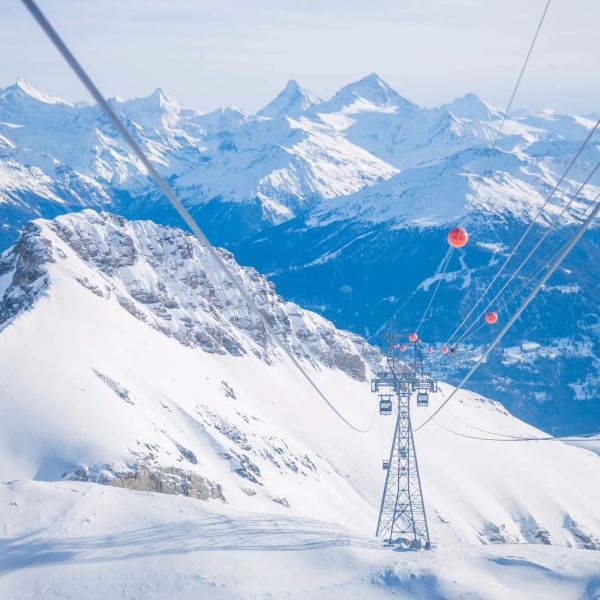
Crans-Montana 2027 World Championships President Resigns Ahead of Fraud Hearing
Less than four months out from the Crans-Montana 2027 World Championships, the man running the organising committee has stepped down. Claude-Alain Schmidhalter resigned as Swiss-Ski vice president and OC president after being indicted over a business dispute unrelated to skiing. He denies the allegations and faces court on October 27. Interim leaders are in place for the February 1-14 event.
9 Oct 2026
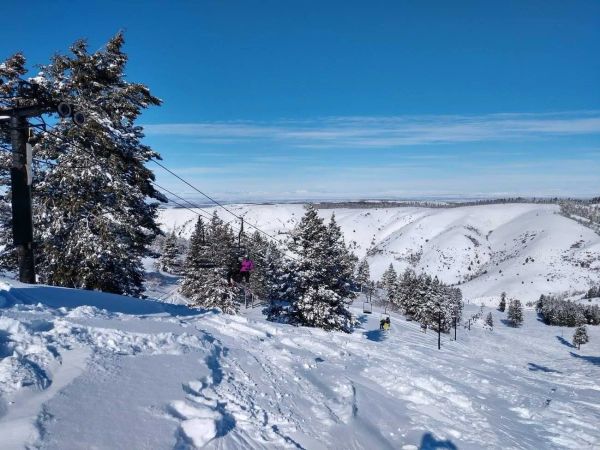
Kelly Canyon, Idaho, Adds Snowmaking, a Bigger Terrain Park and More Parking for 2026-27
Kelly Canyon had a rough 2025-26, and the Idaho resort has spent the summer making sure it doesn’t repeat. Snowmaking now reaches the top of Goldrush, the terrain park is doubling in size with a stereo system, lights and a snack shack, and the car park is getting bigger. Grooming is stepping up too. Target opening is December 4, conditions permitting.
9 Oct 2026
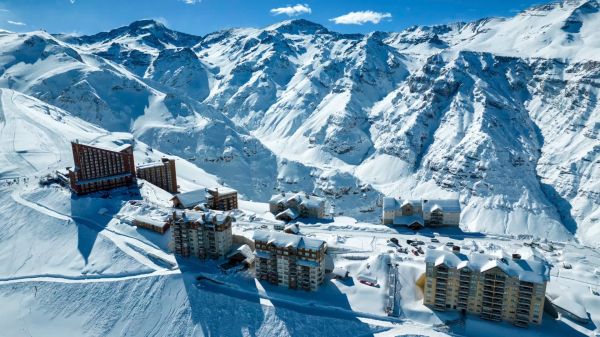
Valle Nevado Extends Season to November 8 After 108 cm in 48 Hours
Winter was meant to be winding down in Chile. Then Valle Nevado took 108 cm in 48 hours in early October, and the resort has pushed its closing date out to November 8 - its latest in 38 years of operation. That makes 143 days of skiing since opening day on June 19, with 690 cm banked for the season. Only part of the mountain is running while the storm settles, so check the mountain report before you plan a trip.
9 Oct 2026
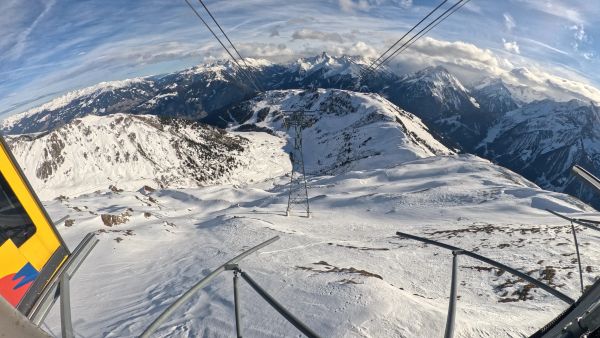
Alps Snow Forecast: Cold Front Brings Thursday Snow to the High Alps
The Alps look a lot more like winter today, for a day or so. A cold front is moving west to east, dropping up to 35 cm on high glaciers and peaks, with snow levels falling to around 1,500-1,800 m at times. Don’t plan a trip around it: mid-elevation snow will be thin and wet, every area is closed bar a limited Sölden glacier opening tomorrow, and warmer weather returns by Monday.
8 Oct 2026
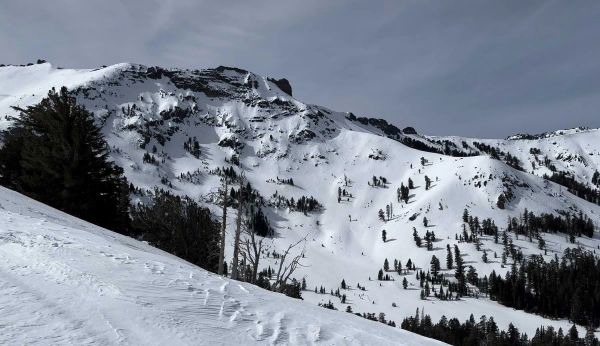
California Ski Resort Opening Dates 2026-27: Mammoth Leads, Tahoe Follows
Mammoth Mountain is first up in California, targeting Friday 13 November after a dusting of September snow. Heavenly and Northstar follow on 20 November, Palisades Tahoe on Wednesday 25 November and Sugar Bowl on 27 November, with Kirkwood on 4 December and June Mountain on 19 December. Plenty of smaller areas have no date yet. A super El Niño favours the Sierra, but a warmer storm track is the catch.
7 Oct 2026
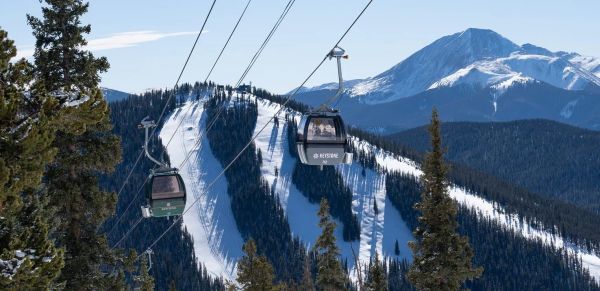
Colorado Ski Resort Opening Dates 2026-27: A-Basin and Keystone Race to Be First
Arapahoe Basin, Keystone and Winter Park are all chasing an October start, though none has a firm date yet. The first dated openers are Breckenridge and Copper on Friday 6 November, then Vail on 13 November, with most of the rest bunched around US Thanksgiving. Hesperus did not open at all last season. A super El Niño offers hope but no guarantee, and forecasters say the southern mountains have the better odds.
5 Oct 2026
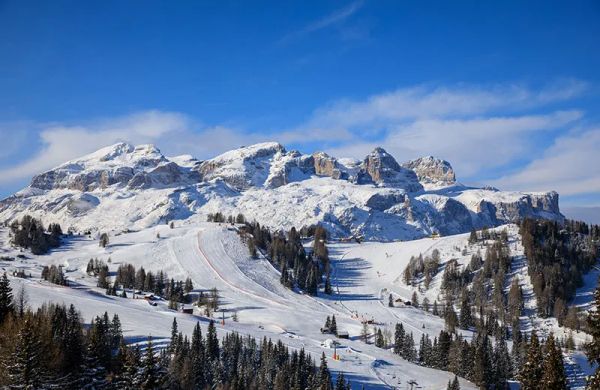
Dolomiti Superski 2026-27: Four New Gondolas, New Reservoirs and an €89 Peak Day Pass
Dolomiti Superski is spending around €100 million across its 12 areas before winter. Kronplatz gets a new 10-passenger gondola with a middle station, 3 Zinnen gets Helmissimo, and Val di Fassa swaps a chairlift for a gondola above Col Valvacin. New water-storage basins and upgraded snowmaking follow, and construction has started on the San Martino to Passo Rolle link. A peak adult day pass is €89.
4 Oct 2026
Pine Creek Lift System
Pine Creek runs a single quad chair, the only lift serving all 32 runs across the mountain's 640 acres. There is no surface lift, gondola or secondary chair of any kind. This makes Pine Creek one of the smallest lift networks of any operating ski area in Wyoming. The single-lift setup means all terrain, from the 30 per cent beginner share to the 40 per cent advanced share, is accessed from the same base point.
With one quad chair serving the entire 1,424-foot vertical drop, uphill capacity is inherently limited compared with multi-lift resorts of similar acreage. Loading and unloading move quickly given the naturally low skier volume on public weekend days. Weekday private rentals mean the lift can run for a single group without public queuing at all. The chair's specific age and manufacturer are not confirmed in available resort information.
All terrain returns to the same base area beside the ski hill's train-depot lodge, moved from Cokeville by Union Pacific decades ago. There is no mid-mountain facility, consistent with the area's single-lift, single-sector layout. The quad chair provides the only route from base to summit, covering the full 1,424-foot vertical in one ride. This straightforward layout suits a ski area built for weekend community use rather than complex terrain navigation.
Pine Creek's lift infrastructure has remained a single quad chair through Paul Etcheverry's roughly five-decade tenure operating the area. No lift expansion or replacement has been documented in available resort information. The cooperative ownership structure between Lincoln County and Etcheverry has prioritised keeping the existing lift running over adding capacity. This stability reflects the area's role as a local, weekend-focused ski hill rather than a growth-oriented resort.
1lifts across 1 types
1
Quad Chair
Pine Creek lift system
Pine Creek is served by 1 lifts, listed here by type. Check which lifts are turning against the live conditions before you plan your first laps - early lifts and high-speed chairs get you to the best snow fastest.
More Pine Creek intelligence: trail map, snow report, webcams, resort overview.