
Mt Buller
300 hectares of terrain and Victoria's biggest lift network, three hours from Melbourne. Ikon Pass access, open June to October.
Season 2026
Opens
6 June 2026
Closes
6 Sept 2026
Days open
92
Annual snow
2m
The Overview
Michael Fulton
Melbourne-based skier and snowboarder with 50+ resorts across 5 continents. Specialises in Australian resorts and international resort comparisons.
Mt Buller is Victoria's most popular ski resort and the most accessible major alpine resort in Australia, sitting approximately 235km north-east of Melbourne and reachable in around three hours — closer to an international airport than any other large resort in the country. The mountain covers 300 hectares of skiable terrain across 76 runs between 1,375m and 1,805m, split across two distinct aspects: a south-facing shady side and a north-facing sunny side that together provide varied conditions throughout the day. Skiing has taken place on the mountain since 1924, making it one of the longest continuously operating ski areas in Australia.
The terrain breakdown is 45% intermediate, 35% advanced and 20% beginner — well suited to a resort that draws heavily from Melbourne's day-trip and weekend market. At the advanced end, runs including The Chamois and Federation offer genuine challenges, while three terrain parks cater to different freestyle levels. The alpine village sits at the heart of the mountain with ski-in ski-out accommodation, more than 30 dining and bar options, and the Olympic Winter Institute of Australia — the national high-performance snow sports training centre — located on the mountain.
430m
Vertical
76
Runs
741 acres
Skiable
2m
Annual snow
Ikon / Mountain Collective
Pass
The Terrain
76 runs across 741 acres skiable
Mt Buller is the largest ski area in Victoria, covering about 300 hectares with 76 runs between 1,375 and 1,805 metres, a vertical of 430 metres. Its profile is 20% beginner, 45% intermediate and 35% advanced, with no expert-rated terrain. That advanced share is higher than many resorts of this size, and it gives the mountain a sporty character. Fourteen chairlifts of various types serve the slopes, supported by T-bars and surface lifts, so the whole mountain is easy to cover. The village sits high on the ridge, with runs descending on several sides, and the terrain feels varied from top to bottom.
Bourke Street is the main green thoroughfare from the summit area back towards the village, served by the Bourke Street Express six-seat chair. Chamois and Federation are the best-known advanced runs, steep and often bumped, while the Cresta Run provides more of the same for strong skiers. Boggy Creek and the lower slopes suit newer skiers and families. Intermediates fill the middle of the mountain with long, groomed cruising. Mt Buller suits confident intermediates and advanced skiers who want a sustained, technical day, and families can still find a gentle area to learn. Experts will want something steeper, but few will feel short-changed.
Terrain split
76
runs
76 runs across 4 grades
Beginner15 runs · 20%
Intermediate34 runs · 45%
Advanced27 runs · 35%
Expert0 runs · 0%
Time it right
When to visit Mt Buller
The 2026 season at Mt Buller runs from 6 June to 4 October, a four-month window that aligns with the Victorian alpine season calendar. Average annual snowfall reaches 2 metres, and the resort's snowmaking system covers approximately 78 hectares — around 26% of the total skiable area — providing early-season and low-snow-year insurance across the key corridors including Bourke Street and Burnt Hut Spur. The snowmaking system is capable of operating in above-zero daytime temperatures, extending its effective window compared to systems at higher-altitude resorts.
Mt Buller sits on the south-western edge of the Victorian Alps, which makes it more exposed to cold airmasses moving up from the Southern Ocean than resorts further north-east. This positioning contributes to some of the lowest recorded maximum temperatures in regional Victoria — a useful buffer during warm spells that affect other resorts. The Ikon Pass and Mountain Collective both include Mt Buller, connecting the resort with Thredbo, Mammoth, Niseko, Coronet Peak and a broader global network.
Season 2026
6 June 2026
Opens
6 Sept 2026
Closes
92
Days open
2 m
Annual snow
Getting there
Getting to Mt Buller, and where to stay
Mt Buller is located in Victoria's Alpine National Park, 47km east of the town of Mansfield and approximately 235km north-east of Melbourne via the Maroondah Highway and Mount Buller Road. The 16km sealed access road from Mirimbah climbs steadily to the village with an average gradient of 6.2%, and all vehicles are required to carry and fit wheel chains when directed. A resort entry fee applies to all vehicles, which includes parking. The drive from Melbourne's Tullamarine Airport takes around three hours under normal conditions.
Coach transfers from Melbourne operate throughout the season via V/Line services connecting with Mansfield Mount Buller Buslines, and various private transfer operators run direct services from the city. Mansfield, 47km below the resort, provides a range of accommodation and services as an alternative base for visitors seeking lower-cost options. Adjacent Mt Stirling — managed by the same resort authority — offers cross-country skiing and snowshoeing accessed from the same road, with no resort entry fee required for those visiting Mt Stirling on foot.
Where to stay
Search all stays →Hotels and lodges near Mt Buller, powered by Stay22.
Latest News
From the SnowStash desk

Europe Ski Resorts Open Now: What Is Skiable in Mid-October 2026
Europe’s ski season is open, technically. After a record-warm summer, glaciers in Austria, Switzerland and Italy are running a few pistes apiece, Sölden, Stubai and Kitzsteinhorn started late, Titlis has pushed back to 24 October, and Zermatt reopens a few lifts on 14 October after more than two months shut. Finland’s Levi and Ruka are skiing on stored snow. Here is what is open, and what you actually get at each.
14 Oct 2026

Zermatt Plans World Cup Downhill Return on the Gornergrat for 2028
Zermatt is having another crack at a World Cup downhill, and this time nobody has to cross a border. Around 13 million Swiss francs is going into rebuilding the Gornergrat piste, including a jump fed by a roughly 300-metre in-run across the roof of the Gornergrat Railway gallery, with the Matterhorn lined up behind it for the TV cameras. First men’s race is pencilled in for March 2028, pending FIS homologation.
14 Oct 2026

Mt. Rose Begins Snowmaking for the 2026-27 Season at Lake Tahoe
Lake Tahoe’s highest base elevation is paying off early: Mt. Rose has started making snow for 2026-27 after the first flurries and a cold snap. The Nevada resort is backing it with nearly US$2 million in upgrades, including a replacement snowmaking main line, a new PistenBully groomer and restraint bars on every lift. Opening day is yet to be confirmed, though Heavenly and Northstar are already eyeing 20 November.
13 Oct 2026

Utah Ski Resorts 2026-27: What’s New at Alta, Deer Valley, Powder Mountain and More
Utah is still building flat out. For 2026-27, Powder Mountain opens a steep new Skytrac chair into more than 1,000 acres of advanced terrain, Deer Valley adds 200 acres on Hail Peak, Sundance gets a new quad and Park City adds a gondola from its new parking structure. Snowmaking is expanding almost everywhere, Eagle Point stays closed after the Cottonwood Fire, and the 2034 Games are setting the pace. Here’s what’s new, resort by resort.
13 Oct 2026

Mt Hutt Invests NZ$12 Million in Base Area, Tripling Its Sun Deck
Mt Hutt is getting busier, and its base lodge is about to catch up. NZ$12 million goes into a heated sun deck roughly three times the current size (430 m² to 1,300 m²), plus a new toilet block, heated steps down to snow level, extra storage and a new food and beverage outlet. Building starts after the 2026 season, with everything due for winter 2027.
11 Oct 2026

Vermont Ski Resort Opening Dates 2026-27: Few Dates Set, Killington Waits on the Cold
Vermont's season is slow to take shape. Stratton is tentatively targeting 18 November and Sugarbush 21 November, while Pico has Friday 11 December on the calendar. Killington never sets a date and opens when the snowmaking allows, and Vail Resorts has yet to name days for Stowe, Okemo and Mount Snow. The forecasts disagree about snow, and the main El Niño worry for the Green Mountains is warmth.
9 Oct 2026
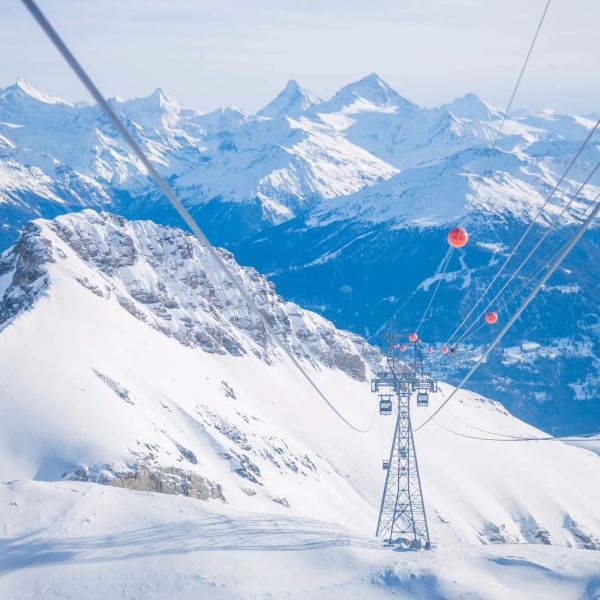
Crans-Montana 2027 World Championships President Resigns Ahead of Fraud Hearing
Less than four months out from the Crans-Montana 2027 World Championships, the man running the organising committee has stepped down. Claude-Alain Schmidhalter resigned as Swiss-Ski vice president and OC president after being indicted over a business dispute unrelated to skiing. He denies the allegations and faces court on October 27. Interim leaders are in place for the February 1-14 event.
9 Oct 2026
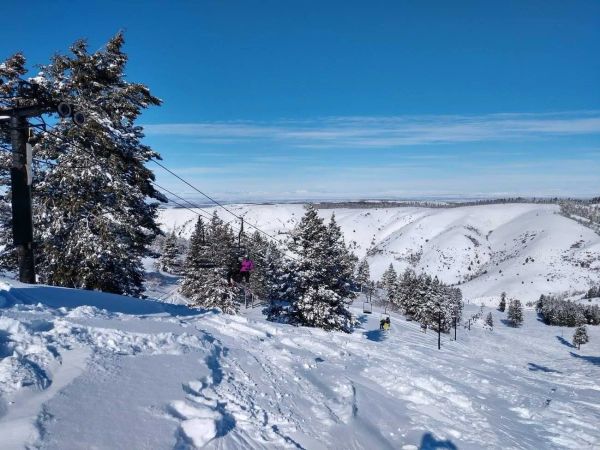
Kelly Canyon, Idaho, Adds Snowmaking, a Bigger Terrain Park and More Parking for 2026-27
Kelly Canyon had a rough 2025-26, and the Idaho resort has spent the summer making sure it doesn’t repeat. Snowmaking now reaches the top of Goldrush, the terrain park is doubling in size with a stereo system, lights and a snack shack, and the car park is getting bigger. Grooming is stepping up too. Target opening is December 4, conditions permitting.
9 Oct 2026
Mt Buller Snow Report
Snow Report
Updated 16 Oct 2026
1805m
summit
+0cm
new snow · last 24 hours
Partly Cloudy1°C / 13°C · N 9km/h
Snowfall
24 hours
0cm
48 hours
0cm
7 days
0cm
Base depth
0cm
Season total
96cm
Total lifts22
Live open status isn’t available right now.
6 June 2026 - 6 Sept 2026
Hour by Hour
Next 38 hours· Updated Oct 17, 2026 at 6:02 PM
Scroll for the full outlook · Open-Meteo
7-Day Outlook
1,805 mUpdated Oct 17, 2026 at 6:02 PMOpen-Meteo
Days 1–7
0.0cm
Days 8–14
0.0cm
Sun, Oct 18
Light Drizzle
Temp13° / 1°°C
Snow0.0cm(65%)
Wind9 km/h N
Live snow from the resort feed; forecast from Open-Meteo, via Supabase.
Understanding the Mt Buller snow report
Get the latest Mt Buller snow report — real-time snowfall, snow depth, and mountain weather for this Victoria resort, spanning 1375m to 1805m in elevation.
Snow measurements
Snow depth at Mt Buller is tracked at both the base and summit, since the two elevations often see different totals — roughly a 430m difference here. We report fresh snowfall over the last 24 hours and 7 days alongside the running season total, in both metric and imperial units.
Weather conditions
Snow quality tracks closely with temperature and wind. We surface both alongside the snowfall data so you can judge whether conditions at Mt Buller are holding up or starting to soften.
Data sources
Snowfall and depth figures for Mt Buller come from official mountain sources; weather and outlook data comes from independent forecasting services. The mountain is served by 22 lifts, including 8 quad chairlifts and 2 6-person chairlifts.
When to check
Conditions can change overnight, so mornings and late afternoons are the best times to check back on Mt Buller.