
Whistler Blackcomb
3,307 hectares, 305 runs across two mountains near Vancouver. 2010 Olympic venue, PEAK 2 PEAK Gondola, Epic Pass.
Season 2026 - 2027
Opens
20 Nov 2026
Closes
16 May 2027
Days open
177
Annual snow
11m
The Overview
Michael Fulton
Melbourne-based skier and snowboarder with 50+ resorts across 5 continents. Specialises in Australian resorts and international resort comparisons.
Whistler Blackcomb's summit reaches 2,284 metres, dropping 1,609 vertical metres to a base at 675 metres across 305 runs spread over roughly 3,307 hectares near Whistler, British Columbia. Terrain splits 40 per cent intermediate, 35 per cent advanced, 18 per cent beginner and 7 per cent expert, with average annual snowfall of roughly 10.8 metres. The resort carries Epic Pass affiliation. Thirty-seven lifts, including eight quad chairs, four six-person chairs, one eight-person chair and nine gondolas, serve the two mountains alongside three triple chairs, ten surface lifts and two t-bars.
Whistler Blackcomb holds a distinguished place as one of the largest ski resorts in North America, spanning two connected mountains linked by the PEAK 2 PEAK Gondola, and served as a host venue for the alpine and freestyle events of the 2010 Winter Olympics. This considerable scale, combined with its purpose-built alpine village, has built the resort's international reputation as a genuine destination for skiers of every ability.
Whistler Mountain was originally developed as part of a bid for the 1968 Winter Olympics, and although that bid failed, construction proceeded regardless, with the resort opening in January 1966. Blackcomb Mountain, initially a separate operation, opened in December 1980, and the two resorts spent the 1980s and 1990s locked in a rivalry of constant upgrades that pushed both ahead of most other North American resorts.
Intrawest bought Blackcomb's assets in 1986, purchased Whistler in 1997, and fully merged operations in 2003, with the combined resort becoming the first in North America to record two million skier visits in a season by April 1999. Vail Resorts acquired Whistler Blackcomb Holdings for 1.39 billion US dollars in August 2016, while Nippon Cable has retained a 25 per cent minority interest throughout. Adult daily tickets run from 150 to 199 Canadian dollars.
1609m
Vertical
305
Runs
8,172 acres
Skiable
11m
Annual snow
Epic
Pass
The Terrain
305 runs across 8,172 acres skiable
Whistler Blackcomb is one resort in Sanity, covering 305 runs across roughly 3,307 hectares between a 675-metre base and the 2,284-metre summit. That is a 1,609-metre vertical spread over two mountains. The grading is 18% beginner, 40% intermediate, 35% advanced and 7% expert, so a third of the mountain is advanced, though huge areas of cruising terrain remain for intermediates, and expert-rated runs are relatively scarce. Roughly 10.8 metres of snow falls each winter, and the range of aspects and elevations offers something skiable in almost any conditions.
On Whistler, Harmony and Symphony bowls offer wide alpine skiing above the tree line, with Symphony the gentler of the two. Blackcomb's steeper terrain includes Spanky's Ladder and the Blackcomb Glacier, which is as close to backcountry freeriding as inbounds skiing gets. Couloir Extreme and Saudan Couloir are strictly for experts. The PEAK 2 PEAK gondola links the two mountains, making long mixed-ability days easy. It suits strong intermediates, advanced skiers and groups who want varied terrain without leaving the resort, and new visitors should expect to spend a day or two just learning the layout.
Terrain split
305
runs
305 runs across 4 grades
Beginner55 runs · 18%
Intermediate122 runs · 40%
Advanced107 runs · 35%
Expert21 runs · 7%
Time it right
When to visit Whistler Blackcomb
The 2025-26 season at Whistler Blackcomb ran from 22 November 2025 to 10 May 2026, a roughly twenty-four-week season supported by average annual snowfall of around 10.8 metres. This extended season is regularly cited among the longest in North America, reflecting Whistler Blackcomb's considerable elevation range and glacier-fed terrain.
Midwinter, from December through February, typically brings the most consistent conditions across both mountains. As the flagship Canadian resort within the Epic Pass system, Whistler Blackcomb draws substantial international visitation from Epic Pass holders and destination travellers alike.
Whistler Blackcomb's purpose-built alpine village continues to draw considerable visitation for its dining, shopping and nightlife alongside the skiing itself. School holiday periods and major weekends bring some of the heaviest crowds in Canada, reflecting the resort's status as one of the most internationally recognised ski destinations in the world.
Specific event programming beyond standard operations is not confirmed in available resort information. Since hosting the alpine and freestyle events of the 2010 Winter Olympics, Whistler Blackcomb has continued building on six decades of history since Whistler Mountain's 1966 founding. The resort's considerable scale and Olympic heritage remain central to its enduring global reputation.
Season 2026 - 2027
20 Nov 2026
Opens
16 May 2027
Closes
177
Days open
11 m
Annual snow
Getting there
Getting to Whistler Blackcomb, and where to stay
Whistler Blackcomb sits near Whistler, British Columbia, with a base elevation of 675 metres and a summit at 2,284 metres across a 1,609-metre vertical drop over roughly 3,307 hectares spanning two connected mountains. This setting places the resort within the Coast Mountains, roughly two hours north of Vancouver.
The town of Whistler itself, a purpose-built alpine village established alongside the resort's development, offers extensive lodging, dining, shopping and nightlife directly at the mountain's base.
Highway 99, the Sea to Sky Highway, provides direct access to the resort from Vancouver, a scenic coastal route that has been substantially upgraded in recent decades. Winter driving conditions on this route can include snow and ice, particularly at higher elevations, though the well-maintained highway reflects the resort's status as a major international destination.
Vancouver International Airport, roughly a two-hour drive away, is the primary gateway for visitors flying into the region, with dedicated shuttle and coach services connecting the airport directly to Whistler for travellers without a vehicle.
Where to stay
Search all stays →Hotels and lodges near Whistler Blackcomb, powered by Stay22.
Latest News
From the SnowStash desk
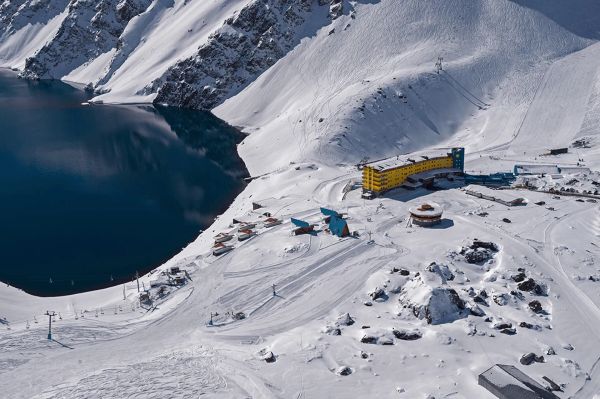
Four Dead After Avalanche Near Ski Portillo in Chile
A large avalanche struck near Laguna del Inca adjacent to Ski Portillo on Saturday afternoon, killing four people and injuring four others. The group were day visitors mountaineering in the backcountry after reportedly being warned about elevated avalanche risk by resort staff.
18 Oct 2026

Europe Ski Resorts Open Now: What Is Skiable in Mid-October 2026
Europe’s ski season is open, technically. After a record-warm summer, glaciers in Austria, Switzerland and Italy are running a few pistes apiece, Sölden, Stubai and Kitzsteinhorn started late, Titlis has pushed back to 24 October, and Zermatt reopens a few lifts on 14 October after more than two months shut. Finland’s Levi and Ruka are skiing on stored snow. Here is what is open, and what you actually get at each.
14 Oct 2026

Zermatt Plans World Cup Downhill Return on the Gornergrat for 2028
Zermatt is having another crack at a World Cup downhill, and this time nobody has to cross a border. Around 13 million Swiss francs is going into rebuilding the Gornergrat piste, including a jump fed by a roughly 300-metre in-run across the roof of the Gornergrat Railway gallery, with the Matterhorn lined up behind it for the TV cameras. First men’s race is pencilled in for March 2028, pending FIS homologation.
14 Oct 2026

Mt. Rose Begins Snowmaking for the 2026-27 Season at Lake Tahoe
Lake Tahoe’s highest base elevation is paying off early: Mt. Rose has started making snow for 2026-27 after the first flurries and a cold snap. The Nevada resort is backing it with nearly US$2 million in upgrades, including a replacement snowmaking main line, a new PistenBully groomer and restraint bars on every lift. Opening day is yet to be confirmed, though Heavenly and Northstar are already eyeing 20 November.
13 Oct 2026

Utah Ski Resorts 2026-27: What’s New at Alta, Deer Valley, Powder Mountain and More
Utah is still building flat out. For 2026-27, Powder Mountain opens a steep new Skytrac chair into more than 1,000 acres of advanced terrain, Deer Valley adds 200 acres on Hail Peak, Sundance gets a new quad and Park City adds a gondola from its new parking structure. Snowmaking is expanding almost everywhere, Eagle Point stays closed after the Cottonwood Fire, and the 2034 Games are setting the pace. Here’s what’s new, resort by resort.
13 Oct 2026

Mt Hutt Invests NZ$12 Million in Base Area, Tripling Its Sun Deck
Mt Hutt is getting busier, and its base lodge is about to catch up. NZ$12 million goes into a heated sun deck roughly three times the current size (430 m² to 1,300 m²), plus a new toilet block, heated steps down to snow level, extra storage and a new food and beverage outlet. Building starts after the 2026 season, with everything due for winter 2027.
11 Oct 2026

Vermont Ski Resort Opening Dates 2026-27: Few Dates Set, Killington Waits on the Cold
Vermont's season is slow to take shape. Stratton is tentatively targeting 18 November and Sugarbush 21 November, while Pico has Friday 11 December on the calendar. Killington never sets a date and opens when the snowmaking allows, and Vail Resorts has yet to name days for Stowe, Okemo and Mount Snow. The forecasts disagree about snow, and the main El Niño worry for the Green Mountains is warmth.
9 Oct 2026

Crans-Montana 2027 World Championships President Resigns Ahead of Fraud Hearing
Less than four months out from the Crans-Montana 2027 World Championships, the man running the organising committee has stepped down. Claude-Alain Schmidhalter resigned as Swiss-Ski vice president and OC president after being indicted over a business dispute unrelated to skiing. He denies the allegations and faces court on October 27. Interim leaders are in place for the February 1-14 event.
9 Oct 2026
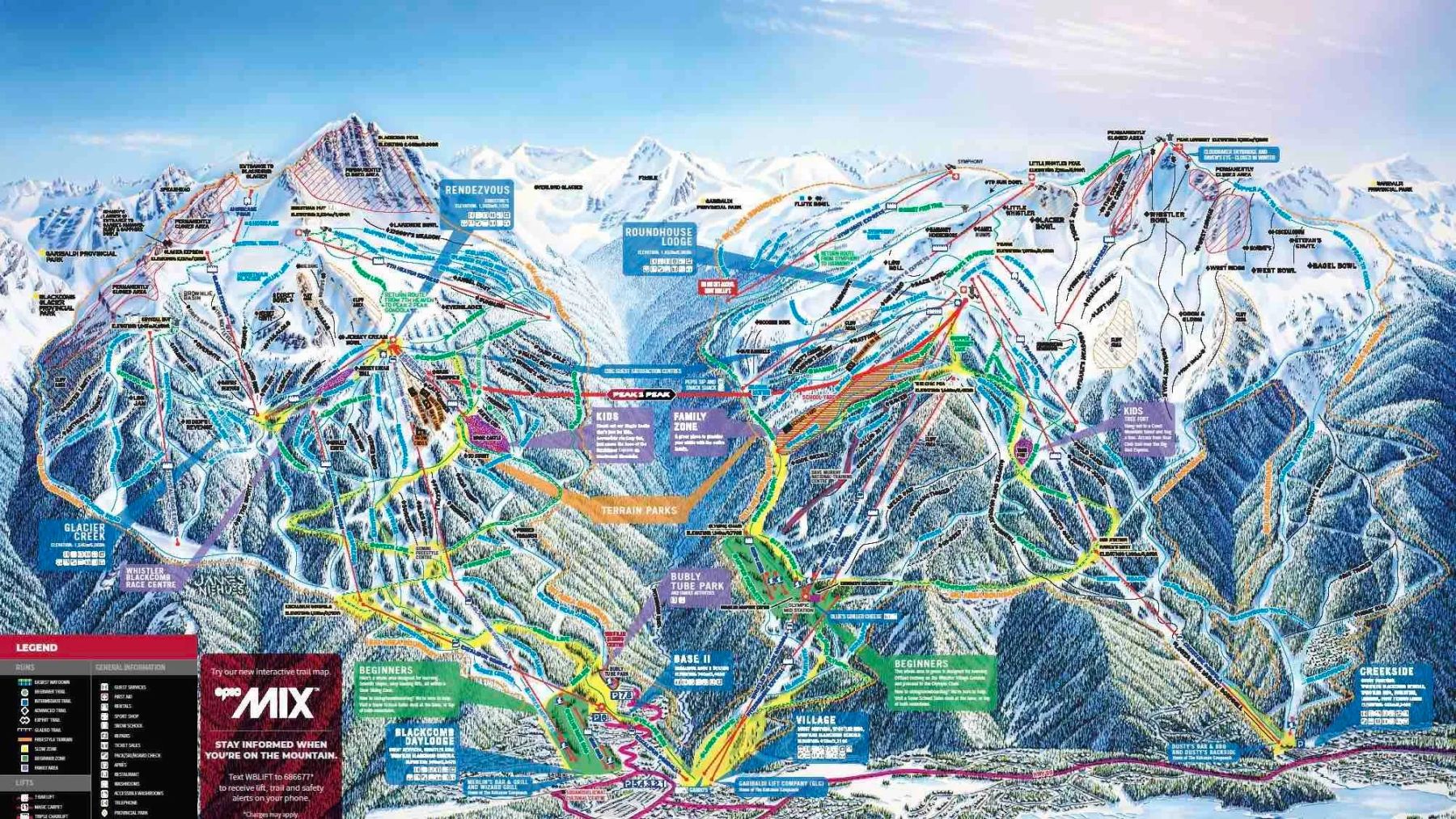
Whistler Blackcomb Trail Map
Downloadable Whistler Blackcomb trail map
Terrain split
305
runs
Beginner18%
Intermediate40%
Advanced35%
Expert7%
8,172 acres skiable3,307 hectares
Resort Stats
Elevation
Base675m
Summit2284m
Annual snowfall
11m
Season
2026 - 2027
20 Nov 2026 - 16 May 2027
Trail coverage
305 runs
8,172 acres (3,307 ha)
About Whistler Blackcomb's trail map
Explore Whistler Blackcomb's full trail map with 305 runs across the mountain, colour-coded by difficulty and shown alongside the terrain split. Use it to plan a day that matches your ability, find lift-served pockets of your favourite grade, and see how the resort links together. Download the piste map (PDF) ↗
More Whistler Blackcomb intelligence: snow report, lift system, webcams, resort overview.