
Le Massif
164 hectares, 53 runs in Charlevoix. Considerable vertical drop, St Lawrence River views, Mountain Collective.
Season 2026 - 2027
Opens
5 Dec 2026
Closes
11 Apr 2027
Days open
127
Annual snow
4m
The Overview
Michael Fulton
Melbourne-based skier and snowboarder with 50+ resorts across 5 continents. Specialises in Australian resorts and international resort comparisons.
Le Massif's summit reaches 806 metres, dropping 770 vertical metres to a base at just 36 metres above the St Lawrence River, across 53 runs spread over roughly 164 hectares in Charlevoix, Quebec. Terrain splits 35 per cent intermediate, 32 per cent advanced, 23 per cent beginner and 10 per cent expert, with average annual snowfall of roughly 3.5 metres. The resort carries Mountain Collective affiliation. Seven lifts, including three quad chairs and two gondolas, serve the mountain alongside two surface lifts.
Le Massif holds a genuinely distinctive place among Eastern Canadian resorts, marketed as having the highest vertical drop east of the Rockies and offering a summit-to-river skiing experience with genuine views over the St Lawrence. Its considerable vertical for the region, combined with the Charlevoix landscape, has built the resort's reputation as one of Quebec's more dramatic ski settings.
Skiing at Le Massif began informally in the late 1970s, with snowmobiles towing groups of skiers up the mountain, before commercial operations started in the early 1980s. By 1983-84, school buses were pressed into service to drive skiers from the base to the top, and two chairlifts were finally installed in 1992.
Daniel Gauthier, co-founder of Cirque du Soleil, purchased the resort, then known as Le Massif de la Petite-Rivière-Saint-François, on 23 September 2002 for 9 million Canadian dollars after selling his stake in Cirque. He invested more than 25 million Canadian dollars immediately, adding a second and third high-speed quad chair, and the resort has since partnered with Club Med, which opened its first North American mountain village at Le Massif in December 2021. Adult daily tickets run from 135 to 166 Canadian dollars.
770m
Vertical
53
Runs
406 acres
Skiable
4m
Annual snow
Mountain Collective
Pass
The Terrain
53 runs across 406 acres skiable
Le Massif de Charlevoix is the standout vertical among the Quebec hills, dropping 770 metres from 806 metres down to a base only 36 metres above the St Lawrence. Across 53 runs and about 164 hectares, the grading is 23% beginner, 35% intermediate, 32% advanced and 10% expert. That advanced share is high for the region, and the long, sustained pitches feel closer to a mid-sized Alpine mountain than a typical eastern hill. Two gondolas and three quad chairs, plus two surface lifts, move skiers up from the water's edge, and the river views are constant.
La Charlevoix, designed as an Olympic racecourse, is the run to carve on a freshly groomed morning, and it delivers a proper sustained descent. The wooded sections beside the trails hold numerous glades, from tight and steep lines to roomier family-friendly options, so strong skiers have plenty to explore. Cold, windy days and firm hardpack are part of the deal here, so edges matter. The resort is part of the Mountain Collective and sits in Charlevoix, east of Quebec City. It suits confident intermediates and advanced skiers chasing real vertical, plus anyone after scenery with their skiing.
Terrain split
53
runs
53 runs across 4 grades
Beginner12 runs · 23%
Intermediate19 runs · 35%
Advanced17 runs · 32%
Expert5 runs · 10%
Time it right
When to visit Le Massif
The 2025-26 season at Le Massif ran from 4 December 2025 to 12 April 2026, a roughly nineteen-week season supported by average annual snowfall of around 3.5 metres. Season dates can shift depending on early and late-season weather in the Charlevoix region.
Midwinter, from December through February, typically brings the most consistent conditions to Le Massif's advanced-and-intermediate-weighted terrain. As a Mountain Collective resort, Le Massif draws pass-holding visitors alongside destination travellers seeking the resort's considerable vertical and river views.
Le Massif's partnership with Club Med, which brought a dedicated mountain village to the resort in December 2021, continues to support strong destination visitation throughout the season. School holiday periods bring family visitation to the resort's more moderate terrain sections.
Specific event programming beyond standard operations is not confirmed in available resort information. Since Daniel Gauthier's 2002 acquisition, Le Massif has continued building on more than four decades of history since informal skiing began there in the late 1970s. The resort's considerable vertical and Charlevoix setting remain central to its enduring appeal.
Season 2026 - 2027
5 Dec 2026
Opens
11 Apr 2027
Closes
127
Days open
4 m
Annual snow
Getting there
Getting to Le Massif, and where to stay
Le Massif sits in Charlevoix, Quebec, with a base elevation of just 36 metres above the St Lawrence River and a summit at 806 metres across a 770-metre vertical drop over roughly 164 hectares. This setting gives the resort a genuinely distinctive summit-to-river skiing experience uncommon among Eastern Canadian resorts.
The village of Petite-Rivière-Saint-François and the broader Charlevoix region offer lodging and dining within a short drive of the resort, while the on-site Club Med mountain village provides considerable accommodation directly at the base.
Route 138 provides direct access to the resort along the St Lawrence River. Winter driving conditions on this scenic route can include snow and ice, and travellers should carry appropriate equipment given the region's coastal exposure.
Quebec City Jean Lesage International Airport, roughly a one-hour drive away, is the primary gateway for visitors flying into the region, with Le Massif's considerable distance from Quebec City drawing a genuinely dedicated destination visitor base.
Where to stay
Search all stays →Hotels and lodges near Le Massif, powered by Stay22.
Latest News
From the SnowStash desk
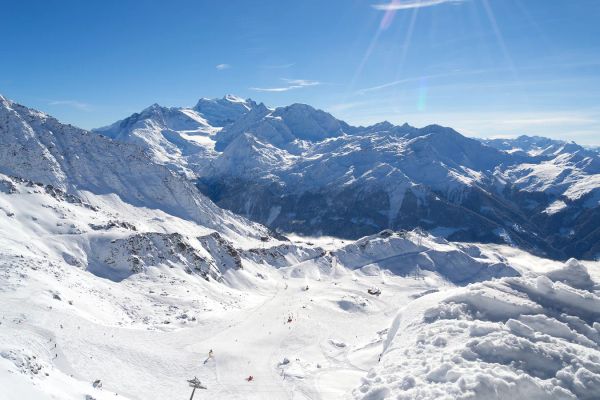
Alps Snow Forecast: Up to 64 cm Headed for the High Glaciers as the Snow Line Drops
The Alps are about to swap mild, sunny October weather for something far more wintry. A cold front arrives Tuesday, and SnowStash forecasts have Monterosa Ski out in front with 64 cm over 14 days, ahead of Blatten Belalp (55 cm) and Verbier (43 cm). The snow line should fall below 2000 metres by Wednesday night, and glaciers across Switzerland, Italy and Austria are in line for the best of it. The wind will have a say too.
20 Oct 2026
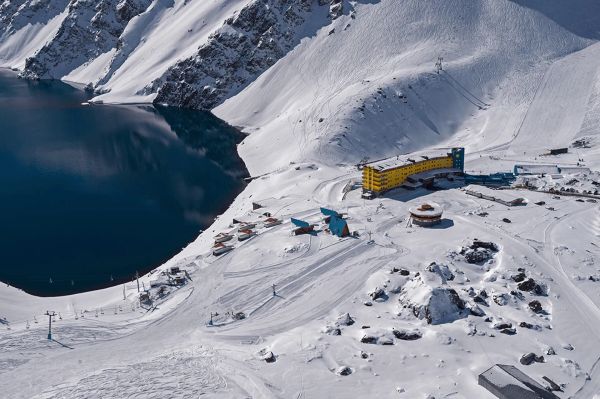
Four Dead After Avalanche Near Ski Portillo in Chile
A large avalanche struck near Laguna del Inca adjacent to Ski Portillo on Saturday afternoon, killing four people and injuring four others. The group were day visitors mountaineering in the backcountry after reportedly being warned about elevated avalanche risk by resort staff.
18 Oct 2026

Europe Ski Resorts Open Now: What Is Skiable in Mid-October 2026
Europe’s ski season is open, technically. After a record-warm summer, glaciers in Austria, Switzerland and Italy are running a few pistes apiece, Sölden, Stubai and Kitzsteinhorn started late, Titlis has pushed back to 24 October, and Zermatt reopens a few lifts on 14 October after more than two months shut. Finland’s Levi and Ruka are skiing on stored snow. Here is what is open, and what you actually get at each.
14 Oct 2026

Zermatt Plans World Cup Downhill Return on the Gornergrat for 2028
Zermatt is having another crack at a World Cup downhill, and this time nobody has to cross a border. Around 13 million Swiss francs is going into rebuilding the Gornergrat piste, including a jump fed by a roughly 300-metre in-run across the roof of the Gornergrat Railway gallery, with the Matterhorn lined up behind it for the TV cameras. First men’s race is pencilled in for March 2028, pending FIS homologation.
14 Oct 2026

Mt. Rose Begins Snowmaking for the 2026-27 Season at Lake Tahoe
Lake Tahoe’s highest base elevation is paying off early: Mt. Rose has started making snow for 2026-27 after the first flurries and a cold snap. The Nevada resort is backing it with nearly US$2 million in upgrades, including a replacement snowmaking main line, a new PistenBully groomer and restraint bars on every lift. Opening day is yet to be confirmed, though Heavenly and Northstar are already eyeing 20 November.
13 Oct 2026

Utah Ski Resorts 2026-27: What’s New at Alta, Deer Valley, Powder Mountain and More
Utah is still building flat out. For 2026-27, Powder Mountain opens a steep new Skytrac chair into more than 1,000 acres of advanced terrain, Deer Valley adds 200 acres on Hail Peak, Sundance gets a new quad and Park City adds a gondola from its new parking structure. Snowmaking is expanding almost everywhere, Eagle Point stays closed after the Cottonwood Fire, and the 2034 Games are setting the pace. Here’s what’s new, resort by resort.
13 Oct 2026

Mt Hutt Invests NZ$12 Million in Base Area, Tripling Its Sun Deck
Mt Hutt is getting busier, and its base lodge is about to catch up. NZ$12 million goes into a heated sun deck roughly three times the current size (430 m² to 1,300 m²), plus a new toilet block, heated steps down to snow level, extra storage and a new food and beverage outlet. Building starts after the 2026 season, with everything due for winter 2027.
11 Oct 2026

Vermont Ski Resort Opening Dates 2026-27: Few Dates Set, Killington Waits on the Cold
Vermont's season is slow to take shape. Stratton is tentatively targeting 18 November and Sugarbush 21 November, while Pico has Friday 11 December on the calendar. Killington never sets a date and opens when the snowmaking allows, and Vail Resorts has yet to name days for Stowe, Okemo and Mount Snow. The forecasts disagree about snow, and the main El Niño worry for the Green Mountains is warmth.
9 Oct 2026
Le Massif Snow Report
Snow Report
Updated 25 Oct 2026
806m
summit
+0cm
new snow · last 24 hours
Clear1°C / 11°C · W 41km/h
Snowfall
24 hours
0cm
48 hours
0cm
7 days
0cm
Base depth
0cm
Season total
1cm
Total lifts7
Live open status isn’t available right now.
5 Dec 2026 - 11 Apr 2027
Hour by Hour
Next 37 hours· Updated Oct 25, 2026 at 6:02 AM
Scroll for the full outlook · Open-Meteo
7-Day Outlook
806 mUpdated Oct 25, 2026 at 6:02 AMOpen-Meteo
Days 1–7
0.0cm
Days 8–14
41cm
Sun, Oct 25
Overcast
Temp11° / 1°°C
Snow0.0cm(10%)
Wind41 km/h W
Live snow from the resort feed; forecast from Open-Meteo, via Supabase.
Understanding the Le Massif snow report
Planning a day at Le Massif? Our snow report combines official mountain data with live weather so you know exactly what conditions look like right now, from the 36m base to the 806m summit.
Snow measurements
Base depth, summit depth, and recent snowfall are the core numbers to watch. At Le Massif, summit conditions (806m) can differ noticeably from the base, so we break both out separately rather than showing a single average.
Weather conditions
Wind and temperature swings matter as much as fresh snowfall. Cold, calm conditions hold snow quality well, while wind-loading or a warm-up can change things quickly — especially given the elevation spread between Le Massif's base and summit.
Data sources
We pull Le Massif's conditions from on-the-ground mountain reporting, then layer in forecast data so you get a fuller picture than either source alone. The mountain is served by 7 lifts, including 3 quad chairlifts and 2 gondolas.
When to check
The biggest swings usually happen right after a storm. Check Le Massif's report in the morning for the freshest numbers, and again in the afternoon as conditions evolve.