
Hochzeiger
Ski Hochzeiger's 54km of sun-drenched Pitztal terrain, 1,450-2,488m, with family-friendly pistes from December to April.
Season 2026 - 2027
Opens
5 Dec 2026
Closes
11 Apr 2027
Days open
127
Annual snow
2m
The Overview
Michael Fulton
Melbourne-based skier and snowboarder with 50+ resorts across 5 continents. Specialises in Australian resorts and international resort comparisons.
Hochzeiger is a family-focused ski resort at the entrance to the Pitztal valley in Tyrol, spanning 1,450m to 2,488m across 54km of pistes and 21 runs above the village of Jerzens. The terrain splits 28 percent beginner, 52 percent intermediate and 20 percent advanced, giving the resort a clear lean toward cruising pistes over expert-only terrain. It sits at the opposite end of the valley from Pitztal Glacier, making the pair a natural double for visitors staying in the region.
The signature run is piste No. 3, named after Tyrolean ski star and multiple world champion Benni Raich, who trained on the mountain during his career. Nearby, the Zirbenfall descent reaches a gradient of up to 80 percent, giving experienced skiers a genuine test on a mountain otherwise built around family-friendly cruising. The south-west-facing slopes catch sun well into the afternoon, even in January, without compromising snow quality at altitude.
Hochzeiger's terrain sits largely above the treeline, with comprehensive snowmaking backing up natural snowfall across more than 90 percent of the pistes that lie above 2,000m. Off-piste, the open upper flanks hold untracked snow well after a fresh fall, giving freeriders room to move without hiking far from the marked runs.
The resort leans hard into family skiing, with a snowpark, a Kids Funline, and a dedicated ski kindergarten alongside the Pitzi Bambini free pass for children under 10. A 6km toboggan run drops from the Zeiger restaurant back to the valley, with Thursday evening lighting for night tobogganing - a drawcard that sets Hochzeiger apart from the more race-focused resorts elsewhere in the valley.
1038m
Vertical
21
Runs
54 km
Piste
2m
Annual snow
Tyrol Pass
Pass
The Terrain
21 runs across 54 km of piste
Hochzeiger's 54km of pistes are split across 21 runs, with 28 percent rated beginner, 52 percent intermediate and 20 percent advanced - a terrain profile weighted firmly toward cruising skiers rather than expert-only lines. The resort carries no runs rated expert, reflecting its position as a family-oriented ski area rather than a destination for extreme terrain.
The standout run is piste No. 3, named after Tyrolean ski star and multiple world champion Benni Raich, who trained on the slope during his competitive career. Nearby, the Zirbenfall descent reaches a gradient of up to 80 percent, giving the resort's more experienced skiers a genuine test within an otherwise moderate terrain mix.
More than 90 percent of the pistes sit above 2,000m on largely treeless, south-west-facing terrain, a combination that keeps snow quality consistent while allowing sun exposure well into the afternoon. The open upper flanks also offer off-piste terrain that holds untracked snow for longer after a fresh fall, giving freeriders room to move without hiking far from the marked network.
The intermediate-heavy trail mix is reinforced by wide, rolling pistes through the centre of the resort, well suited to skiers progressing from beginner terrain without a sharp jump in difficulty. A terrain park adds a dedicated freestyle line into the broader mix, rounding out the resort's terrain for riders looking to move beyond groomed runs.
Terrain split
21
runs
21 runs across 4 grades
Beginner6 runs · 28%
Intermediate11 runs · 52%
Advanced4 runs · 20%
Expert0 runs · 0%
Time it right
When to visit Hochzeiger
Hochzeiger's 2026-27 season runs from 5 December 2026 to 11 April 2027, giving the resort a solid mid-winter window built around altitude and snowmaking rather than glacier terrain. The season length tracks closely with reliable mid-winter conditions rather than the extended shoulder seasons seen at Austria's high-altitude glacier resorts.
Snow reliability through the season is underpinned by the resort's altitude profile, with over 90 percent of pistes sitting above 2,000m and comprehensive snowmaking covering the bulk of the 54km of terrain. The south-west orientation keeps runs sun-drenched for much of the day without compromising snow quality, a combination that keeps the resort skiable from early December through to mid-April.
Hochzeiger's family orientation shapes its seasonal character throughout, with the snowpark and Kids Funline running for the full season and the illuminated toboggan run adding a Thursday night fixture to the week. Live music events at the base area have also become a fixture around the season opening, drawing visitors beyond the core ski crowd.
The resort's appeal peaks in the core January to March window, when reliable snow cover and long sun hours combine with the fullest range of family programming and the 20 percent advanced terrain is at its best-groomed.
Season 2026 - 2027
5 Dec 2026
Opens
11 Apr 2027
Closes
127
Days open
2 m
Annual snow
Getting there
Getting to Hochzeiger, and where to stay
Hochzeiger sits above the village of Jerzens at the entrance to the Pitztal valley, in the Imst district of Tyrol. The valley station is located in the Liss district at 1,450m, reached via a narrow mountain road climbing up from Jerzens village.
Free parking is available at the valley station, supported by a complimentary parking shuttle bus, and free ski buses run from towns throughout the Pitztal valley for visitors staying elsewhere in the region. This local bus network makes a car optional for guests based in the valley itself.
The nearest train station is Imst-Pitztal, on the main line connecting to Innsbruck, Salzburg and Munich, though there is no direct rail link into the valley itself. From Imst-Pitztal, a postbus service covers the final stretch to Jerzens, with a free bus voucher available to guests booked into local accommodation.
Innsbruck Airport is the closest international gateway, roughly an hour's drive via the Inntal Autobahn to the Imst exit and then into the valley through Arzl and Wenns. Visitors travelling from Germany can approach toll-free via the Fernpass from Füssen or Garmisch-Partenkirchen, joining the same route through Imst into the Pitztal.
Where to stay
Search all stays →Hotels and lodges near Hochzeiger, powered by Stay22.
Latest News
From the SnowStash desk

Europe Ski Resorts Open Now: What Is Skiable in Mid-October 2026
Europe’s ski season is open, technically. After a record-warm summer, glaciers in Austria, Switzerland and Italy are running a few pistes apiece, Sölden, Stubai and Kitzsteinhorn started late, Titlis has pushed back to 24 October, and Zermatt reopens a few lifts on 14 October after more than two months shut. Finland’s Levi and Ruka are skiing on stored snow. Here is what is open, and what you actually get at each.
14 Oct 2026

Zermatt Plans World Cup Downhill Return on the Gornergrat for 2028
Zermatt is having another crack at a World Cup downhill, and this time nobody has to cross a border. Around 13 million Swiss francs is going into rebuilding the Gornergrat piste, including a jump fed by a roughly 300-metre in-run across the roof of the Gornergrat Railway gallery, with the Matterhorn lined up behind it for the TV cameras. First men’s race is pencilled in for March 2028, pending FIS homologation.
14 Oct 2026

Mt. Rose Begins Snowmaking for the 2026-27 Season at Lake Tahoe
Lake Tahoe’s highest base elevation is paying off early: Mt. Rose has started making snow for 2026-27 after the first flurries and a cold snap. The Nevada resort is backing it with nearly US$2 million in upgrades, including a replacement snowmaking main line, a new PistenBully groomer and restraint bars on every lift. Opening day is yet to be confirmed, though Heavenly and Northstar are already eyeing 20 November.
13 Oct 2026

Utah Ski Resorts 2026-27: What’s New at Alta, Deer Valley, Powder Mountain and More
Utah is still building flat out. For 2026-27, Powder Mountain opens a steep new Skytrac chair into more than 1,000 acres of advanced terrain, Deer Valley adds 200 acres on Hail Peak, Sundance gets a new quad and Park City adds a gondola from its new parking structure. Snowmaking is expanding almost everywhere, Eagle Point stays closed after the Cottonwood Fire, and the 2034 Games are setting the pace. Here’s what’s new, resort by resort.
13 Oct 2026

Mt Hutt Invests NZ$12 Million in Base Area, Tripling Its Sun Deck
Mt Hutt is getting busier, and its base lodge is about to catch up. NZ$12 million goes into a heated sun deck roughly three times the current size (430 m² to 1,300 m²), plus a new toilet block, heated steps down to snow level, extra storage and a new food and beverage outlet. Building starts after the 2026 season, with everything due for winter 2027.
11 Oct 2026

Vermont Ski Resort Opening Dates 2026-27: Few Dates Set, Killington Waits on the Cold
Vermont's season is slow to take shape. Stratton is tentatively targeting 18 November and Sugarbush 21 November, while Pico has Friday 11 December on the calendar. Killington never sets a date and opens when the snowmaking allows, and Vail Resorts has yet to name days for Stowe, Okemo and Mount Snow. The forecasts disagree about snow, and the main El Niño worry for the Green Mountains is warmth.
9 Oct 2026
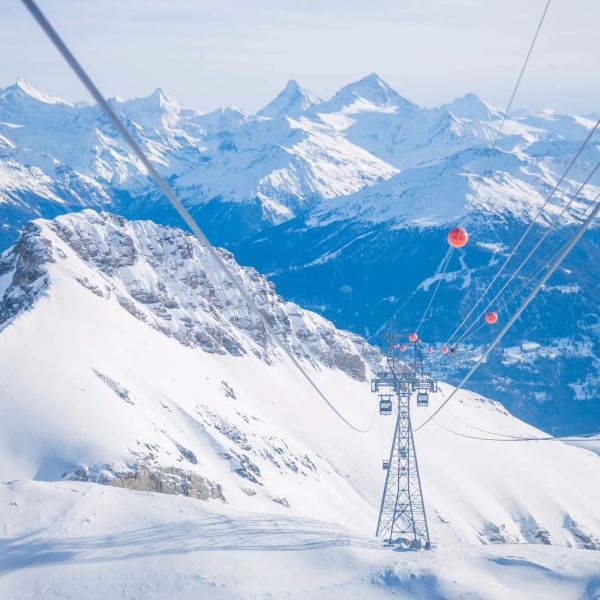
Crans-Montana 2027 World Championships President Resigns Ahead of Fraud Hearing
Less than four months out from the Crans-Montana 2027 World Championships, the man running the organising committee has stepped down. Claude-Alain Schmidhalter resigned as Swiss-Ski vice president and OC president after being indicted over a business dispute unrelated to skiing. He denies the allegations and faces court on October 27. Interim leaders are in place for the February 1-14 event.
9 Oct 2026
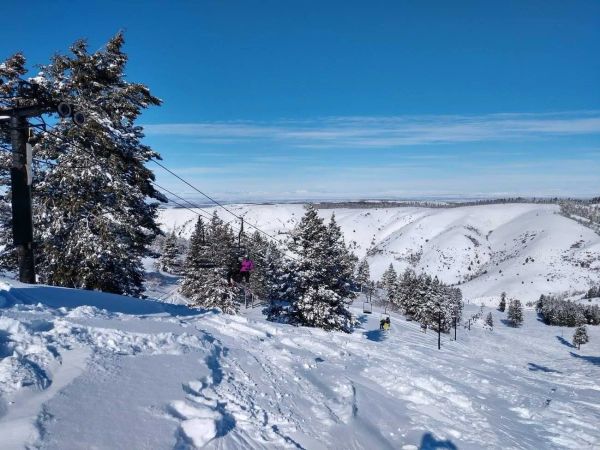
Kelly Canyon, Idaho, Adds Snowmaking, a Bigger Terrain Park and More Parking for 2026-27
Kelly Canyon had a rough 2025-26, and the Idaho resort has spent the summer making sure it doesn’t repeat. Snowmaking now reaches the top of Goldrush, the terrain park is doubling in size with a stereo system, lights and a snack shack, and the car park is getting bigger. Grooming is stepping up too. Target opening is December 4, conditions permitting.
9 Oct 2026