
Obertauern
100km of pistes at 1,630-2,313m. Austria's snowiest resort with 264cm average depth. 26 lifts, ski-in/ski-out village.
Season 2026 - 2027
Opens
20 Nov 2026
Closes
2 May 2027
Days open
163
Annual snow
3m
The Overview
Michael Fulton
Melbourne-based skier and snowboarder with 50+ resorts across 5 continents. Specialises in Australian resorts and international resort comparisons.
Obertauern spans 100 kilometres of pistes across 76 runs between 1,630 and 2,313 metres elevation, with a vertical drop of 683 metres. The resort holds the distinction of being Austria's snowiest winter sports destination, recording a mean maximum snow depth of 264 centimetres according to a 2016 study analysing 30 years of hydrographic data.
Snowmaking covers 95 kilometres of terrain, whilst the high base elevation at 1,740 metres ensures reliable conditions from late November through early May. The terrain suits intermediates particularly well, with 61 per cent blue runs and 35 per cent red runs.
The signature Tauernrunde circuit connects all 26 lifts in a continuous loop around the bowl-shaped village, allowing skiers to complete a full circuit without repeating any lift. The clockwise pink circuit follows red and blue runs for confident skiers, whilst the anticlockwise green circuit sticks to beginner-friendly blue terrain.
Gamsleiten 2 ranks as Austria's second-steepest marked piste, delivering sustained gradients up to 100 per cent with natural moguls forming through the day. The Super Seven Summit Tour links the seven highest mountain stations for stronger skiers seeking a full-day challenge.
Obertauern functions as a purpose-built ski village straddling the Tauern Pass, with nearly all accommodation offering ski-in, ski-out access directly to the slopes. The compact layout means 11 different lift entry points are spread around the village, eliminating long walks in ski boots.
An après-ski mile featuring 25 ski lodges runs through the resort, with Lürzer Alm and Edelweissalm drawing crowds from mid-afternoon. The resort gained international recognition in 1965 when The Beatles filmed snow scenes for Help! here, choosing Obertauern for its guaranteed snow when other resorts lacked cover.
Lift passes valid for 1.5 days or longer include access to the Grosseck-Speiereck ski area in Mauterndorf, 15 kilometres away, effectively expanding the skiable terrain. Adult day passes range from EUR 49 in regular season to EUR 58 during peak periods, with six-day passes priced at EUR 245 to EUR 290.
The resort suits intermediate skiers seeking reliable snow and efficient piste access, families wanting ski-in, ski-out convenience, and groups combining quality skiing with a lively après-ski scene. Expert terrain is limited to a handful of black runs, so advanced skiers may exhaust challenging terrain within a few days.
683m
Vertical
76
Runs
100 km
Piste
3m
Annual snow
Watch
See Obertauern in motion
The Terrain
76 runs across 100 km of piste
Obertauern's terrain spans 1,630m to 2,313m - a modest vertical drop of 683m by Alpine standards - yet it packs 100km of pistes across 76 trails into a high, treeless pass at the top of the valley. The difficulty spread favours intermediates, who account for 61% of the pistes, against 35% rated advanced and just 4% graded expert, with a longest run of 5km. Lifts and runs radiate outward from the village like spokes on a wheel, letting skiers loop the resort in either direction and ride back to their starting point - the basis of the popular Pink Circuit, whose 30km of pistes can be skied via three separate routes for up to 90km of connected terrain in a single circuit.
Terrain quality shifts sharply with aspect: the sun-facing side runs to wide, mellow cruisers well suited to families and improving skiers, while the shaded northerly slopes hold steeps, couloirs and tree-lined bowls that reward freeriders after fresh snowfall. Gamsleiten 2 is the standout for experts - an ungroomed, often icy mogul field rated among the steepest runs in the Alps, with its lift running only when conditions allow. Boarders have their own ground at Longplay Snowboard Park, cross-country skiers can access trails running up to 23km, and night skiing operates on the Edelweissbahn twice a week.
Terrain split
76
runs
76 runs across 4 grades
Beginner46 runs · 61%
Intermediate27 runs · 35%
Advanced2 runs · 2%
Expert2 runs · 2%
Time it right
When to visit Obertauern
Obertauern operates from 21 November 2025 through 3 May 2026 for the current season, delivering over five months of continuous skiing. Lifts run daily from 08:30 to 16:00 during the main season, with partial operations continuing from 20 April through the closing date when the Zehnerkarbahn, Grünwaldkopfbahn, and Seekareckbahn remain open.
The resort typically maintains full operations from late November through mid-April, with reduced lift pass prices of approximately 30 per cent applying from 20 April onwards. Early morning skiing runs every Wednesday from 08:30 on the Zehnerkarbahn, Gamsleitenbahn, and Achenrainbahn.
Annual snowfall averages approximately 562 centimetres, with January historically recording the highest monthly totals around 151 centimetres. The high base elevation at 1,740 metres and summit access to 2,313 metres ensures the ski area sits well above the freezing level throughout winter.
Weather systems arrive from both north and south of the Hohe Tauern mountains, creating the convergence pattern responsible for Obertauern's exceptional natural snowfall. Snowmaking infrastructure covers 95 kilometres of the 100-kilometre piste network with 120 snow cannons, allowing early season opening even before significant natural snowfall arrives.
January and February deliver the most consistent snow conditions, with the snowiest week typically falling in the first week of February when an average of 44 centimetres falls across 4.1 snow days. December offers good early season skiing once the base has established, particularly in the second half of the month.
March maintains excellent conditions on the higher terrain whilst benefiting from longer daylight hours and warmer temperatures. Spring skiing through April provides softer snow in the mornings with corn conditions developing by afternoon on south-facing aspects.
The annual Ski Opening Week features headline concerts marking the season launch - the 2025/26 season opened with performances from Seiler und Speer and Edmund. Night skiing operates every Monday and Thursday from 19:00 to 22:00 on the floodlit 1.5-kilometre run served by the Edelweissbahn chairlift.
The SHEskiS women's ski day supporting the Pink Ribbon campaign takes place on 11 April 2026, whilst the Gamsleiten treasure hunt runs from 16-19 April with prizes including a BMW. First.Track mornings occur monthly, opening lifts at 07:30 with alpine brunch included.
Season 2026 - 2027
20 Nov 2026
Opens
2 May 2027
Closes
163
Days open
3 m
Annual snow
Getting there
Getting to Obertauern, and where to stay
Obertauern sits at 1,740 metres on the Tauern Pass in the Radstädter Tauern mountains, positioned on the border between the Pongau and Lungau regions of Salzburgerland. The village occupies a natural bowl formation surrounded by peaks on all sides, creating the distinctive snow-catching amphitheatre that earns it the nickname 'snow bowl'.
The ski area extends above the treeline, providing open alpine terrain with panoramic views in all directions. Obertauern falls within the municipality of Untertauern in the Sankt Johann im Pongau district, approximately 90 kilometres south of Salzburg city.
The nearest settlements include Untertauern 8 kilometres north, Tweng 7 kilometres south, and the historic market town of Radstadt 20 kilometres to the north. Mauterndorf lies 15 kilometres south in the Lungau valley, providing access to the linked Grosseck-Speiereck ski area.
The region has witnessed winter traffic since 1929, when regular winter crossings of the Tauern Pass first became possible, though skiing arrived earlier with soldiers training here around 110 years ago. Radstadt offers rail connections and serves as the gateway for those travelling by public transport.
Drivers from Salzburg follow the A10 Tauern Motorway to exit 63 at Radstadt, then continue on the B99 Katschberg Federal Road through Untertauern to the pass - a journey of approximately 92 kilometres taking just over one hour. From Munich, the route follows marked motorways to Salzburg before joining the A10 south, covering roughly 220 kilometres.
Those arriving from Villach or the south exit the A10 at St Michael toll station (exit 104), passing through Mauterndorf to approach from the Lungau side. Winter tyres are mandatory on Austrian roads, and snow chains may be required on the final approach to the pass.
Salzburg Airport lies approximately 90 kilometres north, with transfers taking around 70-75 minutes by private shuttle or taxi. Klagenfurt Airport provides an alternative at 140 kilometres, whilst Munich Airport sits 220 kilometres away.
Radstadt railway station, the nearest rail connection at 20 kilometres, receives direct services from Salzburg (80 minutes), Innsbruck, Munich, and Vienna. Line 280 buses operate from Radstadt Bahnhof to Obertauern every four hours, taking 28 minutes - note that public transport throughout the Salzburg region became free of charge in May 2025 for those using Salzburg Verkehr services.
Where to stay
Search all stays →Hotels and lodges near Obertauern, powered by Stay22.
Latest News
From the SnowStash desk

Europe Ski Resorts Open Now: What Is Skiable in Mid-October 2026
Europe’s ski season is open, technically. After a record-warm summer, glaciers in Austria, Switzerland and Italy are running a few pistes apiece, Sölden, Stubai and Kitzsteinhorn started late, Titlis has pushed back to 24 October, and Zermatt reopens a few lifts on 14 October after more than two months shut. Finland’s Levi and Ruka are skiing on stored snow. Here is what is open, and what you actually get at each.
14 Oct 2026

Zermatt Plans World Cup Downhill Return on the Gornergrat for 2028
Zermatt is having another crack at a World Cup downhill, and this time nobody has to cross a border. Around 13 million Swiss francs is going into rebuilding the Gornergrat piste, including a jump fed by a roughly 300-metre in-run across the roof of the Gornergrat Railway gallery, with the Matterhorn lined up behind it for the TV cameras. First men’s race is pencilled in for March 2028, pending FIS homologation.
14 Oct 2026

Mt. Rose Begins Snowmaking for the 2026-27 Season at Lake Tahoe
Lake Tahoe’s highest base elevation is paying off early: Mt. Rose has started making snow for 2026-27 after the first flurries and a cold snap. The Nevada resort is backing it with nearly US$2 million in upgrades, including a replacement snowmaking main line, a new PistenBully groomer and restraint bars on every lift. Opening day is yet to be confirmed, though Heavenly and Northstar are already eyeing 20 November.
13 Oct 2026

Utah Ski Resorts 2026-27: What’s New at Alta, Deer Valley, Powder Mountain and More
Utah is still building flat out. For 2026-27, Powder Mountain opens a steep new Skytrac chair into more than 1,000 acres of advanced terrain, Deer Valley adds 200 acres on Hail Peak, Sundance gets a new quad and Park City adds a gondola from its new parking structure. Snowmaking is expanding almost everywhere, Eagle Point stays closed after the Cottonwood Fire, and the 2034 Games are setting the pace. Here’s what’s new, resort by resort.
13 Oct 2026

Mt Hutt Invests NZ$12 Million in Base Area, Tripling Its Sun Deck
Mt Hutt is getting busier, and its base lodge is about to catch up. NZ$12 million goes into a heated sun deck roughly three times the current size (430 m² to 1,300 m²), plus a new toilet block, heated steps down to snow level, extra storage and a new food and beverage outlet. Building starts after the 2026 season, with everything due for winter 2027.
11 Oct 2026

Vermont Ski Resort Opening Dates 2026-27: Few Dates Set, Killington Waits on the Cold
Vermont's season is slow to take shape. Stratton is tentatively targeting 18 November and Sugarbush 21 November, while Pico has Friday 11 December on the calendar. Killington never sets a date and opens when the snowmaking allows, and Vail Resorts has yet to name days for Stowe, Okemo and Mount Snow. The forecasts disagree about snow, and the main El Niño worry for the Green Mountains is warmth.
9 Oct 2026
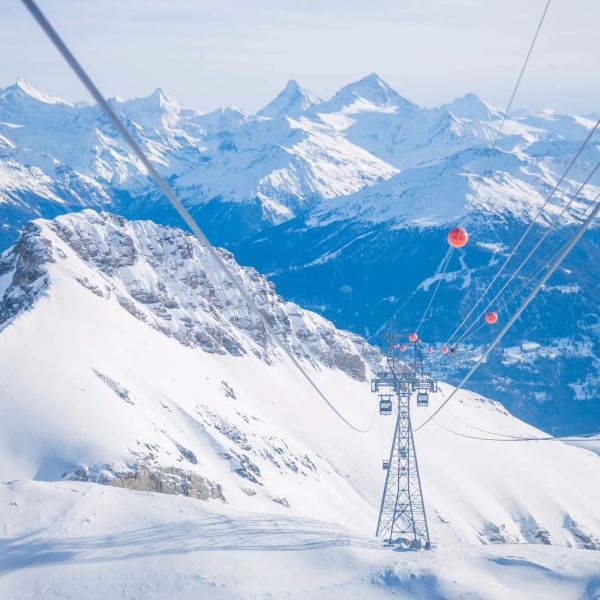
Crans-Montana 2027 World Championships President Resigns Ahead of Fraud Hearing
Less than four months out from the Crans-Montana 2027 World Championships, the man running the organising committee has stepped down. Claude-Alain Schmidhalter resigned as Swiss-Ski vice president and OC president after being indicted over a business dispute unrelated to skiing. He denies the allegations and faces court on October 27. Interim leaders are in place for the February 1-14 event.
9 Oct 2026
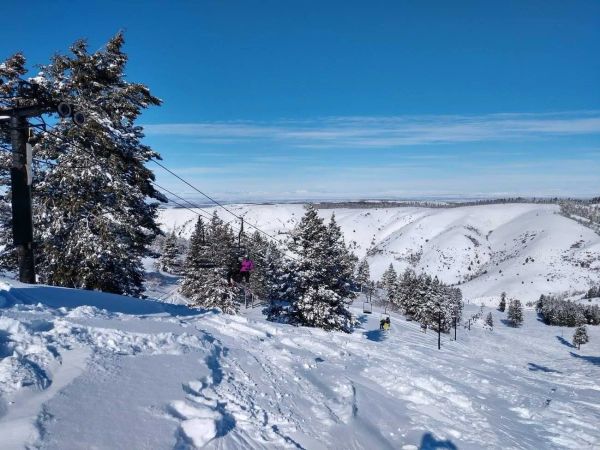
Kelly Canyon, Idaho, Adds Snowmaking, a Bigger Terrain Park and More Parking for 2026-27
Kelly Canyon had a rough 2025-26, and the Idaho resort has spent the summer making sure it doesn’t repeat. Snowmaking now reaches the top of Goldrush, the terrain park is doubling in size with a stereo system, lights and a snack shack, and the car park is getting bigger. Grooming is stepping up too. Target opening is December 4, conditions permitting.
9 Oct 2026