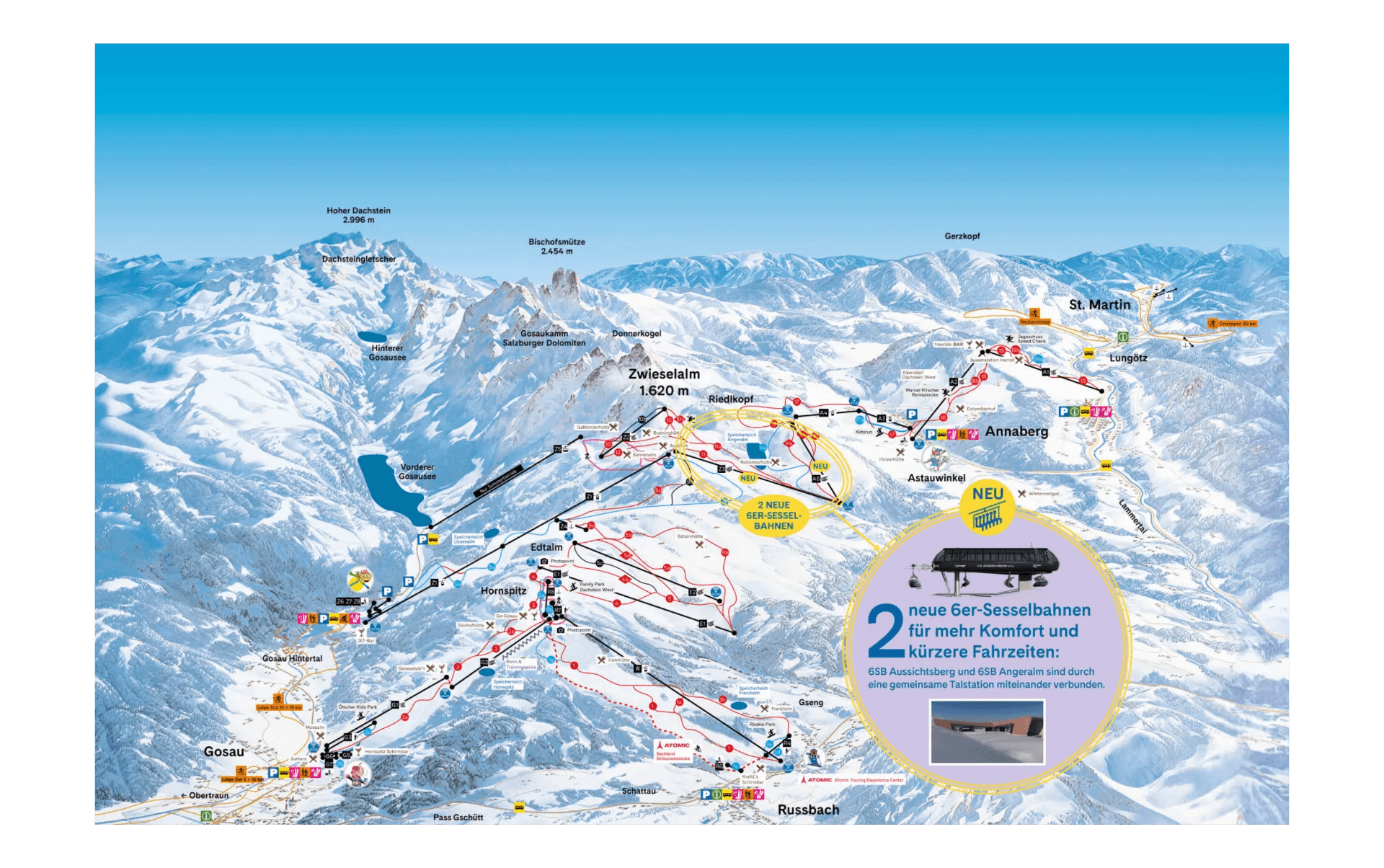
Dachstein West runs 48 lifts across 51km of terrain - an unusual ratio that hints at this Austrian resort's real character. With 65% intermediate terrain and a family-focused infrastructure, it's built for a specific market segment.
Dachstein West runs 48 lifts across 51km of terrain - an unusually high lift-to-trail ratio that immediately signals what kind of resort this is. The numbers suggest either exceptional uphill capacity for a modest trail network, or a sprawling multi-village setup that requires extensive infrastructure just to connect the pieces. The reality is both: this is a deliberately family-oriented operation spread across several access points, prioritising convenience and beginner-intermediate terrain over raw vertical or expert challenge.
The resort sits in the Salzkammergut region, east of Salzburg, where the northern Alps transition into gentler terrain. At 4 metres of average annual snowfall, it's on the lower end for Austrian resorts - comparable to mid-tier destinations rather than the deep-snow guarantees further west.
Dachstein West Mountain Overview
The headline numbers are straightforward: 872 metres of vertical drop from a 1,617-metre summit down to 745-metre base elevations. That's respectable but not exceptional - roughly two-thirds the vertical of a major Austrian destination. The 51km of marked trails spread across 46 runs translates to an average run length of just over 1km, confirming this is terrain designed for laps and progression rather than sustained descents.
The terrain split reveals the target market clearly: 29% beginner, 65% intermediate, 6% advanced, 0% expert. Nearly two-thirds of the mountain caters to intermediate skiers, with meaningful beginner infrastructure but essentially nothing for advanced riders seeking steeps or technical challenge. The 48 lifts serve this terrain through multiple access points - Gosau, Russbach, and Annaberg being the primary bases. This distributed model increases convenience for families staying in different villages but fragments the ski experience compared to a unified base area.
Snow quality follows northern Alps patterns. The 4-metre seasonal average is adequate with decent grooming and snowmaking support, but lean years will show. Current conditions (110cm base, 5cm in the past week, 123cm season total) are functional rather than deep. The 745-metre base elevation is low enough that rain becomes a factor during marginal periods - this isn't high-alpine skiing.
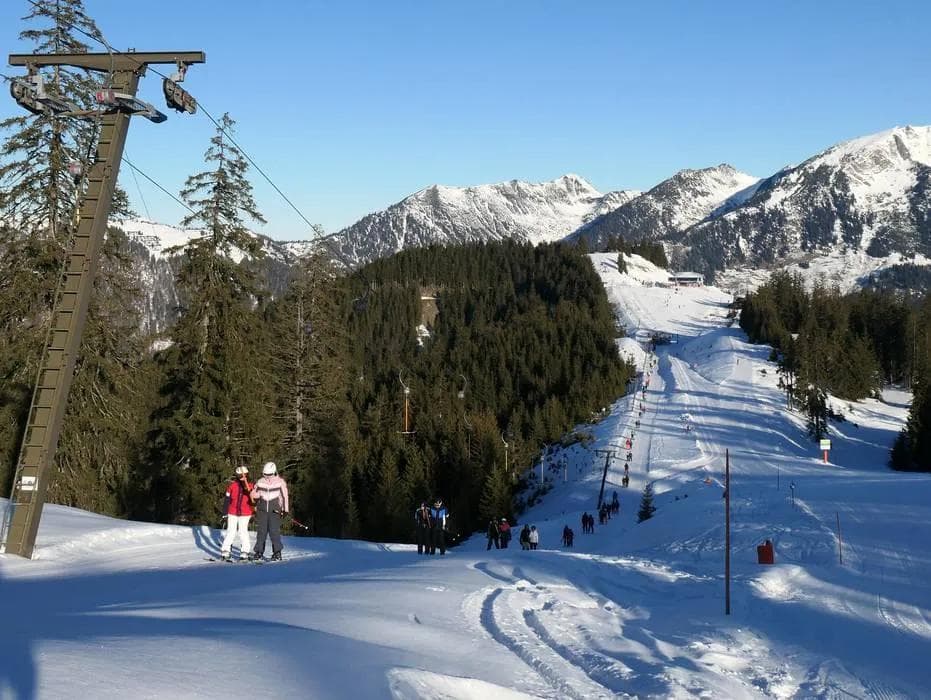
This resort works for families with young children and intermediate skiers focused on cruising rather than challenge. The distributed lift network means you can base in Gosau, Russbach, or Annaberg and still access terrain without excessive transfers. If you're teaching kids or returning to skiing after a break, the 29% beginner terrain is genuinely useful, not token green runs.
The 65% intermediate split caters to confident blue-run skiers who want volume of terrain rather than steeps. With 48 lifts, queue times should be manageable even during Austrian school holidays. The infrastructure investment has gone into uphill capacity and family amenities rather than expert terrain or après culture.
Advanced skiers will exhaust the 6% advanced terrain quickly - three runs, maybe four if conditions allow off-piste exploration. Expert riders have no marked terrain and limited natural options given the moderate vertical and exposure. The resort doesn't pretend otherwise, which is honest, but it makes Dachstein West unsuitable for mixed-ability groups where some skiers want proper challenge.
Dachstein West Snow & Season
The December to early April season (6 December 2025 to 6 April 2026 this year) aligns with the 4-metre average snowfall and moderate base elevations. December and early January carry risk - the 745-metre base can run thin or wet if temperatures spike. Mid-January through February offers the most reliable window, though the northern Alps location means weather systems can bring rain as easily as snow during transitional periods.
Current conditions show 110cm base depth with modest recent accumulation (5cm last week, 123cm season total). These are workable numbers but not confidence-inspiring for a resort with limited high-elevation terrain. Half the lifts (24 of 48) currently running suggests either staged opening for demand management or snow coverage limitations at lower elevations. March skiing is possible but expect afternoon slush and selective trail openings as spring progresses.
The snowfall average of 4 metres puts Dachstein West roughly 20-30% below the Arlberg or Ötztal regions. It's adequate for a family-focused resort with strong grooming operations, but not a deep-snow destination. Plan for machine-worked pistes rather than powder days.
Salzburg airport sits roughly 70-80km north, offering the closest international access. Transfer times run 60-90 minutes depending on your base village and winter road conditions. Munich airport (180km) provides more flight options but adds 2-3 hours of transfer time. Both airports see regular delays during winter storms, so build schedule buffers.
The multi-village layout means access logistics vary. Gosau and Russbach offer the most developed base infrastructure, while Annaberg provides a quieter alternative. Road access is straightforward by Austrian standards - no high mountain passes - but winter tyres and chains remain essential during snowfall. Public transport exists but car rental offers more flexibility for exploring the Salzkammergut region.
The distributed model creates planning complexity that single-base resorts avoid. If you're staying in Gosau but want to ski Annaberg's terrain, you're committing to lifts and traverses rather than a unified ski day. Families appreciate the flexibility; efficiency-focused skiers may find it irritating.
Dachstein West Lift Tickets
Adult day tickets run €65 (regular and peak pricing identical), with junior passes at €47, children at €34, and seniors at €61.70. These rates sit in the mid-range for Austrian resorts - roughly 20-30% below Arlberg destinations but comparable to other regional family areas. The pricing reflects the terrain on offer: you're paying for convenience and intermediate volume, not extensive vertical or expert terrain.
Multi-day tickets presumably offer discounts, though specific rates aren't provided. At €65 per day, families with multiple children will find costs adding up quickly, even with junior discounts. Season passes likely make sense for Salzburg-area locals but less so for international visitors planning a single trip.
The 48 lifts for 51km of terrain means you're funding significant infrastructure even if you're not using all access points. Whether that represents value depends on your priorities - families appreciate the distributed convenience, while advanced skiers may feel they're subsidising amenities they won't use.
The Verdict on Dachstein West
Dachstein West delivers exactly what it promises: intermediate-heavy terrain across a family-friendly, multi-village infrastructure. If you're teaching kids, skiing with nervous partners, or simply prefer cruising blues over hunting steeps, the 65% intermediate terrain and 48-lift network provide genuine value. Advanced skiers will find the 6% expert terrain inadequate, and the 4-metre snowfall average means this isn't a powder destination. It's a competent regional resort that knows its market and serves it well, without pretending to be something larger. Full resort details, webcams, and trail maps are on the Snowstash resort page.