
Serfaus / Fiss / Ladis
214km of pistes, 68 lifts and 1,628m vertical across three Tyrolean villages. Austria's leading family resort with extensive children's terrain.
Season 2026 - 2027
Opens
4 Dec 2026
Closes
4 Apr 2027
Days open
121
Annual snow
-
The Overview
Michael Fulton
Melbourne-based skier and snowboarder with 50+ resorts across 5 continents. Specialises in Australian resorts and international resort comparisons.
Serfaus-Fiss-Ladis spans 214 kilometres of marked pistes and ski routes across three interconnected Tyrolean villages, climbing from 1,200 metres to a summit of 2,828 metres at Masnerkopf. The 1,628-metre vertical drop ranks among the largest in Austria, with 68 lifts distributing skiers across terrain that includes 12 designated freeride routes totalling 28 kilometres. Snowmaking covers approximately 80 per cent of the ski area via more than 1,100 snow cannons, supported by 16 water reservoirs.
Terrain splits roughly 21 per cent beginner, 58 per cent intermediate and 21 per cent advanced, with genuine black runs descending from Pezid at 2,770 metres, Lazid at 2,351 metres and Zwölferkopf at 2,596 metres. Seven fun areas dot the mountain with boxes, rails and kickers for all levels, plus two airbag jumps. The Kinderschneealm in Serfaus and Bertas Kinderland in Fiss rank among Austria's largest dedicated children's ski zones, each with conveyor lifts, mascots and gentle slopes.
Serfaus village operates entirely car-free thanks to the U-Bahn Serfaus, a 1,280-metre underground air-cushion funicular transporting 3,000 passengers per hour between the car park and lift stations. On-mountain dining includes 25 restaurants plus three dedicated children's restaurants and the Crystal Cube at 2,600 metres with 360-degree panoramic views. Après-ski centres on sun terraces at Komperdell and Schönboden rather than late-night clubs, maintaining the family-oriented atmosphere.
The resort consistently earns top ratings for family facilities and lift infrastructure, with skiresort.info awarding it a five-star ranking for lifts and cables. The single ski pass covers all three villages without zonal restrictions, and the typical season extends from early December through mid-April. Intermediate skiers and families with children find the most value here, though steeper terrain and freeride routes deliver for more advanced visitors willing to explore.
1628m
Vertical
89
Runs
186 km
Piste
0m
Annual snow
The Terrain
89 runs across 186 km of piste
Serfaus-Fiss-Ladis climbs 1,628 metres from the valley at 1,200 metres to the 2,828-metre Masnerkopf, with 89 runs and 186 kilometres of piste. Intermediates dominate at 60%, beginners hold 25%, and advanced skiers get 15% with nothing graded expert. Ladis has the gentlest terrain, there are easy pistes up high at Pezid at 2,770 metres, and the three villages link into one of Tyrol's most family-friendly ski areas, with seven fun areas and dedicated children's zones in Serfaus and Fiss.
The black runs are concentrated high on the mountain, descending from Pezid (2,770 metres), Zwölferkopf (2,596 metres) and Lazid (2,351 metres), and are short enough that they work as a change of pace rather than a day's skiing. Twelve designated freeride routes cover 28 kilometres, including the Adlerroute from the Zwölferkopf summit down to Schöngampalm at 1,882 metres, which runs alongside the Adlerpiste and gives deep-snow beginners an approachable first route. It is a strong choice for families and mixed groups, but not for skiers who want a lot of steep, challenging terrain.
Terrain split
89
runs
89 runs across 4 grades
Beginner22 runs · 25%
Intermediate53 runs · 60%
Advanced13 runs · 15%
Expert0 runs · 0%
Time it right
When to visit Serfaus / Fiss / Ladis
The 2025-26 winter season opens 6 December 2025 and closes 19 April 2026, spanning approximately 19 weeks of operation. Lifts typically run from around 8:30am until 4:00pm daily, with extended evening operations for night skiing on Wednesdays at Komperdell from 6pm to 11pm. The Nightflow show at Möseralm in Fiss runs every Tuesday evening from late December through late March, combining ski demonstrations, drone displays and live entertainment.
Annual natural snowfall averages 275 centimetres across roughly 25 snow days, with December and January each receiving approximately 24-26 centimetres dispersed across three snow days per week. The snowiest week typically falls in early-to-mid January, averaging 33 centimetres. Snowmaking infrastructure covers 80 per cent of slopes, maintaining base depths of 60 to 150 centimetres through the season; the south-facing aspect benefits early-season sun but accelerates spring softening.
January through early March delivers the most reliable conditions, with powder accumulation lingering on the north-facing Fiss sector and around Pezid for days after storms. The sunny plateau averages over 2,000 hours of sunshine annually, with March recording approximately 22 sunny days on average. Spring skiing extends through April on higher terrain around Masner and Pezid where altitude preserves snow quality despite afternoon warming.
Weekly programming includes Adventure Night at Komperdell each Wednesday featuring night skiing, a 4-kilometre illuminated toboggan run and live music at mountain restaurants. The Nightflow Show at Fiss combines ski instruction demonstrations, acrobatic performances and drone choreography. Family sunrise ski sessions with Masner Express gondola access and mountain breakfast occur regularly through peak season.
Season 2026 - 2027
4 Dec 2026
Opens
4 Apr 2027
Closes
121
Days open
Getting there
Getting to Serfaus / Fiss / Ladis, and where to stay
The three villages of Serfaus, Fiss and Ladis occupy a sunny high plateau 500 metres above the Upper Inn Valley in western Tyrol, roughly 100 kilometres west of Innsbruck. Serfaus sits at 1,429 metres, Fiss at approximately 1,436 metres and Ladis at around 1,192 metres, all backed by 3,000-metre peaks including the Furgler at 3,004 metres. The plateau's south-facing orientation delivers extended sunshine hours while the ski terrain above reaches north-facing aspects for snow preservation.
The nearest town is Ried im Oberinntal, 8 kilometres distant in the main valley, serving as the junction point from the B180 Reschen road. Landeck, the regional administrative centre, lies approximately 25 kilometres east with rail connections and services. Prutz at 11 kilometres and Tösens at 14 kilometres provide additional valley-floor amenities. The Upper Inn Valley here forms the historical trade route between Austria and Italy via the Reschen Pass.
Driving access follows the A12 Inntal motorway from Innsbruck, exiting at Oberinntal junction through the Landecker Tunnel onto the B180, then turning at Ried im Oberinntal for the 10-kilometre climb to the plateau. From Zurich and the west, the route runs via Arlberg through the toll tunnel, while Italian approaches use either the Reschen Pass from South Tyrol or the Brenner motorway via Innsbruck. Winter tyres and snow chains are recommended for the plateau access road.
Innsbruck Airport sits approximately 90 kilometres east, with transfer times around 75-80 minutes by road. Zurich Airport lies 175 kilometres west via Arlberg, approximately 2 hours 15 minutes driving. Munich Airport at 240 kilometres offers the widest flight selection, requiring roughly 3 hours. Landeck-Zams railway station, 25-30 kilometres from the resort, connects to Innsbruck, Zurich and Vienna via ÖBB services, with regional buses running the final leg to all three villages.
Where to stay
Search all stays →Hotels and lodges near Serfaus / Fiss / Ladis, powered by Stay22.
Latest News
From the SnowStash desk
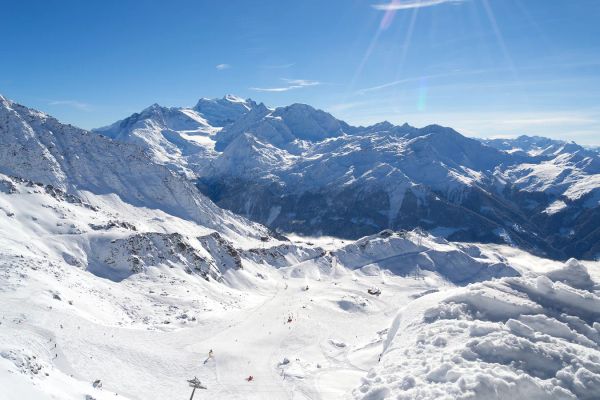
Alps Snow Forecast: Up to 64 cm Headed for the High Glaciers as the Snow Line Drops
The Alps are about to swap mild, sunny October weather for something far more wintry. A cold front arrives Tuesday, and SnowStash forecasts have Monterosa Ski out in front with 64 cm over 14 days, ahead of Blatten Belalp (55 cm) and Verbier (43 cm). The snow line should fall below 2000 metres by Wednesday night, and glaciers across Switzerland, Italy and Austria are in line for the best of it. The wind will have a say too.
20 Oct 2026
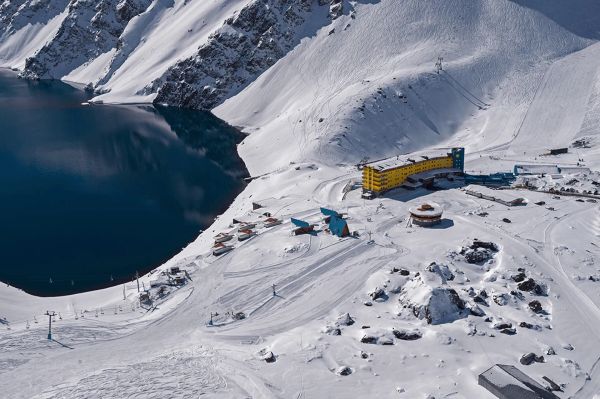
Four Dead After Avalanche Near Ski Portillo in Chile
A large avalanche struck near Laguna del Inca adjacent to Ski Portillo on Saturday afternoon, killing four people and injuring four others. The group were day visitors mountaineering in the backcountry after reportedly being warned about elevated avalanche risk by resort staff.
18 Oct 2026

Europe Ski Resorts Open Now: What Is Skiable in Mid-October 2026
Europe’s ski season is open, technically. After a record-warm summer, glaciers in Austria, Switzerland and Italy are running a few pistes apiece, Sölden, Stubai and Kitzsteinhorn started late, Titlis has pushed back to 24 October, and Zermatt reopens a few lifts on 14 October after more than two months shut. Finland’s Levi and Ruka are skiing on stored snow. Here is what is open, and what you actually get at each.
14 Oct 2026

Zermatt Plans World Cup Downhill Return on the Gornergrat for 2028
Zermatt is having another crack at a World Cup downhill, and this time nobody has to cross a border. Around 13 million Swiss francs is going into rebuilding the Gornergrat piste, including a jump fed by a roughly 300-metre in-run across the roof of the Gornergrat Railway gallery, with the Matterhorn lined up behind it for the TV cameras. First men’s race is pencilled in for March 2028, pending FIS homologation.
14 Oct 2026

Mt. Rose Begins Snowmaking for the 2026-27 Season at Lake Tahoe
Lake Tahoe’s highest base elevation is paying off early: Mt. Rose has started making snow for 2026-27 after the first flurries and a cold snap. The Nevada resort is backing it with nearly US$2 million in upgrades, including a replacement snowmaking main line, a new PistenBully groomer and restraint bars on every lift. Opening day is yet to be confirmed, though Heavenly and Northstar are already eyeing 20 November.
13 Oct 2026

Utah Ski Resorts 2026-27: What’s New at Alta, Deer Valley, Powder Mountain and More
Utah is still building flat out. For 2026-27, Powder Mountain opens a steep new Skytrac chair into more than 1,000 acres of advanced terrain, Deer Valley adds 200 acres on Hail Peak, Sundance gets a new quad and Park City adds a gondola from its new parking structure. Snowmaking is expanding almost everywhere, Eagle Point stays closed after the Cottonwood Fire, and the 2034 Games are setting the pace. Here’s what’s new, resort by resort.
13 Oct 2026

Mt Hutt Invests NZ$12 Million in Base Area, Tripling Its Sun Deck
Mt Hutt is getting busier, and its base lodge is about to catch up. NZ$12 million goes into a heated sun deck roughly three times the current size (430 m² to 1,300 m²), plus a new toilet block, heated steps down to snow level, extra storage and a new food and beverage outlet. Building starts after the 2026 season, with everything due for winter 2027.
11 Oct 2026

Vermont Ski Resort Opening Dates 2026-27: Few Dates Set, Killington Waits on the Cold
Vermont's season is slow to take shape. Stratton is tentatively targeting 18 November and Sugarbush 21 November, while Pico has Friday 11 December on the calendar. Killington never sets a date and opens when the snowmaking allows, and Vail Resorts has yet to name days for Stowe, Okemo and Mount Snow. The forecasts disagree about snow, and the main El Niño worry for the Green Mountains is warmth.
9 Oct 2026
Serfaus / Fiss / Ladis Lift Tickets
Serfaus / Fiss / Ladis lift tickets & passes
Opening day for the winter 2026 - 2027 season is scheduled for Dec 4, 2026 (subject to change). Lift tickets at Serfaus / Fiss / Ladis typically go on sale well before the start of the ski season.
Lift tickets FAQ
How much does a Serfaus / Fiss / Ladis day pass cost?
Serfaus / Fiss / Ladis day pass pricing varies by date and advance booking - see the full breakdown in the tickets panel.
Can I buy Serfaus / Fiss / Ladis lift tickets online?
Yes, you can purchase tickets online or at the resort ticket office.
Are there discounts for multi-day passes?
Yes, multi-day packages typically offer significant savings compared to individual day passes. The per-day cost decreases with longer stays.
What is included with a Serfaus / Fiss / Ladis lift ticket?
Full access to all lifts and trails at Serfaus / Fiss / Ladis, including mountain safety and patrol services.
What is the difference between Serfaus / Fiss / Ladis lift tickets and ski passes?
"Lift tickets" and "ski passes" refer to the same thing at Serfaus / Fiss / Ladis - your access to the mountain's lifts and trails for your chosen duration.
When should I buy Serfaus / Fiss / Ladis lift tickets for the best price?
Purchase tickets at least 7 days in advance for the best rates, and consider weekday visits for further savings over weekend rates.
Does Serfaus / Fiss / Ladis offer group discounts on lift tickets?
Group discounts are typically available for parties of 10 or more. Contact Serfaus / Fiss / Ladis directly for group booking information and rates.
How can I check current conditions before buying tickets?
Before purchasing, check the live snow report and mountain webcams to see current weather, snow conditions, and lift operations at Serfaus / Fiss / Ladis.
More Serfaus / Fiss / Ladis intelligence: snow report, webcams, resort overview.