
Snow Space Salzburg
Snow Space Salzburg: 120km of slopes across Flachau, Wagrain & St. Johann. 45 lifts, 100% snowmaking. Part of Ski amadé's 760km network.
Season 2026 - 2027
Opens
28 Nov 2026
Closes
4 Apr 2027
Days open
127
Annual snow
4m
The Overview
Michael Fulton
Melbourne-based skier and snowboarder with 50+ resorts across 5 continents. Specialises in Australian resorts and international resort comparisons.
Snow Space Salzburg spans 120 kilometres of piste across three interconnected sectors - Flachau, Wagrain, and St. Johann-Alpendorf - with elevations ranging from 740 metres to 1,980 metres and a maximum vertical drop of 1,240 metres. The resort forms part of the broader 210-kilometre ski area when combined with the linked Shuttleberg Flachauwinkl-Kleinarl and Zauchensee zones via the Panorama Link gondola. Annual snowfall averages 250 centimetres, supplemented by 100% snowmaking coverage using 800 snow cannons that can blanket the entire terrain within 72 hours. The resort operates within Ski amadé, granting pass holders access to 760 kilometres of slopes across 25 Austrian ski areas.
The terrain breakdown favours cruising intermediates: 69% of runs are graded red, 28% blue for beginners, with just 3% classified as black. Three main peaks define the area - Grießenkareck at 1,991 metres, Sonntagskogel at 1,850 metres, and Hirschkogel at 1,755 metres - with the St. Johann-Wagrain-Flachau sector alone offering 125 kilometres of trails spanning 15 kilometres from end to end. The longest continuous descent runs 6 kilometres from the Grießenkareck summit down into Flachau village, covering approximately 1,200 metres of vertical. Flachau hosts the Hermann Maier FIS World Cup slope, a 637-metre run with 200 metres of vertical that stages the annual women's night slalom each January.
Over 85 mountain restaurants dot the ski area, from the rustic Birkhahnalm in Flachau to the Buchau Salettl above St. Johann. Après-ski concentrates around the Dampfkessel and Hofstadl bars near the Flachau valley stations, with the village maintaining a lively atmosphere well into the evening. Wagraini's Winter World at the middle station of the Rote 8er gondola provides a dedicated children's learning area with magic carpets, a dwarf house, and a beginner snow park. The resort operates seven entry points across the three villages, each with free parking directly at the lift bases.
The Ski amadé season pass costs €689 for adults and unlocks 270 lifts across the network, whilst single-day tickets for Snow Space Salzburg range from €52 to €62 depending on peak dates. Children under nine ski free, and youth tickets start at €39 per day. The terrain profile and lift infrastructure make this resort particularly well-suited to intermediate skiers, families, and groups of mixed abilities seeking extensive mileage without challenging steeps. Advanced skiers seeking off-piste terrain should consider venturing to the linked Zauchensee sector, which offers the region's most reliable snow conditions.
1240m
Vertical
69
Runs
120 km
Piste
4m
Annual snow
Ski amadé
Pass
The Terrain
69 runs across 120 km of piste
Snow Space Salzburg joins Flachau, Wagrain and St. Johann-Alpendorf into 120 kilometres of piste across 69 runs, falling 1,240 metres from 1,980 metres to the 740-metre valley floor. Red runs make up 69% of the terrain, beginners take 28%, and advanced and expert pistes together amount to just 3%, which is about as intermediate-focused as an Austrian ski area gets. The G-Link aerial tram between Grafenberg and Grießenkareck makes hopping between sectors easy, and the Panorama Link opens the way on to Flachauwinkl-Kleinarl and Zauchensee.
With so little steep terrain, Snow Space suits confident intermediates and families who want kilometre after kilometre of well-groomed red runs and short transfer times between villages. Freeride options are limited and the slopes are mostly mellow, so advanced skiers should expect to head elsewhere in Ski amadé after a day or two. Where it does deliver is the lift system, which has 45 modern lifts, and the distances you can cover in a single day without repeating a run, particularly if you add the linked Zauchensee area.
Terrain split
69
runs
69 runs across 4 grades
Beginner19 runs · 28%
Intermediate48 runs · 69%
Advanced1 run · 2%
Expert1 run · 1%
Time it right
When to visit Snow Space Salzburg
The 2025/26 season at Snow Space Salzburg runs from 29 November 2025 through to Easter Monday, 6 April 2026, offering approximately 130 days of operation. The 12 Peaks ski connection linking all sectors typically opens by early December, with full operations across all 45 lifts maintained through to early April. Partial terrain opening with discounted passes is available in the final weeks before the main closing date. Lift operating hours run 8:30am to 4:00pm daily, extending to 4:15pm from 1 February.
The resort receives an annual average of 250 centimetres of natural snowfall, with the higher-elevation Zauchensee sector offering the most reliable natural cover in the region. The 100% snowmaking system uses 800 snow cannons fed by 1.2 million cubic metres of recycled meltwater and rainwater stored in alpine reservoirs. When temperatures drop below optimal thresholds, the entire ski area can be covered with base snow within 72 hours. Base depths at mid-mountain typically reach 100-140 centimetres by mid-season.
January through early March delivers the most consistent conditions, with February offering the optimal balance of reliable snowpack and lengthening daylight hours. The annual FIS World Cup women's night slalom in Flachau falls in mid-January, drawing thousands of spectators to the Hermann Maier slope. Late November and early December can be variable before the snowmaking system establishes full coverage, whilst late March often brings spring corn snow and softer afternoon conditions on south-facing aspects.
DJ Ötzi's Gipfeltour concert at St. Johann-Alpendorf features as a winter highlight, alongside regular Thursday ski touring sessions and the JoKiWo family festival at the Geisterberg. Weekly kids' days run every Tuesday with guided activities for younger skiers. The resort does not operate regular night skiing, though the floodlit World Cup slope hosts special evening events during the season. Christmas and February school holiday weeks see peak crowds, whilst mid-January and March weekdays offer quieter pistes.
Season 2026 - 2027
28 Nov 2026
Opens
4 Apr 2027
Closes
127
Days open
4 m
Annual snow
Getting there
Getting to Snow Space Salzburg, and where to stay
Snow Space Salzburg occupies the Pongau region in the Salzach Valley of Austria's Eastern Alps, approximately 70 kilometres south of the city of Salzburg. The three base villages - Flachau (927m), Wagrain (838m), and St. Johann-Alpendorf (740m) - spread across interconnected valleys between the Salzburg Slate Alps to the north and the Niedere Tauern range to the southeast. St. Johann im Pongau serves as the district capital with a population exceeding 10,000, whilst Flachau gained international recognition as the hometown of four-time World Cup champion Hermann Maier. The Liechtensteinklamm gorge, one of the longest and deepest ravines in the Alps, lies just south of St. Johann.
Salzburg city offers the nearest major urban centre, featuring the historic old town, Mozart's birthplace, and the annual Salzburg Festival. Bischofshofen, famous for its ski jumping venue on the Four Hills Tournament circuit, sits 10 kilometres west of St. Johann. The Gastein Valley thermal spa region lies within 30 kilometres to the south, whilst Schladming and the Dachstein glacier region are accessible within an hour's drive east via the B320. The area has been settled since the Bronze Age, with St. Johann first documented as a village in a 1074 deed.
The Tauern Autobahn A10 provides direct motorway access, with exits at Flachau-Wagrain (exit 66) and Pongau junction (exit 47 for St. Johann via the B311). Driving time from Salzburg is approximately 50 minutes; from Munich, allow around two hours via the A8 and A10. From Vienna, the route follows the A1 to the A10, taking approximately three hours. Free parking is available at all seven lift base stations, with electric vehicle charging points installed at valley stations throughout the resort.
Salzburg W.A. Mozart Airport lies 72 kilometres away, with a transfer time of approximately 45 minutes by road. Munich Franz Josef Strauss Airport is 153 kilometres distant, requiring roughly 90 minutes by car or shuttle. St. Johann im Pongau railway station sits on the main ÖBB intercity line, with direct trains from Salzburg departing every 30 minutes and journey times of 56-71 minutes. Free ski shuttle buses meet all arriving trains and deliver passengers to the Alpendorf gondola base within 10 minutes. Holders of valid Snow Space lift passes receive free public transport throughout the province of Salzburg on ski days.
Where to stay
Search all stays →Hotels and lodges near Snow Space Salzburg, powered by Stay22.
Latest News
From the SnowStash desk
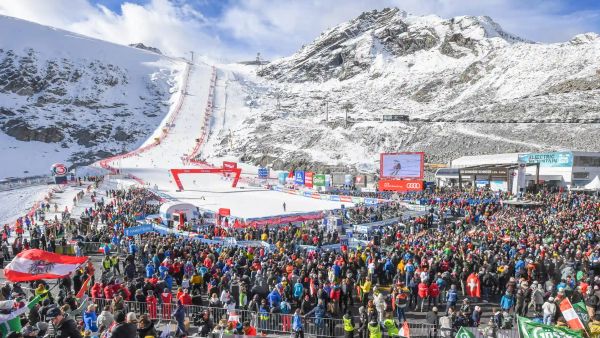
Pinheiro Braathen Wins Sölden Giant Slalom Opener by 0.48 Seconds
Two days at Sölden, two races decided by a hundredth somewhere on the podium, and one very quick Brazilian. Lucas Pinheiro Braathen led from the first run to win the men’s World Cup opener by 0.48 seconds, with Loïc Meillard second and Marco Odermatt third. River Radamus charged from 15th to fourth on a rutted course, and Britain’s Freddy Carrick-Smith banked his first World Cup points. Braathen still hasn’t lost a giant slalom since Olympic gold.
25 Oct 2026
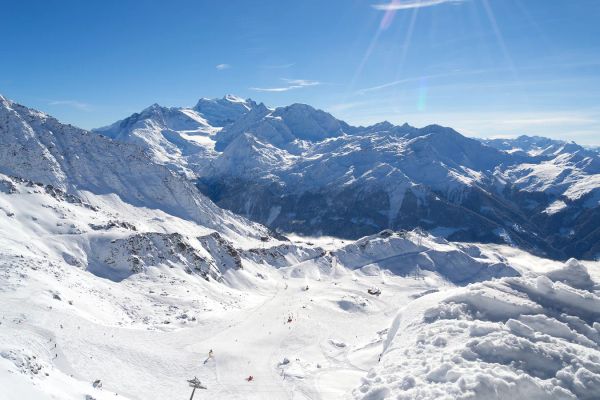
Alps Snow Forecast: Up to 64 cm Headed for the High Glaciers as the Snow Line Drops
The Alps are about to swap mild, sunny October weather for something far more wintry. A cold front arrives Tuesday, and SnowStash forecasts have Monterosa Ski out in front with 64 cm over 14 days, ahead of Blatten Belalp (55 cm) and Verbier (43 cm). The snow line should fall below 2000 metres by Wednesday night, and glaciers across Switzerland, Italy and Austria are in line for the best of it. The wind will have a say too.
20 Oct 2026
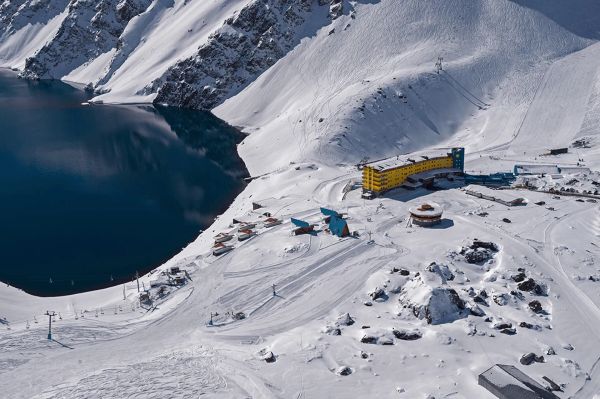
Four Dead After Avalanche Near Ski Portillo in Chile
A large avalanche struck near Laguna del Inca adjacent to Ski Portillo on Saturday afternoon, killing four people and injuring four others. The group were day visitors mountaineering in the backcountry after reportedly being warned about elevated avalanche risk by resort staff.
18 Oct 2026
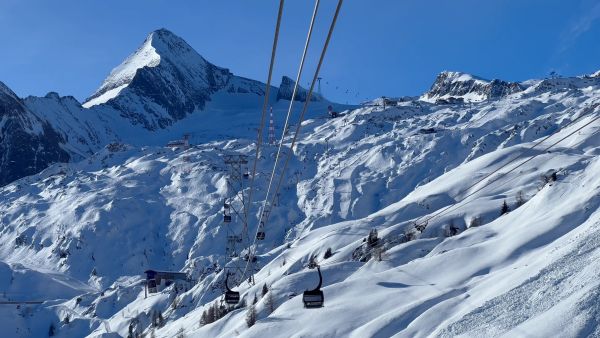
Europe Ski Resorts Open Now: What Is Skiable in Mid-October 2026
Europe’s ski season is open, technically. After a record-warm summer, glaciers in Austria, Switzerland and Italy are running a few pistes apiece, Sölden, Stubai and Kitzsteinhorn started late, Titlis has pushed back to 24 October, and Zermatt reopens a few lifts on 14 October after more than two months shut. Finland’s Levi and Ruka are skiing on stored snow. Here is what is open, and what you actually get at each.
14 Oct 2026
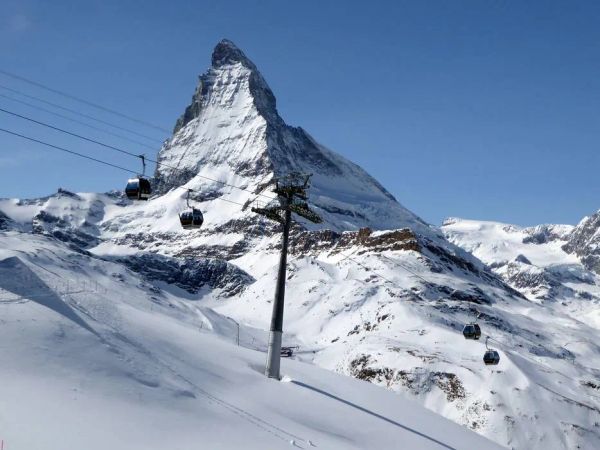
Zermatt Plans World Cup Downhill Return on the Gornergrat for 2028
Zermatt is having another crack at a World Cup downhill, and this time nobody has to cross a border. Around 13 million Swiss francs is going into rebuilding the Gornergrat piste, including a jump fed by a roughly 300-metre in-run across the roof of the Gornergrat Railway gallery, with the Matterhorn lined up behind it for the TV cameras. First men’s race is pencilled in for March 2028, pending FIS homologation.
14 Oct 2026
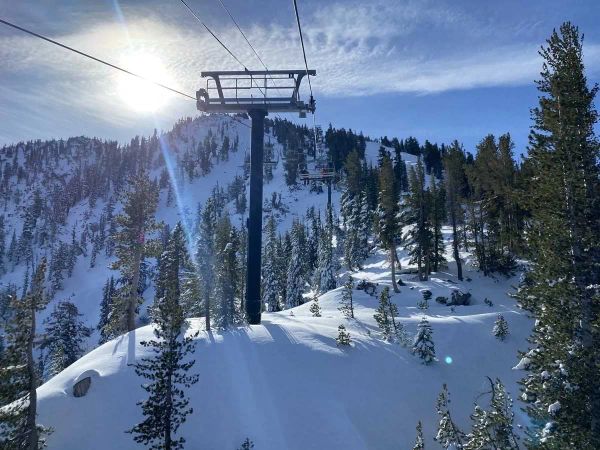
Mt. Rose Begins Snowmaking for the 2026-27 Season at Lake Tahoe
Lake Tahoe’s highest base elevation is paying off early: Mt. Rose has started making snow for 2026-27 after the first flurries and a cold snap. The Nevada resort is backing it with nearly US$2 million in upgrades, including a replacement snowmaking main line, a new PistenBully groomer and restraint bars on every lift. Opening day is yet to be confirmed, though Heavenly and Northstar are already eyeing 20 November.
13 Oct 2026
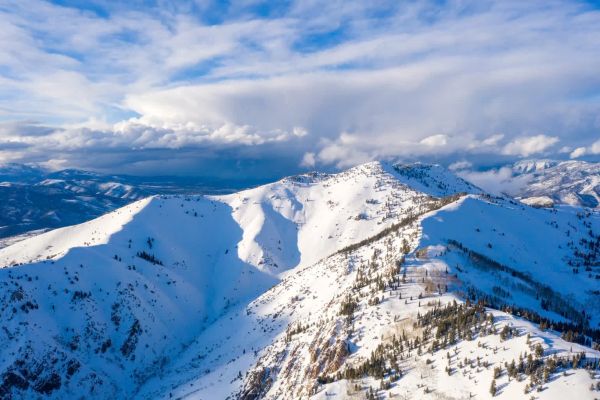
Utah Ski Resorts 2026-27: What’s New at Alta, Deer Valley, Powder Mountain and More
Utah is still building flat out. For 2026-27, Powder Mountain opens a steep new Skytrac chair into more than 1,000 acres of advanced terrain, Deer Valley adds 200 acres on Hail Peak, Sundance gets a new quad and Park City adds a gondola from its new parking structure. Snowmaking is expanding almost everywhere, Eagle Point stays closed after the Cottonwood Fire, and the 2034 Games are setting the pace. Here’s what’s new, resort by resort.
13 Oct 2026
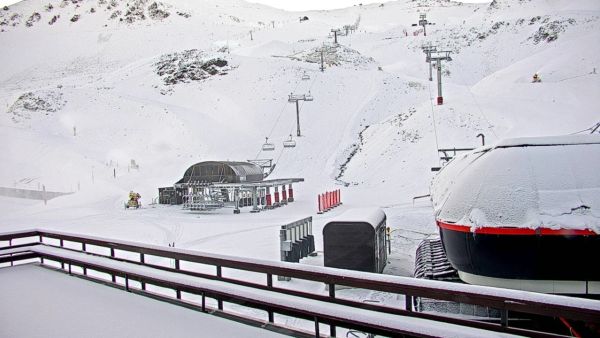
Mt Hutt Invests NZ$12 Million in Base Area, Tripling Its Sun Deck
Mt Hutt is getting busier, and its base lodge is about to catch up. NZ$12 million goes into a heated sun deck roughly three times the current size (430 m² to 1,300 m²), plus a new toilet block, heated steps down to snow level, extra storage and a new food and beverage outlet. Building starts after the 2026 season, with everything due for winter 2027.
11 Oct 2026
Snow Space Salzburg Lift System
Snow Space Salzburg operates 45 lifts across its core terrain: 10 gondolas, 4 eight-seat chairlifts, 11 six-seat chairlifts, 1 quad chair, 2 aerial trams, and 17 surface lifts including T-bars and magic carpets. The combined system delivers efficient uphill transport with minimal bottlenecks, and the entire network runs daily from 8:30am to 4:00pm, extending to 4:15pm from February onwards. Seven valley stations provide ski-in access from Flachau, Wagrain, and St. Johann-Alpendorf, spreading crowds across multiple entry points. The lift infrastructure earned substantial investment exceeding €35 million in the early 2020s.
The flagship installation is the Flying Mozart, a two-section 10-passenger Doppelmayr gondola rebuilt in 2021 that transports 4,000 guests per hour from Wagrain to the Grießenkareck summit. The 142 Omega-V cabins feature heated individual seats, panoramic glazing, integrated lighting, and free WiFi, with two special glass-floor cabins and onboard selfie cameras. The underground middle station sits 25 metres below grade to preserve the mountain landscape and provides barrier-free transfer to the G-Link aerial tramway. The G-Link itself connects the Grießenkareck and Grafenberg peaks, functioning as a critical hub for traversing between sectors.
The 3.1-kilometre Panorama Link gondola, completed in October 2020, extends from the Grießenkareck top station to the Shuttleberg summit, opening direct ski access to Flachauwinkl-Kleinarl and onward to Zauchensee. The Alpendorf Gondola provides the primary access from St. Johann, whilst the Achterjet, Starjet 1-3, Spacejet 1, and Rote 8er gondola anchor the Flachau and Wagrain sectors. Named chairlifts including the Sonntagskogel 2 - which features the world's first back-heating system - and the Hirschkogelbahn complete the summit-access network.
Recent seasons have seen continued infrastructure refinement, with the Winkl Link gondola (opened 2024/25) completing the final road crossing between Flachauwinkl and Zauchensee. The resort uses 100% green electricity for all lift operations and has committed to climate-neutral ski operations from the 2025/26 season. Ticket machines at valley stations accept pre-purchased QR codes for contactless pickup, eliminating queues at ticket offices. Free ski buses connect all three villages and meet every arriving train at St. Johann im Pongau station.
45lifts across 7 types
2
Aerial Trams
10
Gondolas
4
8-Person Chairs
11
6-Person Chairs
1
Quad Chair
8
T-Bars
9
Surface Lifts
Snow Space Salzburg lift system
Snow Space Salzburg is served by 45 lifts, listed here by type. Check which lifts are turning against the live conditions before you plan your first laps - early lifts and high-speed chairs get you to the best snow fastest.
More Snow Space Salzburg intelligence: trail map, snow report, webcams, resort overview.