The Overview
Michael Fulton
Melbourne-based skier and snowboarder with 50+ resorts across 5 continents. Specialises in Australian resorts and international resort comparisons.
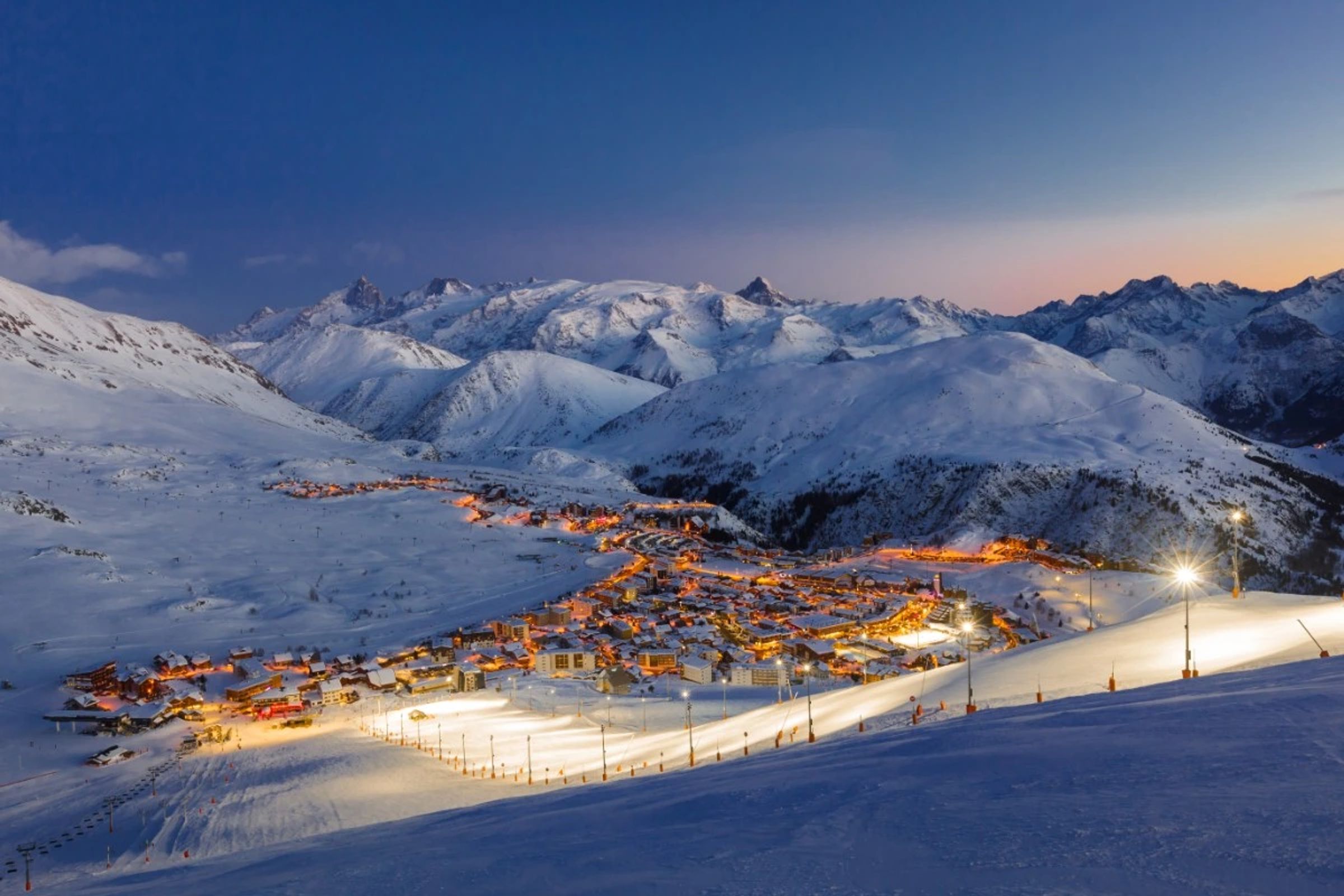
Alpe d'Huez Grand Domaine is one of the largest ski areas in the French Alps, delivering 250km of marked pistes across five linked resorts — Alpe d'Huez, Auris-en-Oisans, Oz-en-Oisans, Vaujany and Villard-Reculas — spread across 10,000 hectares of skiable terrain in the Grandes Rousses massif of the Isère. The ski area spans elevations from 1,125m at the base to 3,330m at the Pic Blanc summit, producing a skiable vertical of 2,205m — one of the largest continuous vertical drops in the Alps.
The 159 runs break down as 28% beginner, 52% intermediate, 15% advanced and 5% expert, a profile that reflects Alpe d'Huez's reputation as one of the finest intermediate destinations in France, though the 17 black runs and over 50km of expert terrain ensure serious skiers are equally well served.
The resort's defining run is the Sarenne — a 16km black piste descending from the Pic Blanc glacier at 3,330m to the Gorges de Sarenne at 1,510m, widely regarded as the longest black run in Europe and covering nearly 1,830m of vertical in a single unbroken descent.
The Tunnel piste is equally iconic: a 200m cave bored directly through the mountainside that deposits skiers onto one of the steepest mogul fields in France at a 35° gradient. Alpe d'Huez has been a recognised ski destination since the 1920s and hosted bobsleigh events at the 1968 Winter Olympics, but its parallel fame as a Tour de France summit finish — first used in 1952 with Fausto Coppi and climbed regularly since 1976 — has embedded the mountain's identity in both snow sports and cycling culture in equal measure.
2205m
Vertical
159
Runs
250 km
Piste
4m
Annual snow
The Terrain
159 runs across 250 km of piste
Alpe d'Huez spreads 159 runs across 250 km of piste of terrain. It leans intermediate at 52%, with 45 beginner runs to find your feet and 32 advanced or expert runs when you want to push.
Terrain split
159
runs
159 runs across 4 grades
Beginner45 runs · 28%
Intermediate83 runs · 52%
Advanced24 runs · 15%
Expert8 runs · 5%
Time it right
When to visit Alpe d'Huez
Alpe d'Huez operates from mid-November through to late April, with the 2025/26 season running 10 November to 20 April — one of the earlier opening dates in the French Alps, made possible by the Pic Blanc glacier and high-altitude snowmaking infrastructure that secures coverage from the summit down from the first weeks of the season.
The resort records an average annual snowfall of around 3.8 metres, but its elevation profile and 1,071-gun snowmaking network provide consistent coverage across the full 250km domain even in low-natural-snowfall years. The current 2025/26 season has accumulated a total of 781cm with a base depth of 350cm as of early March, reflecting a strong winter in the Isère.
Alpe d'Huez is widely known as the "Island in the Sun" — a nickname rooted in the south-facing orientation of the main resort village, which averages approximately 300 sunny days per year, more than almost any other major French ski resort. This characteristic creates a distinctive seasonal rhythm: cold, firm snow on high-altitude north-facing aspects contrasting with warm, spring-condition grooming on the lower south-facing village slopes, often simultaneously.
The Sarenne glacier at Pic Blanc maintains cold, reliable snow throughout the season regardless of conditions at lower elevations, making December through April consistently productive for skiers who know how to track the mountain's aspect changes across the day. Spring skiing at Alpe d'Huez is particularly well regarded, with long daylight hours, warm base temperatures and deep upper-mountain snowpack converging through March and April.
Season 2025 - 2026
10 Nov 2025
Opens
20 Apr 2026
Closes
161
Days open
4 m
Annual snow
Getting there
Getting to Alpe d'Huez, and where to stay
Alpe d'Huez sits in the commune of Huez in the Isère department of the Auvergne-Rhône-Alpes region, 59km east of Grenoble in the central French Western Alps. The resort is accessed from the Romanche Valley via the D211 road, which climbs 1,000m in elevation across 13.8km through the famous 21 hairpin bends — the same road used by the Tour de France for its legendary Alpe d'Huez summit stages.
Grenoble itself is around one hour by road and served by regular train connections from Paris Lyon on the TGV in around two and a quarter hours, making Alpe d'Huez one of the more accessible major ski resorts in the Alps by public transport for international visitors arriving through Paris. Grenoble Airport handles limited direct flights from some UK and European destinations, while Lyon Saint-Exupéry is approximately two hours by road and offers significantly broader international connections.
The five villages that make up the Grand Domaine each offer distinct characters — the main Alpe d'Huez village is a purpose-built resort with a lively après-ski scene anchored by La Folie Douce and a dense concentration of ski-in accommodation, restaurants and bars.
Vaujany, by contrast, is a traditional mountain village of around 600 residents that grew wealthy from hydroelectric power revenues and invested heavily in a gondola and cable car infrastructure that gives it disproportionately strong lift access relative to its size. The 6-day Grand Domaine pass includes two free days at Les 2 Alpes, which is visible directly across the Romanche Valley from the Auris sector and reachable by road in around 30 minutes — an arrangement that effectively extends the week's skiing beyond the already substantial 250km home domain.
Where to stay
Search all stays →Hotels and lodges near Alpe d'Huez, powered by Stay22.
Latest News
From the SnowStash desk
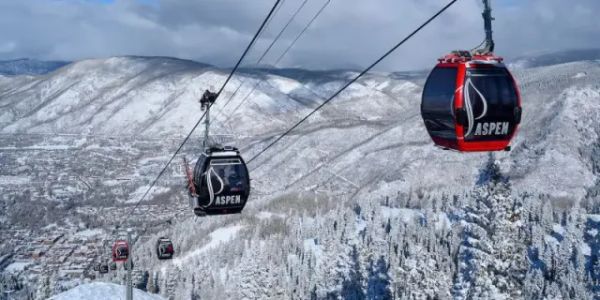
Aspen Snowmass Marks 80th Anniversary With $3.75 Throwback Lift Tickets
Aspen Snowmass turns 80 this December, and it's marking the milestone with $3.75 lift tickets on the anniversary itself - the original 1946 price. A discounted long weekend, $19.46 dining specials, lodging deals up to 46 percent off, and a season of anniversary programming round out the celebration across all four mountains.
17 Sept 2026
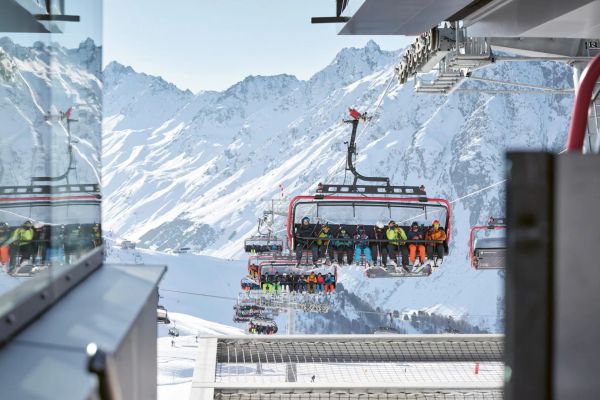
Doppelmayr Group Posts 9.1% Revenue Growth in 2025/26, Passing 1.3 Billion Euros
Doppelmayr closed its 2025/26 business year with revenue up 9.1 percent to 1.3 billion euros, driven by projects including the Big Sky Explorer Gondola, Deer Valley's Mayflower East Village Gondola, and the first TRI-Line installation at Hoch-Ybrig. Headcount grew too, with the ropeway manufacturer now employing almost 4,000 people worldwide.
16 Sept 2026
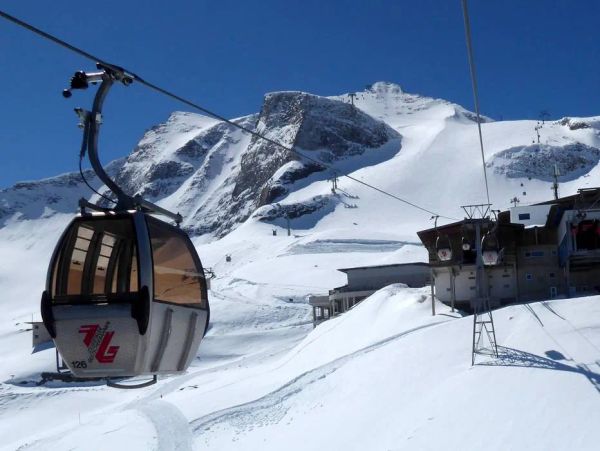
Hintertux Glacier Replaces 40-Year-Old Gondola to Tuxer Fernerhaus
Hintertux Glacier is retiring its 40-year-old gondola to the Tuxer Fernerhaus. The replacement carries 10 people per cabin instead of four, with seat heating and nearly 40 percent more hourly capacity. Doppelmayr's new line opens at the end of October 2026, right as the glacier's high-altitude terrain becomes accessible again for the new season.
16 Sept 2026
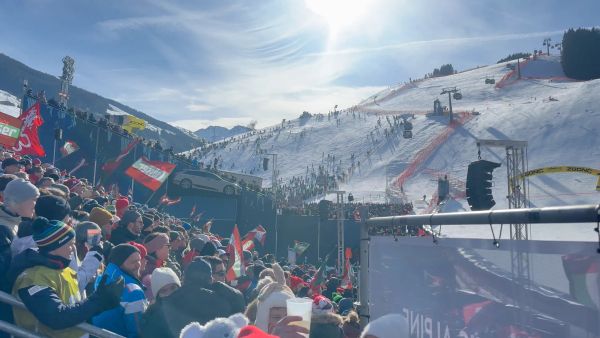
FIS Weighs Holding World Championships in Almost Every Winter, Starting 2032
The International Ski and Snowboard Federation is looking at a major shake-up to its title events calendar. From 2032, World Championships could run not just in odd-numbered years but in every non-Olympic winter too, effectively putting a global title event on the calendar almost every season. The FIS Council has approved the concept following a feasibility study, though an accelerated rollout as early as 2028 is also under consideration.
4 Sept 2026
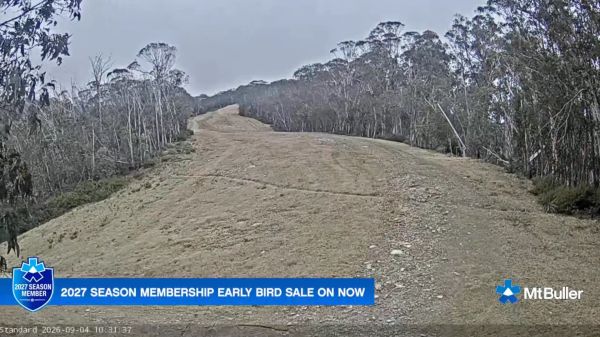
Mount Buller Becomes Latest Australian Resort to Call Time Early on 2026
Mount Buller closes out its 2026 season this Sunday, joining Falls Creek, Hotham and Charlotte Pass in a cluster of closures landing almost simultaneously and roughly a month ahead of schedule. The culprit is stark: Spencers Creek's benchmark snow depth hit 31.2cm on 3 September, just 18% of the 73-year average and an all-time low for this point in the season. Six of Victoria and NSW's best-known resorts will have shut their lifts early within a span of about two and a half weeks.
4 Sept 2026
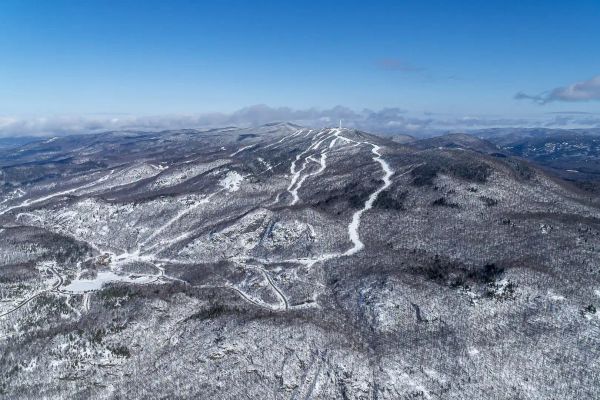
Tremblant to Add New Timber Summit Ski Sector for 2027/28 Season
Tremblant has confirmed a major expansion of its Quebec ski area, with a new Timber Summit sector adding 62 acres of terrain, eight trails and a high-speed quad chairlift for winter 2027/28. It's part of a CAD 42.5 million investment that also includes a new beginner learning zone at Versant Soleil opening this coming season. The project has grown considerably since it was first announced back in 2020, when it carried a far smaller budget and an opening date that never eventuated.
2 Sept 2026
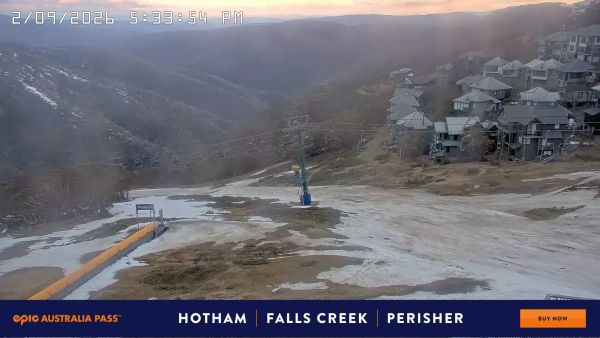
Mount Hotham to Close for the 2026 Season on Sunday, September 6
We knew when the Bird Bath Pond Skim showed up on Hotham's Instagram that the season was on its way out. It's been a rough one - I only managed two days on snow all year, at Falls Creek - and now Baw Baw, Selwyn and Hotham have all called it, possibly the worst Australian season I've seen in a decade. Hotham's last day of lift operations is Sunday, 6 September, with a Retro Day, Father's Day après and closing sales before the lifts stop turning for good.
1 Sept 2026
Thredbo to Replace Ageing Gunbarrel Quad With New Six-Seat Chairlift for 2028
Thredbo Alpine Resort has confirmed plans to replace its 37-year-old Gunbarrel quad chairlift with a new six-seat Doppelmayr D-Line, targeting winter 2028. The AUD 35 million project will keep travel time roughly the same but lift capacity from 2,800 to 3,000 skiers per hour. It's part of a broader investment push that also includes doubled snowmaking capacity at Friday Flat for 2027, with the ageing Kosciuszko Express now flagged as the resort's next major lift replacement after Gunbarrel.
31 Aug 2026
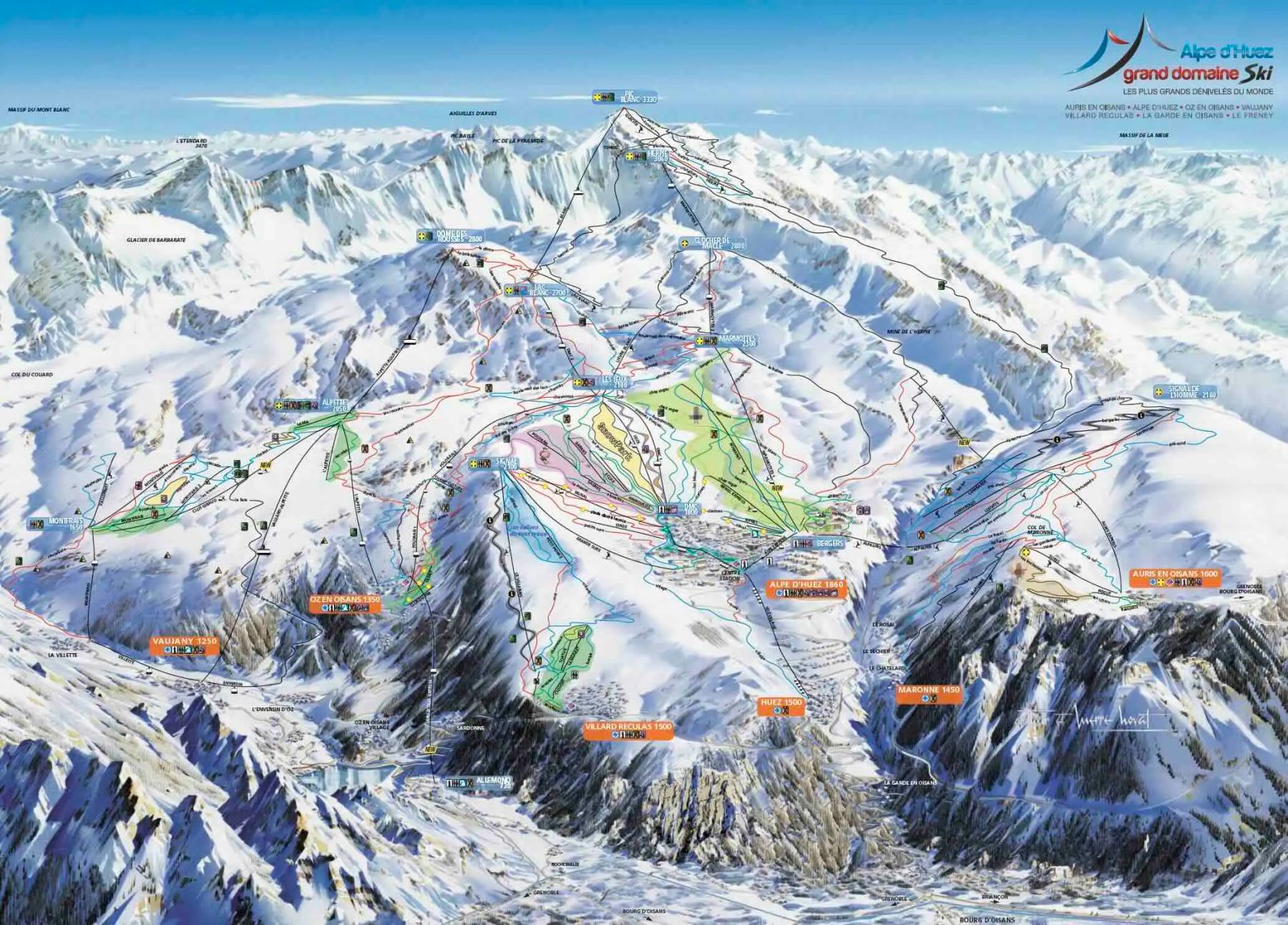
Alpe d'Huez Ski Trails
Live Alpe d'Huez trail map
Loading trail map...
Downloadable Alpe d'Huez trail map
Terrain split
159
runs
Beginner28%
Intermediate52%
Advanced15%
Expert5%
250 km of piste
Resort Stats
Elevation
Base1125m
Summit3330m
Annual snowfall
4m
Season
2025 - 2026
10 Nov 2025 - 20 Apr 2026
Trail coverage
159 runs
250 km
Alpe d'Huez ski trails
Alpe d'Huez offers 159 runs across a mix of difficulties. The terrain split and trail map here show how the mountain breaks down so you can plan a day that suits your group.
- • Match runs to your ability - the terrain split shows how much of Alpe d'Huez is beginner, intermediate and advanced.
- • Check grooming and open-run status against the live conditions before committing to the upper mountain.
- • Early season and after fresh snow, favour the lifts serving your preferred grade to make the most of the day.
More Alpe d'Huez intelligence: trail map, lift system, resort overview.