
Grands Montets (Chamonix)
Grands Montets: 2043m vertical, 29km of piste, 3295m summit. Chamonix's highest ski area for advanced freeriders.
Season 2026 - 2027
Opens
28 Nov 2026
Closes
2 May 2027
Days open
155
Annual snow
-
The Overview
Michael Fulton
Melbourne-based skier and snowboarder with 50+ resorts across 5 continents. Specialises in Australian resorts and international resort comparisons.
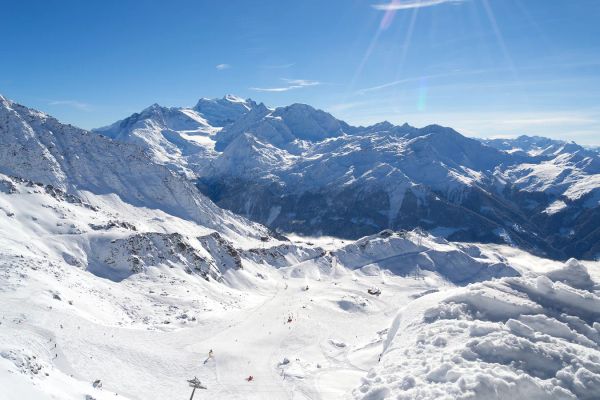
Grands Montets rises from 1,252 metres in Argentière village to 3,295 metres on the Aiguille des Grands Montets, delivering 2,043 metres of vertical drop across 29 kilometres of piste and 16 marked runs. The ski area spans three mountainsides above the Argentière Glacier, with terrain split into 21 per cent beginner, 31 per cent intermediate, 40 per cent advanced and 8 per cent expert. Its north-facing aspect and high-altitude glacial terrain guarantee snow preservation from late November through early May, consistently making it the first Chamonix area to open and the last to close.
The area operates under both Chamonix Le Pass and Mont Blanc Unlimited, though only the latter includes access to the summit installations. Six black runs descend from the upper stations, including the technical Point de Vue and Les Pylônes pistes, whilst intermediate terrain fans out across the Lognan plateau at 1,972 metres. Off-piste options dominate the experience, with Combe de la Pendant and the Magic Forest tree runs attracting freeriders from across Europe.
Argentière village at 1,250 metres retains its mountain authenticity, with an 18th-century baroque church and traditional alpine architecture anchoring a quieter alternative to central Chamonix 8 kilometres down-valley. The resort sits directly beneath the 4,122-metre Aiguille Verte and the sprawling Argentière Glacier, creating one of the most dramatic high-mountain settings in the French Alps. On-mountain facilities include restaurants at Lognan mid-station and boardercross terrain accessed from the Marmottons chairlift.
Grands Montets forms part of the broader Chamonix valley network but operates as a standalone area requiring road or rail connections to neighbouring sectors. The 2018 fire destroyed the original summit cable cars, temporarily limiting access to the highest terrain until December 2026, when architect Renzo Piano's €155 million replacement system reopens the glacial summit. The area suits confident intermediates through expert skiers, with limited appeal for pure beginners despite dedicated learning zones at Plan Joran.
1513m
Vertical
16
Runs
29 km
Piste
0m
Annual snow
The Terrain
16 runs across 29 km of piste
Grands Montets above Argentiere is a steep, serious mountain rather than a big piste network, with 29 kilometres of marked run across 16 runs. It drops 1,513 metres from 2,765 metres to the 1,252 metre base. Sanity grades it at 21% beginner, 31% intermediate, 40% advanced and 8% expert, so advanced skiers outnumber everyone else by some margin. Lifts are few, just two gondolas, two six-packs, a triple and two T-bars, and queues build on powder days. This is a mountain where the off-piste matters more than the groomers.
The Pierre a Ric piste is the long way home to Argentiere, while Point de Vue runs beside the Argentiere glacier and its seracs. The real draw is beyond the markers, where Combe de la Pendant and the tree runs of the Magic Forest draw freeriders from across Europe. Treat all of it as guide-only terrain unless you have avalanche gear and experience. Strong intermediates can enjoy the marked runs, but beginners should look elsewhere in the valley. Come here if you want steep lines, big vertical and a proper alpine setting.
Terrain split
16
runs
16 runs across 4 grades
Beginner3 runs · 21%
Intermediate5 runs · 31%
Advanced6 runs · 40%
Expert1 run · 8%
Time it right
When to visit Grands Montets (Chamonix)
The 2025-2026 season runs from 29 November 2025 through 3 May 2026, delivering a 155-day operating window that consistently outlasts other Chamonix areas by several weeks. Grands Montets typically opens in early December and extends into early May thanks to its exceptional altitude range and predominantly northwest exposure. The resort holds the distinction of being both first to open and last to close in the Chamonix valley each winter.
Snow reliability stems from the 3,300-metre summit elevation and north-facing glacial terrain, which preserves powder quality when lower resorts deteriorate. Average seasonal snowfall totals 461 centimetres, with summit snow depth averaging 2 metres at mid-season and base depths maintaining 1 metre through spring. March delivers peak accumulation, averaging 224 centimetres at the top and 109 centimetres at base elevations, though the shaded slopes receive limited afternoon sun from December through February.
January through March offers optimal powder conditions and full terrain access, whilst December requires patience as early-season coverage builds over rocky glacial sections and open crevasses. Late-season skiing from April into May attracts freeriders seeking corn snow and extended daylight, with temperatures warming but snow quality preserved at altitude. The resort's climate creates extremely cold morning temperatures during mid-winter, maintaining exceptional snow quality whilst other areas thaw.
The area hosts the Chamonix Unlimited Festival at season's end, typically staged as a major freeride closing party in late April. Limited programming exists compared to larger resorts, with the focus remaining on pure mountain terrain rather than events calendars. Artificial snowmaking covers lower slopes including the Pierre à Ric piste, ensuring valley-level access throughout the season regardless of natural accumulation.
Season 2026 - 2027
28 Nov 2026
Opens
2 May 2027
Closes
155
Days open
Getting there
Getting to Grands Montets (Chamonix), and where to stay
Grands Montets occupies the northern Chamonix valley in the Haute-Savoie département of the Auvergne-Rhône-Alpes region, with Argentière village sitting at 1,250 metres beneath the Aiguille Verte and Argentière Glacier. The ski area lies 8 kilometres north of Chamonix town centre, positioned at the upper end of the Arve valley within the Mont Blanc massif. Surrounding peaks include the 4,122-metre Aiguille Verte, Les Droites and Les Drus, creating an amphitheatre of 4,000-metre summits enclosing the glacial terrain.
Argentière functions as the base village, retaining authentic mountain character with traditional chalets, local guides' families and a baroque church dating from 1724. Chamonix lies 8 kilometres south via the valley floor, accessible in 15 minutes by road or 16 minutes on the Mont Blanc Express railway. The hamlet of Le Tour sits 5 kilometres north, whilst Vallorcine marks the valley's northern extremity near the Swiss border.
Road access follows the Route Départementale 1506 through the Chamonix valley, connecting to the A40 Autoroute Blanche at junction 21 near Passy. Drive time from Geneva measures 88 kilometres, typically requiring 75 to 90 minutes via the motorway through Cluses and Sallanches. The route involves two French péage points totalling approximately €6, with an optional Swiss vignette costing CHF 40 if using the faster Geneva airport autoroute routing.
Geneva Airport provides the primary international gateway, positioned 88 kilometres northwest with direct bus services taking 75 minutes and private transfers requiring similar journey times. Lyon-Saint-Exupéry Airport lies 220 kilometres south, whilst Chambéry Airport offers seasonal ski charter access. The Mont Blanc Express narrow-gauge railway connects Argentière station to Saint-Gervais-les-Bains-Le-Fayet in 55 minutes, with onward TGV connections to Paris and regional links via Martigny into Switzerland.
Where to stay
Search all stays →Hotels and lodges near Grands Montets (Chamonix), powered by Stay22.
Latest News
From the SnowStash desk
Alps Snow Forecast: Up to 64 cm Headed for the High Glaciers as the Snow Line Drops
The Alps are about to swap mild, sunny October weather for something far more wintry. A cold front arrives Tuesday, and SnowStash forecasts have Monterosa Ski out in front with 64 cm over 14 days, ahead of Blatten Belalp (55 cm) and Verbier (43 cm). The snow line should fall below 2000 metres by Wednesday night, and glaciers across Switzerland, Italy and Austria are in line for the best of it. The wind will have a say too.
20 Oct 2026

Four Dead After Avalanche Near Ski Portillo in Chile
A large avalanche struck near Laguna del Inca adjacent to Ski Portillo on Saturday afternoon, killing four people and injuring four others. The group were day visitors mountaineering in the backcountry after reportedly being warned about elevated avalanche risk by resort staff.
18 Oct 2026

Europe Ski Resorts Open Now: What Is Skiable in Mid-October 2026
Europe’s ski season is open, technically. After a record-warm summer, glaciers in Austria, Switzerland and Italy are running a few pistes apiece, Sölden, Stubai and Kitzsteinhorn started late, Titlis has pushed back to 24 October, and Zermatt reopens a few lifts on 14 October after more than two months shut. Finland’s Levi and Ruka are skiing on stored snow. Here is what is open, and what you actually get at each.
14 Oct 2026

Zermatt Plans World Cup Downhill Return on the Gornergrat for 2028
Zermatt is having another crack at a World Cup downhill, and this time nobody has to cross a border. Around 13 million Swiss francs is going into rebuilding the Gornergrat piste, including a jump fed by a roughly 300-metre in-run across the roof of the Gornergrat Railway gallery, with the Matterhorn lined up behind it for the TV cameras. First men’s race is pencilled in for March 2028, pending FIS homologation.
14 Oct 2026

Mt. Rose Begins Snowmaking for the 2026-27 Season at Lake Tahoe
Lake Tahoe’s highest base elevation is paying off early: Mt. Rose has started making snow for 2026-27 after the first flurries and a cold snap. The Nevada resort is backing it with nearly US$2 million in upgrades, including a replacement snowmaking main line, a new PistenBully groomer and restraint bars on every lift. Opening day is yet to be confirmed, though Heavenly and Northstar are already eyeing 20 November.
13 Oct 2026

Utah Ski Resorts 2026-27: What’s New at Alta, Deer Valley, Powder Mountain and More
Utah is still building flat out. For 2026-27, Powder Mountain opens a steep new Skytrac chair into more than 1,000 acres of advanced terrain, Deer Valley adds 200 acres on Hail Peak, Sundance gets a new quad and Park City adds a gondola from its new parking structure. Snowmaking is expanding almost everywhere, Eagle Point stays closed after the Cottonwood Fire, and the 2034 Games are setting the pace. Here’s what’s new, resort by resort.
13 Oct 2026

Mt Hutt Invests NZ$12 Million in Base Area, Tripling Its Sun Deck
Mt Hutt is getting busier, and its base lodge is about to catch up. NZ$12 million goes into a heated sun deck roughly three times the current size (430 m² to 1,300 m²), plus a new toilet block, heated steps down to snow level, extra storage and a new food and beverage outlet. Building starts after the 2026 season, with everything due for winter 2027.
11 Oct 2026

Vermont Ski Resort Opening Dates 2026-27: Few Dates Set, Killington Waits on the Cold
Vermont's season is slow to take shape. Stratton is tentatively targeting 18 November and Sugarbush 21 November, while Pico has Friday 11 December on the calendar. Killington never sets a date and opens when the snowmaking allows, and Vail Resorts has yet to name days for Stowe, Okemo and Mount Snow. The forecasts disagree about snow, and the main El Niño worry for the Green Mountains is warmth.
9 Oct 2026
Grands Montets (Chamonix) Lift System
The ski area currently operates 7 lifts transporting skiers from Argentière to mid-mountain elevations, comprising 2 gondolas, 2 six-seat chairlifts, 1 triple chairlift and 2 T-bars following the 2018 infrastructure changes. Access from the village begins via the Plan Joran gondola, climbing to 2,134 metres and serving beginner terrain, whilst the original Lognan cable car route remains closed pending reconstruction. Additional surface lifts include the Tabé chairlift for novice areas and the Pendant and Lavancher chairs serving varied descent options.
The Bochard gondola rises 800 metres to 2,765 metres, providing the current highest lift-served point and access to steep alpine terrain overlooking the glacier. The Herse six-seat high-speed chairlift reaches 2,593 metres, replacing an older two-seat installation during mid-station upgrades completed in recent years. Both lifts deliver skiers to challenging red and black pistes, plus extensive marked and unmarked off-piste zones beneath the glacier seracs.
The lift network flows from multiple base points, with Plan Joran handling the majority of uphill traffic since the cable car closure. From the mid-station hub at Lognan, skiers branch towards either Bochard for steeper glaciated runs or Herse for technical couloirs and bowls. The system efficiently distributes skiers across three distinct sectors despite reduced summit access.
Construction of the replacement summit system began in April 2024, with Doppelmayr installing a 10-person monocable gondola from Argentière to Lognan and a 24-person 3S tricable gondola from Lognan to 3,275 metres. The €107.6 million project includes wind-resistant technology to maximise operational days without increasing capacity. Until completion in December 2026, skiers skin 500 to 600 vertical metres from the Herse top station to reach glacier terrain previously served by the destroyed cable car.
7lifts across 4 types
2
Gondolas
2
6-Person Chairs
1
Triple Chair
2
T-Bars
Grands Montets (Chamonix) lift system
Grands Montets (Chamonix) is served by 7 lifts, listed here by type. Check which lifts are turning against the live conditions before you plan your first laps - early lifts and high-speed chairs get you to the best snow fastest.
More Grands Montets (Chamonix) intelligence: trail map, snow report, webcams, resort overview.