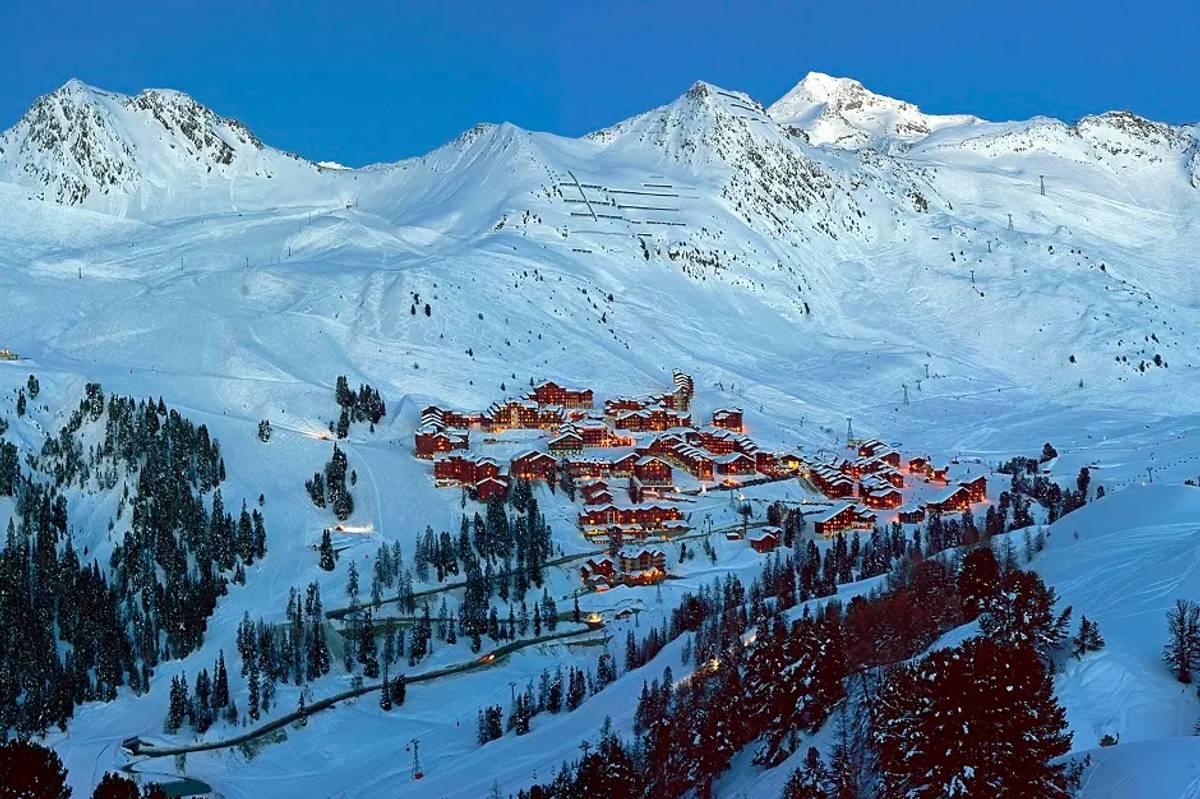
La Plagne
La Plagne: 225km piste, 1,960m vertical, 11 villages. Part of 425km Paradiski. Tarentaise, France. 7 Dec to 26 Apr.
Season 2026 - 2027
Opens
12 Dec 2026
Closes
25 Apr 2027
Days open
134
Annual snow
6m
The Overview
Michael Fulton
Melbourne-based skier and snowboarder with 50+ resorts across 5 continents. Specialises in Australian resorts and international resort comparisons.
La Plagne operates across 1,207 to 3,167 metres with 225 kilometres of piste, 137 runs and 1,960 metres of vertical drop. The terrain divides 62 per cent beginner, 26 per cent intermediate and 12 per cent advanced across 11 villages spread between the valley floor and 2,100 metres altitude. Over 70 per cent of skiing sits above 2,000 metres, with glacier access at 3,080 metres via the Glaciers 2 gondola. Average annual snowfall reaches 518 to 600 centimetres, supported by 359 snow cannons covering 50 kilometres of piste.
The ski area contains 137 marked runs including 8 green, 73 blue, 35 red and 17 black pistes, with extensive off-piste terrain on Bellecôte's north face. Seven purpose-built altitude villages between 1,800 and 2,100 metres provide ski-in ski-out access, whilst lower villages at Montchavin (1,250 metres), Montalbert and Champagny-en-Vanoise offer traditional Savoyard character. Plagne Centre at 1,970 metres functions as the central hub, connecting all sectors. The resort built a bobsleigh track for the 1992 Albertville Winter Olympics that remains operational at La Roche.
La Plagne recorded 2.5 million visitors per season in 2014, making it the most visited ski resort globally at that time. Villages range from functional architecture at Plagne Centre and the Aime 2000 'Paquebot' to quieter family bases at Plagne 1800 and Belle Plagne. The Bellecôte glacier sector provides high-altitude skiing, though the Chiaupe Glacier closed to skiing after the 2022-23 season for environmental preservation. Montchavin-Les Coches holds Famille Plus certification, whilst Champagny borders Vanoise National Park.
The resort forms half of Paradiski, linked to Les Arcs and Peisey-Vallandry since 2003 via the Vanoise Express cable car travelling at over 40 kilometres per hour across the Ponturin Gorge. Paradiski covers 425 kilometres of piste with 129 lifts and 258 runs, ranking as one of the largest linked ski areas in the Alps. The 2025-26 season runs 7 December 2025 to 26 April 2026. La Plagne alone suits beginners to advanced skiers, with dedicated CoolSki zones offering free beginner lifts at multiple villages and extensive intermediate cruising terrain.
1960m
Vertical
137
Runs
225 km
Piste
6m
Annual snow
The Terrain
137 runs across 225 km of piste
La Plagne covers 225 kilometres of piste and 137 runs, falling 1,960 metres from the 3,167 metre top to the 1,207 metre base. Beginners dominate at 62%, followed by 26% intermediate and 12% advanced, with no expert grading. The area is made up of several purpose-built villages, and the lift system is huge: 18 six-seaters, 11 gondolas, 27 T-bars and nine quads among others. With such a high share of easy terrain and mostly high-altitude slopes, it is a practical choice for groups where the abilities vary.
Roche de Mio gives access to long runs down to Plagne Bellecote, with a red or blue choice, and Mont de la Guerre is the longest red in the resort, dropping nearly 1,200 metres without a lift. The Emile Allais piste offers fast, wide carving for advanced skiers, and the Bellecote glacier black runs are left ungroomed. Verdons and Col de Forcle are gentle options for progressing beginners. La Plagne also links to Les Arcs by the Vanoise Express, extending the options for strong skiers. It works for families, beginners and cruising intermediates, while experts should add the Bellecote glacier.
Terrain split
137
runs
137 runs across 4 grades
Beginner85 runs · 62%
Intermediate36 runs · 26%
Advanced16 runs · 12%
Expert0 runs · 0%
Time it right
When to visit La Plagne
The 2025-26 season operates 7 December 2025 to 26 April 2026, with Paradiski connections including Vanoise Express running 13 December 2025 to 25 April 2026. Typical season length spans 135 to 140 days from mid-December through late April. The resort opened 24 December 1961 with two drag lifts and four slopes, developing progressively as villages were added through the 1970s and 1980s. Pre-season weeks in early December offer discounted lift passes before Christmas holidays commence.
Annual snowfall averages between 518 and 600 centimetres, with the snowiest period occurring in December's second week bringing approximately 50 centimetres and 3.3 snowy days. Over 70 per cent of terrain above 2,000 metres ensures reliable coverage from December through April. Snowmaking covers 50 kilometres via 359 cannons, approximately 23 per cent of total piste length. South-facing exposure brings sunshine to many sectors, though Champagny's orientation results in slightly less snow retention than north-facing areas.
January and February deliver peak powder conditions and coldest temperatures, with high-altitude sectors maintaining dry snow throughout winter. March brings spring skiing with morning freeze-thaw cycles creating firm corduroy early and softer conditions by afternoon. April extends the season on upper slopes above 2,500 metres whilst lower villages transition to slush. December typically sees base depths building, with Christmas week offering 136 operational days historically. Mid-season maintains the deepest snowpack.
Ice climbing competitions and ski races run through winter months, alongside après-ski events with live bands. The 6000D trail running race covers 69 kilometres with 3,400 metres elevation gain during late July, established in 1990. Summer lift operations from early July to late August serve hikers and mountain bikers, with the Glaciers gondola offering pedestrian access to 3,080 metres. Night skiing is not available in La Plagne itself but operates in linked Les Arcs sectors on designated evenings.
Season 2026 - 2027
12 Dec 2026
Opens
25 Apr 2027
Closes
134
Days open
6 m
Annual snow
The record
Historical snowfall at La Plagne
Daily snow reports at La Plagne go back to 1996, 31 winters on the books. Open the record to compare winters, lifts and piste.
60 cm
Snowiest day
23 Nov 2025
59 cm
This winter · 2026-27
so far
603 cm
Typical winter
average of complete seasons
Winter totals
cm
Past wintersThis winter
Getting there
Getting to La Plagne, and where to stay
La Plagne occupies the Tarentaise valley in Savoie, southeastern France, with villages distributed between 1,207 and 2,100 metres across four communes: Aime, Bellentre, Champagny-en-Vanoise and Mâcot-la-Plagne, merged as La Plagne Tarentaise commune in January 2016. The resort sits directly above the valley town of Aime at 650 metres, facing Mont Blanc with southern exposure across much of the domain. Vanoise National Park, France's first national park created in 1963, borders Champagny village providing access to protected alpine terrain.
Aime-la-Plagne in the valley sits 10 minutes from Bourg-Saint-Maurice, the Haute-Tarentaise capital at approximately 12 kilometres distance. Moûtiers lies 15 kilometres north along the N90, serving as the main valley junction town. The historic Basilique Saint-Martin in Aime dates from the 11th century as a Romanesque monument. Albertville, host of the 1992 Winter Olympics, sits 40 kilometres northwest. The area's mining heritage includes lead and silver extraction that ceased in 1973, with Plagne 1800 village occupying the former mining settlement.
Road access follows the A43 motorway from Chambéry or Grenoble to Albertville at approximately 77 kilometres, then the N90 dual carriageway to Moûtiers and Aime. From Aime, the D220 climbs to altitude villages in 30 to 40 minutes by road. Geneva lies 149 kilometres distant via A41 and A43 motorways, requiring approximately 2 hours 30 minutes driving. Lyon sits 196 kilometres away, roughly 2 hours 30 minutes via A43. Paris is 645 kilometres north, around 6.5 to 7 hours via A6 motorway.
Geneva Airport at 150 to 155 kilometres offers the most international connections with 2 hours 30 minutes to 3 hours 30 minutes transfer time depending on traffic. Chambéry Airport at 125 kilometres provides the shortest transfer at 1 hour 45 minutes but fewer flight options. Lyon Airport lies 195 to 200 kilometres distant with 2 hours 30 minutes transfer time, whilst Grenoble Airport sits 196 kilometres away. Aime-la-Plagne railway station serves TGV and regional trains with connections to Paris Gare de Lyon in approximately 4 hours 30 minutes, Chambéry, and Bourg-Saint-Maurice. Eurostar Snow Train operates Saturdays during winter from London St Pancras via Lille to Aime-la-Plagne and neighbouring valley stations. Local buses connect the station to resort villages in 30 to 40 minutes.
Where to stay
Search all stays →Hotels and lodges near La Plagne, powered by Stay22.
Latest News
From the SnowStash desk
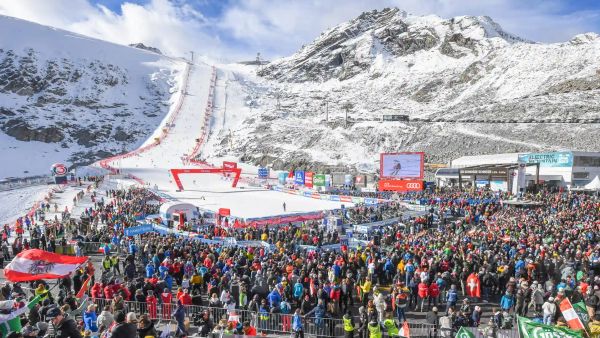
Pinheiro Braathen Wins Sölden Giant Slalom Opener by 0.48 Seconds
Two days at Sölden, two races decided by a hundredth somewhere on the podium, and one very quick Brazilian. Lucas Pinheiro Braathen led from the first run to win the men’s World Cup opener by 0.48 seconds, with Loïc Meillard second and Marco Odermatt third. River Radamus charged from 15th to fourth on a rutted course, and Britain’s Freddy Carrick-Smith banked his first World Cup points. Braathen still hasn’t lost a giant slalom since Olympic gold.
25 Oct 2026
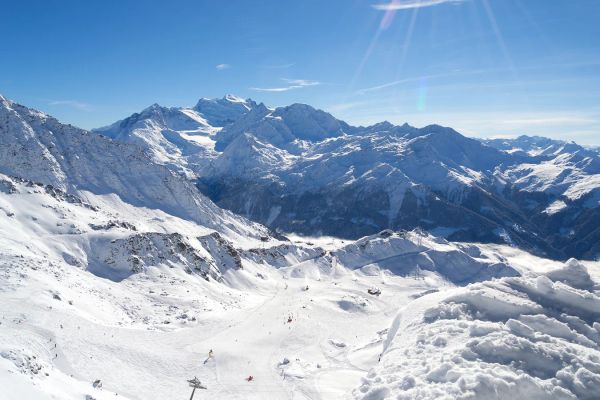
Alps Snow Forecast: Up to 64 cm Headed for the High Glaciers as the Snow Line Drops
The Alps are about to swap mild, sunny October weather for something far more wintry. A cold front arrives Tuesday, and SnowStash forecasts have Monterosa Ski out in front with 64 cm over 14 days, ahead of Blatten Belalp (55 cm) and Verbier (43 cm). The snow line should fall below 2000 metres by Wednesday night, and glaciers across Switzerland, Italy and Austria are in line for the best of it. The wind will have a say too.
20 Oct 2026
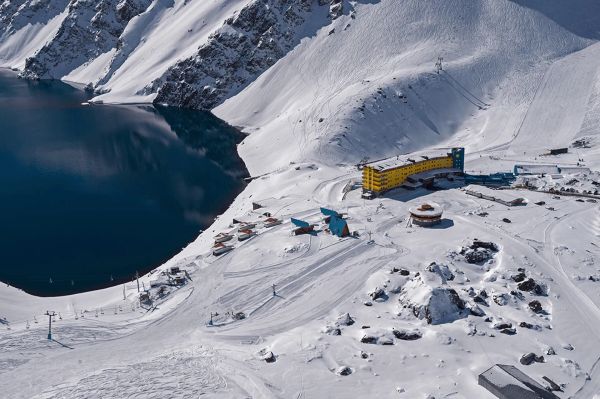
Four Dead After Avalanche Near Ski Portillo in Chile
A large avalanche struck near Laguna del Inca adjacent to Ski Portillo on Saturday afternoon, killing four people and injuring four others. The group were day visitors mountaineering in the backcountry after reportedly being warned about elevated avalanche risk by resort staff.
18 Oct 2026
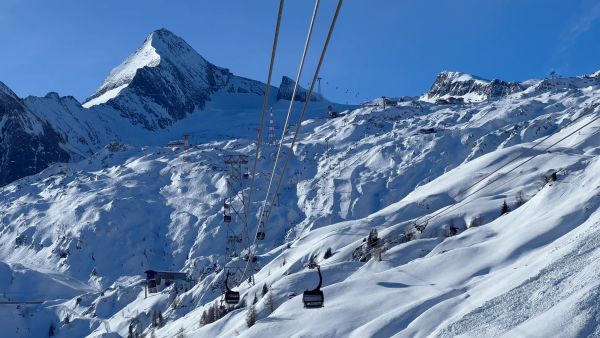
Europe Ski Resorts Open Now: What Is Skiable in Mid-October 2026
Europe’s ski season is open, technically. After a record-warm summer, glaciers in Austria, Switzerland and Italy are running a few pistes apiece, Sölden, Stubai and Kitzsteinhorn started late, Titlis has pushed back to 24 October, and Zermatt reopens a few lifts on 14 October after more than two months shut. Finland’s Levi and Ruka are skiing on stored snow. Here is what is open, and what you actually get at each.
14 Oct 2026
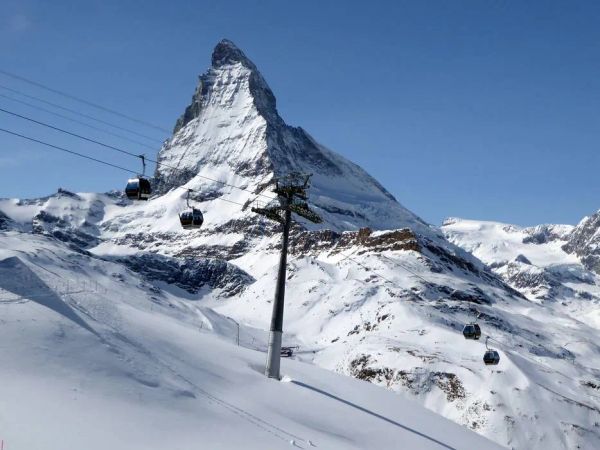
Zermatt Plans World Cup Downhill Return on the Gornergrat for 2028
Zermatt is having another crack at a World Cup downhill, and this time nobody has to cross a border. Around 13 million Swiss francs is going into rebuilding the Gornergrat piste, including a jump fed by a roughly 300-metre in-run across the roof of the Gornergrat Railway gallery, with the Matterhorn lined up behind it for the TV cameras. First men’s race is pencilled in for March 2028, pending FIS homologation.
14 Oct 2026
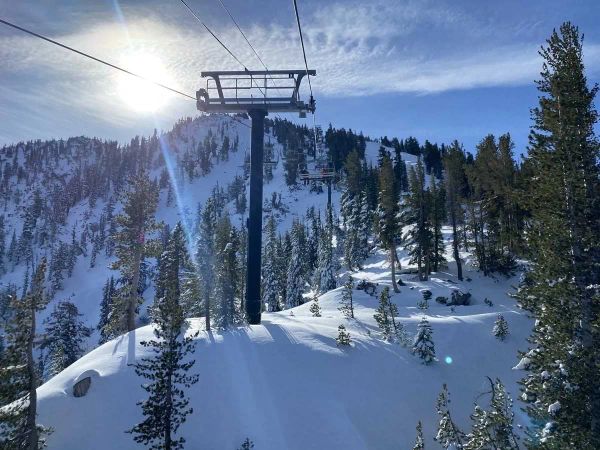
Mt. Rose Begins Snowmaking for the 2026-27 Season at Lake Tahoe
Lake Tahoe’s highest base elevation is paying off early: Mt. Rose has started making snow for 2026-27 after the first flurries and a cold snap. The Nevada resort is backing it with nearly US$2 million in upgrades, including a replacement snowmaking main line, a new PistenBully groomer and restraint bars on every lift. Opening day is yet to be confirmed, though Heavenly and Northstar are already eyeing 20 November.
13 Oct 2026
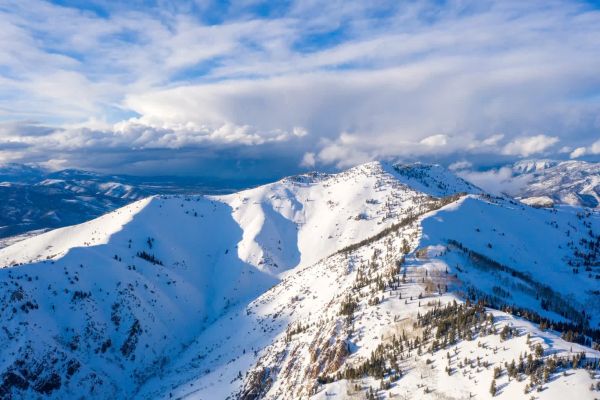
Utah Ski Resorts 2026-27: What’s New at Alta, Deer Valley, Powder Mountain and More
Utah is still building flat out. For 2026-27, Powder Mountain opens a steep new Skytrac chair into more than 1,000 acres of advanced terrain, Deer Valley adds 200 acres on Hail Peak, Sundance gets a new quad and Park City adds a gondola from its new parking structure. Snowmaking is expanding almost everywhere, Eagle Point stays closed after the Cottonwood Fire, and the 2034 Games are setting the pace. Here’s what’s new, resort by resort.
13 Oct 2026
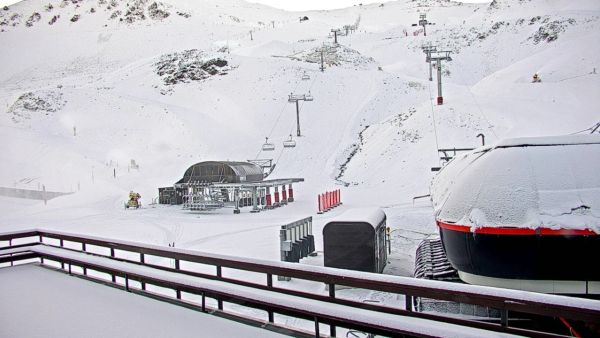
Mt Hutt Invests NZ$12 Million in Base Area, Tripling Its Sun Deck
Mt Hutt is getting busier, and its base lodge is about to catch up. NZ$12 million goes into a heated sun deck roughly three times the current size (430 m² to 1,300 m²), plus a new toilet block, heated steps down to snow level, extra storage and a new food and beverage outlet. Building starts after the 2026 season, with everything due for winter 2027.
11 Oct 2026
La Plagne Lift Tickets
La Plagne lift tickets & passes
Opening day for the winter 2026 - 2027 season is scheduled for Dec 12, 2026 (subject to change). Lift tickets at La Plagne typically go on sale well before the start of the ski season.
Lift tickets FAQ
How much does a La Plagne day pass cost?
La Plagne day pass pricing varies by date and advance booking - see the full breakdown in the tickets panel.
Can I buy La Plagne lift tickets online?
Yes, you can purchase tickets online or at the resort ticket office.
Are there discounts for multi-day passes?
Yes, multi-day packages typically offer significant savings compared to individual day passes. The per-day cost decreases with longer stays.
What is included with a La Plagne lift ticket?
Full access to all lifts and trails at La Plagne, including mountain safety and patrol services.
What is the difference between La Plagne lift tickets and ski passes?
"Lift tickets" and "ski passes" refer to the same thing at La Plagne - your access to the mountain's lifts and trails for your chosen duration.
When should I buy La Plagne lift tickets for the best price?
Purchase tickets at least 7 days in advance for the best rates, and consider weekday visits for further savings over weekend rates.
Does La Plagne offer group discounts on lift tickets?
Group discounts are typically available for parties of 10 or more. Contact La Plagne directly for group booking information and rates.
How can I check current conditions before buying tickets?
Before purchasing, check the live snow report and mountain webcams to see current weather, snow conditions, and lift operations at La Plagne.
More La Plagne intelligence: snow report, webcams, resort overview.