
The Overview
Michael Fulton
Melbourne-based skier and snowboarder with 50+ resorts across 5 continents. Specialises in Australian resorts and international resort comparisons.
Le Grand Massif spans 265 kilometres of pistes across five interconnected villages in France's Haute-Savoie department, rising from 697 metres at Samoëns village to 2,480 metres at Les Grandes Platières. The ski area encompasses 149 marked runs with a vertical drop of 1,783 metres, making it the fourth-largest linked ski domain in France. Terrain distribution favours progression skiers, with 51% beginner runs, 36% intermediate, 9% advanced, and 4% expert. The 14-kilometre Cascades run from Flaine to Sixt Fer-à-Cheval ranks among the longest pistes in the Alps, descending 1,740 metres through protected nature reserves.
The north-facing bowl configuration preserves snow quality throughout the season, whilst 80% of slopes above 1,600 metres elevation ensure reliable coverage from mid-December through mid-April. Flaine anchors the high-altitude sector at 1,600 metres, offering direct access to expansive above-treeline terrain, whilst Samoëns, Les Carroz, and Morillon provide traditional Savoyard village bases between 700 and 1,140 metres. The Combe de Gers off-piste zone attracts expert freeriders, accessible via the steep Styx black run. Olympic downhill champion Antoine Deneriaz trained on these slopes before winning gold in 2006.
Flaine's purpose-built 1960s architecture contrasts sharply with the historic stone villages below, where Samoëns holds Monument Historique status as a protected heritage site. The Coulouvrier six-seat chairlift, opened in 2018, climbs 944 vertical metres over 2.9 kilometres between Samoëns and Morillon, creating Europe's longest detachable six-seater at the time of installation. Mid-mountain restaurants cluster around the traditional sectors, whilst the remote Refuge du Lac de Gers requires advance booking. Peak-season crowds concentrate at the Chariande Express and Grand Massif Express base stations.
Compagnie des Alpes acquired four of the five resorts in 1997, maintaining competitive season pass pricing below €600 for early-bird purchasers. The interconnected domain suits mixed-ability groups and intermediates seeking mileage, with free ski buses linking Morillon, Samoëns, and Sixt villages. Children under eight and adults over 75 ski free on presentation of proof of age. Geneva Airport lies 70 kilometres northwest via the A40 Autoroute Blanche, whilst Cluses TGV station sits 15 kilometres from the nearest village access point.
1783m
Vertical
149
Runs
265 km
Piste
0m
Annual snow
The Terrain
149 runs across 265 km of piste
Le Grand Massif links Flaine, Samoens, Morillon and Les Carroz across 265 kilometres of piste and 149 runs, with a vertical of 1,783 metres from 697 metres to 2,480 metres. Sanity grades the area at 51% beginner, 36% intermediate, 9% advanced and 4% expert. The low valley base at Samoens and Morillon means the area depends on snow cover lower down, while Flaine sits much higher. A wide mix of lifts, including 25 T-bars, 11 six-seaters, eight quads and seven gondolas, ties the four villages together into a single circuit.
Skiers can follow the long Cascades run, a 14 kilometre blue from Flaine toward Sixt, which is among the longest in Europe. The Tete du Pre du Saix has steeper pistes that open into fast cruising lower down, and the Combe de Gers is a well-known freeride descent with about 800 metres of vertical. Flaine's modernist village sits right on the slopes at altitude, while Samoens offers a traditional village base. Beginners and intermediates will spend most of their time on wide pistes, and freeriders should take a local guide. It is a good fit for families and mixed groups.
Terrain split
149
runs
149 runs across 4 grades
Beginner76 runs · 51%
Intermediate54 runs · 36%
Advanced13 runs · 9%
Expert6 runs · 4%
Time it right
When to visit Le Grand Massif
The 2025-26 season runs from 6 December 2025 through 19 April 2026 at Flaine, with Les Carroz and Samoëns operating 13 December to 12 April, Morillon 20 December to 6 April, and Sixt 20 December to 8 March. The staggered calendar reflects elevation differences, with higher Flaine benefiting from earlier snowfall and prolonged spring coverage. Typical season length spans 18 weeks at altitude and 16 weeks in valley villages. Pre-Christmas opening depends on early-December snowfall reaching the 1,600-metre snow front.
Annual snowfall averages 338 centimetres at mid-mountain elevations, with summit zones receiving significantly higher accumulation due to proximity to Mont Blanc weather systems. March historically delivers peak snowfall, averaging 41 centimetres per week, whilst February and March offer the most reliable powder windows. Average snow depth reaches 296 centimetres on upper slopes and 74 centimetres at lower elevations during the first week of April across the past 11 seasons. Snowmaking covers 109 kilometres of pistes, including a €1.5 million reservoir serving the Coulouvrier and Samoëns sectors with 35,000 cubic metres of water capacity.
February half-term and French school holidays generate peak visitor numbers, particularly at Samoëns and Morillon beginner zones. Early January and late March offer quieter slopes with comparable snow conditions, though late-season skiing concentrates above 1,600 metres as lower runs soften. Spring conditions favour morning sessions before midday thaw cycles begin. The exposed Flaine bowl maintains skiable coverage into late April, whilst tree-lined Morillon and Les Carroz sectors close earlier. North-facing aspect preserves snow quality longer than south-facing alternatives.
No major on-mountain events calendar exists, though the resort promotes local producers through the Origine Grand Massif label supporting regional artisans. Night skiing does not feature in the standard offering. The resort sells piste maps for €1, with proceeds funding reforestation projects on private forestry land. Sustainability initiatives include removing on-mountain rubbish bins to encourage waste removal to valley recycling points and an energy reduction target of 5% annually over two years.
Season 2026 - 2027
28 Nov 2026
Opens
18 Apr 2027
Closes
141
Days open
Getting there
Getting to Le Grand Massif, and where to stay
Le Grand Massif occupies the Giffre Valley in Haute-Savoie department, southeastern France, midway between Geneva and Chamonix within the Faucigny region. Samoëns village sits at 700 metres elevation, Morillon at 700 metres, Les Carroz at 1,140 metres, and Flaine at 1,600 metres, whilst Sixt Fer-à-Cheval anchors the eastern end at 760 metres below the Fiz mountain range. The domain faces Mont Blanc to the south, the Aravis range to the west, and borders the Portes du Soleil to the north. The Sixt-Fer-à-Cheval and Passy nature reserves protect 80% of Sixt's terrain.
Cluses, the nearest significant town 15-19 kilometres northwest, hosts the closest TGV railway station with direct services to Paris, Lyon, and Geneva. Samoëns holds Monument Historique classification, the only French ski village with protected heritage status. Arâches-La Frasse administers Les Carroz, whilst Magland commune co-manages Flaine with the valley town. The 12th-century Sixt abbey and medieval square define the eastern valley terminus. Population remains year-round despite seasonal tourism peaks during December-April skiing and July-August summer holidays.
The A40 Autoroute Blanche provides primary motorway access, with exit 18 at Cluses serving Samoëns, Morillon, and Sixt via the D902 and Col de Châtillon, and exit 19 serving Les Carroz and Flaine via the RN205 and D106. Geneva lies 42 kilometres northwest, requiring 59 minutes by car. Lyon sits 210 kilometres south via the A41 and A40, taking approximately 2 hours 45 minutes. The D106 climb to Flaine covers 12 steep kilometres from the valley floor.
Geneva Airport (GVA) is 70 kilometres distant with transfer times of 1 hour to 1 hour 15 minutes depending on destination village and traffic conditions. Chambéry Airport sits 122 kilometres southeast, Lyon-Saint Exupéry 210 kilometres, and Grenoble 180 kilometres. Cluses railway station connects to Annemasse (50 kilometres northwest) via regional TER services, with Annemasse offering direct trains to Geneva Cornavin and the Léman Express linking Geneva Airport. Local buses and private transfer companies service the final 15-20 kilometre leg from Cluses to individual villages, with journey times of 20-30 minutes.
Where to stay
Search all stays →Hotels and lodges near Le Grand Massif, powered by Stay22.
Latest News
From the SnowStash desk
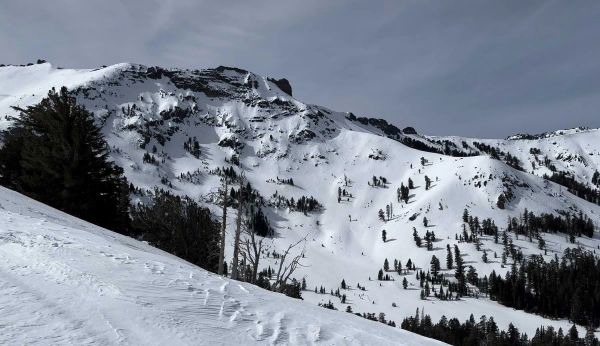
California Ski Resort Opening Dates 2026-27: Mammoth Leads, Tahoe Follows
Mammoth Mountain is first up in California, targeting Friday 13 November after a dusting of September snow. Heavenly and Northstar follow on 20 November, Palisades Tahoe on Wednesday 25 November and Sugar Bowl on 27 November, with Kirkwood on 4 December and June Mountain on 19 December. Plenty of smaller areas have no date yet. A super El Niño favours the Sierra, but a warmer storm track is the catch.
7 Oct 2026
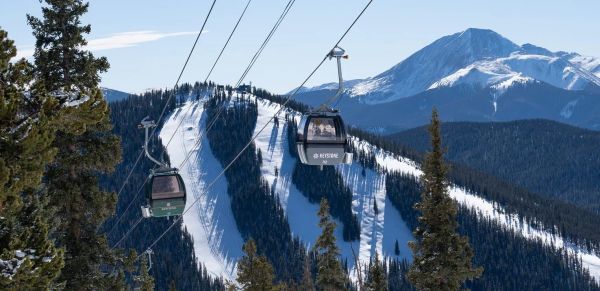
Colorado Ski Resort Opening Dates 2026-27: A-Basin and Keystone Race to Be First
Arapahoe Basin, Keystone and Winter Park are all chasing an October start, though none has a firm date yet. The first dated openers are Breckenridge and Copper on Friday 6 November, then Vail on 13 November, with most of the rest bunched around US Thanksgiving. Hesperus did not open at all last season. A super El Niño offers hope but no guarantee, and forecasters say the southern mountains have the better odds.
5 Oct 2026
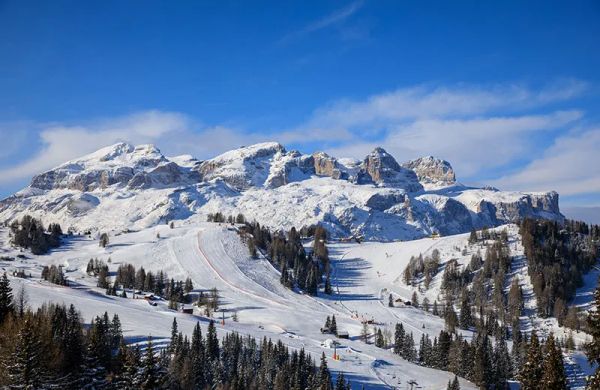
Dolomiti Superski 2026-27: Four New Gondolas, New Reservoirs and an €89 Peak Day Pass
Dolomiti Superski is spending around €100 million across its 12 areas before winter. Kronplatz gets a new 10-passenger gondola with a middle station, 3 Zinnen gets Helmissimo, and Val di Fassa swaps a chairlift for a gondola above Col Valvacin. New water-storage basins and upgraded snowmaking follow, and construction has started on the San Martino to Passo Rolle link. A peak adult day pass is €89.
4 Oct 2026
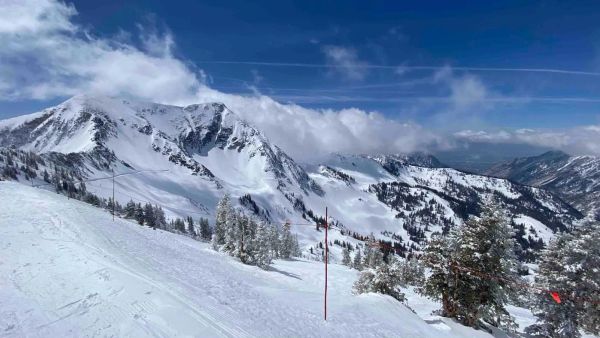
Utah Ski Resort Opening Dates 2026-27: Brian Head First, Eagle Point Out
Brian Head is targeting 6 November, though last year it aimed for 7 November and did not open until the 25th. Park City, Alta and Solitude are pencilled in for 20 November, Snowbird and Snowbasin for 27 November, and Deer Valley for 5 December. Eagle Point will stay closed after the Cottonwood Fire. A super El Niño is forecast, but the big snow is not expected until January.
4 Oct 2026
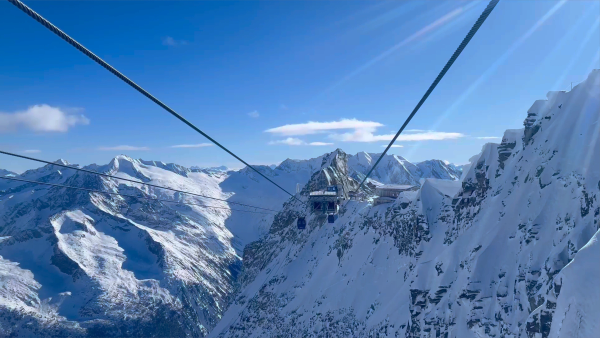
Hintertux Glacier Opens for 2026-27 With 12 Kilometres of Piste
Hintertux became Austria's second glacier to open for 2026-27 on Friday 2 October, after the Pitztal Glacier. Twelve kilometres of piste are running around the Olperer and Gefrorene Wand, served by one gondola and two drag lifts, with the Betterpark also open. Lifts officially run 8:15 am to 4:30 pm, but skiing stops at 2 pm for now.
4 Oct 2026
Vail Resorts Counts the Cost of a Thin Winter as Pass Sales Slide Further
A historically poor western winter cut Vail Resorts' annual net income from $280 million to $147.5 million and skier visits by 13.4 per cent. Now 2026-27 pass units are down 12 per cent as of 18 September, worse than the 10 per cent flagged in spring. Vail blames the weather and thinks some buyers are simply waiting, and it forecasts a rebound if the snow behaves.
3 Oct 2026
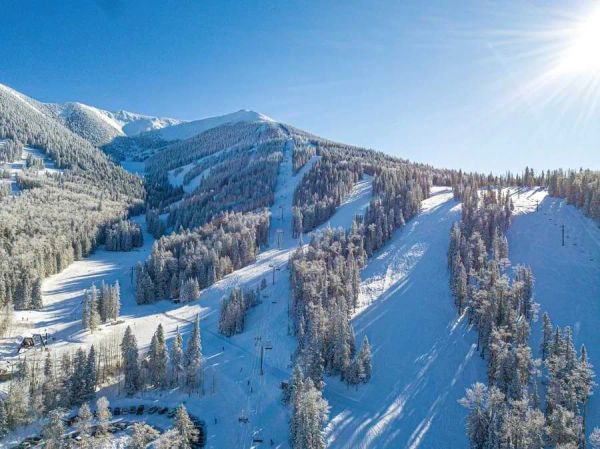
Arizona Snowbowl's $1 Lift Tickets Are Hard to Find, but $9 Days Are Not
Arizona Snowbowl advertised eight $1 lift ticket days this winter. Go looking and only three are showing - 10 March, 1 April and 10 April - so the rest may already have gone. The consolation is a calendar full of $9 days, including all but one day in April. Opening day is 20 November, weather permitting, and opening weekend is $19.
2 Oct 2026
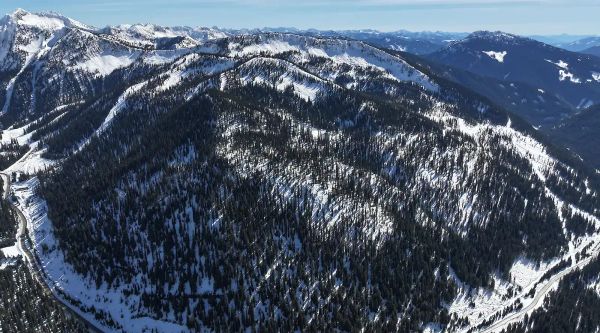
Whitewater Brings Its Short Side Inbounds, With Six New Runs for 2026-27
For years, Whitewater's Short Side was where you ducked a rope and hoped for the best: unmapped, ungroomed and unpatrolled. This winter it's inbounds. Six new runs of glades and fall-line skiing add 190 acres (about 77 hectares), taking the resort past 1,400 acres in total. F2 Logging spent a month in the trees to make it happen, and opening day is pencilled in for 4 December. Bonanza now needs less snow to groom, too.
1 Oct 2026