
Season 2026 - 2027
Opens
12 Dec 2026
Closes
7 Mar 2027
Days open
85
Annual snow
1m
The Overview
Geißkopf delivers a diverse winter sports experience in the Bavarian Forest, with 8km of well-groomed slopes catering to all ability levels. This family-friendly resort combines traditional skiing with modern attractions including Germany's longest toboggan run, creating an ideal destination for mixed-interest groups. The uncrowded pistes and authentic eastern Bavarian character make Geißkopf particularly appealing for those seeking quality winter experiences away from the busier Alpine regions.
265m
Vertical
9
Runs
8 km
Piste
1m
Annual snow
The Terrain
9 runs across 8 km of piste
Geißkopf is a mid-sized hill in the Bavarian Forest above Bischofsmais, with nine runs and 8 kilometres of piste between 835 and 1,100 metres, a vertical of 265 metres. The grading is 23% beginner, 66% intermediate and 11% advanced, with no expert terrain, so it is mainly a red-run hill. A six-seat chair, two surface lifts and four T-bars provide the uphill access. Snowmaking covers most of the pistes, which keeps the season reliable when natural snow is thin. Expect a quick day of laps rather than a destination trip.
The main descent, known as the Herrenabfahrt, is about 1,200 metres long and is the longest floodlit piste in the Bavarian Forest, with lights on several evenings a week in peak season. The broad pistes suit intermediates cruising and building confidence, while the beginner slopes and conveyor lifts are friendly for small children. A long toboggan run runs alongside, which helps when not everyone in the family skis. Geißkopf is aimed at day-trippers and weekend families from Lower Bavaria, and at night-skiing regulars. Advanced skiers will find the steeper section short, and freeride terrain is minimal.
Terrain split
9
runs
9 runs across 4 grades
Beginner2 runs · 23%
Intermediate6 runs · 66%
Advanced1 run · 11%
Expert0 runs · 0%
Time it right
When to visit Geißkopf
Geißkopf typically operates from December through March, with the most consistent conditions in January and February. The resort benefits from its position in the snowy Bavarian Forest region, receiving substantial natural snowfall supplemented by strategic snowmaking on key runs. The predominantly north-facing slopes maintain good snow quality throughout the season, often preserving excellent conditions when lower areas struggle. The resort's growing reputation for diverse winter activities makes it increasingly popular throughout the season.
Season 2026 - 2027
12 Dec 2026
Opens
7 Mar 2027
Closes
85
Days open
1 m
Annual snow
Getting there
Getting to Geißkopf, and where to stay
Located near Bischofsmais in eastern Bavaria, Geißkopf sits approximately 160km from Munich and 60km from Passau. The resort enjoys a spectacular position within the Bavarian Forest, surrounded by pristine woodland and traditional villages. This location offers visitors the opportunity to experience the unique culture of eastern Bavaria while enjoying quality winter sports. The surrounding Bavarian Forest National Park provides additional winter activities including extensive cross-country skiing, winter hiking, and wildlife observation in one of Germany's most impressive wilderness areas.
Where to stay
Search all stays →Hotels and lodges near Geißkopf, powered by Stay22.
Latest News
From the SnowStash desk
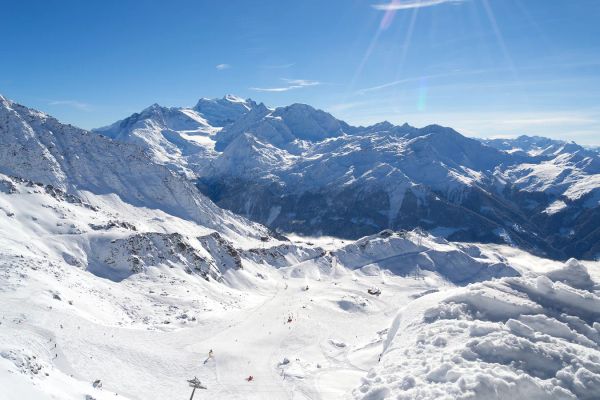
Alps Snow Forecast: Up to 64 cm Headed for the High Glaciers as the Snow Line Drops
The Alps are about to swap mild, sunny October weather for something far more wintry. A cold front arrives Tuesday, and SnowStash forecasts have Monterosa Ski out in front with 64 cm over 14 days, ahead of Blatten Belalp (55 cm) and Verbier (43 cm). The snow line should fall below 2000 metres by Wednesday night, and glaciers across Switzerland, Italy and Austria are in line for the best of it. The wind will have a say too.
20 Oct 2026
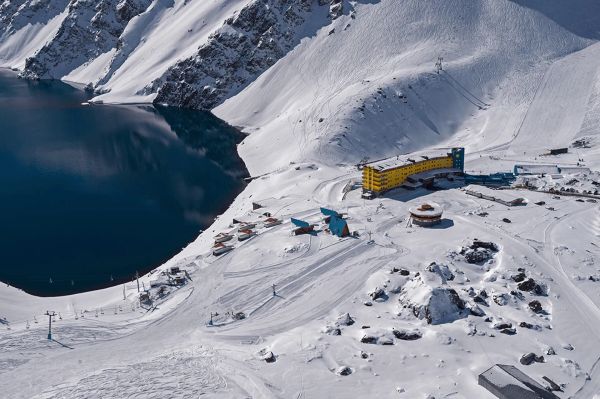
Four Dead After Avalanche Near Ski Portillo in Chile
A large avalanche struck near Laguna del Inca adjacent to Ski Portillo on Saturday afternoon, killing four people and injuring four others. The group were day visitors mountaineering in the backcountry after reportedly being warned about elevated avalanche risk by resort staff.
18 Oct 2026

Europe Ski Resorts Open Now: What Is Skiable in Mid-October 2026
Europe’s ski season is open, technically. After a record-warm summer, glaciers in Austria, Switzerland and Italy are running a few pistes apiece, Sölden, Stubai and Kitzsteinhorn started late, Titlis has pushed back to 24 October, and Zermatt reopens a few lifts on 14 October after more than two months shut. Finland’s Levi and Ruka are skiing on stored snow. Here is what is open, and what you actually get at each.
14 Oct 2026

Zermatt Plans World Cup Downhill Return on the Gornergrat for 2028
Zermatt is having another crack at a World Cup downhill, and this time nobody has to cross a border. Around 13 million Swiss francs is going into rebuilding the Gornergrat piste, including a jump fed by a roughly 300-metre in-run across the roof of the Gornergrat Railway gallery, with the Matterhorn lined up behind it for the TV cameras. First men’s race is pencilled in for March 2028, pending FIS homologation.
14 Oct 2026

Mt. Rose Begins Snowmaking for the 2026-27 Season at Lake Tahoe
Lake Tahoe’s highest base elevation is paying off early: Mt. Rose has started making snow for 2026-27 after the first flurries and a cold snap. The Nevada resort is backing it with nearly US$2 million in upgrades, including a replacement snowmaking main line, a new PistenBully groomer and restraint bars on every lift. Opening day is yet to be confirmed, though Heavenly and Northstar are already eyeing 20 November.
13 Oct 2026

Utah Ski Resorts 2026-27: What’s New at Alta, Deer Valley, Powder Mountain and More
Utah is still building flat out. For 2026-27, Powder Mountain opens a steep new Skytrac chair into more than 1,000 acres of advanced terrain, Deer Valley adds 200 acres on Hail Peak, Sundance gets a new quad and Park City adds a gondola from its new parking structure. Snowmaking is expanding almost everywhere, Eagle Point stays closed after the Cottonwood Fire, and the 2034 Games are setting the pace. Here’s what’s new, resort by resort.
13 Oct 2026

Mt Hutt Invests NZ$12 Million in Base Area, Tripling Its Sun Deck
Mt Hutt is getting busier, and its base lodge is about to catch up. NZ$12 million goes into a heated sun deck roughly three times the current size (430 m² to 1,300 m²), plus a new toilet block, heated steps down to snow level, extra storage and a new food and beverage outlet. Building starts after the 2026 season, with everything due for winter 2027.
11 Oct 2026

Vermont Ski Resort Opening Dates 2026-27: Few Dates Set, Killington Waits on the Cold
Vermont's season is slow to take shape. Stratton is tentatively targeting 18 November and Sugarbush 21 November, while Pico has Friday 11 December on the calendar. Killington never sets a date and opens when the snowmaking allows, and Vail Resorts has yet to name days for Stowe, Okemo and Mount Snow. The forecasts disagree about snow, and the main El Niño worry for the Green Mountains is warmth.
9 Oct 2026
Geißkopf Snow Report
Snow Report
Updated 25 Oct 2026
1100m
summit
+0cm
new snow · last 24 hours
Overcast1°C / 6°C · SW 23km/h
Snowfall
24 hours
0cm
48 hours
1cm
7 days
1cm
Base depth
0cm
Season total
1cm
Total lifts7
Live open status isn’t available right now.
12 Dec 2026 - 7 Mar 2027
Hour by Hour
Next 43 hours· Updated Oct 25, 2026 at 5:02 AM
Scroll for the full outlook · Open-Meteo
7-Day Outlook
1,100 mUpdated Oct 25, 2026 at 5:02 AMOpen-Meteo
Days 1–7
0.0cm
Days 8–14
0.0cm
Sun, Oct 25
Slight Rain Showers
Temp6° / 1°°C
Snow0.0cm(100%)
Wind23 km/h SW
Live snow from the resort feed; forecast from Open-Meteo, via Supabase.
Understanding the Geißkopf snow report
Get the latest Geißkopf snow report — real-time snowfall, snow depth, and mountain weather for this Germany resort, spanning 835m to 1100m in elevation.
Snow measurements
Snow depth at Geißkopf is tracked at both the base and summit, since the two elevations often see different totals — roughly a 265m difference here. We report fresh snowfall over the last 24 hours and 7 days alongside the running season total, in both metric and imperial units.
Weather conditions
Wind and temperature swings matter as much as fresh snowfall. Cold, calm conditions hold snow quality well, while wind-loading or a warm-up can change things quickly — especially given the elevation spread between Geißkopf's base and summit.
Data sources
Snowfall and depth figures for Geißkopf come from official mountain sources; weather and outlook data comes from independent forecasting services. The mountain is served by 7 lifts, including a 6-person chairlift.
When to check
Conditions can change overnight, so mornings and late afternoons are the best times to check back on Geißkopf.