
Abetone
Abetone: 50km slopes across four valleys, 85km from Florence. Historic Tuscan ski resort with Olympic heritage. 18 lifts, authentic mountain atmosphere.
Season 2026 - 2027
Opens
28 Nov 2026
Closes
4 Apr 2027
Days open
127
Annual snow
4m
The Overview
Michael Fulton
Melbourne-based skier and snowboarder with 50+ resorts across 5 continents. Specialises in Australian resorts and international resort comparisons.
Spanning four valleys in the Tuscan-Emilian Apennines, Abetone delivers 50 kilometres of varied skiing terrain between 1,240 and 1,892 metres elevation across Val di Luce, Valle dello Scoltenna, Valle del Lima, and Ovovia sectors. Established in the 1930s with deep roots in Italian skiing history, the resort has produced Olympic and World Championship gold medallists including Zeno Colò, who claimed Italy's first Olympic Alpine skiing gold at Oslo 1952, and Celina Seghi, who won 37 Italian championship medals across two decades of competition.
The terrain features predominantly intermediate runs winding through ancient beech and pine forests, with three Zeno-designated slopes honouring the legendary downhill champion. Modern investments have expanded snowmaking coverage to 80% of marked terrain whilst maintaining the area's authentic mountain character that attracts families seeking accessible Alpine skiing within 85 kilometres of Florence.
652m
Vertical
25
Runs
44.1 km
Piste
4m
Annual snow
The Terrain
25 runs across 44.1 km of piste
Abetone sits on the Tuscany and Emilia-Romagna border in the northern Apennines, with 44.1 kilometres of piste across 25 runs between 1,240 and 1,892 metres. The vertical is 652 metres, modest by Alpine standards but enough for proper laps. Sanity splits the grading 32% beginner, 65% intermediate and 3% advanced, so it is overwhelmingly a red-run mountain with very little to challenge experts. Runs thread through forest below the tree line, and a mix of quad chairs, a gondola and older double and triple chairs moves skiers between sectors on a single pass.
The three Zeno runs, named after local Olympic champion Zeno Colò, give the area its identity: Zeno 1 is the black for strong skiers, Zeno 2 is a red, and Zeno 3 is a long blue that many rate among the nicest cruises in Italy. Other sectors include Val di Luce, the historic Selletta slopes, and Stucchi and Pulicchio on the Emilian side. There is no real freeride zone, so this is groomed-piste skiing. It suits families, intermediates and day-trippers from Florence or Bologna, while advanced skiers will run out of challenge quickly.
Terrain split
25
runs
25 runs across 4 grades
Beginner8 runs · 32%
Intermediate16 runs · 65%
Advanced1 run · 3%
Expert0 runs · 0%
Time it right
When to visit Abetone
The 2025/26 season operates from 7 December 2025 through 6 April 2026, with January and February typically delivering the most consistent conditions across all four valleys. Abetone receives approximately 350 centimetres of annual snowfall, benefiting from its position in the Apennines where moisture-laden weather systems produce reliable accumulation throughout winter.
The comprehensive snowmaking system covering 80% of skiable terrain ensures consistent grooming quality despite the relatively southern latitude compared to Alpine resorts. Val di Luce sector often captures the heaviest natural snowfall, whilst predominantly north-facing upper slopes preserve excellent conditions through March. Spring skiing brings warm sunshine and well-maintained snow on higher elevation runs, particularly after overnight freezes that create firm morning surfaces ideal for carving.
Season 2026 - 2027
28 Nov 2026
Opens
4 Apr 2027
Closes
127
Days open
4 m
Annual snow
Getting there
Getting to Abetone, and where to stay
Positioned 85 kilometres northwest of Florence and 45 kilometres from Pistoia, Abetone sits directly on the border between Tuscany and Emilia-Romagna in the northern Apennines. The resort's main village at 1,388 metres features traditional stone and timber architecture housing authentic mountain restaurants specialising in regional Tuscan and Emilian cuisine. Florence Airport and Pisa International Airport both lie within 90 minutes' drive, whilst Pistoia serves as the nearest railway station with connecting bus services to the resort.
The strategic location enables day trips or weekend excursions from Florence, Lucca, Pisa, Bologna, and Modena, whilst nearby historic towns including Pistoia and San Marcello Pistoiese offer cultural diversions. The area's year-round appeal extends beyond skiing with extensive hiking trails, mountain biking routes, and thermal springs attracting visitors throughout summer and autumn months.
Where to stay
Search all stays →Hotels and lodges near Abetone, powered by Stay22.
Latest News
From the SnowStash desk
Alps Snow Forecast: Up to 64 cm Headed for the High Glaciers as the Snow Line Drops
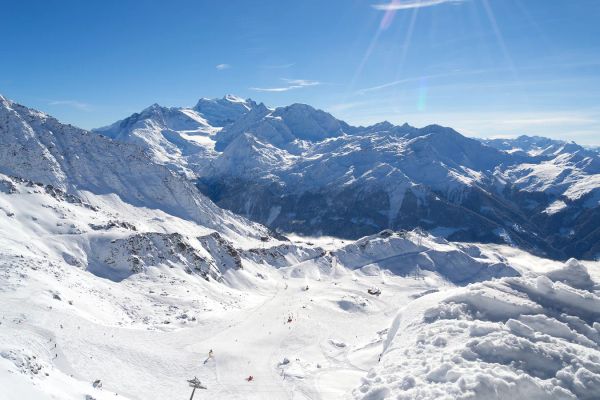
The Alps are about to swap mild, sunny October weather for something far more wintry. A cold front arrives Tuesday, and SnowStash forecasts have Monterosa Ski out in front with 64 cm over 14 days, ahead of Blatten Belalp (55 cm) and Verbier (43 cm). The snow line should fall below 2000 metres by Wednesday night, and glaciers across Switzerland, Italy and Austria are in line for the best of it. The wind will have a say too.
20 Oct 2026
Four Dead After Avalanche Near Ski Portillo in Chile
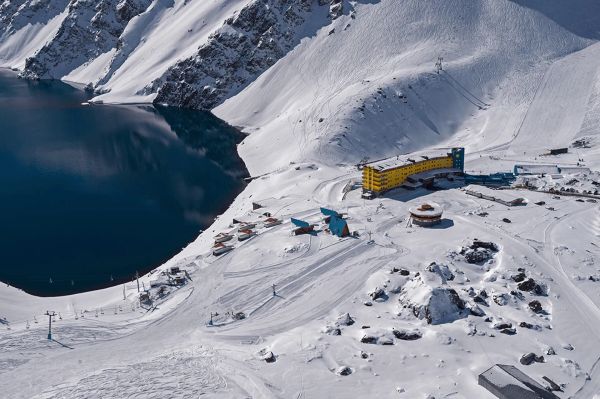
A large avalanche struck near Laguna del Inca adjacent to Ski Portillo on Saturday afternoon, killing four people and injuring four others. The group were day visitors mountaineering in the backcountry after reportedly being warned about elevated avalanche risk by resort staff.
18 Oct 2026

Europe Ski Resorts Open Now: What Is Skiable in Mid-October 2026
Europe’s ski season is open, technically. After a record-warm summer, glaciers in Austria, Switzerland and Italy are running a few pistes apiece, Sölden, Stubai and Kitzsteinhorn started late, Titlis has pushed back to 24 October, and Zermatt reopens a few lifts on 14 October after more than two months shut. Finland’s Levi and Ruka are skiing on stored snow. Here is what is open, and what you actually get at each.
14 Oct 2026

Zermatt Plans World Cup Downhill Return on the Gornergrat for 2028
Zermatt is having another crack at a World Cup downhill, and this time nobody has to cross a border. Around 13 million Swiss francs is going into rebuilding the Gornergrat piste, including a jump fed by a roughly 300-metre in-run across the roof of the Gornergrat Railway gallery, with the Matterhorn lined up behind it for the TV cameras. First men’s race is pencilled in for March 2028, pending FIS homologation.
14 Oct 2026

Mt. Rose Begins Snowmaking for the 2026-27 Season at Lake Tahoe
Lake Tahoe’s highest base elevation is paying off early: Mt. Rose has started making snow for 2026-27 after the first flurries and a cold snap. The Nevada resort is backing it with nearly US$2 million in upgrades, including a replacement snowmaking main line, a new PistenBully groomer and restraint bars on every lift. Opening day is yet to be confirmed, though Heavenly and Northstar are already eyeing 20 November.
13 Oct 2026

Utah Ski Resorts 2026-27: What’s New at Alta, Deer Valley, Powder Mountain and More
Utah is still building flat out. For 2026-27, Powder Mountain opens a steep new Skytrac chair into more than 1,000 acres of advanced terrain, Deer Valley adds 200 acres on Hail Peak, Sundance gets a new quad and Park City adds a gondola from its new parking structure. Snowmaking is expanding almost everywhere, Eagle Point stays closed after the Cottonwood Fire, and the 2034 Games are setting the pace. Here’s what’s new, resort by resort.
13 Oct 2026

Mt Hutt Invests NZ$12 Million in Base Area, Tripling Its Sun Deck
Mt Hutt is getting busier, and its base lodge is about to catch up. NZ$12 million goes into a heated sun deck roughly three times the current size (430 m² to 1,300 m²), plus a new toilet block, heated steps down to snow level, extra storage and a new food and beverage outlet. Building starts after the 2026 season, with everything due for winter 2027.
11 Oct 2026

Vermont Ski Resort Opening Dates 2026-27: Few Dates Set, Killington Waits on the Cold
Vermont's season is slow to take shape. Stratton is tentatively targeting 18 November and Sugarbush 21 November, while Pico has Friday 11 December on the calendar. Killington never sets a date and opens when the snowmaking allows, and Vail Resorts has yet to name days for Stowe, Okemo and Mount Snow. The forecasts disagree about snow, and the main El Niño worry for the Green Mountains is warmth.
9 Oct 2026