
Obereggen
Ski 49km in the UNESCO Latemar Dolomites, 1,540-2,388m, with night skiing, 100% snowmaking and Dolomiti Superski access.
Season 2026 - 2027
Opens
27 Nov 2026
Closes
11 Apr 2027
Days open
135
Annual snow
4m
The Overview
Michael Fulton
Melbourne-based skier and snowboarder with 50+ resorts across 5 continents. Specialises in Australian resorts and international resort comparisons.
Obereggen sits at the foot of the Latemar massif in the Val d'Ega in South Tyrol, part of the Ski Center Latemar - a connected ski area spanning 49km of pistes across three access points: Obereggen, Pampeago and Predazzo. Terrain runs from 1,540m to 2,388m, with 67% of runs graded red and open piste across the upper mountain transitioning to forested descents lower down. The Latemar massif, rising directly above the ski area, is part of the Dolomites UNESCO World Heritage Site.
The Ski Center Latemar has been ranked the world's best ski area in its size category by skiresort.info, which has awarded it 17 separate quality designations - including the top ranking for slope grooming across all European resorts. The area averages 86 sunny days per season, above the Italian average, and carries 100% snowmaking coverage across all marked runs, described by the resort as one of the most modern systems in Europe.
On-mountain highlights include the Latemar Sixpack - six consecutive steep descents with gradients of up to 60% - and the Pala di Santa, the area's steepest black run. The Skimovie Piste 8 (Toler) runs two parallel timed tracks for those wanting a speed reference. Night skiing operates twice weekly from 7pm to 10pm on a floodlit 1,780m piste, and the Snowpark Obereggen - maintained three times weekly by the F-Tech crew - includes kickers, boxes, rails, a half-pipe and a dedicated Night Park.
A Val di Fiemme-Obereggen area pass extends access to 111km across five ski areas including Alpe Cermis and Alpe Lusia, linked by a free ski bus. Obereggen also sits within the Dolomiti Superski network, which covers 1,200km of piste across 12 interconnected areas in the broader Dolomites region.
848m
Vertical
45
Runs
49 km
Piste
4m
Annual snow
The Terrain
45 runs across 49 km of piste
Obereggen is the South Tyrol gateway to the Latemar Dolomites area, where 49 kilometres of piste over 45 runs sit between 1,540 and 2,388 metres. That gives 848 metres of vertical on a compact, tightly connected mountain. The grading is built for confident cruising: 19% beginner, 67% intermediate and 14% advanced, with no expert runs. Lifts are overwhelmingly chairs, from quads through six-seaters and eight-seaters, plus a gondola, so lines stay short and the pistes get a lot of use. Pampeago and Predazzo link in without taking skis off, which stretches a day well beyond the numbers.
Advanced skiers should head for the Latemar Sixpack, a set of six steep descents with gradients up to 60%, including the Pala di Santa at Pampeago, Maierl and Torre di Pisa. The Tresca is the longest run, at about three kilometres, and gives a flowing finish. Skimovie Piste 8 offers two parallel tracks for a bit of friendly racing. Freeriders will find little here, since the focus is on groomed piste. Obereggen suits intermediates chasing smooth carving and families who like short lift queues, with a handful of pitches to keep stronger skiers interested.
Terrain split
45
runs
45 runs across 4 grades
Beginner9 runs · 19%
Intermediate30 runs · 67%
Advanced6 runs · 14%
Expert0 runs · 0%
Time it right
When to visit Obereggen
Obereggen operates from late November through to late April, with the 2025-26 season running from 29 November 2025 to 21 April 2026 - one of the longer guaranteed seasons among South Tyrolean resorts outside of glacier areas. The extended closing date reflects the combination of altitude, northerly aspect on the upper mountain and the full snowmaking coverage that keeps conditions reliable through the spring period.
Annual snowfall averages 3.5 metres, and the resort's position within the Latemar bowl provides good natural snow retention through the core winter months. Average snow depth at the summit during February - typically the deepest month - runs to around 1 metre, with the base holding close to 65cm. December is the sunniest month of the season with around 20 clear days on average.
The season's shoulder months are actively programmed. Opening week in late November draws early-season visitors to the freshly groomed pistes before the broader Dolomites crowd arrives, while the spring period through March and April benefits from firm morning snow and long daylight hours on a predominantly south-east-facing ski area. Night skiing on Tuesdays and Fridays provides a distinct evening session option unavailable at most comparable South Tyrolean areas.
The Obereggen Snowpark season runs in parallel with the main ski area, with the pipe shaped and maintained through to closing day and the Night Park open on the same evenings as the floodlit slope. The Alpine Coaster Gardonè - Trentino's only rail toboggan run - operates alongside the ski area and provides an additional activity for non-ski days.
Season 2026 - 2027
27 Nov 2026
Opens
11 Apr 2027
Closes
135
Days open
4 m
Annual snow
Getting there
Getting to Obereggen, and where to stay
Obereggen sits in the Val d'Ega in the Nova Ponente municipality of South Tyrol, reached via the SS241 Eggental road from the A22 Brenner motorway. From the Bolzano Nord motorway exit, the resort is approximately 25 minutes by road - making it one of the most accessible ski areas in the Dolomites relative to a major city. Bolzano is the closest urban centre with full services, rail connections and the nearest regional airport.
The nearest international airport is Bolzano Airport, around 30km to the north-west. For visitors flying into larger hubs, Verona Villafranca Airport is approximately 130km to the south via the A22, and Innsbruck Airport in Austria is around 90km to the north across the Brenner Pass. Driving from Munich is around 2.5 hours via the A13 and A22.
Public transport access runs via train to Bolzano, from where the Val d'Ega bus service connects to Obereggen. The journey from Bolzano train station to the ski area by bus takes around 45 minutes. A dedicated ski bus network also connects Obereggen to the other areas under the Val di Fiemme-Obereggen pass, running on a regular timetable throughout the ski season.
The village of Obereggen itself is compact and purpose-built around the ski area, with accommodation, ski hire and ski school facilities clustered at the gondola base. The adjacent Val d'Ega valley town of Eggen/Nova Levante provides a broader range of accommodation and restaurants within a short drive of the lifts.
Where to stay
Search all stays →Hotels and lodges near Obereggen, powered by Stay22.
Latest News
From the SnowStash desk
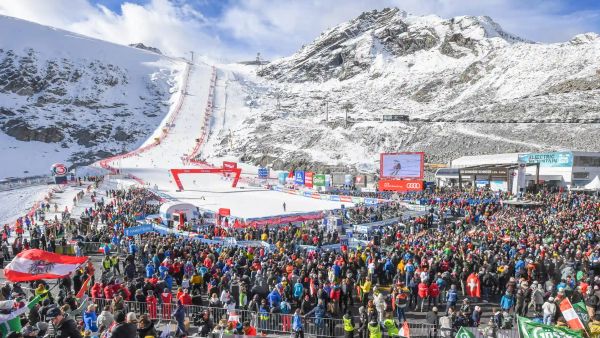
Pinheiro Braathen Wins Sölden Giant Slalom Opener by 0.48 Seconds
Two days at Sölden, two races decided by a hundredth somewhere on the podium, and one very quick Brazilian. Lucas Pinheiro Braathen led from the first run to win the men’s World Cup opener by 0.48 seconds, with Loïc Meillard second and Marco Odermatt third. River Radamus charged from 15th to fourth on a rutted course, and Britain’s Freddy Carrick-Smith banked his first World Cup points. Braathen still hasn’t lost a giant slalom since Olympic gold.
25 Oct 2026
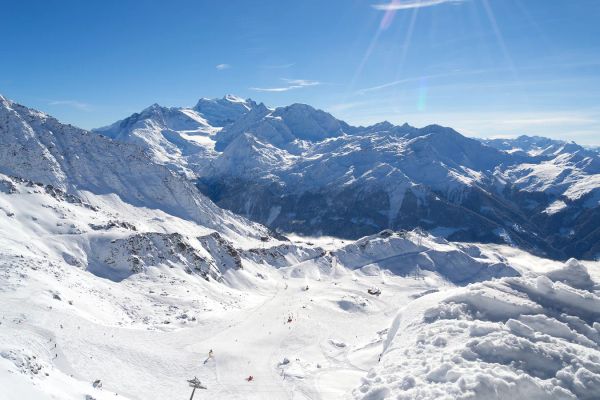
Alps Snow Forecast: Up to 64 cm Headed for the High Glaciers as the Snow Line Drops
The Alps are about to swap mild, sunny October weather for something far more wintry. A cold front arrives Tuesday, and SnowStash forecasts have Monterosa Ski out in front with 64 cm over 14 days, ahead of Blatten Belalp (55 cm) and Verbier (43 cm). The snow line should fall below 2000 metres by Wednesday night, and glaciers across Switzerland, Italy and Austria are in line for the best of it. The wind will have a say too.
20 Oct 2026
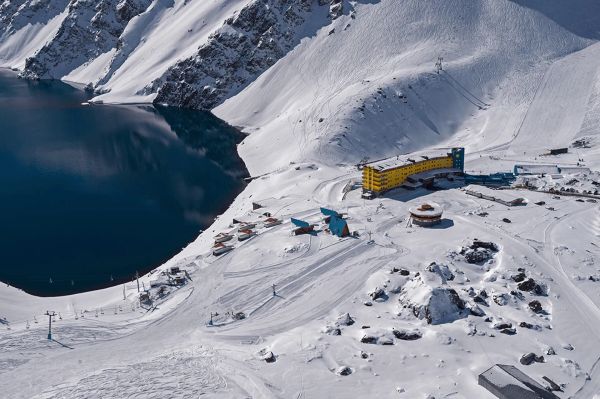
Four Dead After Avalanche Near Ski Portillo in Chile
A large avalanche struck near Laguna del Inca adjacent to Ski Portillo on Saturday afternoon, killing four people and injuring four others. The group were day visitors mountaineering in the backcountry after reportedly being warned about elevated avalanche risk by resort staff.
18 Oct 2026
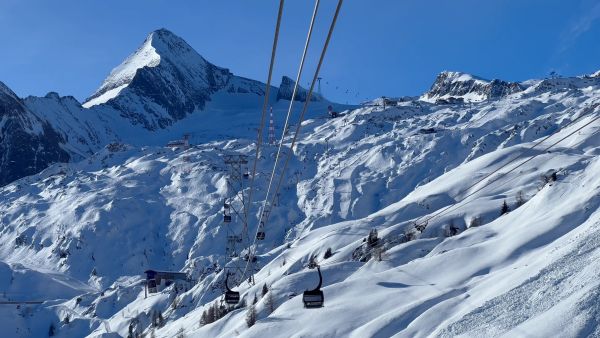
Europe Ski Resorts Open Now: What Is Skiable in Mid-October 2026
Europe’s ski season is open, technically. After a record-warm summer, glaciers in Austria, Switzerland and Italy are running a few pistes apiece, Sölden, Stubai and Kitzsteinhorn started late, Titlis has pushed back to 24 October, and Zermatt reopens a few lifts on 14 October after more than two months shut. Finland’s Levi and Ruka are skiing on stored snow. Here is what is open, and what you actually get at each.
14 Oct 2026

Zermatt Plans World Cup Downhill Return on the Gornergrat for 2028
Zermatt is having another crack at a World Cup downhill, and this time nobody has to cross a border. Around 13 million Swiss francs is going into rebuilding the Gornergrat piste, including a jump fed by a roughly 300-metre in-run across the roof of the Gornergrat Railway gallery, with the Matterhorn lined up behind it for the TV cameras. First men’s race is pencilled in for March 2028, pending FIS homologation.
14 Oct 2026

Mt. Rose Begins Snowmaking for the 2026-27 Season at Lake Tahoe
Lake Tahoe’s highest base elevation is paying off early: Mt. Rose has started making snow for 2026-27 after the first flurries and a cold snap. The Nevada resort is backing it with nearly US$2 million in upgrades, including a replacement snowmaking main line, a new PistenBully groomer and restraint bars on every lift. Opening day is yet to be confirmed, though Heavenly and Northstar are already eyeing 20 November.
13 Oct 2026

Utah Ski Resorts 2026-27: What’s New at Alta, Deer Valley, Powder Mountain and More
Utah is still building flat out. For 2026-27, Powder Mountain opens a steep new Skytrac chair into more than 1,000 acres of advanced terrain, Deer Valley adds 200 acres on Hail Peak, Sundance gets a new quad and Park City adds a gondola from its new parking structure. Snowmaking is expanding almost everywhere, Eagle Point stays closed after the Cottonwood Fire, and the 2034 Games are setting the pace. Here’s what’s new, resort by resort.
13 Oct 2026

Mt Hutt Invests NZ$12 Million in Base Area, Tripling Its Sun Deck
Mt Hutt is getting busier, and its base lodge is about to catch up. NZ$12 million goes into a heated sun deck roughly three times the current size (430 m² to 1,300 m²), plus a new toilet block, heated steps down to snow level, extra storage and a new food and beverage outlet. Building starts after the 2026 season, with everything due for winter 2027.
11 Oct 2026
Obereggen Lift System
Eighteen lifts serve the Ski Center Latemar between 1,540m and 2,388m, with Obereggen's own infrastructure comprising one gondola, three eight-seat chairlifts, ten quad chairlifts, two six-seat chairlifts and two T-bars - one of the most chairlift-heavy networks relative to terrain size in South Tyrol. The absence of surface tows on the main ski area reflects a sustained investment in fixed-grip and detachable chair technology across the mountain.
The Ochsenweide gondola is the main valley access from Obereggen village, an eight-seat installation covering 1,301m and serving the 1.5km valley return run for skiers finishing the day. The gondola also operates for night skiing, bringing the floodlit evening sessions up to capacity on Tuesday and Friday nights. The recently installed Campanil six-seat chairlift replaced a slower two-seater on the same line, doubling uphill capacity on that sector and opening a new blue piste of the same name.
The Pampeago sector, connected to Obereggen without removing skis, received a new Latemar cable car in recent seasons, improving the cross-sector connection between the three access points. The three sectors - Obereggen, Pampeago and Predazzo - are fully interlinked at mid-mountain, allowing circuits across all areas on a single pass without returning to the valley.
A free ski bus connects the Ski Center Latemar to the five areas covered under the wider Val di Fiemme-Obereggen pass, with the bus network running between Obereggen, Cavalese, Predazzo and the outlying ski areas on a regular schedule throughout the season.
18lifts across 5 types
1
Gondola
3
8-Person Chairs
2
6-Person Chairs
10
Quad Chairs
2
T-Bars
Obereggen lift system
Obereggen is served by 18 lifts, listed here by type. Check which lifts are turning against the live conditions before you plan your first laps - early lifts and high-speed chairs get you to the best snow fastest.
More Obereggen intelligence: trail map, snow report, webcams, resort overview.