
Sangiacomo Cardini
Sangiacomo Cardini: 35km slopes on Monte Alpet from €24 daily. Budget-friendly family skiing near Turin and Cuneo in Piedmont Alps.
Season 2025 - 2026
Opens
1 Dec 2025
Closes
15 Apr 2026
Days open
135
Annual snow
4m
The Overview
Michael Fulton
Melbourne-based skier and snowboarder with 50+ resorts across 5 continents. Specialises in Australian resorts and international resort comparisons.
Sangiacomo Cardini delivers exceptional value skiing across 35km of varied terrain on Monte Alpet and Bric Colmé in Piedmont's Cuneo province, with elevations spanning 1,098m to 1,611m. This family-oriented resort combines genuinely affordable pricing with comprehensive terrain distribution of 37% beginner, 34% intermediate, and 29% advanced runs across 32 marked trails. Full-day adult lift tickets starting at just €24 make Sangiacomo Cardini one of Italy's most budget-friendly ski destinations without compromising the authentic mountain experience sought by families and value-conscious skiers.
The resort's position in the extreme southern Western Alps creates a distinctive microclimate where dense forests give way to open alpine terrain, offering sheltered tree skiing transitioning to exposed summit runs with commanding panoramic views. The accessible village atmosphere at San Giacomo di Roburent, positioned at 1,011m, provides essential services including shops, restaurants, accommodation, and a cinema within comfortable walking distance of the main lifts. This unpretentious approach focuses resources on maintaining excellent slope conditions rather than elaborate facilities.
The ski area's compact layout enables efficient exploration across all ability zones, with chairlifts and surface lifts strategically positioned to minimise walking whilst maximising skiing time. Dedicated learning areas feature conveyor belt installations at both valley level in Sangiacomo and directly below the Monte Alpet summit, creating ideal progression zones for first-time skiers. Summer operations transform the mountain into Monte Alpet Bike Village, offering five mountain bike trails with varying difficulty levels, extending the resort's appeal beyond winter months.
513m
Vertical
32
Runs
35 km
Piste
4m
Annual snow
The Terrain
32 runs across 35 km of piste
Sangiacomo Cardini is a small, low-key ski area in Piedmont's Cuneo province, rising from 1,098 metres to 1,611 metres for a vertical of 513 metres. It packs 32 runs into 35 kilometres of piste, and the split is unusually even: 37% beginner, 34% intermediate and 29% advanced, with no expert terrain. Few areas this size give advanced skiers that much to play with. The slopes spread across Monte Alpet and Bric Colme, and the lift system is old-school, with two double chairs and a handful of surface lifts rather than any high-speed detachables.
Beginners are well covered, with a nursery slope in the village and a children's area with a conveyor belt up on Monte Alpet, plus the Babylandia kids' zone. The runs served by the Colme and Pineta lifts have snowmaking, which helps in thin seasons. Stronger skiers can head for the Alpet slopes and look out over the Maritime Alps. Expect short, steady laps rather than long descents, and no freeride terrain to speak of. It suits families, learners and weekend skiers from Turin and the Ligurian coast who want a quiet, affordable day on snow.
Terrain split
32
runs
32 runs across 4 grades
Beginner12 runs · 37%
Intermediate11 runs · 34%
Advanced9 runs · 29%
Expert0 runs · 0%
Time it right
When to visit Sangiacomo Cardini
Sangiacomo Cardini typically operates from early December through mid-April, with optimal conditions occurring January through March when the southern Maritime Alps receive their most reliable snowfall. The resort averages 3.5m annual snowfall, with the elevation range between 1,098m and 1,611m providing sufficient altitude for consistent natural snow coverage supplemented by snowmaking installations across key runs. The predominantly north-facing upper slopes preserve snow quality throughout the season, particularly important during warmer spring periods.
February represents peak snowfall months across the Cuneo Alps, delivering substantial accumulations that create excellent powder opportunities across the resort's varied terrain. The compact ski area benefits from efficient grooming operations that maintain consistent piste conditions even during periods between fresh snowfall. Spring skiing extends well into April with pleasant temperatures and softening snow creating ideal conditions for recreational skiers and families, whilst early mornings still offer firm, fast surfaces before the sun softens upper mountain terrain.
The resort's position straddling the border between Ligurian and Maritime Alps creates weather patterns distinct from higher-elevation Piedmont resorts, occasionally delivering Mediterranean-influenced systems that produce significant snowfall events. Weekend and Italian holiday periods attract regional visitors from Turin, Genoa, and Cuneo, though the resort's modest scale and affordable pricing structure maintain manageable crowd levels compared to more famous destinations. The straightforward season pass pricing at €300 for adults and €500 for two-person family passes demonstrates the resort's commitment to accessible skiing throughout winter.
Season 2025 - 2026
1 Dec 2025
Opens
15 Apr 2026
Closes
135
Days open
4 m
Annual snow
Getting there
Getting to Sangiacomo Cardini, and where to stay
Located in the commune of Roburent approximately 103km southwest of Turin, Sangiacomo Cardini occupies an accessible position in Cuneo province's southern mountains. Turin Caselle Airport lies roughly 120km northeast with drive times approaching 90 minutes via the A6 Torino-Savona motorway, exiting at Cuneo before continuing on SS20 towards San Giacomo di Roburent. Alternative international access through Nice Côte d'Azur Airport sits 90km south across the French border, providing convenient options for international visitors combining Mediterranean coast holidays with alpine skiing.
The nearest significant airport at Cuneo-Levaldigi sits approximately 35km distant, offering regional flight connections though with more limited international services than Turin or Nice facilities. The resort's position just 1.5km from San Giacomo di Roburent village and 600m from Cardini di Roburent hamlet creates genuine ski-village integration rather than isolated resort development, with nearby Serra di Pamparato, Pamparato, and Roburent providing additional accommodation and dining options within 6km radius.
Public transport access exists via train connections to Mondovì station, well-connected to major Piedmont cities, with onward regional bus services linking to San Giacomo di Roburent on seasonal schedules. Winter period shuttle services often operate during peak tourism seasons, facilitating car-free resort access for skiers preferring public transport. The strategic position between Turin 103km northeast and Genoa approximately 100km south creates dual-city access, with the resort serving as weekend destination for northwestern Italian skiers seeking affordable, authentic mountain experiences.
The extreme southern Western Alps location delivers distinctive character compared to higher-profile Piedmont destinations, with thick forests transitioning to alpine peaks creating varied landscapes. The village at 1,011m elevation maintains genuine mountain atmosphere whilst remaining accessible year-round, with the resort positioning itself explicitly for visitors seeking relaxation and sport rather than sophisticated resort amenities.
Where to stay
Search all stays →Hotels and lodges near Sangiacomo Cardini, powered by Stay22.
Latest News
From the SnowStash desk
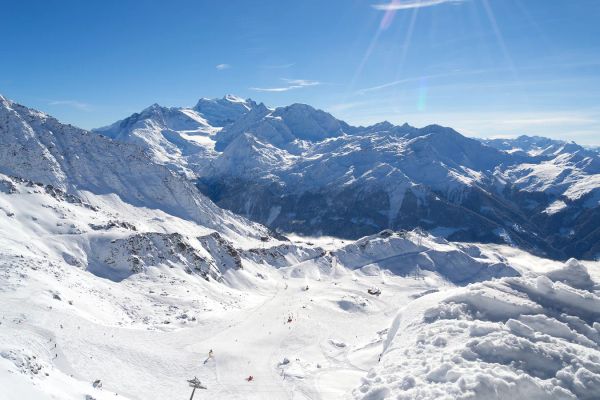
Alps Snow Forecast: Up to 64 cm Headed for the High Glaciers as the Snow Line Drops
The Alps are about to swap mild, sunny October weather for something far more wintry. A cold front arrives Tuesday, and SnowStash forecasts have Monterosa Ski out in front with 64 cm over 14 days, ahead of Blatten Belalp (55 cm) and Verbier (43 cm). The snow line should fall below 2000 metres by Wednesday night, and glaciers across Switzerland, Italy and Austria are in line for the best of it. The wind will have a say too.
20 Oct 2026
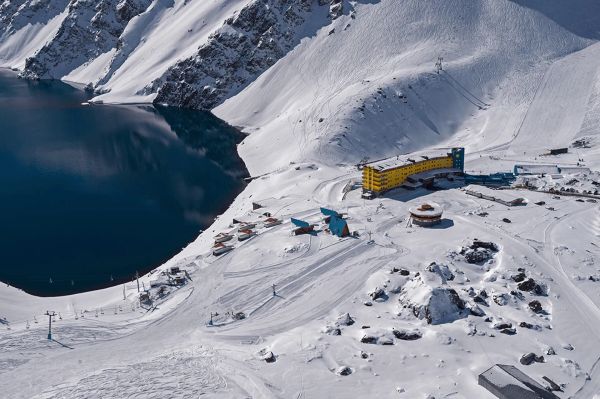
Four Dead After Avalanche Near Ski Portillo in Chile
A large avalanche struck near Laguna del Inca adjacent to Ski Portillo on Saturday afternoon, killing four people and injuring four others. The group were day visitors mountaineering in the backcountry after reportedly being warned about elevated avalanche risk by resort staff.
18 Oct 2026
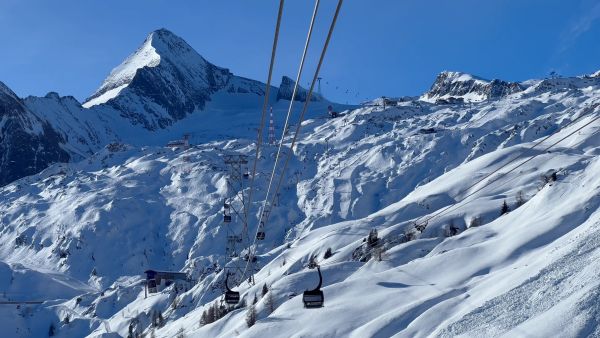
Europe Ski Resorts Open Now: What Is Skiable in Mid-October 2026
Europe’s ski season is open, technically. After a record-warm summer, glaciers in Austria, Switzerland and Italy are running a few pistes apiece, Sölden, Stubai and Kitzsteinhorn started late, Titlis has pushed back to 24 October, and Zermatt reopens a few lifts on 14 October after more than two months shut. Finland’s Levi and Ruka are skiing on stored snow. Here is what is open, and what you actually get at each.
14 Oct 2026

Zermatt Plans World Cup Downhill Return on the Gornergrat for 2028
Zermatt is having another crack at a World Cup downhill, and this time nobody has to cross a border. Around 13 million Swiss francs is going into rebuilding the Gornergrat piste, including a jump fed by a roughly 300-metre in-run across the roof of the Gornergrat Railway gallery, with the Matterhorn lined up behind it for the TV cameras. First men’s race is pencilled in for March 2028, pending FIS homologation.
14 Oct 2026

Mt. Rose Begins Snowmaking for the 2026-27 Season at Lake Tahoe
Lake Tahoe’s highest base elevation is paying off early: Mt. Rose has started making snow for 2026-27 after the first flurries and a cold snap. The Nevada resort is backing it with nearly US$2 million in upgrades, including a replacement snowmaking main line, a new PistenBully groomer and restraint bars on every lift. Opening day is yet to be confirmed, though Heavenly and Northstar are already eyeing 20 November.
13 Oct 2026

Utah Ski Resorts 2026-27: What’s New at Alta, Deer Valley, Powder Mountain and More
Utah is still building flat out. For 2026-27, Powder Mountain opens a steep new Skytrac chair into more than 1,000 acres of advanced terrain, Deer Valley adds 200 acres on Hail Peak, Sundance gets a new quad and Park City adds a gondola from its new parking structure. Snowmaking is expanding almost everywhere, Eagle Point stays closed after the Cottonwood Fire, and the 2034 Games are setting the pace. Here’s what’s new, resort by resort.
13 Oct 2026

Mt Hutt Invests NZ$12 Million in Base Area, Tripling Its Sun Deck
Mt Hutt is getting busier, and its base lodge is about to catch up. NZ$12 million goes into a heated sun deck roughly three times the current size (430 m² to 1,300 m²), plus a new toilet block, heated steps down to snow level, extra storage and a new food and beverage outlet. Building starts after the 2026 season, with everything due for winter 2027.
11 Oct 2026

Vermont Ski Resort Opening Dates 2026-27: Few Dates Set, Killington Waits on the Cold
Vermont's season is slow to take shape. Stratton is tentatively targeting 18 November and Sugarbush 21 November, while Pico has Friday 11 December on the calendar. Killington never sets a date and opens when the snowmaking allows, and Vail Resorts has yet to name days for Stowe, Okemo and Mount Snow. The forecasts disagree about snow, and the main El Niño worry for the Green Mountains is warmth.
9 Oct 2026
Sangiacomo Cardini Snow Report
Snow Report
Updated 25 Oct 2026
1611m
summit
+0cm
new snow · last 24 hours
Mainly Clear5°C / 13°C · SW 11km/h
Snowfall
24 hours
0cm
48 hours
0cm
7 days
0cm
Base depth
0cm
Season total
0cm
Total lifts9
Live open status isn’t available right now.
1 Dec 2025 - 15 Apr 2026
Hour by Hour
Next 41 hours· Updated Oct 25, 2026 at 5:02 PM
Scroll for the full outlook · Open-Meteo
7-Day Outlook
1,611 mUpdated Oct 25, 2026 at 5:02 PMOpen-Meteo
Days 1–7
0.0cm
Days 8–14
0.0cm
Mon, Oct 26
Overcast
Temp13° / 5°°C
Snow0.0cm
Wind11 km/h SW
Live snow from the resort feed; forecast from Open-Meteo, via Supabase.
Understanding the Sangiacomo Cardini snow report
See what's happening on the mountain at Sangiacomo Cardini right now — snowfall, snow depth, and weather data to help you plan your day in Italy.
Snow measurements
Snow depth at Sangiacomo Cardini is tracked at both the base and summit, since the two elevations often see different totals — roughly a 513m difference here. We report fresh snowfall over the last 24 hours and 7 days alongside the running season total, in both metric and imperial units.
Weather conditions
Wind and temperature swings matter as much as fresh snowfall. Cold, calm conditions hold snow quality well, while wind-loading or a warm-up can change things quickly — especially given the elevation spread between Sangiacomo Cardini's base and summit.
Data sources
We pull Sangiacomo Cardini's conditions from on-the-ground mountain reporting, then layer in forecast data so you get a fuller picture than either source alone. The mountain is served by 9 lifts in total.
When to check
The biggest swings usually happen right after a storm. Check Sangiacomo Cardini's report in the morning for the freshest numbers, and again in the afternoon as conditions evolve.