
Schnalstal Glacier
42km of glacier skiing from 2,011m to 3,212m in South Tyrol. September to May season. Ötzi discovery site.
Season 2026 - 2027
Opens
19 Sept 2026
Closes
9 May 2027
Days open
232
Annual snow
4m
The Overview
Michael Fulton
Melbourne-based skier and snowboarder with 50+ resorts across 5 continents. Specialises in Australian resorts and international resort comparisons.
Schnalstal Glacier sits at the head of the Val Senales in South Tyrol, offering 42 kilometres of piste across 20 marked runs spanning an elevation range from 2,011 metres at the base village of Kurzras to 3,212 metres at the Grawand summit - a vertical drop of 1,201 metres. The Hochjochferner glacier straddles the Italian-Austrian border, delivering reliable snow coverage across a season that runs from mid-September through early May - one of the longest operating windows of any ski area in the Alps. The resort gained international recognition as the discovery site of Ötzi the Iceman in 1991, and today the Iceman Ötzi Peak viewing platform at 3,251 metres provides direct sightlines to the Tisenjoch saddle where the 5,300-year-old mummy was found.
Terrain splits roughly 35 per cent blue, 45 per cent red, and 20 per cent black, favouring intermediate skiers whilst providing sufficient challenge for stronger skiers. The signature run is the 8-kilometre Schmugglerabfahrt - the Smuggler's Trail - which descends continuously from the glacier to Kurzras, allowing skiers to cover 1,100 metres of vertical without interruption. The Leo Gurschler piste delivers a demanding 550-metre training run with gradients approaching 60 per cent, used by national alpine teams for slalom and giant slalom preparation. Wide, groomed glacier slopes on the Grawand sector suit carving at speed, whilst the Finail area at the glacier's edge offers sunny, mellow terrain for building confidence.
The atmosphere at Schnalstal is notably quiet compared to larger Alpine destinations. Lift queues are minimal, slopes rarely feel crowded, and the focus remains on quality snow time rather than extensive nightlife or village bustle. The Glacier Hotel Grawand at the summit - Europe's highest hotel at 3,212 metres - offers ski-to-door access directly onto glacier terrain. Down in Kurzras, a compact base village provides equipment rental, ski schools, and a handful of restaurants serving South Tyrolean cuisine. A terrain park and children's area with magic carpets cater to freestyle riders and young families respectively.
Schnalstal operates within the Ortler Skiarena network, and multi-day passes grant access to 15 South Tyrolean resorts totalling over 400 kilometres of connected terrain. The cross-border SunnyCard extends this further into Austrian areas. The resort suits skiers seeking reliable early and late season conditions, families looking for uncrowded slopes, and serious athletes - the training centre hosts alpine and cross-country teams from Italy, Germany, Switzerland, the United States, Canada, Japan and Norway throughout autumn. For those wanting glacier skiing without the intensity of busier glacier resorts, Schnalstal delivers a focused, high-altitude experience with genuine Italian hospitality.
1201m
Vertical
20
Runs
42 km
Piste
4m
Annual snow
The Terrain
20 runs across 42 km of piste
Schnalstal Glacier is a high-altitude South Tyrol ski area running from 2,011 metres at Kurzras to 3,212 metres on the Grawand, a vertical of 1,201 metres. There are 20 runs over 42 kilometres, graded 24% beginner, 43% intermediate and 33% advanced, with no expert-rated pistes. The advanced share is large for a glacier area, so confident skiers are not short of options. Being on a glacier, snow cover is dependable and the season starts early. The lifts include an aerial tram, a gondola and a mix of chairs and T-bars, spread across the Grawand, Gletschersee, Finail and Hintereis sectors.
The headline descent is the Schmugglerabfahrt, the Smugglers' Run, which heads from the glacier back to Kurzras over about 8 kilometres. Grawand has wide, open slopes that suit long carving turns, while Finail and the lower slopes are gentler for beginners and kids. Hintereis opens up the far side of the valley. This is not a freeride mountain in the Alpine-resort sense, so treat it as a piste skier's glacier. It suits intermediates and strong skiers who want early or late-season snow, and families who prefer quiet slopes.
Terrain split
20
runs
20 runs across 4 grades
Beginner5 runs · 24%
Intermediate9 runs · 43%
Advanced7 runs · 33%
Expert0 runs · 0%
Time it right
When to visit Schnalstal Glacier
Schnalstal Glacier operates from mid-September through early May, with the 2025-26 season running 20 September 2025 to approximately 4 May 2026. This roughly eight-month operating window ranks among the longest in the Alps, enabled by the high-altitude glacier terrain where slopes begin above 3,000 metres. Whilst dates can shift slightly based on conditions, the glacier typically opens for professional team training in late September before transitioning to full public operations.
Snow reliability is the glacier's defining characteristic. Natural snowfall averages approximately 3.5 metres annually, supplemented by the high elevation that preserves base coverage throughout the season. Snowmaking covers around 80 per cent of terrain according to regional tourism authorities, providing backup during leaner natural snow periods. The glacier's north-facing aspects and altitude above the freezing line ensure consistent conditions even when lower valleys experience thaws. Cross-country trails on the glacier operate from October through mid-December at approximately 3,000 metres, attracting national teams for early-season altitude training.
Early autumn - September through November - brings the busiest period for professional ski teams, with national squads from Italy, Germany, Switzerland, Austria, the United States, and beyond occupying dedicated training slopes. Recreational skiers share the mountain but benefit from minimal crowds outside reserved training times. December through February delivers full operations across all terrain including the valley run, with holiday periods around Christmas and February half-term representing peak visitor numbers - though still modest compared to larger resorts. Spring skiing from March through May offers excellent firn conditions, with warming temperatures producing soft, carveable snow by late morning whilst summit terrain remains firm.
The resort hosts limited organised events compared to major destination resorts, though the proximity to Sölden - where the FIS World Cup season traditionally opens in late October - brings increased regional activity each autumn. The Iceman Ötzi Peak platform and the archeoParc museum in nearby Madonna di Senales provide non-skiing activities that extend interest beyond pure piste time.
Season 2026 - 2027
19 Sept 2026
Opens
9 May 2027
Closes
232
Days open
4 m
Annual snow
Getting there
Getting to Schnalstal Glacier, and where to stay
Schnalstal Glacier lies at the head of the Val Senales in South Tyrol, the autonomous German-Italian bilingual province in northern Italy. The base village of Kurzras - known as Maso Corto in Italian - sits at 2,011 metres elevation at the valley's terminus, backed by the Hochjochferner glacier straddling the Austrian border. The resort occupies a side valley branching north from the main Vinschgau - Val Venosta - corridor, with the Ötztal Alps providing the dramatic mountain backdrop. Nearby Lago di Vernago - a reservoir lake - punctuates the valley scenery en route to the ski area.
Merano, the spa town and regional centre, lies approximately 40 kilometres south via the valley road, reachable in around 40-50 minutes by car. Bolzano, the provincial capital and home to the South Tyrol Museum of Archaeology where Ötzi the Iceman is displayed, sits approximately 68 kilometres distant with a driving time of just over one hour. The village of Naturno in the main valley provides the junction where traffic turns north into the Schnalstal, offering rail connections and bus services. The archeoParc open-air museum in Madonna di Senales - roughly 10 kilometres below Kurzras - provides cultural context with reconstructions of Neolithic life and exhibitions on transhumance traditions.
Road access follows the Merano-Bolzano Expressway - the MeBo - taking the Foresta or Forst exit before heading through Naturno and up the valley road for approximately 25 kilometres. From the north, the A12 Inntal Autobahn in Austria connects via the Reschenpass - Passo Resia - adding roughly two hours from Innsbruck. The valley road is well-maintained and cleared during winter, though chains or winter tyres remain mandatory during snow season. Large car parks operate at Kurzras, with the new underground garage at the valley station providing covered options.
Bolzano Airport - the nearest commercial option - lies approximately 68 kilometres from Kurzras with a transfer time around one hour. Innsbruck Airport sits roughly 190 kilometres distant via the Reschen Pass, requiring around two hours' drive. Verona offers international connections at 213 kilometres, whilst Munich provides intercontinental links at roughly four hours' driving distance. Public transport runs via the SAD bus network - line 261 from Naturno to Kurzras - connecting with Vinschgau line trains and buses from Merano and Bolzano. The Südtirol Guest Pass, provided free by many accommodations, covers public transport throughout the province.
Where to stay
Search all stays →Hotels and lodges near Schnalstal Glacier, powered by Stay22.
Latest News
From the SnowStash desk
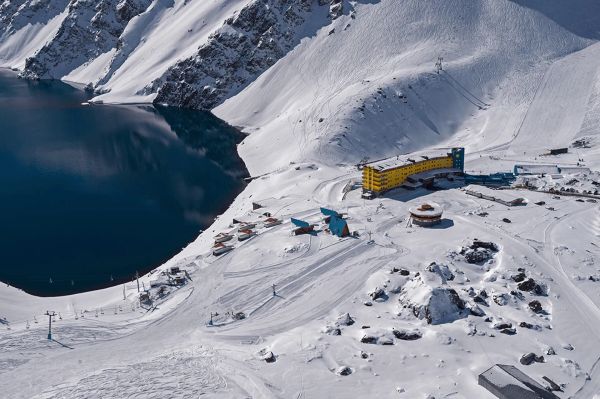
Four Dead After Avalanche Near Ski Portillo in Chile
A large avalanche struck near Laguna del Inca adjacent to Ski Portillo on Saturday afternoon, killing four people and injuring four others. The group were day visitors mountaineering in the backcountry after reportedly being warned about elevated avalanche risk by resort staff.
18 Oct 2026
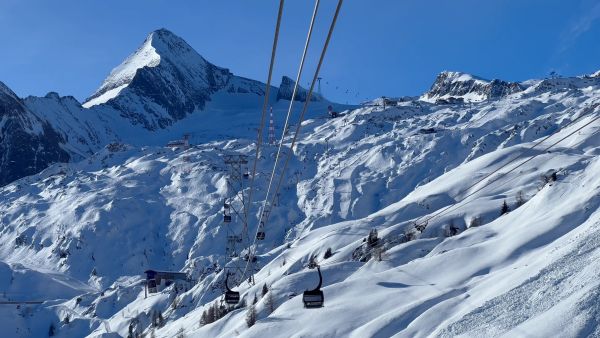
Europe Ski Resorts Open Now: What Is Skiable in Mid-October 2026
Europe’s ski season is open, technically. After a record-warm summer, glaciers in Austria, Switzerland and Italy are running a few pistes apiece, Sölden, Stubai and Kitzsteinhorn started late, Titlis has pushed back to 24 October, and Zermatt reopens a few lifts on 14 October after more than two months shut. Finland’s Levi and Ruka are skiing on stored snow. Here is what is open, and what you actually get at each.
14 Oct 2026
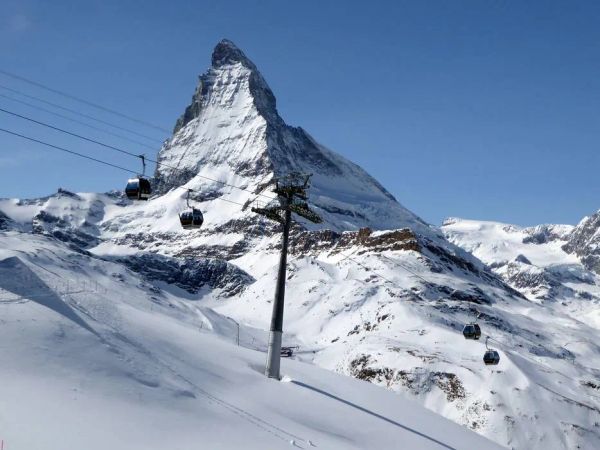
Zermatt Plans World Cup Downhill Return on the Gornergrat for 2028
Zermatt is having another crack at a World Cup downhill, and this time nobody has to cross a border. Around 13 million Swiss francs is going into rebuilding the Gornergrat piste, including a jump fed by a roughly 300-metre in-run across the roof of the Gornergrat Railway gallery, with the Matterhorn lined up behind it for the TV cameras. First men’s race is pencilled in for March 2028, pending FIS homologation.
14 Oct 2026
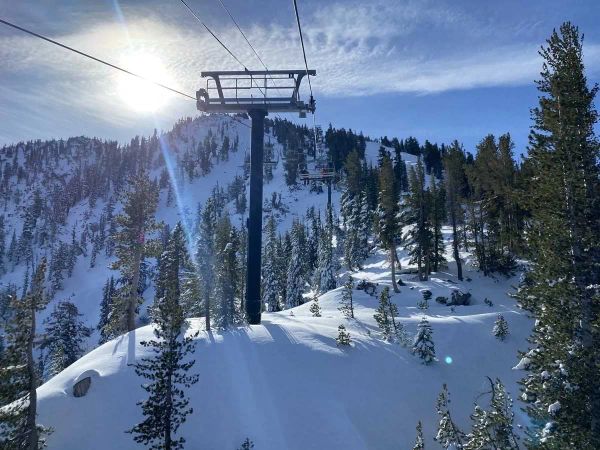
Mt. Rose Begins Snowmaking for the 2026-27 Season at Lake Tahoe
Lake Tahoe’s highest base elevation is paying off early: Mt. Rose has started making snow for 2026-27 after the first flurries and a cold snap. The Nevada resort is backing it with nearly US$2 million in upgrades, including a replacement snowmaking main line, a new PistenBully groomer and restraint bars on every lift. Opening day is yet to be confirmed, though Heavenly and Northstar are already eyeing 20 November.
13 Oct 2026
Utah Ski Resorts 2026-27: What’s New at Alta, Deer Valley, Powder Mountain and More
Utah is still building flat out. For 2026-27, Powder Mountain opens a steep new Skytrac chair into more than 1,000 acres of advanced terrain, Deer Valley adds 200 acres on Hail Peak, Sundance gets a new quad and Park City adds a gondola from its new parking structure. Snowmaking is expanding almost everywhere, Eagle Point stays closed after the Cottonwood Fire, and the 2034 Games are setting the pace. Here’s what’s new, resort by resort.
13 Oct 2026
Mt Hutt Invests NZ$12 Million in Base Area, Tripling Its Sun Deck
Mt Hutt is getting busier, and its base lodge is about to catch up. NZ$12 million goes into a heated sun deck roughly three times the current size (430 m² to 1,300 m²), plus a new toilet block, heated steps down to snow level, extra storage and a new food and beverage outlet. Building starts after the 2026 season, with everything due for winter 2027.
11 Oct 2026

Vermont Ski Resort Opening Dates 2026-27: Few Dates Set, Killington Waits on the Cold
Vermont's season is slow to take shape. Stratton is tentatively targeting 18 November and Sugarbush 21 November, while Pico has Friday 11 December on the calendar. Killington never sets a date and opens when the snowmaking allows, and Vail Resorts has yet to name days for Stowe, Okemo and Mount Snow. The forecasts disagree about snow, and the main El Niño worry for the Green Mountains is warmth.
9 Oct 2026
Crans-Montana 2027 World Championships President Resigns Ahead of Fraud Hearing
Less than four months out from the Crans-Montana 2027 World Championships, the man running the organising committee has stepped down. Claude-Alain Schmidhalter resigned as Swiss-Ski vice president and OC president after being indicted over a business dispute unrelated to skiing. He denies the allegations and faces court on October 27. Interim leaders are in place for the February 1-14 event.
9 Oct 2026
Schnalstal Glacier Lift System
Schnalstal operates 11 lifts comprising one aerial tramway, one gondola, five chairlifts, and four surface lifts. The headline installation is the Schnalstaler Gletscherbahn - a reversible aerial tramway connecting Kurzras at 2,011 metres to the Grawand summit at 3,212 metres. This system underwent complete technical renovation in 2023-24, with the new cable car opening in December 2023, featuring 80-person cabins and summer cabrio functionality allowing passengers to ride on an open-air platform atop the cabin.
The glacier cable car covers 2,150 metres of horizontal distance whilst climbing 1,180 metres of vertical in under six minutes, negotiating gradients of up to 100 per cent. Supporting lifts include the Lazaun gondola serving the mid-mountain zone and beginner terrain, alongside chairlifts at Grawand, Gletschersee, Hintereis, Roter Kofel, and Teufelsegg that circulate skiers across the glacier sectors. The four T-bar lifts - Finail 1, Finail 2, Glocken 1, and Glocken 2 - serve lower-elevation beginner zones and the children's area adjacent to the terrain park.
Base-to-summit flow is straightforward. Skiers arriving at Kurzras board the main glacier cable car for direct summit access, or take the Lazaun gondola to reach the mid-mountain at 2,433 metres. From the Grawand station, the Grawand and Gletschersee chairlifts circulate skiers across glacier terrain, whilst the Hintereis chairlift provides access to slopes on the opposite valley side. The system allows efficient laps without excessive traversing, and reserved training slopes for professional teams operate on a booking system to avoid conflicts with recreational skiing.
The 2024 infrastructure investment extended beyond the cable car itself, with a new valley station completed featuring an underground car park with 44 spaces, direct covered access from the piste to the cable car, and expanded restaurant and après-ski facilities. The renovation addressed engineering challenges posed by high winds at altitude, with increased track width and redesigned support structures improving reliability in adverse weather. Energy recovery systems were integrated into the drive technology as part of environmental considerations during the rebuild.
11lifts across 6 types
1
Aerial Tram
1
Gondola
3
Quad Chairs
1
Triple Chair
1
Double Chair
4
T-Bars
Schnalstal Glacier lift system
Schnalstal Glacier is served by 11 lifts, listed here by type. Check which lifts are turning against the live conditions before you plan your first laps - early lifts and high-speed chairs get you to the best snow fastest.
More Schnalstal Glacier intelligence: trail map, snow report, webcams, resort overview.