
Val di Fassa
Val di Fassa offers 110km of piste across six Dolomites ski areas. Direct Sella Ronda access from Canazei and Campitello.
Season 2026 - 2027
Opens
3 Dec 2026
Closes
4 Apr 2027
Days open
122
Annual snow
4m
The Overview
Michael Fulton
Melbourne-based skier and snowboarder with 50+ resorts across 5 continents. Specialises in Australian resorts and international resort comparisons.
Val di Fassa stretches across one of the Dolomites' most celebrated valleys in Trentino, Italy, offering six interconnected ski areas with around 110 kilometres of piste between 1,320 and 2,950 metres elevation. The valley's terrain spans seven traditional Ladin villages - Canazei, Campitello, Alba, Pozza di Fassa, Vigo di Fassa, Pera and Moena - each providing lift access to distinct sectors. With approximately 150 marked runs and over 50 lifts serving the Val di Fassa-Carezza pass area alone, the resort delivers substantial variety without requiring a car between ski days. The Dolomites' distinctive pale limestone towers frame every descent, creating a visual experience unlike any other ski region in the Alps.
The terrain breakdown favours intermediate skiers decisively, with roughly 74 per cent of runs graded red. The Belvedere-Col Rodella sector above Canazei and Campitello offers the most extensive skiing, with wide, sun-drenched cruisers descending beneath the Sassolungo and Sella massifs. The Ciampac-Buffaure area provides some of the valley's most challenging terrain, including the 3-kilometre Pista Ciampac with its 658-metre vertical drop. For advanced skiers seeking steep descents, the FIS-certified Aloch black run at Pozza delivers a maximum gradient of 49 per cent and hosts European Cup events.
The valley atmosphere blends authentic Ladin culture with contemporary alpine facilities. Canazei functions as the de facto ski capital, offering the liveliest après-ski scene with venues like Apres Ski Paradis directly at the Belvedere base. Pozza di Fassa provides a quieter alternative centred on its thermal spa complex fed by the Aloch sulphur spring - the only such facility in Trentino. On-mountain dining showcases traditional cuisine at numerous rifugi, including Rifugio Maria at 2,950 metres atop Sass Pordoi, while the valley floor hosts two Michelin-starred restaurants: L Chimpl in Tamion and Malga Panna in Moena.
The Val di Fassa-Carezza ski pass provides access to all six local ski areas plus the Carezza slopes beneath the Rosengarten massif. Upgrading to Dolomiti Superski unlocks 1,200 kilometres of piste across 12 interconnected areas, including direct lift-linked access to the Sella Ronda circuit and neighbouring valleys of Val Gardena, Alta Badia and Arabba-Marmolada. The resort suits intermediate skiers and families exceptionally well, with extensive snowmaking coverage maintaining reliable conditions throughout the December to April season. Strong skiers will appreciate the gateway position to the broader Dolomiti Superski network rather than the local terrain alone.
1165m
Vertical
146
Runs
55.2 km
Piste
4m
Annual snow
The Terrain
146 runs across 55.2 km of piste
Val di Fassa is a multi-sector Dolomites ski area in Trentino, running from 1,320 metres to 2,485 metres for a vertical of 1,165 metres. It lists 146 runs, and the grading is heavily weighted to the middle: 74% intermediate, with 13% beginner and 13% advanced, and no expert runs. If you like cruising on wide reds, this is the right mountain. The lift network is large, with seven gondolas, four aerial trams, a dozen quad chairs and several six and eight-seaters, and the valley villages each give access to their own sector.
Belvedere and Col Rodella above Canazei and Campitello are the main sectors, with sunny, open slopes under the Sassolungo and Sella walls and a direct link onto the Sella Ronda. Ciampac and Buffaure, connected by the Alba-Col dei Rossi funicular, are where the steeper skiing sits, including the Pista Ciampac. The Aloch black at Pozza di Fassa is the tough one, a racing piste used for European Cup events. Val di Fassa suits intermediates and families best, and strong skiers use it as a gateway to the wider Dolomiti Superski network.
Terrain split
146
runs
146 runs across 4 grades
Beginner19 runs · 13%
Intermediate108 runs · 74%
Advanced19 runs · 13%
Expert0 runs · 0%
Time it right
When to visit Val di Fassa
Val di Fassa's 2025-26 winter season runs from 5 December through 7 April, delivering approximately four months of skiing across the valley's six interconnected areas. The Sella Ronda circuit and broader Dolomiti Superski network typically opens around 29 November, with Val di Fassa's central sectors activating in early December once sufficient natural and artificial snow accumulates. Season length varies by sector - higher terrain at Sass Pordoi and Col Rodella generally maintains coverage longest, while lower village runs depend more heavily on snowmaking infrastructure.
Annual snowfall averages approximately 200 centimetres at upper elevations, with the valley benefiting from weather patterns that deliver regular storms throughout winter. The Dolomites' relatively southern position within the Alps produces a favourable blend of snowfall and abundant sunshine - Val di Fassa records an average of 57 sunny days per winter season, making it one of the sunniest ski destinations in Italy. Comprehensive snowmaking covers virtually all primary runs, with the Aloch race slope at Pozza capable of producing full coverage within 72 hours using 22 fan guns. This infrastructure ensures reliable skiing even during lean natural snow years.
January and February deliver the most consistent conditions, with cold temperatures preserving snow quality and the valley's north-facing aspects holding powder for days after storms. The last Sunday in January brings the Marcialonga, drawing over 7,000 cross-country skiers through the valley on a 70-kilometre course from Moena to Cavalese. March offers longer days and warmer temperatures ideal for extended on-mountain lunches, though afternoon softening affects south-facing slopes. Early December and late March represent the quieter shoulder periods, offering shorter lift queues and discounted accommodation.
The winter calendar features several notable events beyond the Marcialonga. The Aloch Ski Stadium hosts European Cup night slalom events in December, while various ski touring competitions traverse the Sella Ronda circuit throughout the season. The valley observes traditional Ladin festivals, and the nearby Val di Fiemme will host cross-country skiing, ski jumping and Nordic combined events for the Milan-Cortina 2026 Winter Olympics from 6-22 February. Night skiing operates at the Aloch slope in Pozza on Wednesdays and Fridays from 7:30pm to 10pm, offering floodlit descents on the 1-kilometre FIS-certified black run.
Season 2026 - 2027
3 Dec 2026
Opens
4 Apr 2027
Closes
122
Days open
4 m
Annual snow
Getting there
Getting to Val di Fassa, and where to stay
Val di Fassa occupies a northeast-southwest oriented valley in the Trentino region of northern Italy, carved by the Avisio River beneath some of the Dolomites' most recognisable peaks. The Sella, Sassolungo, Marmolada and Catinaccio-Rosengarten massifs form a dramatic amphitheatre around the valley, which sits at the intersection of the Pordoi, Sella and Fedaia mountain passes. Base villages range from 1,200 metres at Moena to 1,460 metres at Canazei, with skiing extending to 2,950 metres atop Sass Pordoi. The entire Dolomites range holds UNESCO World Heritage status, recognising the geological and scenic significance of these pale limestone towers.
Canazei, the largest settlement at the valley's upper end, lies 38 kilometres from Bolzano and claims Italy's oldest ski school. Campitello di Fassa sits 3 kilometres below Canazei, while Pozza di Fassa and Vigo di Fassa occupy the middle valley. Moena, at the lower end, bills itself as the Fairy of the Dolomites and serves as the starting point for the Marcialonga cross-country race. The valley is home to the Ladin-speaking community of Trentino, preserving a distinct language, cuisine and cultural identity across all villages.
Road access follows the A22 Brennero motorway, with two primary exits serving the valley. From Bolzano Nord, the SS241 Grande Strada delle Dolomiti climbs over Passo Costalunga before descending to Vigo di Fassa - approximately 40 kilometres and one hour from the motorway. The alternative Ora-Egna exit leads via the SS48 through Val di Fiemme, reaching Canazei in roughly 45 kilometres. From Innsbruck, the drive covers 140 kilometres via the Brenner Pass, taking approximately 2.5 hours. Verona lies 180-210 kilometres south, connecting to Milan and Venice via the A4 motorway.
Bolzano Airport sits closest at 40 kilometres but offers limited international services. Innsbruck Airport, 140-190 kilometres north, provides the most convenient gateway for European flights, with transfers taking around 2.5 hours. Venice Marco Polo (170-175 kilometres) and Verona Villafranca (180 kilometres) offer broader flight networks, with the Fly Ski Shuttle bus service operating weekend transfers throughout the ski season. Train connections run to Bolzano and Trento stations, with regular bus services continuing to the valley - the journey from Bolzano takes approximately 1.5 hours. The Val di Fassa Guest Card provides free public transport throughout the valley during stays at participating accommodation.
Where to stay
Search all stays →Hotels and lodges near Val di Fassa, powered by Stay22.
Latest News
From the SnowStash desk
Alps Snow Forecast: Up to 64 cm Headed for the High Glaciers as the Snow Line Drops
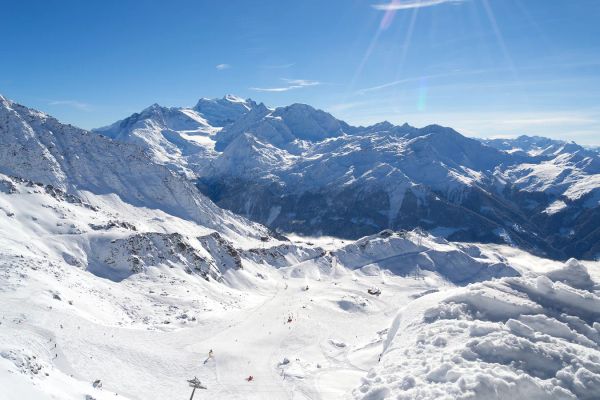
The Alps are about to swap mild, sunny October weather for something far more wintry. A cold front arrives Tuesday, and SnowStash forecasts have Monterosa Ski out in front with 64 cm over 14 days, ahead of Blatten Belalp (55 cm) and Verbier (43 cm). The snow line should fall below 2000 metres by Wednesday night, and glaciers across Switzerland, Italy and Austria are in line for the best of it. The wind will have a say too.
20 Oct 2026
Four Dead After Avalanche Near Ski Portillo in Chile
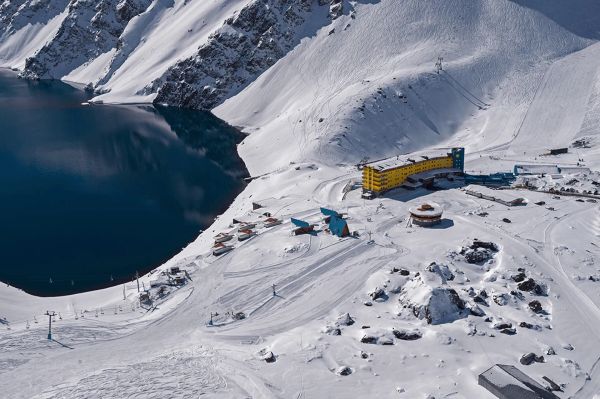
A large avalanche struck near Laguna del Inca adjacent to Ski Portillo on Saturday afternoon, killing four people and injuring four others. The group were day visitors mountaineering in the backcountry after reportedly being warned about elevated avalanche risk by resort staff.
18 Oct 2026

Europe Ski Resorts Open Now: What Is Skiable in Mid-October 2026
Europe’s ski season is open, technically. After a record-warm summer, glaciers in Austria, Switzerland and Italy are running a few pistes apiece, Sölden, Stubai and Kitzsteinhorn started late, Titlis has pushed back to 24 October, and Zermatt reopens a few lifts on 14 October after more than two months shut. Finland’s Levi and Ruka are skiing on stored snow. Here is what is open, and what you actually get at each.
14 Oct 2026

Zermatt Plans World Cup Downhill Return on the Gornergrat for 2028
Zermatt is having another crack at a World Cup downhill, and this time nobody has to cross a border. Around 13 million Swiss francs is going into rebuilding the Gornergrat piste, including a jump fed by a roughly 300-metre in-run across the roof of the Gornergrat Railway gallery, with the Matterhorn lined up behind it for the TV cameras. First men’s race is pencilled in for March 2028, pending FIS homologation.
14 Oct 2026

Mt. Rose Begins Snowmaking for the 2026-27 Season at Lake Tahoe
Lake Tahoe’s highest base elevation is paying off early: Mt. Rose has started making snow for 2026-27 after the first flurries and a cold snap. The Nevada resort is backing it with nearly US$2 million in upgrades, including a replacement snowmaking main line, a new PistenBully groomer and restraint bars on every lift. Opening day is yet to be confirmed, though Heavenly and Northstar are already eyeing 20 November.
13 Oct 2026

Utah Ski Resorts 2026-27: What’s New at Alta, Deer Valley, Powder Mountain and More
Utah is still building flat out. For 2026-27, Powder Mountain opens a steep new Skytrac chair into more than 1,000 acres of advanced terrain, Deer Valley adds 200 acres on Hail Peak, Sundance gets a new quad and Park City adds a gondola from its new parking structure. Snowmaking is expanding almost everywhere, Eagle Point stays closed after the Cottonwood Fire, and the 2034 Games are setting the pace. Here’s what’s new, resort by resort.
13 Oct 2026

Mt Hutt Invests NZ$12 Million in Base Area, Tripling Its Sun Deck
Mt Hutt is getting busier, and its base lodge is about to catch up. NZ$12 million goes into a heated sun deck roughly three times the current size (430 m² to 1,300 m²), plus a new toilet block, heated steps down to snow level, extra storage and a new food and beverage outlet. Building starts after the 2026 season, with everything due for winter 2027.
11 Oct 2026

Vermont Ski Resort Opening Dates 2026-27: Few Dates Set, Killington Waits on the Cold
Vermont's season is slow to take shape. Stratton is tentatively targeting 18 November and Sugarbush 21 November, while Pico has Friday 11 December on the calendar. Killington never sets a date and opens when the snowmaking allows, and Vail Resorts has yet to name days for Stowe, Okemo and Mount Snow. The forecasts disagree about snow, and the main El Niño worry for the Green Mountains is warmth.
9 Oct 2026
Val di Fassa Lift System
Val di Fassa-Carezza operates 54 lifts across its combined ski areas, providing efficient access to terrain spanning 1,165 metres of vertical drop. The lift fleet includes seven gondolas, four aerial tramways, three eight-passenger chairlifts, four six-passenger chairlifts, twelve quad chairs and assorted surface lifts. This modern infrastructure reflects decades of investment by the Dolomiti Superski consortium, which has systematically upgraded facilities across all member areas. The Buffaure-Ciampac sector alone maintains 11 lifts with a combined capacity of 16,000 riders per hour.
The headline installation for the 2025-26 season is the new Campitello 3S tri-cable gondola, representing a €60 million investment and the first lift of its type in the Dolomites. This Doppelmayr-built system replaces the historic 1986 cable car to Col Rodella, more than doubling hourly capacity from 1,000 to 2,177 passengers. The 16 cabins each accommodate 30 skiers with heated seats, large glass windows and infotainment screens. Additional new installations include the ten-seater Lezuo gondola at Belvedere replacing an older chairlift, and the ten-seater Franzin gondola at Carezza replacing a 1976 platter lift.
Base-to-summit access operates through multiple entry points along the valley floor. From Canazei, the Pecol gondola rises to 1,926 metres, with onward connections via the Pecol-Col dei Rossi cable car reaching Belvedere at 2,423 metres. The Sass Pordoi cable car continues to the valley's highest point at 2,950 metres, known as the Terrace of the Dolomites. From Campitello, the new 3S gondola provides direct access to Col Rodella at 2,485 metres and the Sella Ronda circuit. Alba offers an alternative entry via the Ciampac cable car, while Pozza di Fassa connects to the Buffaure sector through its base gondola.
Recent infrastructure investment across the broader Dolomiti Superski network totalled €154 million for the 2025-26 season, with 13 lifts renewed or replaced across nine ski areas. Val di Fassa has received particular attention given its strategic position on the Sella Ronda circuit, where the new 3S lift eliminates a significant bottleneck at Campitello. Snowmaking systems have also received substantial upgrades, with advanced technology ensuring optimal coverage throughout the season using resource-efficient methods. The combination of high-capacity gondolas and modern chairlifts minimises wait times even during peak periods.
40lifts across 9 types
4
Aerial Trams
7
Gondolas
3
8-Person Chairs
4
6-Person Chairs
12
Quad Chairs
2
Triple Chairs
1
Double Chair
6
T-Bars
1
Surface Lift
Val di Fassa lift system
Val di Fassa is served by 40 lifts, listed here by type. Check which lifts are turning against the live conditions before you plan your first laps - early lifts and high-speed chairs get you to the best snow fastest.
More Val di Fassa intelligence: trail map, snow report, webcams, resort overview.