
Val Gardena (Gröden)
181km of pistes, 79 lifts, direct Sellaronda access. Val Gardena - South Tyrol's best-rated Dolomites ski area.
Season 2026 - 2027
Opens
4 Dec 2026
Closes
4 Apr 2027
Days open
121
Annual snow
2.6m
The Overview
Michael Fulton
Melbourne-based skier and snowboarder with 50+ resorts across 5 continents. Specialises in Australian resorts and international resort comparisons.
Val Gardena spans 181 kilometres of marked pistes across 188 runs, with lift-accessed terrain rising from 1,236 metres at the valley floor to 2,518 metres at the Seceda summit - a vertical drop of 1,282 metres. The resort sits within the UNESCO World Heritage Dolomites and forms part of Dolomiti Superski, giving pass holders direct access to over 500 kilometres of interconnected slopes and the full 1,200-kilometre network across 12 ski areas. Snow reliability is exceptional: technically programmed snowmaking covers approximately 95% of the terrain, supplemented by natural snowfall that averages around 300 centimetres annually. The resort has been repeatedly named the best ski area in the Dolomites by independent rating platforms.
Terrain distribution favours intermediate skiers heavily, with 60% of runs graded red, 29% blue for beginners, and 11% black. The area divides into distinct sectors including Seceda, Col Raiser, Ciampinoi, Plan de Gralba, and Passo Sella on the Val Gardena side, plus Alpe di Siusi across the valley. Signature runs include the 3,446-metre Saslong - home to the annual FIS World Cup downhill since 1969 - and La Longia, a 10-kilometre descent from Seceda to Ortisei. The newly opened La Ria black run on Dantercepies features gradients up to 52%, while the Pela (Pista Nera) near Col Raiser ranks among the steepest marked trails in the valley.
Three traditional Ladin villages anchor the valley: Ortisei at 1,236 metres serves as the main town with approximately 5,000 residents, Santa Cristina sits at 1,428 metres as the quietest option, and Selva at 1,563 metres provides the most direct lift access to the Sellaronda circuit. More than 60 mountain huts dot the slopes, serving South Tyrolean and Ladin cuisine. The valley retains strong cultural identity - Ladin, Italian, and German are all spoken locally - while traditional woodcarving workshops continue an artistic heritage dating to the 17th century.
The Val Gardena/Alpe di Siusi ski pass covers the local 175-kilometre network, while the Dolomiti Superski pass unlocks the full regional system including the Sellaronda - a 40-kilometre ski circuit around the Sella massif crossing four high passes. From Selva, the Dantercepies gondola provides clockwise access to the circuit, while Ciampinoi serves the counter-clockwise route. The resort suits intermediates seeking long cruising runs and exploratory day tours, families attracted to Alpe di Siusi's gentle terrain, and racing fans drawn to World Cup heritage.
1282m
Vertical
188
Runs
181 km
Piste
2.6m
Annual snow
Watch
See Val Gardena (Gröden) in motion
The Terrain
188 runs across 181 km of piste
Val Gardena is one of the largest ski areas in the Dolomites, with 188 runs and 181 kilometres of piste between 1,236 metres and 2,518 metres, a vertical of 1,282 metres. The grading is 29% beginner, 60% intermediate and 11% advanced, with no expert-rated runs. That makes it a reds-first valley, where a good intermediate can ski all day without repeating a lap. The lift network is vast, with 19 quad chairs, 10 six-seaters, three eight-seaters, 13 double chairs, 23 surface lifts, two trams and a gondola, spread over three villages and Alpe di Siusi.
The Saslong is the famous run, a World Cup downhill piste above Santa Cristina that most skiers can tackle at their own pace. Seceda reaches the top of the area from Ortisei, with long descents back to town, and Ciampinoi is the central launch point from Selva. Alpe di Siusi is a plateau of gentle slopes that suits beginners and children. Selva sits directly on the Sella Ronda circuit, which makes Val Gardena ideal for intermediates who want big mileage. Freeride terrain is limited, and advanced skiers will find fewer hard pistes than the size suggests.
Terrain split
188
runs
188 runs across 4 grades
Beginner55 runs · 29%
Intermediate113 runs · 60%
Advanced21 runs · 11%
Expert0 runs · 0%
Time it right
When to visit Val Gardena (Gröden)
Val Gardena typically operates from early December through early April, with the 2025/26 season scheduled from 4 December 2025 to 7 April 2026. This four-month window aligns with the broader Sellaronda circuit opening dates, ensuring full regional connectivity throughout the winter. Exact dates remain subject to snow conditions, though comprehensive snowmaking infrastructure enables consistent early-December starts regardless of natural precipitation.
Natural snowfall averages approximately 300 centimetres annually, with reliable base depths ranging from 50 to 150 centimetres during peak season. The resort's elevation profile - with most terrain above 1,800 metres - preserves snow quality through the shoulder periods. Technically controlled snowmaking covers 165 kilometres of pistes, effectively guaranteeing skiable conditions across the network. Over 300 snowcats groom the terrain nightly, maintaining consistent surface quality.
January and February deliver the most reliable cold temperatures and powder opportunities, with the first week of February historically recording the highest snowfall frequency. December offers excellent groomed conditions with festive atmosphere across the villages. March brings longer daylight hours and spring snow conditions, particularly favourable for the extensive south-facing terrain on Seceda and Alpe di Siusi. Late March into April sees softer afternoon snow and ideal conditions for leisurely cruising.
The annual FIS Ski World Cup races on the Saslong take place in mid-December, drawing international crowds for the downhill and super-G events. The Sellaronda Skimarathon in March challenges ski tourers with 42 kilometres and 2,000 metres of climbing around the Sella massif. Late March hosts the Südtirol Gardenissima - the longest giant slalom in the world - a 6-kilometre race from Seceda with over 1,000 metres vertical drop. Rock the Dolomites brings live music performances across mountain huts during the final weeks of the season.
Season 2026 - 2027
4 Dec 2026
Opens
4 Apr 2027
Closes
121
Days open
2.6 m
Annual snow
The record
Historical snowfall at Val Gardena (Gröden)
Daily snow reports at Val Gardena (Gröden) go back to 1996, 31 winters on the books. Open the record to compare winters, lifts and piste.
65 cm
Snowiest day
5 Dec 2020
15 cm
This winter · 2026-27
so far
260 cm
Typical winter
average of complete seasons
Winter totals
cm
Past wintersThis winter
Getting there
Getting to Val Gardena (Gröden), and where to stay
Val Gardena lies in the Alto Adige/South Tyrol region of northern Italy, carved into the western slopes of the Sella massif within the central Dolomites. The valley stretches approximately 30 kilometres from Ponte Gardena at its entrance to the high passes of Passo Sella and Passo Gardena at its head. Dramatic limestone peaks frame the landscape: Sassolungo rises to 3,181 metres to the south, the Odle group and Seceda ridge form the northern boundary, and the Sella plateau dominates the eastern horizon. The entire area falls within the UNESCO World Heritage Dolomites designation.
Ortisei, the valley's main town, sits at 1,236 metres approximately 20 minutes drive from the motorway exit. Bolzano, the regional capital, lies 43 kilometres west and serves as the primary urban centre with full services, shopping, and cultural attractions. The valley retains trilingual character - Ladin, Italian, and German - reflecting its position at the intersection of three cultural traditions. Traditional woodcarving remains a significant local industry alongside tourism, with workshops and galleries concentrated in Ortisei's pedestrianised centre.
Road access follows the A22 Brenner motorway, the main north-south corridor between Austria and Italy. From the north, drivers exit at Chiusa after passing through Innsbruck and the Brenner Pass; from the south, the same exit serves traffic arriving via Verona and Trento. The climb from Chiusa to Ortisei takes approximately 20 minutes on well-maintained valley roads, with Santa Cristina and Selva a few kilometres beyond. Alternative scenic routes approach via Passo Sella from Val di Fassa or Passo Gardena from Alta Badia.
Bolzano Airport lies approximately 50 kilometres from Val Gardena with transfer times around 40 minutes, though international flight options remain limited. Innsbruck Airport in Austria offers the nearest practical hub for UK and European connections, situated 120 kilometres north with transfer times of 90 minutes to two hours. Verona Airport provides the most convenient Italian gateway at 195 kilometres, roughly two hours fifteen minutes by road. Train services reach Ponte Gardena, Chiusa, Bressanone, and Bolzano stations, with connecting buses running frequently into the valley.
Where to stay
Search all stays →Hotels and lodges near Val Gardena (Gröden), powered by Stay22.
Latest News
From the SnowStash desk
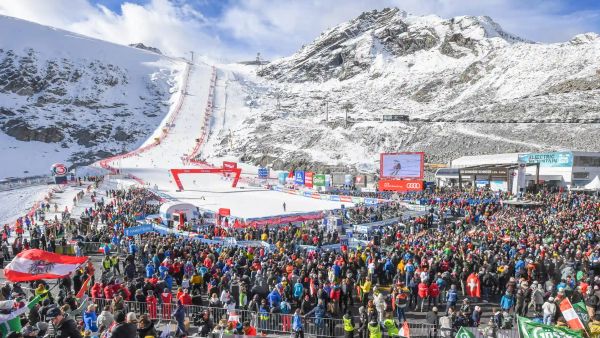
Pinheiro Braathen Wins Sölden Giant Slalom Opener by 0.48 Seconds
Two days at Sölden, two races decided by a hundredth somewhere on the podium, and one very quick Brazilian. Lucas Pinheiro Braathen led from the first run to win the men’s World Cup opener by 0.48 seconds, with Loïc Meillard second and Marco Odermatt third. River Radamus charged from 15th to fourth on a rutted course, and Britain’s Freddy Carrick-Smith banked his first World Cup points. Braathen still hasn’t lost a giant slalom since Olympic gold.
25 Oct 2026
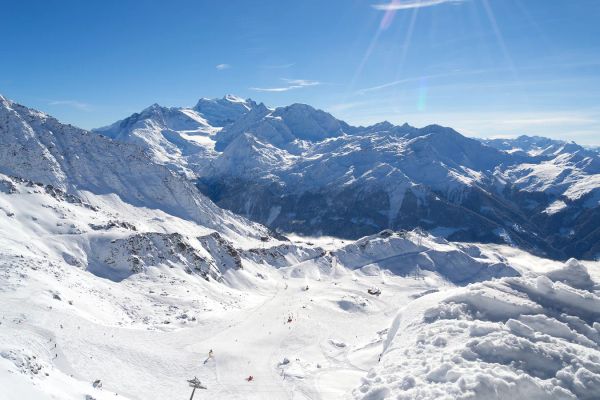
Alps Snow Forecast: Up to 64 cm Headed for the High Glaciers as the Snow Line Drops
The Alps are about to swap mild, sunny October weather for something far more wintry. A cold front arrives Tuesday, and SnowStash forecasts have Monterosa Ski out in front with 64 cm over 14 days, ahead of Blatten Belalp (55 cm) and Verbier (43 cm). The snow line should fall below 2000 metres by Wednesday night, and glaciers across Switzerland, Italy and Austria are in line for the best of it. The wind will have a say too.
20 Oct 2026
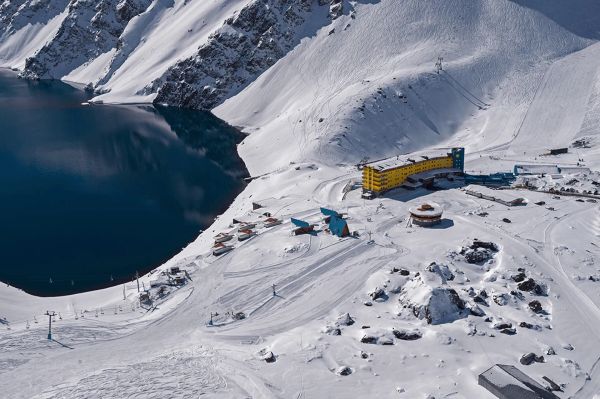
Four Dead After Avalanche Near Ski Portillo in Chile
A large avalanche struck near Laguna del Inca adjacent to Ski Portillo on Saturday afternoon, killing four people and injuring four others. The group were day visitors mountaineering in the backcountry after reportedly being warned about elevated avalanche risk by resort staff.
18 Oct 2026

Europe Ski Resorts Open Now: What Is Skiable in Mid-October 2026
Europe’s ski season is open, technically. After a record-warm summer, glaciers in Austria, Switzerland and Italy are running a few pistes apiece, Sölden, Stubai and Kitzsteinhorn started late, Titlis has pushed back to 24 October, and Zermatt reopens a few lifts on 14 October after more than two months shut. Finland’s Levi and Ruka are skiing on stored snow. Here is what is open, and what you actually get at each.
14 Oct 2026

Zermatt Plans World Cup Downhill Return on the Gornergrat for 2028
Zermatt is having another crack at a World Cup downhill, and this time nobody has to cross a border. Around 13 million Swiss francs is going into rebuilding the Gornergrat piste, including a jump fed by a roughly 300-metre in-run across the roof of the Gornergrat Railway gallery, with the Matterhorn lined up behind it for the TV cameras. First men’s race is pencilled in for March 2028, pending FIS homologation.
14 Oct 2026

Mt. Rose Begins Snowmaking for the 2026-27 Season at Lake Tahoe
Lake Tahoe’s highest base elevation is paying off early: Mt. Rose has started making snow for 2026-27 after the first flurries and a cold snap. The Nevada resort is backing it with nearly US$2 million in upgrades, including a replacement snowmaking main line, a new PistenBully groomer and restraint bars on every lift. Opening day is yet to be confirmed, though Heavenly and Northstar are already eyeing 20 November.
13 Oct 2026

Utah Ski Resorts 2026-27: What’s New at Alta, Deer Valley, Powder Mountain and More
Utah is still building flat out. For 2026-27, Powder Mountain opens a steep new Skytrac chair into more than 1,000 acres of advanced terrain, Deer Valley adds 200 acres on Hail Peak, Sundance gets a new quad and Park City adds a gondola from its new parking structure. Snowmaking is expanding almost everywhere, Eagle Point stays closed after the Cottonwood Fire, and the 2034 Games are setting the pace. Here’s what’s new, resort by resort.
13 Oct 2026

Mt Hutt Invests NZ$12 Million in Base Area, Tripling Its Sun Deck
Mt Hutt is getting busier, and its base lodge is about to catch up. NZ$12 million goes into a heated sun deck roughly three times the current size (430 m² to 1,300 m²), plus a new toilet block, heated steps down to snow level, extra storage and a new food and beverage outlet. Building starts after the 2026 season, with everything due for winter 2027.
11 Oct 2026
Val Gardena (Gröden) Lift System
Val Gardena and Alpe di Siusi operate a combined network of 79 lifts with total uphill capacity exceeding 115,000 skiers per hour. The system comprises 2 aerial tramways, 1 gondola, 3 eight-passenger chairlifts, 10 six-passenger chairlifts, 19 quad chairs, 13 double chairs, 1 triple chair, and 23 surface lifts. This infrastructure connects three valley villages to multiple ski sectors and provides seamless integration with the broader Sellaronda circuit through strategically positioned link lifts.
Key installations include the Seceda cableway system from Ortisei, which rises in two stages via Furnes to reach 2,518 metres at the summit. The Col Raiser gondola from Santa Cristina accesses the same high terrain via a scenic alpine plateau route. From Selva, the Ciampinoi gondola climbs to 2,254 metres as the central hub for Sellaronda connections, while the Dantercepies twin gondolas provide direct access to Passo Gardena and the clockwise circuit. An underground funicular - the Gardena Ronda Express - connects the Col Raiser and Ciampinoi sectors through an efficient tunnel link.
Base-to-summit flow operates efficiently from all three villages. Ortisei riders ascend via Seceda or cross to Alpe di Siusi using the valley gondola. Santa Cristina offers multiple entry points through Col Raiser, Monte Pana, and the Ciampinoi sector. Selva provides the most direct high-alpine access through Ciampinoi, Dantercepies, and the Plan de Gralba lifts serving Passo Sella terrain. The interconnected nature allows completion of the Val Gardena Ronda - a local circuit touching all major sectors - using a single regional pass.
Recent infrastructure investments have focused on modernisation rather than expansion. The Palmer ski lift in Ortisei was rebuilt for the 2024/25 season alongside piste improvements in the Pilat-Ronc area. Ongoing optimisation of snowmaking systems ensures early-season opening reliability. The lift operators continue upgrading existing facilities to improve safety, comfort, and uphill capacity while maintaining the network's reputation for efficient mountain access.
72lifts across 8 types
2
Aerial Trams
1
Gondola
3
8-Person Chairs
10
6-Person Chairs
19
Quad Chairs
1
Triple Chair
13
Double Chairs
23
T-Bars
Val Gardena (Gröden) lift system
Val Gardena (Gröden) is served by 72 lifts, listed here by type. Check which lifts are turning against the live conditions before you plan your first laps - early lifts and high-speed chairs get you to the best snow fastest.
More Val Gardena (Gröden) intelligence: trail map, snow report, webcams, resort overview.