
Meiringen-Hasliberg
60km of piste from 1,065-2,433m in the Haslital valley. Uncrowded intermediate skiing with 1,368m vertical in Switzerland.
Season 2026 - 2027
Opens
19 Dec 2026
Closes
29 Mar 2027
Days open
100
Annual snow
4m
The Overview
Michael Fulton
Melbourne-based skier and snowboarder with 50+ resorts across 5 continents. Specialises in Australian resorts and international resort comparisons.
Meiringen-Hasliberg operates from 1,065 to 2,433 metres across 60 kilometres of piste in the Haslital valley of the Bernese Oberland. The ski area spreads across 23 runs with 1,368 metres of vertical drop, whilst 33% of terrain suits beginners, 57% intermediates, and 10% advanced skiers. The resort's southwest-facing bowl beneath Glogghüs (2,534m) and Rothorn (2,525m) receives 4.3 metres of annual snowfall, making it snow-reliable above 1,700 metres.
The terrain unfolds across interconnected zones from Meiringen's valley base at 595 metres up through Hasliberg Reuti, Bidmi, Mägisalp and Käserstatt to the highest lift-accessed point at Glogghüs. Red runs dominate the upper mountain, including the longest descent at 10 kilometres from Glogghüs via Käserstatt to Hohfluh, whilst the sole black run Nordpol drops 1.5 kilometres from Planplatten. Bidmi at 1,423 metres serves as the beginner hub with gentle slopes and Skihäsliland practice area.
The resort remains uncrowded midweek, drawing 50% Swiss visitors and 30% German, with limited international traffic keeping queues minimal even during February and March. Ten mountain restaurants punctuate the ski area, from the Alpen Tower panorama restaurant at 2,250 metres to the lively Kuhstall and Aquarium bars at Käserstatt. Night skiing operates Friday evenings from January to March on the 4.5-kilometre Mägisalp-Reuti piste until 22:00.
Meiringen-Hasliberg suits intermediates seeking quiet Swiss skiing at competitive prices compared to Jungfrau region neighbours Grindelwald and Wengen, which lie 30 minutes away by train. The 2025-2026 season runs from 14 December to 30 March. Family groups and improving skiers will find varied terrain without the crowds or expense of larger Oberland resorts.
1368m
Vertical
23
Runs
60 km
Piste
4m
Annual snow
The Terrain
23 runs across 60 km of piste
Meiringen-Hasliberg covers 60 kilometres across 23 runs in the Haslital, with a vertical of 1,368 metres from 2,433 metres down to a base at 1,065 metres. The grading favours mid-level skiers, at 33% beginner, 57% intermediate and 10% advanced, with nothing graded expert. Four gondolas, three eight-seat chairs, three six-seat chairs and an aerial tram link the sectors, backed by quads, T-bars and surface lifts. Midweek the slopes feel remarkably empty, with mostly Swiss and German visitors, and it makes a good all-round area for progressing skiers.
The long run from Alpentower down to Reuti is the standout, dropping well over 1,000 metres. Planplatten holds the toughest piste, the black Nordpol, a former World Cup course, while the sunny blues around Bidmi and Mägisalp suit cruisers. Freeriders can explore the open slopes above the treeline near Mägisalp and Käserstatt, ideally with a local guide. A Friday night piste runs under lights from Mägisalp to Reuti from January to March. Families, intermediates and visitors wanting a quieter day than the nearby Jungfrau resorts will find it a comfortable base.
Terrain split
23
runs
23 runs across 4 grades
Beginner8 runs · 33%
Intermediate13 runs · 57%
Advanced2 runs · 10%
Expert0 runs · 0%
Time it right
When to visit Meiringen-Hasliberg
The 2025-2026 season operates from 14 December 2025 to 30 March 2026, with weekend-only service from late November before full opening in mid-December. The resort typically closes in early April after a 16-week winter season. Average annual snowfall reaches 4.3 metres, with January delivering 91 centimetres and February another 91 centimetres, making midwinter the most reliable snow window.
Elevation provides the snow reliability advantage, with terrain above 1,700 metres holding coverage through March whilst lower runs to Wasserwendi (1,169m) and Hohfluh (1,043m) thin out by late season. Snowmaking covers 18.4 kilometres or roughly 30% of piste, concentrated on key access runs and learning areas at Bidmi. March averages 81 centimetres of snowfall with 100-centimetre base depths at summit elevation.
January and February deliver peak powder conditions alongside coldest temperatures, whilst December and March offer sunnier skiing as the resort's southwest exposure captures afternoon light. The Brünig Pass acts as a weather divide, often leaving Hasliberg sunny whilst fog blankets central Switzerland's lowlands. Week two of January historically records the snowiest conditions with 43 centimetres average.
Friday night skiing from early January to early March lights the Mägisalp-Reuti run until 22:00, included with multi-day passes. Weekend crowds peak in February half-term, though midweek remains quiet. The resort hosts racing events at the Ski Racing Center at Bidmi, alongside dwarf-themed family trails and the Junior Park between Hääggen and Mägisalp.
Season 2026 - 2027
19 Dec 2026
Opens
29 Mar 2027
Closes
100
Days open
4 m
Annual snow
Getting there
Getting to Meiringen-Hasliberg, and where to stay
Meiringen-Hasliberg occupies the Haslital valley in the eastern Bernese Oberland, where the Aare River flows between Lake Brienz and the Grimsel Pass in Canton Bern. Meiringen town sits at 595 metres elevation whilst the Hasliberg terrace spreads from 1,000 to 1,050 metres across the villages of Hohfluh, Wasserwendi, Goldern and Reuti. The ski area rises to 2,433 metres on the slopes separating Haslital from the Melchsee-Frutt region across the cantonal border.
Meiringen lies 50 kilometres southeast of Lucerne and 85 kilometres from Bern, with Interlaken 30 kilometres northwest via the A8 motorway along Lake Brienz. The valley sits between four alpine passes: Brünig (1,008m) connecting to central Switzerland, Grimsel (2,165m) to Valais, Susten (2,224m) to Uri, and Grosse Scheidegg (1,962m) to Grindelwald. During winter, Grimsel and Susten passes close, leaving Brünig as the sole road access from November to May.
Zurich Airport lies 115 kilometres northeast with 90-minute drive times via A4, A14 and A8 motorways through Lucerne. Bern Airport at Belp sits 84 kilometres distant but offers fewer international connections than Zurich. By rail, Meiringen station connects hourly to Lucerne in 75 minutes and Interlaken in 30 minutes on the Zentralbahn Brünig line, which opened in 1888.
From Zurich Airport, the rail journey takes 2 hours 25 minutes with one change at Lucerne, whilst trains from Bern require 90 minutes via Thun, Spiez and Interlaken Ost. The Brünig-Hasliberg station on the pass provides hourly connections to Lucerne and Interlaken, with coordinated PostBus service to Hasliberg villages. The resort operates a free ski shuttle from mid-December to mid-March between Meiringen station, villages and lift stations.
Where to stay
Search all stays →Hotels and lodges near Meiringen-Hasliberg, powered by Stay22.
Latest News
From the SnowStash desk
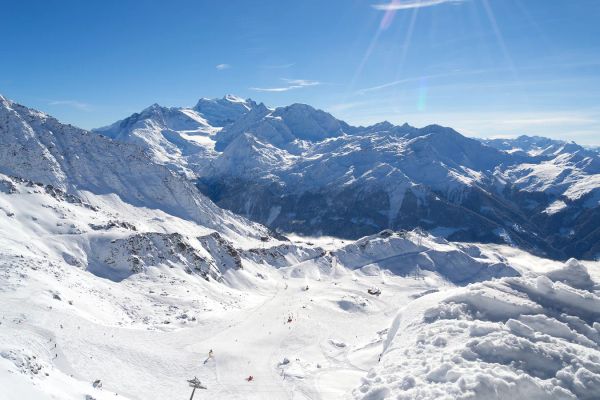
Alps Snow Forecast: Up to 64 cm Headed for the High Glaciers as the Snow Line Drops
The Alps are about to swap mild, sunny October weather for something far more wintry. A cold front arrives Tuesday, and SnowStash forecasts have Monterosa Ski out in front with 64 cm over 14 days, ahead of Blatten Belalp (55 cm) and Verbier (43 cm). The snow line should fall below 2000 metres by Wednesday night, and glaciers across Switzerland, Italy and Austria are in line for the best of it. The wind will have a say too.
20 Oct 2026
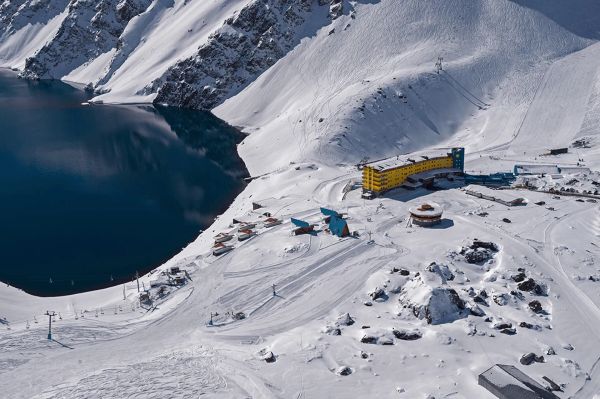
Four Dead After Avalanche Near Ski Portillo in Chile
A large avalanche struck near Laguna del Inca adjacent to Ski Portillo on Saturday afternoon, killing four people and injuring four others. The group were day visitors mountaineering in the backcountry after reportedly being warned about elevated avalanche risk by resort staff.
18 Oct 2026
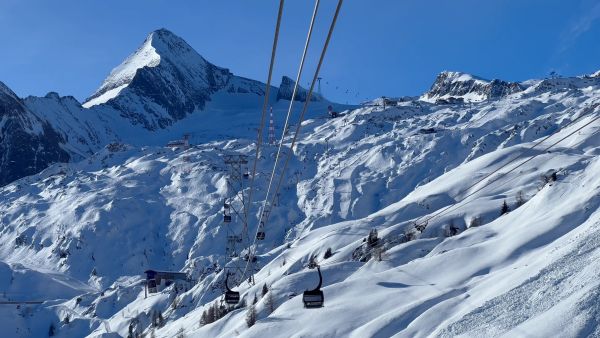
Europe Ski Resorts Open Now: What Is Skiable in Mid-October 2026
Europe’s ski season is open, technically. After a record-warm summer, glaciers in Austria, Switzerland and Italy are running a few pistes apiece, Sölden, Stubai and Kitzsteinhorn started late, Titlis has pushed back to 24 October, and Zermatt reopens a few lifts on 14 October after more than two months shut. Finland’s Levi and Ruka are skiing on stored snow. Here is what is open, and what you actually get at each.
14 Oct 2026

Zermatt Plans World Cup Downhill Return on the Gornergrat for 2028
Zermatt is having another crack at a World Cup downhill, and this time nobody has to cross a border. Around 13 million Swiss francs is going into rebuilding the Gornergrat piste, including a jump fed by a roughly 300-metre in-run across the roof of the Gornergrat Railway gallery, with the Matterhorn lined up behind it for the TV cameras. First men’s race is pencilled in for March 2028, pending FIS homologation.
14 Oct 2026

Mt. Rose Begins Snowmaking for the 2026-27 Season at Lake Tahoe
Lake Tahoe’s highest base elevation is paying off early: Mt. Rose has started making snow for 2026-27 after the first flurries and a cold snap. The Nevada resort is backing it with nearly US$2 million in upgrades, including a replacement snowmaking main line, a new PistenBully groomer and restraint bars on every lift. Opening day is yet to be confirmed, though Heavenly and Northstar are already eyeing 20 November.
13 Oct 2026

Utah Ski Resorts 2026-27: What’s New at Alta, Deer Valley, Powder Mountain and More
Utah is still building flat out. For 2026-27, Powder Mountain opens a steep new Skytrac chair into more than 1,000 acres of advanced terrain, Deer Valley adds 200 acres on Hail Peak, Sundance gets a new quad and Park City adds a gondola from its new parking structure. Snowmaking is expanding almost everywhere, Eagle Point stays closed after the Cottonwood Fire, and the 2034 Games are setting the pace. Here’s what’s new, resort by resort.
13 Oct 2026

Mt Hutt Invests NZ$12 Million in Base Area, Tripling Its Sun Deck
Mt Hutt is getting busier, and its base lodge is about to catch up. NZ$12 million goes into a heated sun deck roughly three times the current size (430 m² to 1,300 m²), plus a new toilet block, heated steps down to snow level, extra storage and a new food and beverage outlet. Building starts after the 2026 season, with everything due for winter 2027.
11 Oct 2026

Vermont Ski Resort Opening Dates 2026-27: Few Dates Set, Killington Waits on the Cold
Vermont's season is slow to take shape. Stratton is tentatively targeting 18 November and Sugarbush 21 November, while Pico has Friday 11 December on the calendar. Killington never sets a date and opens when the snowmaking allows, and Vail Resorts has yet to name days for Stowe, Okemo and Mount Snow. The forecasts disagree about snow, and the main El Niño worry for the Green Mountains is warmth.
9 Oct 2026
Meiringen-Hasliberg Lift Tickets
Meiringen-Hasliberg lift tickets & passes
Opening day for the winter 2026 - 2027 season is scheduled for Dec 19, 2026 (subject to change). Lift tickets at Meiringen-Hasliberg typically go on sale well before the start of the ski season.
Lift tickets FAQ
How much does a Meiringen-Hasliberg day pass cost?
Meiringen-Hasliberg day pass pricing varies by date and advance booking - see the full breakdown in the tickets panel.
Can I buy Meiringen-Hasliberg lift tickets online?
Yes, you can purchase tickets online or at the resort ticket office.
Are there discounts for multi-day passes?
Yes, multi-day packages typically offer significant savings compared to individual day passes. The per-day cost decreases with longer stays.
What is included with a Meiringen-Hasliberg lift ticket?
Full access to all lifts and trails at Meiringen-Hasliberg, including mountain safety and patrol services.
What is the difference between Meiringen-Hasliberg lift tickets and ski passes?
"Lift tickets" and "ski passes" refer to the same thing at Meiringen-Hasliberg - your access to the mountain's lifts and trails for your chosen duration.
When should I buy Meiringen-Hasliberg lift tickets for the best price?
Purchase tickets at least 7 days in advance for the best rates, and consider weekday visits for further savings over weekend rates.
Does Meiringen-Hasliberg offer group discounts on lift tickets?
Group discounts are typically available for parties of 10 or more. Contact Meiringen-Hasliberg directly for group booking information and rates.
How can I check current conditions before buying tickets?
Before purchasing, check the live snow report and mountain webcams to see current weather, snow conditions, and lift operations at Meiringen-Hasliberg.
More Meiringen-Hasliberg intelligence: snow report, webcams, resort overview.