
Saint Luc (Anniviers)
60km of slopes, 1,300m vertical, 2,980m summit. South-facing terrain with uncrowded pistes in Valais. Magic Pass included.
Season 2026 - 2027
Opens
28 Nov 2026
Closes
11 Apr 2027
Days open
134
Annual snow
4m
The Overview
Michael Fulton
Melbourne-based skier and snowboarder with 50+ resorts across 5 continents. Specialises in Australian resorts and international resort comparisons.
Saint Luc shares a linked ski area with neighbouring Chandolin across 60 kilometres of piste between 1,680 and 2,980 metres elevation, delivering 1,300 metres of vertical drop on the sun-drenched western flank of Val d'Anniviers. The terrain divides into 33 per cent beginner, 50 per cent intermediate, and 17 per cent advanced, with 80 per cent of slopes situated between 2,000 and 3,000 metres for reliable snow coverage. The Bella Tola T-bar climbs to just below 3,000 metres, offering panoramic views of the Weisshorn, Dent Blanche, and Matterhorn across the Imperial Crown range. Annual snowfall averages 4.3 metres, with 22 snow cannons covering 12 per cent of groomed terrain.
The ski area stretches across predominantly west and southwest-facing slopes, with the Bella Tola sector providing the most challenging terrain and the longest descents. Blue runs concentrate around the Tignousa mid-station at 2,180 metres, accessed via a year-round funicular from Saint Luc village at 1,650 metres. Red runs dominate the area, particularly the winding descents from Col des Ombrintzes and Pas de Boeuf, whilst the run from Bella Tola to Le Prilet ranks among the longest continuous pistes in Val d'Anniviers. The Rotsé chairlift provides the connection between Saint Luc and Chandolin for intermediate skiers.
Saint Luc village retains traditional Valaisan character with century-old timber mazots and the four-star Hôtel Bella Tola dating from 1859. The resort attracts families and off-piste enthusiasts seeking quieter slopes and north-facing couloirs that hold powder for days after snowfall. Five mountain restaurants include Cabane Bella-Tola at 2,340 metres and the restaurant at Tignousa. The François-Xavier Bagnoud Observatory and Planets Trail add a distinctive astronomical dimension to the alpine experience.
Saint Luc forms part of the wider Val d'Anniviers ski pass covering 210 kilometres across three separate areas including Grimentz-Zinal and Vercorin, with free shuttle buses connecting the resorts every 20 minutes. The resort also participates in the Magic Pass scheme, offering access to over 25 Swiss ski areas. The 2025-26 season runs from 20 December to 21 April, with optimal conditions typically between January and March. The area suits intermediate cruisers, families with young children, and backcountry skiers seeking uncrowded north-facing freeride terrain.
1300m
Vertical
0
Runs
60 km
Piste
4m
Annual snow
The Terrain
0 runs across 60 km of piste
Saint Luc rises from 1,680 metres to 2,980 metres near the summit of Bella Tola, giving 1,300 vertical metres across 60 kilometres of piste shared with Chandolin. Half the terrain is intermediate, a third is beginner at 33% and 17% is advanced, with nothing graded expert. Most of the skiing is open and above the trees, so visibility is rarely a problem and the sun does plenty of work. The Tignousa funicular lifts skiers from the village to the main blue-run zone, and two quad chairs, a six-seater and eleven drag lifts take over from there.
From the top of the Bella Tola T-bar, the views take in the Weisshorn, Dent Blanche and Matterhorn, and a short traverse opens up bowls and couloirs for anyone wanting a steeper line. Reds dominate the higher slopes, so there is plenty of cruising between the village and the ridge. Saint Luc suits families, relaxed intermediates and skiers who prefer a quiet Valais resort to a busy one, with accessible off-piste for those happy to hire a guide and some patience with a small lift system.
Terrain split
0
runs
0 runs across 4 grades
Beginner0 runs · 33%
Intermediate0 runs · 50%
Advanced0 runs · 17%
Expert0 runs · 0%
Time it right
When to visit Saint Luc (Anniviers)
The 2025-26 winter season operates from 20 December 2025 to 21 April 2026, offering a four-month window consistent with mid-altitude Swiss resorts in the Valais. Historical data shows the resort typically opens in mid-December and closes in mid-April, with the funicular providing year-round access to Tignousa for summer hiking and mountain biking. Seasonal variations depend on early-winter snowfall and spring temperatures, though the high-altitude terrain generally ensures reliable coverage from January onwards. The resort benefits from southwest exposure, delivering exceptional sunshine hours during the winter months.
Annual snowfall averages 4.3 metres at summit elevation, with the high-altitude terrain between 2,000 and 3,000 metres providing natural snow reliability throughout the season. Most slopes sit above the critical 2,000-metre threshold, allowing the resort to maintain good coverage even in lean years. The 22 snow cannons supplement natural snowfall on lower slopes and key pistes, covering approximately 12 per cent of groomed terrain including beginner areas at Tignousa. Base depths in the 2025-26 season reached 200 centimetres in March, with 52 centimetres falling in the preceding week.
January through March delivers the most consistent powder and piste conditions, with February offering peak snow depth averaging 140 centimetres at summit and 40 centimetres at base. March combines deep snowpack with lengthening days and warmer temperatures, making it popular with families and spring skiers. December and early January see quieter slopes but variable coverage, whilst April offers spring corn snow and extended daylight for those willing to ski softening afternoon conditions. The resort's north-facing couloirs and shaded sectors hold cold snow longer than the sun-baked main pistes.
The resort hosts several seasonal events including Sunrise at Bella-Tola breakfast experiences at 3,000 metres, raclette nights, and torchlit descents. The Là-Haut electronic music festival brings a unique atmosphere to the high-altitude setting. Night skiing opportunities are limited, but the astronomical observatory and Planets Trail operate through winter for evening stargazing sessions. The shoulder seasons remain quiet, offering excellent value for early-season and spring visitors seeking uncrowded slopes and lower accommodation rates.
Season 2026 - 2027
28 Nov 2026
Opens
11 Apr 2027
Closes
134
Days open
4 m
Annual snow
Getting there
Getting to Saint Luc (Anniviers), and where to stay
Saint Luc sits at 1,650 metres on a sunny balcony above Val d'Anniviers in the canton of Valais, with the village positioned on the eastern flank of the valley opposite the larger Grimentz-Zinal ski area. The valley extends southward from the Rhône Valley town of Sierre, surrounded by 4,000-metre peaks including the Weisshorn, Zinalrothorn, and Dent Blanche forming the Imperial Crown range. The municipality of Anniviers was formed in 2009 by merging six villages including Saint Luc, Chandolin, Grimentz, Vissoie, Ayer, and Saint-Jean. The geographic position between Verbier, Crans-Montana, and Zermatt places Saint Luc in one of Switzerland's less-commercialised ski valleys.
Vissoie, the valley's central hub at 1,204 metres, lies five kilometres downvalley and serves as the postbus interchange connecting all Val d'Anniviers resorts. Sierre, the nearest major town at 525 metres in the Rhône Valley, sits 22 kilometres by road and serves as the primary transport gateway with rail connections and regional amenities. The village of Chandolin, positioned at 2,000 metres and one of Europe's highest year-round settlements, shares the ski area and sits approximately 15 minutes by bus from Saint Luc. The region lies in French-speaking Valais, with the linguistic border to German-speaking Wallis running along the mountain ridges to the east.
Road access from Geneva follows the A9 motorway via Lausanne to Sierre, then climbs steeply through hairpin bends up the valley for approximately 22 kilometres to Saint Luc. The journey from Geneva takes two hours by car, covering 185 kilometres, whilst Zurich lies 3.5 to four hours away via the A9. The A9 motorway continues eastward to Brig and the Simplon Pass, positioning Val d'Anniviers on major trans-Alpine routes. Mountain roads require winter tyres between November and March, with postbuses expertly navigating the tight switchbacks using distinctive sing-song horns to alert oncoming traffic.
Sion Airport lies approximately 45 minutes away and offers seasonal flights from London and Portugal during winter and summer. Geneva Airport, 185 kilometres distant, provides the most international connections with direct trains to Sierre in under 2.5 hours. From Sierre station, postbus route 451 runs hourly to Vissoie, where passengers change to connecting services for Saint Luc, with total journey time around one hour. Zurich Airport lies roughly 310 kilometres away with train connections via Bern or direct routes to Sierre taking approximately four hours including the valley bus transfer.
Where to stay
Search all stays →Hotels and lodges near Saint Luc (Anniviers), powered by Stay22.
Latest News
From the SnowStash desk
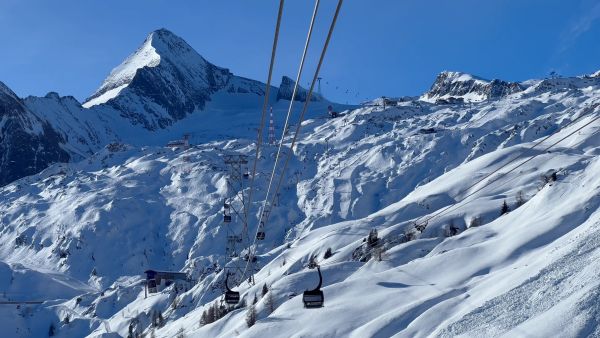
Europe Ski Resorts Open Now: What Is Skiable in Mid-October 2026
Europe’s ski season is open, technically. After a record-warm summer, glaciers in Austria, Switzerland and Italy are running a few pistes apiece, Sölden, Stubai and Kitzsteinhorn started late, Titlis has pushed back to 24 October, and Zermatt reopens a few lifts on 14 October after more than two months shut. Finland’s Levi and Ruka are skiing on stored snow. Here is what is open, and what you actually get at each.
14 Oct 2026
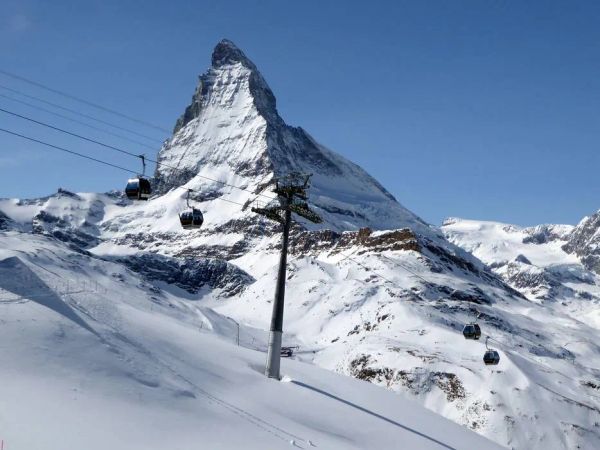
Zermatt Plans World Cup Downhill Return on the Gornergrat for 2028
Zermatt is having another crack at a World Cup downhill, and this time nobody has to cross a border. Around 13 million Swiss francs is going into rebuilding the Gornergrat piste, including a jump fed by a roughly 300-metre in-run across the roof of the Gornergrat Railway gallery, with the Matterhorn lined up behind it for the TV cameras. First men’s race is pencilled in for March 2028, pending FIS homologation.
14 Oct 2026
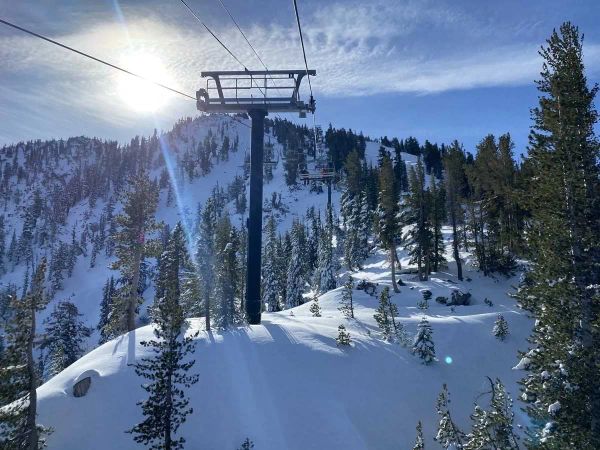
Mt. Rose Begins Snowmaking for the 2026-27 Season at Lake Tahoe
Lake Tahoe’s highest base elevation is paying off early: Mt. Rose has started making snow for 2026-27 after the first flurries and a cold snap. The Nevada resort is backing it with nearly US$2 million in upgrades, including a replacement snowmaking main line, a new PistenBully groomer and restraint bars on every lift. Opening day is yet to be confirmed, though Heavenly and Northstar are already eyeing 20 November.
13 Oct 2026
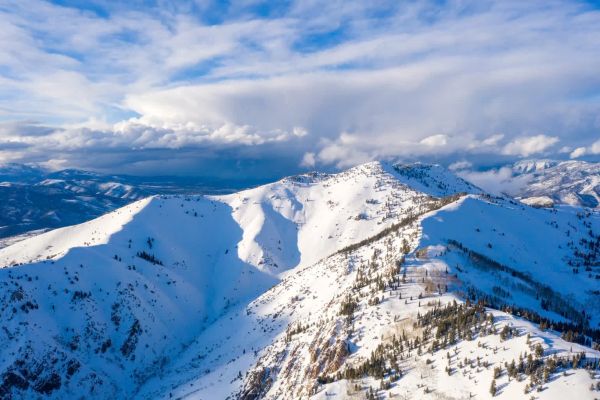
Utah Ski Resorts 2026-27: What’s New at Alta, Deer Valley, Powder Mountain and More
Utah is still building flat out. For 2026-27, Powder Mountain opens a steep new Skytrac chair into more than 1,000 acres of advanced terrain, Deer Valley adds 200 acres on Hail Peak, Sundance gets a new quad and Park City adds a gondola from its new parking structure. Snowmaking is expanding almost everywhere, Eagle Point stays closed after the Cottonwood Fire, and the 2034 Games are setting the pace. Here’s what’s new, resort by resort.
13 Oct 2026
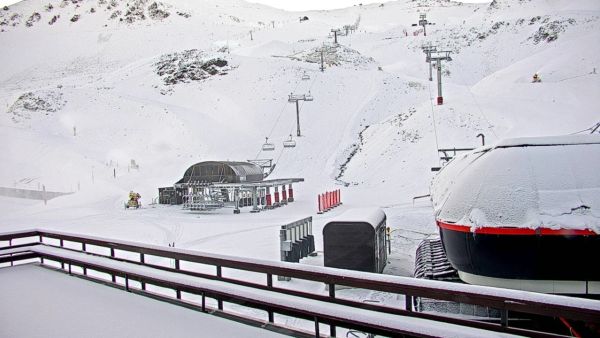
Mt Hutt Invests NZ$12 Million in Base Area, Tripling Its Sun Deck
Mt Hutt is getting busier, and its base lodge is about to catch up. NZ$12 million goes into a heated sun deck roughly three times the current size (430 m² to 1,300 m²), plus a new toilet block, heated steps down to snow level, extra storage and a new food and beverage outlet. Building starts after the 2026 season, with everything due for winter 2027.
11 Oct 2026

Vermont Ski Resort Opening Dates 2026-27: Few Dates Set, Killington Waits on the Cold
Vermont's season is slow to take shape. Stratton is tentatively targeting 18 November and Sugarbush 21 November, while Pico has Friday 11 December on the calendar. Killington never sets a date and opens when the snowmaking allows, and Vail Resorts has yet to name days for Stowe, Okemo and Mount Snow. The forecasts disagree about snow, and the main El Niño worry for the Green Mountains is warmth.
9 Oct 2026
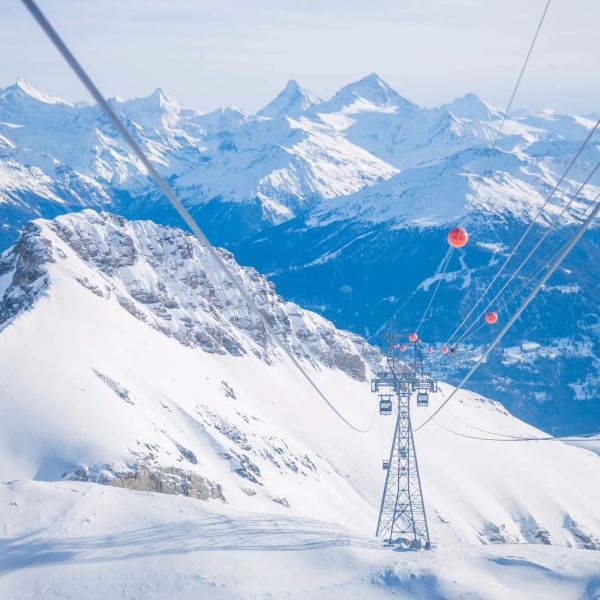
Crans-Montana 2027 World Championships President Resigns Ahead of Fraud Hearing
Less than four months out from the Crans-Montana 2027 World Championships, the man running the organising committee has stepped down. Claude-Alain Schmidhalter resigned as Swiss-Ski vice president and OC president after being indicted over a business dispute unrelated to skiing. He denies the allegations and faces court on October 27. Interim leaders are in place for the February 1-14 event.
9 Oct 2026
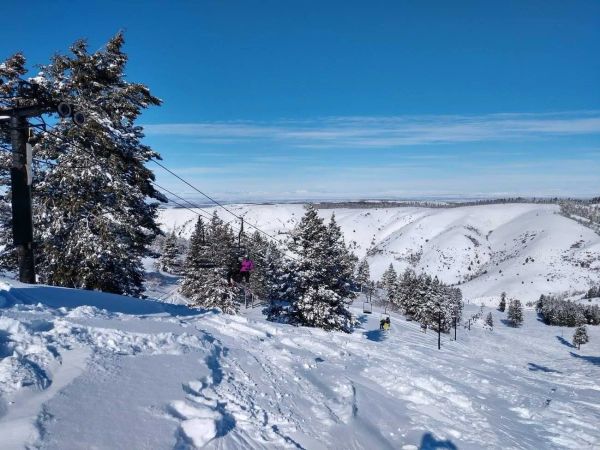
Kelly Canyon, Idaho, Adds Snowmaking, a Bigger Terrain Park and More Parking for 2026-27
Kelly Canyon had a rough 2025-26, and the Idaho resort has spent the summer making sure it doesn’t repeat. Snowmaking now reaches the top of Goldrush, the terrain park is doubling in size with a stereo system, lights and a snack shack, and the car park is getting bigger. Grooming is stepping up too. Target opening is December 4, conditions permitting.
9 Oct 2026
Saint Luc (Anniviers) Snow Report
Snow Report
Updated 9 Oct 2026
2980m
summit
+1cm
new snow · last 24 hours
Overcast2°C / 7°C · W 14km/h
Snowfall
24 hours
1cm
48 hours
16cm
7 days
17cm
Base depth
0cm
Season total
44cm
Total lifts14
Live open status isn’t available right now.
28 Nov 2026 - 11 Apr 2027
Hour by Hour
Next 41 hours· Updated Oct 16, 2026 at 6:02 PM
Scroll for the full outlook · Open-Meteo
7-Day Outlook
2,980 mUpdated Oct 16, 2026 at 6:02 PMOpen-Meteo
Days 1–7
5.1cm
Days 8–14
6.9cm
Sat, Oct 17
Foggy
Temp7° / 2°°C
Snow0.0cm(10%)
Wind14 km/h W
Live snow from the resort feed; forecast from Open-Meteo, via Supabase.
Understanding the Saint Luc (Anniviers) snow report
Saint Luc (Anniviers) snow conditions, updated regularly: current snowfall, snow depth, temperatures, and the outlook for this Switzerland resort.
Snow measurements
Snow depth at Saint Luc (Anniviers) is tracked at both the base and summit, since the two elevations often see different totals — roughly a 1300m difference here. We report fresh snowfall over the last 24 hours and 7 days alongside the running season total, in both metric and imperial units.
Weather conditions
Snow quality tracks closely with temperature and wind. We surface both alongside the snowfall data so you can judge whether conditions at Saint Luc (Anniviers) are holding up or starting to soften.
Data sources
Saint Luc (Anniviers) snow data is collected through a combination of on-mountain reports and weather forecasting services, giving you both official resort updates and independent forecast data in one place. The mountain is served by 14 lifts, including 2 quad chairlifts and a 6-person chairlift.
When to check
The biggest swings usually happen right after a storm. Check Saint Luc (Anniviers)'s report in the morning for the freshest numbers, and again in the afternoon as conditions evolve.