
Hakuba Cortina
530m vertical, 12m annual snowfall, 16 runs. Hakuba Valley's northernmost resort with steep tree skiing and Epic Pass access.
Season 2026 - 2027
Opens
12 Dec 2026
Closes
29 Mar 2027
Days open
107
Annual snow
12m
The Overview
Michael Fulton
Melbourne-based skier and snowboarder with 50+ resorts across 5 continents. Specialises in Australian resorts and international resort comparisons.
Hakuba Cortina spans 872 to 1,402 metres elevation across 50 hectares with 16 marked runs and 530 metres of vertical drop. The resort operates 7 lifts serving terrain split 40 per cent beginner, 30 per cent intermediate, and 30 per cent advanced and expert combined. Annual snowfall averages 12 metres, positioning Cortina as the northernmost resort in Hakuba Valley and closest to the Sea of Japan moisture source. The resort holds Epic Pass benefits for five consecutive days across all ten Hakuba Valley areas.
The terrain concentrates within a single bowl anchored by a highway-wide beginner run down the centre, with intermediate and advanced runs fanning to either side. Hiedayama courses 1 and 2 feature pitches averaging 36 degrees with maximums reaching 42 degrees, whilst the Kurobishi and Kaminari runs provide high-gradient groomed options. Off-piste zones between marked runs permit self-responsibility tree skiing through well-spaced conifers on moderate to steep grades. The resort interconnects with Hakuba Norikura via a shared lift pass, expanding accessible terrain beyond Cortina's compact 50 hectares.
The 253-room Hotel Green Plaza Hakuba dominates the base area in Tudor-revival style with ski-in ski-out access, 11 varieties of onsen baths, and consolidated resort services under one roof. Weekday traffic remains light whilst Tokyo weekend visitors and powder-day crowds from central Hakuba create queues at the base quad and number 4 double chair. The resort draws powder hunters during storm cycles but empties on non-powder days, creating stark crowd variations throughout the week.
Epic Pass, Epic Local Pass, and Epic Australia Pass holders receive five consecutive unrestricted days valid across all Hakuba Valley resorts including Cortina. The 2025-2026 season runs 5 December through 29 March with typical operations extending early December to early April in standard years. The resort suits advanced skiers seeking steep tree terrain and powder hunters willing to navigate slow double chairs, though beginners benefit from wide groomed runs and families appreciate the all-inclusive hotel infrastructure.
530m
Vertical
16
Runs
124 acres
Skiable
12m
Annual snow
Epic Pass
Pass
The Terrain
16 runs across 124 acres skiable
Hakuba Cortina is the northernmost ski area in the Hakuba Valley, sitting in Otari village in Nagano, and it should not be mixed up with Cortina d'Ampezzo in Italy. The slopes drop 530 metres from 1,402 metres to the 872-metre base across 16 runs over roughly 50 hectares. The grading is 40% beginner, 30% intermediate, 15% advanced and 15% expert, which is a high expert share for Japan. Around 12 metres of snow falls each year, and the setting at the valley's northern edge tends to collect more powder than the busier areas to the south.
Hiedayama Course 2 is the headline, with a pitch averaging about 36 degrees and reaching 42 degrees, one of the steepest ski runs in Japan. The longest descent is around 3.5 kilometres, so there is room for a long warm-up on the gentler pistes first. Between the marked courses, steep conifer tree lines hold fresh snow after storms, though the off-piste is for skiers who read terrain well and ski with a partner. Hakuba Cortina suits strong intermediates through to experts chasing steeper snow, while beginners have a dedicated run in the centre and the small scale keeps lift lines short.
Terrain split
16
runs
16 runs across 4 grades
Beginner6 runs · 40%
Intermediate5 runs · 30%
Advanced2 runs · 15%
Expert2 runs · 15%
Time it right
When to visit Hakuba Cortina
The 2025-2026 season opens 5 December 2025 and closes 29 March 2026, spanning 115 days of operations. Typical seasons extend early December through early April depending on snowpack, with the resort occasionally pushing into late April during heavy snow years. Hakuba Cortina receives the highest annual snowfall in Hakuba Valley due to its northern position closest to Sea of Japan storm tracks.
Annual snowfall averages 12 metres, with sources reporting Cortina receives up to twice the accumulation of southern Hakuba resorts during major storm cycles. The 872-metre base elevation sits below the reliable snow line, but consistent winter temperatures and high-volume precipitation maintain coverage from opening through closing. Peak snowfall occurs during January and February, with the snowiest week typically mid-January averaging 72 centimetres across 5.5 snowy days.
Powder conditions peak December through February when overnight storms deliver 20 to 40 centimetres at upper elevations, though in-bounds terrain tracks out by midday on big storm days. March offers spring skiing with longer daylight and stable snow surfaces, whilst late-season visitors in late March find reduced crowds and preserved powder in north-facing tree zones. Weekday visits between storm cycles provide the longest-lasting fresh tracks, with powder accessible into afternoon hours.
Night skiing operates until 21:00 on a limited 1,500-metre run when conditions permit, though availability remains sporadic throughout the season. No major events anchor the Cortina calendar, with the resort maintaining a low-key operational schedule focused on daily lift operations. The resort publishes lift status and snow reports through the Hakuba Valley website and individual Cortina channels during operating season.
Season 2026 - 2027
12 Dec 2026
Opens
29 Mar 2027
Closes
107
Days open
12 m
Annual snow
Getting there
Getting to Hakuba Cortina, and where to stay
Hakuba Cortina sits in Otari Village at the northern terminus of Hakuba Valley in Nagano Prefecture's Kitaazumi District, 6 kilometres from Route 148 and the JR Oito Line's Minami-Otari Station. The base area occupies 872 metres elevation beneath the Hida Mountains, part of the Northern Japanese Alps rising to 3,000-metre peaks along the Niigata Prefecture border. The resort lies within Chubu-Sangaku National Park boundaries, surrounded by alpine forest transitioning to subalpine zones above 1,200 metres.
Hakuba Village sits 14 kilometres south with central accommodation hubs in Echoland and Happo, whilst Otari Village's rural character preserves traditional mountain architecture and limited commercial development. Nagano City lies 58 kilometres southeast as the prefectural capital and primary transport gateway, positioned 70 minutes by express bus from central Hakuba. The resort operates at the northwestern extreme of Hakuba Valley, with Hakuba Norikura immediately adjacent and Tsugaike 8 kilometres south.
Route 148 provides year-round road access from Nagano City via the Nagano Expressway, with the drive requiring 90 minutes in winter conditions and 70 minutes during dry months. From Tokyo, the journey spans 300 kilometres northwest requiring 4 to 5 hours via Kan-Etsu and Joshin-Etsu Expressways to Nagano, then north on Route 148. No direct resort access roads exist, with all arrivals funnelling through Otari Village's main thoroughfare.
Nagano Airport sits 90 kilometres southeast with limited international service, whilst Tokyo's Narita Airport lies 350 kilometres away and Haneda Airport 320 kilometres requiring 6 to 7 hours via direct bus. Hokuriku Shinkansen bullet trains reach Nagano Station from Tokyo in 90 minutes, followed by Alpico express bus services covering the 58 kilometres to Cortina in 75 to 80 minutes for 3,800 yen per adult. The JR Oito Line terminates at Minami-Otari Station 6 kilometres from the resort, with the Hotel Green Plaza operating scheduled shuttle transfers and Hakuba Valley free shuttle buses connecting all ten valley resorts for lift pass holders.
Where to stay
Search all stays →Hotels and lodges near Hakuba Cortina, powered by Stay22.
Latest News
From the SnowStash desk
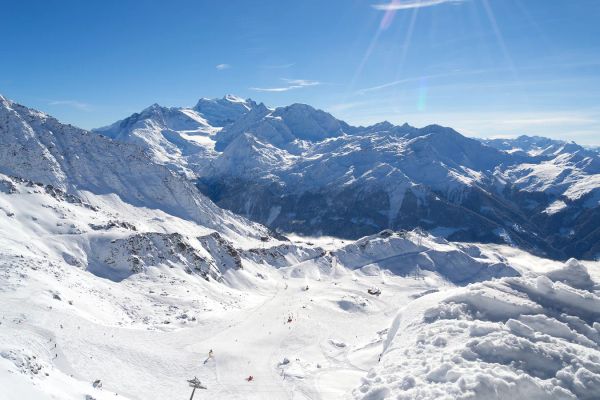
Alps Snow Forecast: Up to 64 cm Headed for the High Glaciers as the Snow Line Drops
The Alps are about to swap mild, sunny October weather for something far more wintry. A cold front arrives Tuesday, and SnowStash forecasts have Monterosa Ski out in front with 64 cm over 14 days, ahead of Blatten Belalp (55 cm) and Verbier (43 cm). The snow line should fall below 2000 metres by Wednesday night, and glaciers across Switzerland, Italy and Austria are in line for the best of it. The wind will have a say too.
20 Oct 2026
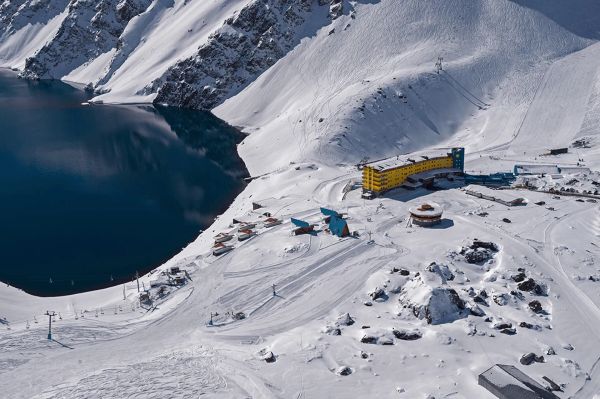
Four Dead After Avalanche Near Ski Portillo in Chile
A large avalanche struck near Laguna del Inca adjacent to Ski Portillo on Saturday afternoon, killing four people and injuring four others. The group were day visitors mountaineering in the backcountry after reportedly being warned about elevated avalanche risk by resort staff.
18 Oct 2026

Europe Ski Resorts Open Now: What Is Skiable in Mid-October 2026
Europe’s ski season is open, technically. After a record-warm summer, glaciers in Austria, Switzerland and Italy are running a few pistes apiece, Sölden, Stubai and Kitzsteinhorn started late, Titlis has pushed back to 24 October, and Zermatt reopens a few lifts on 14 October after more than two months shut. Finland’s Levi and Ruka are skiing on stored snow. Here is what is open, and what you actually get at each.
14 Oct 2026

Zermatt Plans World Cup Downhill Return on the Gornergrat for 2028
Zermatt is having another crack at a World Cup downhill, and this time nobody has to cross a border. Around 13 million Swiss francs is going into rebuilding the Gornergrat piste, including a jump fed by a roughly 300-metre in-run across the roof of the Gornergrat Railway gallery, with the Matterhorn lined up behind it for the TV cameras. First men’s race is pencilled in for March 2028, pending FIS homologation.
14 Oct 2026

Mt. Rose Begins Snowmaking for the 2026-27 Season at Lake Tahoe
Lake Tahoe’s highest base elevation is paying off early: Mt. Rose has started making snow for 2026-27 after the first flurries and a cold snap. The Nevada resort is backing it with nearly US$2 million in upgrades, including a replacement snowmaking main line, a new PistenBully groomer and restraint bars on every lift. Opening day is yet to be confirmed, though Heavenly and Northstar are already eyeing 20 November.
13 Oct 2026

Utah Ski Resorts 2026-27: What’s New at Alta, Deer Valley, Powder Mountain and More
Utah is still building flat out. For 2026-27, Powder Mountain opens a steep new Skytrac chair into more than 1,000 acres of advanced terrain, Deer Valley adds 200 acres on Hail Peak, Sundance gets a new quad and Park City adds a gondola from its new parking structure. Snowmaking is expanding almost everywhere, Eagle Point stays closed after the Cottonwood Fire, and the 2034 Games are setting the pace. Here’s what’s new, resort by resort.
13 Oct 2026

Mt Hutt Invests NZ$12 Million in Base Area, Tripling Its Sun Deck
Mt Hutt is getting busier, and its base lodge is about to catch up. NZ$12 million goes into a heated sun deck roughly three times the current size (430 m² to 1,300 m²), plus a new toilet block, heated steps down to snow level, extra storage and a new food and beverage outlet. Building starts after the 2026 season, with everything due for winter 2027.
11 Oct 2026

Vermont Ski Resort Opening Dates 2026-27: Few Dates Set, Killington Waits on the Cold
Vermont's season is slow to take shape. Stratton is tentatively targeting 18 November and Sugarbush 21 November, while Pico has Friday 11 December on the calendar. Killington never sets a date and opens when the snowmaking allows, and Vail Resorts has yet to name days for Stowe, Okemo and Mount Snow. The forecasts disagree about snow, and the main El Niño worry for the Green Mountains is warmth.
9 Oct 2026
Hakuba Cortina Lift Tickets
Hakuba Cortina lift tickets & passes
Opening day for the winter 2026 - 2027 season is scheduled for Dec 12, 2026 (subject to change). Lift tickets at Hakuba Cortina typically go on sale well before the start of the ski season.
Lift tickets FAQ
How much does a Hakuba Cortina day pass cost?
Hakuba Cortina day pass pricing varies by date and advance booking - see the full breakdown in the tickets panel.
Can I buy Hakuba Cortina lift tickets online?
Yes, you can purchase tickets online or at the resort ticket office.
Are there discounts for multi-day passes?
Yes, multi-day packages typically offer significant savings compared to individual day passes. The per-day cost decreases with longer stays.
What is included with a Hakuba Cortina lift ticket?
Full access to all lifts and trails at Hakuba Cortina, including mountain safety and patrol services.
What is the difference between Hakuba Cortina lift tickets and ski passes?
"Lift tickets" and "ski passes" refer to the same thing at Hakuba Cortina - your access to the mountain's lifts and trails for your chosen duration.
When should I buy Hakuba Cortina lift tickets for the best price?
Purchase tickets at least 7 days in advance for the best rates, and consider weekday visits for further savings over weekend rates.
Does Hakuba Cortina offer group discounts on lift tickets?
Group discounts are typically available for parties of 10 or more. Contact Hakuba Cortina directly for group booking information and rates.
How can I check current conditions before buying tickets?
Before purchasing, check the live snow report and mountain webcams to see current weather, snow conditions, and lift operations at Hakuba Cortina.
More Hakuba Cortina intelligence: snow report, webcams, resort overview.