
Happo-one
1,071m vertical drop, 22 lifts, 11m annual snowfall. Epic Pass access to Hakuba Valley's largest resort in Japan's Northern Alps.
Season 2026 - 2027
Opens
4 Dec 2026
Closes
18 Apr 2027
Days open
135
Annual snow
11m
The Overview
Michael Fulton
Melbourne-based skier and snowboarder with 50+ resorts across 5 continents. Specialises in Australian resorts and international resort comparisons.
Happo-one spans 760 to 1,831 metres elevation with 1,071 metres of vertical drop across 52 kilometres of terrain. The resort operates 22 lifts serving 13 marked runs, though the actual skiable area reaches 220 hectares on Mount Karamatsu's eastern slopes. Annual snowfall averages 11 metres, with the 2025-26 season opening 3 December and closing 6 May. Happo-one hosted alpine skiing events during the 1998 Nagano Winter Olympics, including downhill, super-G and combined competitions on courses still skied today.
Terrain splits 30 per cent beginner, 45 per cent intermediate, 20 per cent advanced and 5 per cent expert, though this understates the mountain's character. The 3,000-metre Riesen Slalom course and Skyline run provide extended intermediate cruising, whilst the upper Usagidaira area above the treeline offers wide-open alpine faces. The Olympic downhill tracks accessible from the Adam Gondola deliver steep pitches exceeding 30 degrees. Four distinct base areas - Nakiyama, Shirakaba, Kokusai and Sakka - funnel into the narrow summit, with Sakka offering the gentlest beginner terrain and Shirakaba providing the fastest gondola access to mid-mountain.
Happo-one anchors the Hakuba Valley hub, with lift queues during Japanese holidays and weekend periods reflecting its popularity amongst domestic and international visitors. The Shirakaba base area concentrates most services, including rental shops, ski schools and direct gondola access. English-speaking staff and signage cater to the substantial overseas visitor base. The upper mountain's Hakuba Mountain Beach facility at Usagidaira offers alpine hot tubs and saunas mid-run.
Epic Pass holders receive five consecutive days at Happo-one and nine other Hakuba Valley resorts with no restricted dates. The Hakuba Valley All-Mountain Pass covers the same 10 resorts plus free shuttle buses connecting the valley. Happo-one suits strong intermediates and advanced skiers best, with the vertical drop and sustained pitch challenging for beginners. Backcountry access via the marked resort exit at the summit leads into steep alpine bowls and requires proper avalanche equipment and experience.
1071m
Vertical
13
Runs
544 acres
Skiable
11m
Annual snow
Epic Pass
Pass
The Terrain
13 runs across 544 acres skiable
Happo-one is the largest area in the Hakuba Valley at about 220 hectares, set on the slopes of Mount Karamatsu in Nagano, and it hosted alpine events at the 1998 Winter Olympics. The vertical is 1,071 metres, from 760 metres up to 1,831 metres, across 13 runs. Terrain splits into 30% beginner, 45% intermediate, 20% advanced and 5% expert. With 11 metres of snow on average, it is a strong all-round choice for anyone planning a Japan ski trip. Chairs and the Adam Gondola carry riders up from several bases, so you can pick your sector for the day.
The Riesen Slalom runs for around 3 kilometres and is the classic long cruise, while the Skyline trail offers tree skiing on powder days. Usagidaira, around 1,680 metres, is the mid-mountain gateway to the open upper slopes, and the old Olympic downhill pitches off the gondola are the steepest groomed skiing. Sakka is the gentlest beginner zone. Happo-one works well for intermediates who like variety, strong skiers seeking big vertical, and groups of mixed ability sharing one base. Beginners can learn here, though the area is bigger and busier than its quieter valley neighbours, and on powder mornings the upper mountain fills fast.
Terrain split
13
runs
13 runs across 4 grades
Beginner4 runs · 30%
Intermediate6 runs · 45%
Advanced3 runs · 20%
Expert1 run · 5%
Time it right
When to visit Happo-one
The 2025-26 season runs 3 December 2025 to 6 May 2026, matching Happo-one's typical early-December to early-May operating window. Goryu opened one day earlier at 4 December, with both resorts using snowmaking to launch ahead of smaller Hakuba Valley areas. The resort typically reaches full operational status by late December once natural snowfall builds adequate base depth. Lifts operate 07:30 to 17:00 weekends and 08:00 to 17:00 weekdays, with hours subject to wind and weather.
Annual snowfall averages 11 metres at Happo-one, matching the broader Hakuba Valley accumulation. The 2024-25 winter season recorded 782 centimetres total, the highest single-season snowfall in Hakuba's recorded history. Base depth reliability benefits from the 760-metre base elevation and north-facing mid-mountain aspects, with the upper Usagidaira zone holding snow well into spring. Snowmaking supplements natural coverage on Usagidaira, Riesen Slalom and Panorama courses during marginal periods. The resort's inland location and Northern Alps position deliver dry, cold powder during winter storm cycles.
January and February provide peak powder conditions with the highest snowfall frequency and coldest temperatures. The second week of January historically receives 79 centimetres with 5.5 snowy days on average. Early December conditions depend heavily on snowmaking, whilst March and April offer spring skiing with longer daylight and softer snow. Australian school holidays throughout January bring substantial crowds, particularly to Happo-one and the main Happo, Wadano and Echoland villages. Late February through March delivers quieter periods with maintained snow quality at altitude.
The annual Riesen Slalom competition runs in late February, with FIS Far East Cup races held on the same course in early March. The Happo Lines terrain park event typically closes the season in mid-March. A spring festival occurs in early April. Night skiing availability varies season to season, operating when conditions permit on the Nakiyama beginner run. The Olympic downhill and slalom courses remain accessible throughout the season for recreational skiing.
Season 2026 - 2027
4 Dec 2026
Opens
18 Apr 2027
Closes
135
Days open
11 m
Annual snow
Getting there
Getting to Happo-one, and where to stay
Happo-one sits in Hakuba village within Nagano Prefecture's Northern Alps, 280 kilometres northwest of Tokyo on Honshu island. The resort occupies the eastern slopes of 2,696-metre Mount Karamatsu, with the base village at 760 metres elevation. Hakuba Valley encompasses three municipalities - Hakuba village, Otari village and Omachi city - stretching 40 kilometres north to south beneath 3,000-metre peaks of the Northern Japan Alps. The valley forms part of Chubu-Sangaku National Park, with the dramatic Ushiro-Tateyama range rising immediately west.
Hakuba village centre and Hakuba Station lie 2.7 kilometres east of Happo-one's base areas. Happo village directly below the resort serves as the valley's main accommodation and transport hub, with the Hakuba Happo Bus Terminal providing free shuttle connections to all 10 Hakuba Valley resorts for pass holders. Nagano city, the prefectural capital, sits 45 kilometres east and serves as the primary gateway. Matsumoto city lies 60 kilometres southeast via the scenic Azusa Valley. The 1998 Winter Olympics brought international recognition, with the Hakuba Ski Jumping Stadium still visible from the Nakiyama slopes.
Road access follows Route 148 north from Matsumoto or the Nagano Olympic Road (toll) west from Nagano via Route 19 and the Hakuba-Nagano expressway. The drive from Tokyo via the Kanetsu and Joshinetsu expressways takes approximately four hours covering 250 kilometres. Local roads connect the valley's villages, with winter driving requiring chains or winter tyres. Free shuttle buses eliminate the need for rental cars when staying centrally. The valley's compact geography places all 10 resorts within 30 minutes' drive.
Tokyo's Narita and Haneda airports provide the closest international access, both 3.5 to 4 hours from Hakuba. Haneda lies closer to Tokyo city centre at 134 kilometres from Hakuba. The fastest route combines Hokuriku Shinkansen from Tokyo Station to Nagano (80 minutes) then express bus to Hakuba (70 minutes), totalling three hours. The Chuo Line Limited Express Azusa runs directly from Shinjuku to Hakuba Station via Matsumoto. Airport shuttles operate seasonally direct to Hakuba, whilst Matsumoto Airport sits 60 kilometres south with limited domestic service.
Where to stay
Search all stays →Hotels and lodges near Happo-one, powered by Stay22.
Latest News
From the SnowStash desk
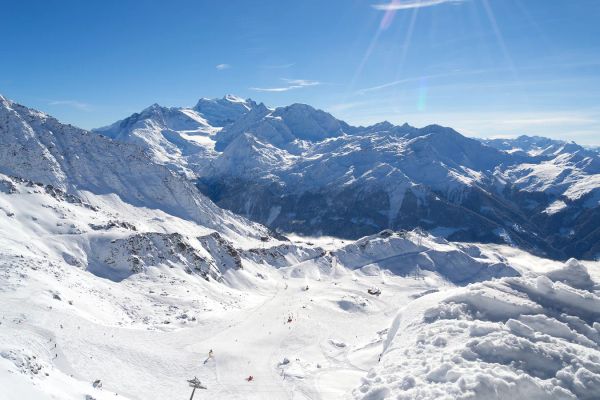
Alps Snow Forecast: Up to 64 cm Headed for the High Glaciers as the Snow Line Drops
The Alps are about to swap mild, sunny October weather for something far more wintry. A cold front arrives Tuesday, and SnowStash forecasts have Monterosa Ski out in front with 64 cm over 14 days, ahead of Blatten Belalp (55 cm) and Verbier (43 cm). The snow line should fall below 2000 metres by Wednesday night, and glaciers across Switzerland, Italy and Austria are in line for the best of it. The wind will have a say too.
20 Oct 2026
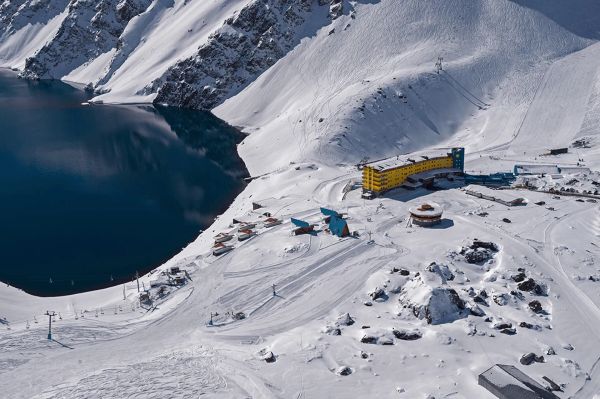
Four Dead After Avalanche Near Ski Portillo in Chile
A large avalanche struck near Laguna del Inca adjacent to Ski Portillo on Saturday afternoon, killing four people and injuring four others. The group were day visitors mountaineering in the backcountry after reportedly being warned about elevated avalanche risk by resort staff.
18 Oct 2026

Europe Ski Resorts Open Now: What Is Skiable in Mid-October 2026
Europe’s ski season is open, technically. After a record-warm summer, glaciers in Austria, Switzerland and Italy are running a few pistes apiece, Sölden, Stubai and Kitzsteinhorn started late, Titlis has pushed back to 24 October, and Zermatt reopens a few lifts on 14 October after more than two months shut. Finland’s Levi and Ruka are skiing on stored snow. Here is what is open, and what you actually get at each.
14 Oct 2026

Zermatt Plans World Cup Downhill Return on the Gornergrat for 2028
Zermatt is having another crack at a World Cup downhill, and this time nobody has to cross a border. Around 13 million Swiss francs is going into rebuilding the Gornergrat piste, including a jump fed by a roughly 300-metre in-run across the roof of the Gornergrat Railway gallery, with the Matterhorn lined up behind it for the TV cameras. First men’s race is pencilled in for March 2028, pending FIS homologation.
14 Oct 2026

Mt. Rose Begins Snowmaking for the 2026-27 Season at Lake Tahoe
Lake Tahoe’s highest base elevation is paying off early: Mt. Rose has started making snow for 2026-27 after the first flurries and a cold snap. The Nevada resort is backing it with nearly US$2 million in upgrades, including a replacement snowmaking main line, a new PistenBully groomer and restraint bars on every lift. Opening day is yet to be confirmed, though Heavenly and Northstar are already eyeing 20 November.
13 Oct 2026

Utah Ski Resorts 2026-27: What’s New at Alta, Deer Valley, Powder Mountain and More
Utah is still building flat out. For 2026-27, Powder Mountain opens a steep new Skytrac chair into more than 1,000 acres of advanced terrain, Deer Valley adds 200 acres on Hail Peak, Sundance gets a new quad and Park City adds a gondola from its new parking structure. Snowmaking is expanding almost everywhere, Eagle Point stays closed after the Cottonwood Fire, and the 2034 Games are setting the pace. Here’s what’s new, resort by resort.
13 Oct 2026

Mt Hutt Invests NZ$12 Million in Base Area, Tripling Its Sun Deck
Mt Hutt is getting busier, and its base lodge is about to catch up. NZ$12 million goes into a heated sun deck roughly three times the current size (430 m² to 1,300 m²), plus a new toilet block, heated steps down to snow level, extra storage and a new food and beverage outlet. Building starts after the 2026 season, with everything due for winter 2027.
11 Oct 2026

Vermont Ski Resort Opening Dates 2026-27: Few Dates Set, Killington Waits on the Cold
Vermont's season is slow to take shape. Stratton is tentatively targeting 18 November and Sugarbush 21 November, while Pico has Friday 11 December on the calendar. Killington never sets a date and opens when the snowmaking allows, and Vail Resorts has yet to name days for Stowe, Okemo and Mount Snow. The forecasts disagree about snow, and the main El Niño worry for the Green Mountains is warmth.
9 Oct 2026
Happo-one Lift System
Happo-one operates 22 lifts comprising one gondola, five quad chairs, three triple chairs and 13 double chairs across four base zones. No surface lifts or aerial trams serve the mountain. Total uphill capacity handles the resort's position as Hakuba Valley's busiest area, though lift queues form during peak Japanese holiday periods and weekends. The lift network requires multiple connections to reach the summit from most base areas, with a typical top-to-bottom run involving three separate lifts.
The Adam Gondola manufactured by Poma serves as the primary uphill workhorse from Shirakaba base, transporting 1,350 people per hour to Usagidaira mid-station at 1,680 metres. The gondola opens one hour earlier than other lifts at 07:00 on weekends, providing first-tracks advantage. From Usagidaira, the Alpen Quad and additional chairs access the 1,831-metre summit and the upper alpine zone. The Kurobishi Quad serves intermediate terrain on the mountain's mid-section, whilst the Nakiyama sector relies on double and triple chairs.
Base-to-summit requires the Adam Gondola followed by the Usagidaira chairlift system, with skiers choosing between multiple descent routes back to four separate base areas. Shirakaba offers the fastest return via the gondola, whilst Skyline course provides an 8,000-metre descent to Sakka when fully open. The Nakiyama and Kokusai sectors connect via mid-mountain traverses. Night skiing operates on the Nakiyama green slope serviced by Nakiyama 2 lifts on a seasonal basis.
A new gondola and base centre redevelopment was announced for 2027 to address transport infrastructure challenges and increase uphill capacity. The aging lift fleet includes numerous slower double chairs that contribute to bottlenecks, particularly accessing upper terrain during powder days. The 2024-25 season recorded strong visitor numbers with consistent snowfall, reinforcing investment in modernisation. Digital signage and expanded parking will accompany the gondola upgrade.
22lifts across 4 types
1
Gondola
5
Quad Chairs
3
Triple Chairs
13
Double Chairs
Happo-one lift system
Happo-one is served by 22 lifts, listed here by type. Check which lifts are turning against the live conditions before you plan your first laps - early lifts and high-speed chairs get you to the best snow fastest.
More Happo-one intelligence: trail map, snow report, webcams, resort overview.