
Otaru Tenguyama
410m vertical, 40° steeps, 8m annual snowfall. 3.3km from Otaru Station. Advanced terrain overlooking Ishikari Bay, Hokkaido.
Season 2025-2026
Opens
5 Dec 2025
Closes
29 Mar 2026
Days open
114
Annual snow
8m
The Overview
Michael Fulton
Melbourne-based skier and snowboarder with 50+ resorts across 5 continents. Specialises in Australian resorts and international resort comparisons.
Otaru Tenguyama operates across 410 metres of vertical drop between 122 and 532 metres elevation, spreading 6 runs over 40 hectares of terrain on the northern slopes of Tenguyama. The ski area splits 50% beginner, 20% intermediate and 30% advanced terrain, with the New Course reaching a maximum pitch of 40 degrees and the Old Course hitting 38 degrees. 8 metres of annual snowfall feeds this compact ski hill, which functions primarily as a city resort for Otaru residents and regional day-trippers. Adult day tickets start at 3,600 yen, whilst elementary-age children ski free.
Beginner terrain sits at the summit in a mellow zone above the ropeway station, where novices can work on turns with Otaru city and Ishikari Bay spread below. The Long Line course connects summit to base across 1,247 metres, whilst intermediate terrain is limited to a couple of blue runs with occasional steep moments. Advanced skiers target the black runs flanking the ropeway line, where steep upper pitches demand clean technique before the angle mellows mid-mountain. Off-piste tree skiing in shallow gullies between marked trails rewards deliberate line choice, though official sidecountry access is restricted.
The mountain maintains a low-key, human-scale atmosphere compared to Niseko's international circus, with weekday crowds thinning to near-private conditions. Sightseers share the 30-person ropeway year-round for summit views, whilst skiers and snowboarders use the remaining double chairlift exclusively. The 735-metre ropeway climbs 271 metres in 4 minutes, operating every 12 minutes or 6 minutes during peak periods. Night skiing runs weekends and holidays from 10 January to 22 February until 7pm, lighting the slopes whilst Otaru's city lights glitter across the bay.
Otaru Tenguyama stands alone on lift pass networks, operating independently just 3.3 kilometres southwest of Otaru Station. The 2025-2026 season runs 5 December to 29 March across 116 operating days. Kiroro sits 28 kilometres south, Sapporo Kokusai 22 kilometres east by road, and Sapporo Teine 32 kilometres southeast, making Otaru an efficient multi-resort base. The hill suits powder chasers pairing quick morning missions with afternoon seafood in the canal district, beginners attracted to affordable tickets and ocean views, and advanced skiers hunting steep fall lines on an uncrowded mountain.
410m
Vertical
6
Runs
99 acres
Skiable
8m
Annual snow
The Terrain
6 runs across 99 acres skiable
Otaru Tenguyama is a small city hill of only 40 hectares above Otaru's harbour, rising 410 vertical metres from 122 metres to 532 metres. Its six runs break down 50% beginner, 20% intermediate and 30% advanced, with no expert terrain listed, and a ropeway and two double chairs make up the lift system. The slopes face north over the city and Ishikari Bay, and the compact layout keeps everything within a short ride of the base. It will not fill a week, but it fits neatly into a day trip from Sapporo or an Otaru stay, with the harbour views as a bonus.
Beginner terrain sits near the summit in a gentle zone above the ropeway station, which means novices ski with the city spread below. The Long Line is the long route, covering 1,247 metres from summit to base, while the New Course reaches about 40 degrees and the Old Course around 38 degrees. Black runs flank the ropeway line, with steep upper pitches that ease as you descend. Shallow gullies between marked trails hold off-piste tree skiing for those prepared to choose lines carefully, though official sidecountry access is limited. Beginners, families and strong skiers wanting a quiet evening or half-day will be well served.
Terrain split
6
runs
6 runs across 4 grades
Beginner3 runs · 50%
Intermediate1 run · 20%
Advanced2 runs · 30%
Expert0 runs · 0%
Time it right
When to visit Otaru Tenguyama
Otaru Tenguyama operates from 5 December 2025 to 29 March 2026 for the current season, spanning 116 days across Hokkaido's winter months. Typical season length extends mid-December through late March, though opening and closing dates shift based on early-season snowpack and spring melt conditions. The resort opens at 9am until 4pm during standard operations, with earlier 3pm closures until 31 December. Night skiing extends hours to 7pm on weekends and holidays between 10 January and 22 February 2026, allowing twilight runs above the illuminated city.
Annual snowfall averages 8 metres across the northern slopes of Tenguyama, fed by moisture from the Sea of Japan hitting the 532-metre summit. The resort's coastal proximity and low base elevation at 122 metres can make early-season coverage patchy compared to higher-altitude Hokkaido destinations, though mid-winter dumps reliably refresh the 410-metre vertical. Snowmaking infrastructure is limited given the compact terrain footprint. Base depths remain adequate through core season January to February, with snow quality benefiting from the same northwest storm track that hammers Kiroro and Niseko 28 to 68 kilometres away.
Peak powder arrives January through early February when Siberian systems march across the Sea of Japan, though Tenguyama receives less accumulation than interior resorts due to lower elevation. Late December typically sees the snowiest week with 48 centimetres falling across 6.4 snowy days according to historical averages. Spring conditions develop through March as temperatures rise and coastal influence softens snow, though the season remains viable until late-month closure. Weekdays offer the quietest periods, whilst weekends and Japanese holidays pack both lifts and the sightseeing ropeway. School holiday periods in late December and early January see increased family traffic.
The resort hosts no major competitive events or festivals documented in current schedules, maintaining a low-profile local character. Night skiing from mid-January to mid-February adds programming for workers finishing late shifts and visitors seeking the illuminated cityscape from 532 metres elevation. The observatory deck at the summit, awarded one star in the Michelin Green Guide Japan, operates year-round for non-skiing tourism. Optimal timing targets weekday powder days in January and February when fresh snow, empty lifts, and clear Ishikari Bay views align. Avoid weekends and holidays if crowds concern you, or embrace the lively local atmosphere.
Season 2025-2026
5 Dec 2025
Opens
29 Mar 2026
Closes
114
Days open
8 m
Annual snow
Getting there
Getting to Otaru Tenguyama, and where to stay
Otaru Tenguyama occupies the northern slopes of 532-metre Tenguyama in Otaru City, Shiribeshi Subprefecture, within the region known as Donan or Southern Hokkaido. The ski area sits just 3.3 kilometres southwest of central Otaru, perched directly above the historic port city that faces Ishikari Bay and the Sea of Japan. The base station at 122 metres elevation is a 15-minute drive from Otaru's canal district, whilst the 532-metre summit offers panoramic views across the city, bay, and on clear days the Shakotan Peninsula and Shokanbetsu Mountain Range. The mountain functions as Otaru's symbol, visible from the waterfront and accessible enough for half-day missions.
Otaru city (population approximately 110,000) spreads along the coast 36 kilometres northwest of Sapporo, Hokkaido's capital. Once a major financial centre during the Meiji and Taisho eras (1868-1926), Otaru now thrives on tourism, glassworks, sake breweries, and seafood markets housed in century-old canal-side warehouses. Sapporo sits 36 kilometres southeast and serves as the primary regional hub. The resort location within city limits makes lodging, dining, and transport straightforward compared to isolated mountain resorts. Otaru Station connects directly to the ski area via 20-minute local buses departing from the station forecourt. Niseko's Hirafu village lies 68 kilometres southwest.
Road access from Sapporo follows the Sasson Expressway, a 38.3-kilometre motorway linking Sapporo Junction to Otaru Interchange in approximately 40 minutes. From Otaru IC, Tenguyama sits 10 minutes south via local roads. The drive from central Otaru takes 15 minutes without traffic. Kiroro (28km south), Sapporo Kokusai (22km east), and Teine (32km southeast) all fall within 40-minute drives, enabling multi-resort powder chasing from an Otaru base. Route 5 provides the main coastal highway connection. Free parking at the base makes driving convenient for those with rental vehicles. Google Maps occasionally flags Route 1 past Asari towards Kokusai as closed when it remains open during daylight hours.
New Chitose Airport sits 72 kilometres south of Otaru, a 75-minute journey via JR Rapid Airport trains that run every 15 minutes during daytime. The train costs 2,040 yen one-way and continues through Sapporo (40 minutes, 800 yen from Otaru) before reaching the airport. Two trains per hour extend to Otaru, providing seamless connections from touchdown to town. Airport buses run less frequently with journey times around 2 hours 30 minutes. From Sapporo Station, rapid trains reach Otaru in 30-35 minutes or locals in 45 minutes. Otaru Station sits 2.2 kilometres from the ropeway base station, bridged by 20-minute local buses or 10-minute taxis. The resort operates no dedicated shuttle services, relying on municipal transport and private vehicles for access.
Where to stay
Search all stays →Hotels and lodges near Otaru Tenguyama, powered by Stay22.
Latest News
From the SnowStash desk
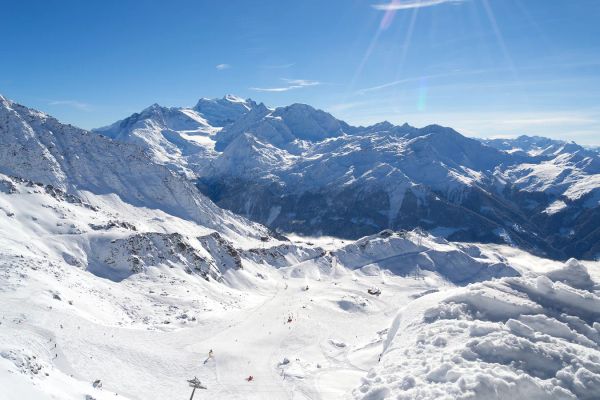
Alps Snow Forecast: Up to 64 cm Headed for the High Glaciers as the Snow Line Drops
The Alps are about to swap mild, sunny October weather for something far more wintry. A cold front arrives Tuesday, and SnowStash forecasts have Monterosa Ski out in front with 64 cm over 14 days, ahead of Blatten Belalp (55 cm) and Verbier (43 cm). The snow line should fall below 2000 metres by Wednesday night, and glaciers across Switzerland, Italy and Austria are in line for the best of it. The wind will have a say too.
20 Oct 2026
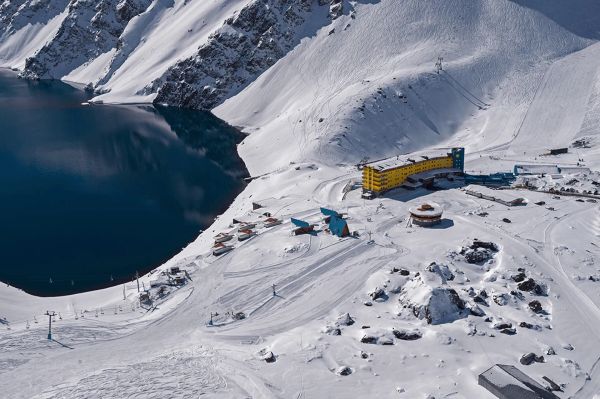
Four Dead After Avalanche Near Ski Portillo in Chile
A large avalanche struck near Laguna del Inca adjacent to Ski Portillo on Saturday afternoon, killing four people and injuring four others. The group were day visitors mountaineering in the backcountry after reportedly being warned about elevated avalanche risk by resort staff.
18 Oct 2026

Europe Ski Resorts Open Now: What Is Skiable in Mid-October 2026
Europe’s ski season is open, technically. After a record-warm summer, glaciers in Austria, Switzerland and Italy are running a few pistes apiece, Sölden, Stubai and Kitzsteinhorn started late, Titlis has pushed back to 24 October, and Zermatt reopens a few lifts on 14 October after more than two months shut. Finland’s Levi and Ruka are skiing on stored snow. Here is what is open, and what you actually get at each.
14 Oct 2026

Zermatt Plans World Cup Downhill Return on the Gornergrat for 2028
Zermatt is having another crack at a World Cup downhill, and this time nobody has to cross a border. Around 13 million Swiss francs is going into rebuilding the Gornergrat piste, including a jump fed by a roughly 300-metre in-run across the roof of the Gornergrat Railway gallery, with the Matterhorn lined up behind it for the TV cameras. First men’s race is pencilled in for March 2028, pending FIS homologation.
14 Oct 2026

Mt. Rose Begins Snowmaking for the 2026-27 Season at Lake Tahoe
Lake Tahoe’s highest base elevation is paying off early: Mt. Rose has started making snow for 2026-27 after the first flurries and a cold snap. The Nevada resort is backing it with nearly US$2 million in upgrades, including a replacement snowmaking main line, a new PistenBully groomer and restraint bars on every lift. Opening day is yet to be confirmed, though Heavenly and Northstar are already eyeing 20 November.
13 Oct 2026

Utah Ski Resorts 2026-27: What’s New at Alta, Deer Valley, Powder Mountain and More
Utah is still building flat out. For 2026-27, Powder Mountain opens a steep new Skytrac chair into more than 1,000 acres of advanced terrain, Deer Valley adds 200 acres on Hail Peak, Sundance gets a new quad and Park City adds a gondola from its new parking structure. Snowmaking is expanding almost everywhere, Eagle Point stays closed after the Cottonwood Fire, and the 2034 Games are setting the pace. Here’s what’s new, resort by resort.
13 Oct 2026

Mt Hutt Invests NZ$12 Million in Base Area, Tripling Its Sun Deck
Mt Hutt is getting busier, and its base lodge is about to catch up. NZ$12 million goes into a heated sun deck roughly three times the current size (430 m² to 1,300 m²), plus a new toilet block, heated steps down to snow level, extra storage and a new food and beverage outlet. Building starts after the 2026 season, with everything due for winter 2027.
11 Oct 2026

Vermont Ski Resort Opening Dates 2026-27: Few Dates Set, Killington Waits on the Cold
Vermont's season is slow to take shape. Stratton is tentatively targeting 18 November and Sugarbush 21 November, while Pico has Friday 11 December on the calendar. Killington never sets a date and opens when the snowmaking allows, and Vail Resorts has yet to name days for Stowe, Okemo and Mount Snow. The forecasts disagree about snow, and the main El Niño worry for the Green Mountains is warmth.
9 Oct 2026
Otaru Tenguyama Lift System
Three lifts service Otaru Tenguyama: one aerial tramway and two double chairlifts, though operational changes for 2025-2026 have shifted access patterns. The 735-metre ropeway holds 30 passengers and was built in 1979, running from a base station at 205 metres to an upper station at 476 metres. The ropeway now operates exclusively for sightseeing, with skiers and snowboarders prohibited from riding with equipment. The remaining pair lift runs the full 410-metre vertical of the ski area, becoming the primary uphill transportation for winter sports.
The single chairlift previously serving beginner terrain at the summit ceased operations for the 2025-2026 season, though this change does not affect available terrain according to resort statements. The pair lift services all six marked runs including the 40-degree New Course, 38-degree Old Course, and the 1,247-metre Long Line that threads summit to base. The ropeway operates year-round with a carrying capacity of 210 persons per hour at 3.1 metres per second, completing the journey in 4 minutes. During ski season, it functions purely as a tourist attraction rather than lift infrastructure.
Base-to-summit flow now relies entirely on the double chairlift, which accesses beginner zones at the top, steep blacks flanking the ropeway line, and the long intermediate traverse to the base area. The lift system prioritises local traffic patterns over international resort efficiency, with weekend queues forming when clear skies draw sightseers and skiers simultaneously. Weekday operations remain uncrowded, allowing quick laps on the compact 410-metre vertical. The Tenguyama Snow Park at the ropeway base offers a separate sledding area and beginner zone with a 500-yen admission charge, operating 10am to 4pm.
No recent major infrastructure investments have modernised the lift fleet, with the 1979 ropeway and older double chairs reflecting the resort's modest scale and city-hill positioning. The removal of the summit single chair for 2025-2026 streamlines operations without cutting terrain, consolidating all skier traffic onto one primary lift. Night skiing infrastructure lights select runs excluding blacks, operating weekends and holidays mid-January through February. The system handles limited capacity efficiently during off-peak periods but bottlenecks can develop on powder days and holiday weekends when both tourists and locals converge.
3lifts across 2 types
1
Aerial Tram
2
Double Chairs
Otaru Tenguyama lift system
Otaru Tenguyama is served by 3 lifts, listed here by type. Check which lifts are turning against the live conditions before you plan your first laps - early lifts and high-speed chairs get you to the best snow fastest.
More Otaru Tenguyama intelligence: trail map, snow report, webcams, resort overview.