
Biwako
224m vertical, 8 runs across Mount Horai. 40 min from Kyoto, extensive snowmaking. Kansai region, Japan.
Season 2025-2026
Opens
5 Dec 2025
Closes
29 Mar 2026
Days open
114
Annual snow
4m
The Overview
Michael Fulton
Melbourne-based skier and snowboarder with 50+ resorts across 5 continents. Specialises in Australian resorts and international resort comparisons.
Biwako Valley operates between 950 and 1,174 metres elevation on Mount Horai and Mount Uchimi in Shiga Prefecture's Hira mountain range. The resort spans 10 kilometres of piste across 8 runs with 224 metres of vertical drop. Terrain distribution breaks down to 30 per cent beginner, 60 per cent intermediate and 10 per cent advanced. The ski area receives an average of 3.5 metres of snow annually, supplemented by extensive snowmaking across all major trails to ensure consistent coverage throughout the season.
Intermediate runs dominate the layout, with the Horai Panorama course offering sweeping views across Lake Biwa whilst descending. The resort includes a half pipe, terrain park with progressive features, slalom course and mogul run. Beginners concentrate on the Uchimi Slope near the ropeway summit station, whilst the Horaikita Slope challenges advanced skiers. The compact 74-acre ski area sits across two connected peaks accessed via a network of chairlifts above the ropeway arrival point.
Biwako Valley draws heavy weekend crowds from Kyoto and Osaka, with queues forming at both the ropeway and chairlifts during peak periods. The base-free mountain operates with service desks scattered across the ski area rather than a centralised lodge. Biwako Terrace occupies the summit of Mount Uchimi at 1,100 metres, providing dining and observation facilities with floor-to-ceiling views across Japan's largest lake. Weekday visits offer significantly quieter slopes and faster lift access.
The resort functions primarily as a day-trip destination for Kansai region residents, positioned 40 kilometres from Kyoto and 89 kilometres from Osaka. No on-mountain accommodation exists, with lodging concentrated along the JR Kosei Line in Otsu City. The ski area suits beginners and intermediates seeking accessible skiing with distinctive scenery. Terrain park riders find well-maintained features and dedicated spotters, whilst advanced skiers typically find limited challenge across the modest vertical drop.
224m
Vertical
8
Runs
74 acres
Skiable
4m
Annual snow
The Terrain
8 runs across 74 acres skiable
Biwako Valley is a small day-trip ski area of about 30 hectares on the Hira range above Lake Biwa, with eight runs between Mount Uchimi and Mount Horai. The vertical drop is 224 metres, from a base at 950 metres to the 1,174-metre summit. Intermediates dominate, with 60% of terrain, against 30% beginner and 10% advanced, and nothing rated expert. A ropeway lifts skiers from the valley floor, and two quad chairs and five double chairs serve the slopes above. For a resort this close to Kyoto and Osaka, the runs are well planned and easy to follow.
The terrain gives every level something to do. Uchimi has the gentler learner slopes, while the Horai side carries the steeper courses, with the Horaikita slope the toughest on the mountain. The Horai Panorama slope is the signature descent, with open views back over the lake. Cruising is the main appeal, and strong skiers will cover everything within a few hours. Biwako Valley suits beginners, families and intermediates who want a short, easy ski day from Kansai, and it is also an easy first taste of Japanese skiing for visitors staying in Kyoto or Osaka.
Terrain split
8
runs
8 runs across 4 grades
Beginner2 runs · 30%
Intermediate5 runs · 60%
Advanced1 run · 10%
Expert0 runs · 0%
Time it right
When to visit Biwako
The 2025-26 winter season operates from 5 December 2025 to 29 March 2026, with ski trail access beginning 27 December 2025. The resort typically runs for approximately 3.5 months, though exact opening and closing dates shift based on natural snowfall and snowmaking conditions. Biwako Terrace sightseeing operations commence 20 December ahead of ski terrain opening. Earlier pre-opening periods occasionally occur when snowfall permits advance trail preparation.
The ski area averages 3.5 metres of annual snowfall, modest by Japanese standards but adequate for the Kansai region's lower elevation resorts. The base elevation of 950 metres and summit of 1,174 metres create marginal snow reliability compared to resorts above 1,500 metres. Extensive snowmaking compensates for variable natural accumulation, with coverage across all major runs ensuring rideable conditions throughout the designated season. Late-season skiing typically faces temperature challenges as March arrives.
January delivers peak powder conditions, with the fourth week historically producing 23 centimetres across 4.3 snowy days. February maintains consistent coverage before March temperatures climb toward freezing during both day and night. Weekdays from mid-January through early February offer optimal combinations of snow quality and manageable crowds. Spring conditions deteriorate rapidly once temperatures consistently exceed zero degrees, with the snowpack becoming heavy and wet.
The resort does not schedule major competitive events or festivals during winter operations. Night skiing remains unavailable across all trails. Terrain park features receive regular grooming and maintenance, with staff monitoring jump landings throughout operating hours. The compact season length and metropolitan proximity create concentrated weekend demand, making midweek visits substantially more appealing for quality skiing without excessive queuing.
Season 2025-2026
5 Dec 2025
Opens
29 Mar 2026
Closes
114
Days open
4 m
Annual snow
Getting there
Getting to Biwako, and where to stay
Biwako Valley sits on the western shore of Lake Biwa in the Hira mountain range within Otsu City, Shiga Prefecture. The resort occupies the slopes of Mount Uchimi at 1,108 metres and Mount Horai at 1,174 metres, approximately 1,100 metres above Japan's largest freshwater lake. The Kansai region location places the ski area 40 kilometres northeast of Kyoto and 89 kilometres from central Osaka. The surrounding Hira-Hiei mountains stretch 50 kilometres along Lake Biwa's western shoreline.
Shiga Station on the JR Kosei Line provides the nearest rail access, located on the western lakeshore. The station sits 40 minutes from Kyoto Station and connects via hourly bus service covering the final 10 minutes to the ropeway base station. Otsu City, Shiga Prefecture's capital, lies 15 kilometres south along Lake Biwa's shore. The resort has operated as a ski area and outdoor activity park since 1965, establishing itself as Kansai's most accessible skiing venue.
Road access follows the Meishin Expressway from Kyoto-Higashi Interchange, then Route 161 via Nishi-Ohtsu Bypass to Route 558. The drive from Kyoto-Higashi Interchange requires approximately 40 minutes under normal traffic conditions. Osaka drivers face 1.5 hours via the same expressway routing. The ropeway base station parking accommodates 1,700 vehicles, filling completely on winter weekends and holidays. Traffic congestion affects Route 558 approaches during peak periods.
Kansai International Airport sits 52 kilometres southwest of Osaka, approximately 90 kilometres from Biwako Valley via expressway connections. Osaka Itami Airport provides domestic service 10 kilometres north of central Osaka, roughly 70 kilometres from the resort. No direct airport shuttle services operate to Biwako Valley. Visitors typically transit through Kyoto Station via JR Haruka limited express from Kansai Airport, then transfer to the JR Kosei Line for Shiga Station. Total journey time from Kansai Airport approaches 2 hours using public transport.
Where to stay
Search all stays →Hotels and lodges near Biwako, powered by Stay22.
Latest News
From the SnowStash desk
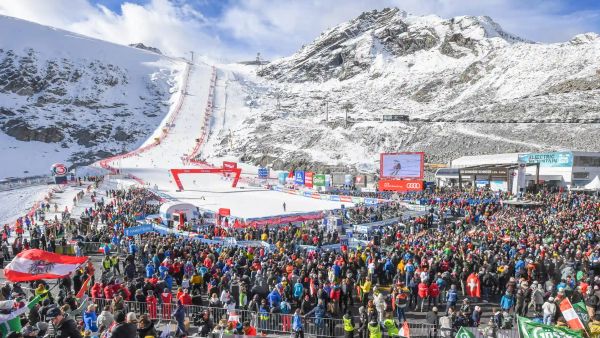
Pinheiro Braathen Wins Sölden Giant Slalom Opener by 0.48 Seconds
Two days at Sölden, two races decided by a hundredth somewhere on the podium, and one very quick Brazilian. Lucas Pinheiro Braathen led from the first run to win the men’s World Cup opener by 0.48 seconds, with Loïc Meillard second and Marco Odermatt third. River Radamus charged from 15th to fourth on a rutted course, and Britain’s Freddy Carrick-Smith banked his first World Cup points. Braathen still hasn’t lost a giant slalom since Olympic gold.
25 Oct 2026

Alps Snow Forecast: Up to 64 cm Headed for the High Glaciers as the Snow Line Drops
The Alps are about to swap mild, sunny October weather for something far more wintry. A cold front arrives Tuesday, and SnowStash forecasts have Monterosa Ski out in front with 64 cm over 14 days, ahead of Blatten Belalp (55 cm) and Verbier (43 cm). The snow line should fall below 2000 metres by Wednesday night, and glaciers across Switzerland, Italy and Austria are in line for the best of it. The wind will have a say too.
20 Oct 2026

Four Dead After Avalanche Near Ski Portillo in Chile
A large avalanche struck near Laguna del Inca adjacent to Ski Portillo on Saturday afternoon, killing four people and injuring four others. The group were day visitors mountaineering in the backcountry after reportedly being warned about elevated avalanche risk by resort staff.
18 Oct 2026

Europe Ski Resorts Open Now: What Is Skiable in Mid-October 2026
Europe’s ski season is open, technically. After a record-warm summer, glaciers in Austria, Switzerland and Italy are running a few pistes apiece, Sölden, Stubai and Kitzsteinhorn started late, Titlis has pushed back to 24 October, and Zermatt reopens a few lifts on 14 October after more than two months shut. Finland’s Levi and Ruka are skiing on stored snow. Here is what is open, and what you actually get at each.
14 Oct 2026

Zermatt Plans World Cup Downhill Return on the Gornergrat for 2028
Zermatt is having another crack at a World Cup downhill, and this time nobody has to cross a border. Around 13 million Swiss francs is going into rebuilding the Gornergrat piste, including a jump fed by a roughly 300-metre in-run across the roof of the Gornergrat Railway gallery, with the Matterhorn lined up behind it for the TV cameras. First men’s race is pencilled in for March 2028, pending FIS homologation.
14 Oct 2026

Mt. Rose Begins Snowmaking for the 2026-27 Season at Lake Tahoe
Lake Tahoe’s highest base elevation is paying off early: Mt. Rose has started making snow for 2026-27 after the first flurries and a cold snap. The Nevada resort is backing it with nearly US$2 million in upgrades, including a replacement snowmaking main line, a new PistenBully groomer and restraint bars on every lift. Opening day is yet to be confirmed, though Heavenly and Northstar are already eyeing 20 November.
13 Oct 2026

Utah Ski Resorts 2026-27: What’s New at Alta, Deer Valley, Powder Mountain and More
Utah is still building flat out. For 2026-27, Powder Mountain opens a steep new Skytrac chair into more than 1,000 acres of advanced terrain, Deer Valley adds 200 acres on Hail Peak, Sundance gets a new quad and Park City adds a gondola from its new parking structure. Snowmaking is expanding almost everywhere, Eagle Point stays closed after the Cottonwood Fire, and the 2034 Games are setting the pace. Here’s what’s new, resort by resort.
13 Oct 2026

Mt Hutt Invests NZ$12 Million in Base Area, Tripling Its Sun Deck
Mt Hutt is getting busier, and its base lodge is about to catch up. NZ$12 million goes into a heated sun deck roughly three times the current size (430 m² to 1,300 m²), plus a new toilet block, heated steps down to snow level, extra storage and a new food and beverage outlet. Building starts after the 2026 season, with everything due for winter 2027.
11 Oct 2026
Biwako Webcams
1 live angles across the mountain. Tap any camera to go full-screen.
About Biwako's live webcams
Check live conditions across Biwako with 1 real-time webcams showing snow, weather, and lift operations, updated every 10 minutes. Check high-elevation cams for powder visibility and base-area cams for crowd levels before you head up.
Camera guide
- Tram Summit1108m
- Admire sweeping views of the resort and the majestic Lake Biwa as you plan your ski routes by viewing the main slopes from above. On clear days, you might even catch a glimpse of lift operations, giving you a complete picture of the day's skiing potential.
Biwako snow cams FAQ
How often do Biwako snow cams update?
All Biwako snow cams and webcams update every 10 minutes with fresh images showing current mountain conditions. This frequent update schedule ensures you have access to near real-time conditions for planning your ski day at Biwako.
Which Biwako webcam shows the best powder conditions?
The high-elevation Tram Summit webcam at 1,108m provides the clearest view of powder conditions and snowfall. These Biwako webcams capture fresh snow accumulation and visibility better than base area cameras.
Can I see Biwako lift queues on the webcams?
Yes. Multiple Biwako snow cams specifically show lift queue areas and chairlift operations, helping you time your arrival and avoid peak queue periods.
When is the best time to check Biwako snow cams?
Check Biwako webcams early morning (7-8am) for overnight snowfall assessment, and mid-afternoon for current crowd levels and weather. The live cams are most useful after storm events to assess fresh powder.
How can I check current conditions before buying Biwako lift tickets?
Use our Biwako webcams alongside the live snow report to assess conditions before purchasing lift tickets. The webcams show real-time visibility, snow quality, and operational status.
Do Biwako webcams work on mobile devices?
Yes. All Biwako snow cams and webcams are optimized for mobile viewing, so you can check live conditions from anywhere using your phone or tablet.
More Biwako intelligence: snow report, lift tickets, trail map, resort overview.