
Aomori Spring
14 runs, 525m vertical, 8m annual snowfall. Northern Tohoku powder on Mount Iwaki with Japan's largest superpipe.
Season 2026 - 2027
Opens
12 Dec 2026
Closes
4 Apr 2027
Days open
113
Annual snow
8m
The Overview
Michael Fulton
Melbourne-based skier and snowboarder with 50+ resorts across 5 continents. Specialises in Australian resorts and international resort comparisons.
Aomori Spring operates on the northern slopes of Mount Iwaki in Aomori Prefecture, rising from 397 metres at the base to 922 metres at the gondola summit. The resort claims 525 metres of vertical drop across 14 runs covering 50 hectares, with a terrain split of 50 per cent beginner, 30 per cent intermediate and 20 per cent advanced. Annual snowfall averages 8 metres, delivered as dry powder from northwesterly systems tracking across the Sea of Japan. The resort is part of the Indy Pass network, offering passholders two days of skiing plus discounted third-day access.
The longest marked run stretches 3.4 kilometres from gondola summit to base, known as Main Line, a green-rated cruiser through mature beech forest. Advanced terrain concentrates on the upper mountain, with pitches approaching 30 degrees and widespread tree skiing in the beech zones below the ridgeline. The resort markets its 22-foot superpipe as the largest in Japan, paired with an all-levels terrain park that operates day and night under floodlights. Off-piste exploration requires guided tours, which access lift-served sidecountry and backcountry ascents towards Mount Iwaki's 1,625-metre summit.
Rockwood Hotel & Spa provides the only slopeside accommodation, a ski-in ski-out property with western-style rooms and indoor-outdoor onsen baths overlooking the Tsugaru Plain. Daily lift ticket sales cap at 1,200 to manage crowds, though weekday visits rarely see queues. The resort attracts a predominantly domestic clientele, with minimal international traffic outside Indy Pass holders. Dining spans hotel buffets, a mountaintop café, a ramen house at the chairlift base, and après options including karaoke facilities.
Aomori Spring suits intermediate skiers seeking uncrowded powder, freestyle riders drawn to the park infrastructure, and families requiring mellow green terrain. The 2025-2026 season runs 13 December to 5 April. Former names include Naqua Shirakami Ski Resort and Ajigasawa Ski Resort, reflecting ownership changes since the original 1960s development under Seibu Group. Night skiing operates on selected trails, though availability varies by season and conditions.
525m
Vertical
14
Runs
124 acres
Skiable
8m
Annual snow
The Terrain
14 runs across 124 acres skiable
Aomori Spring is a compact, learner-friendly mountain of about 50 hectares on Mount Iwaki, with 14 runs falling 525 vertical metres from the gondola summit at 922 metres. Half the terrain is graded beginner, 30% intermediate and 20% advanced, and nothing is rated expert. Because the gondola tops out high on the ridge, first-timers can ride up and ski a long way down without ever leaving green terrain. Two quad chairs and two double chairs feed the mid-mountain slopes. Mature beech forest lines much of the descent, so the pistes feel sheltered and wooded rather than open and exposed.
The Main Line is the signature descent, a 3.4-kilometre green cruiser that runs from the gondola summit all the way to the base through the beech trees. Steeper pitches off the quad chairs give stronger skiers something to work on, although they will run out of new lines within a day or two. Night skiing covers a good share of the mountain, but only some lifts operate after dark and the advanced slopes close earlier in the evening. Aomori Spring suits families, beginners and relaxed intermediates, and fits well into a wider northern Tohoku road trip.
Terrain split
14
runs
14 runs across 4 grades
Beginner7 runs · 50%
Intermediate4 runs · 30%
Advanced3 runs · 20%
Expert0 runs · 0%
Time it right
When to visit Aomori Spring
The 2025-2026 season operates from 13 December 2025 through 5 April 2026, spanning approximately 16 weeks. Historical season lengths vary between mid-December openings and late March or early April closures, depending on snowpack depth and spring weather patterns. The resort formerly extended operations into early May during high-snow years, though recent seasons have concluded by early April. Season pass validity runs 14 December 2025 to 5 April 2026, offering a slightly condensed window compared to daily ticket availability.
Aomori City, 54 kilometres northeast at sea level, receives 8 metres of annual snowfall, establishing the prefecture's reputation as Japan's snowiest urban centre. The resort sits at higher elevation on Mount Iwaki's northern exposure, benefiting from consistent northwesterly storm tracks off the Sea of Japan. Snowmaking infrastructure remains minimal, relying instead on natural accumulation to build and maintain base depths. Eight metres of annual average snowfall translates to approximately 800 centimetres, though the resort does not publish season-total or weekly snowfall data publicly.
January and February deliver peak powder conditions, with frequent storm cycles and coldest temperatures preserving snow quality through extended periods. Early season December skiing depends on sufficient base-building storms, whilst March offers longer daylight and occasional spring corn cycles. The resort's northern latitude and coastal proximity mean temperatures remain colder than southern Honshu resorts, extending powder preservation into late season. Weekdays see negligible crowds, particularly outside Japanese national holidays and school breaks.
Night skiing operates on selected trails under floodlighting, though the resort does not maintain a fixed night-skiing schedule across the full season. No major on-mountain festivals or competitive events appear on the published calendar. The terrain park and superpipe remain open day and night when conditions permit. Guided backcountry tours require advance booking and operate subject to weather and avalanche conditions, with prices starting from 13,000 yen per person for group outings.
Season 2026 - 2027
12 Dec 2026
Opens
4 Apr 2027
Closes
113
Days open
8 m
Annual snow
Getting there
Getting to Aomori Spring, and where to stay
Aomori Spring occupies the northern slopes of Mount Iwaki in Ajigasawa, a coastal town in Nishitsugaru District, western Aomori Prefecture. Mount Iwaki rises to 1,625 metres, making it Aomori's highest peak and a focal point of Tsugaru Quasi-National Park. The resort base sits at 397 metres elevation, approximately 14 kilometres inland from the Sea of Japan coastline. The surrounding landscape consists of beech forest transitioning to volcanic ridges, with views extending across the Tsugaru Plain to Hokkaido on clear days.
Ajigasawa town centre lies 14 kilometres northwest of the resort, with a population of approximately 8,250 residents. Hirosaki, a city of 164,000 known for cherry blossoms and Hirosaki Castle, sits 40 kilometres southeast. Aomori City, the prefectural capital with 280,000 residents, lies 54 kilometres northeast. The region formed part of the Tsugaru clan's Hirosaki Domain during the Edo period, with Ajigasawa functioning as a kitamaebune trading port. Mount Iwaki is locally known as Tsugaru Fuji due to its symmetrical volcanic cone resembling Mount Fuji.
Road access follows Route 101 along the coast from Ajigasawa, then Route 31 ascending inland to the resort. From Hirosaki, the drive takes approximately 40 minutes via Routes 7, 41, and 31. Aomori City requires 80 minutes by car via the Aomori Airport Toll Road and coastal Route 101. The nearest train station is JR Ajigasawa Station on the Gonō Line, situated 20 minutes by taxi from the resort base. No public bus service currently connects the station to the mountain.
Aomori Airport sits approximately 50 kilometres east, offering domestic flights to Tokyo Haneda (75 minutes), Osaka Itami, Nagoya Chubu, and Sapporo Chitose. The airport also handles international services from Seoul Incheon. Rockwood Hotel operates scheduled shuttle transfers from the airport, requiring advance reservation. The Tohoku Shinkansen reaches Shin-Aomori Station in 3 hours 10 minutes from Tokyo, followed by an 80-minute drive or hotel transfer. From Shin-Aomori, the JR Gonō Line local train reaches Ajigasawa in approximately 80 minutes, connecting to taxi or pre-arranged pickup.
Where to stay
Search all stays →Hotels and lodges near Aomori Spring, powered by Stay22.
Latest News
From the SnowStash desk
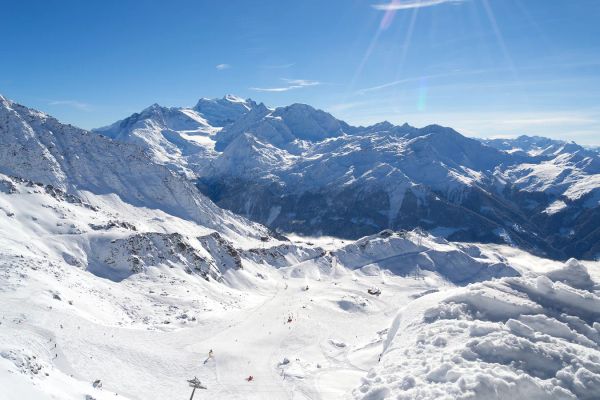
Alps Snow Forecast: Up to 64 cm Headed for the High Glaciers as the Snow Line Drops
The Alps are about to swap mild, sunny October weather for something far more wintry. A cold front arrives Tuesday, and SnowStash forecasts have Monterosa Ski out in front with 64 cm over 14 days, ahead of Blatten Belalp (55 cm) and Verbier (43 cm). The snow line should fall below 2000 metres by Wednesday night, and glaciers across Switzerland, Italy and Austria are in line for the best of it. The wind will have a say too.
20 Oct 2026

Four Dead After Avalanche Near Ski Portillo in Chile
A large avalanche struck near Laguna del Inca adjacent to Ski Portillo on Saturday afternoon, killing four people and injuring four others. The group were day visitors mountaineering in the backcountry after reportedly being warned about elevated avalanche risk by resort staff.
18 Oct 2026

Europe Ski Resorts Open Now: What Is Skiable in Mid-October 2026
Europe’s ski season is open, technically. After a record-warm summer, glaciers in Austria, Switzerland and Italy are running a few pistes apiece, Sölden, Stubai and Kitzsteinhorn started late, Titlis has pushed back to 24 October, and Zermatt reopens a few lifts on 14 October after more than two months shut. Finland’s Levi and Ruka are skiing on stored snow. Here is what is open, and what you actually get at each.
14 Oct 2026

Zermatt Plans World Cup Downhill Return on the Gornergrat for 2028
Zermatt is having another crack at a World Cup downhill, and this time nobody has to cross a border. Around 13 million Swiss francs is going into rebuilding the Gornergrat piste, including a jump fed by a roughly 300-metre in-run across the roof of the Gornergrat Railway gallery, with the Matterhorn lined up behind it for the TV cameras. First men’s race is pencilled in for March 2028, pending FIS homologation.
14 Oct 2026

Mt. Rose Begins Snowmaking for the 2026-27 Season at Lake Tahoe
Lake Tahoe’s highest base elevation is paying off early: Mt. Rose has started making snow for 2026-27 after the first flurries and a cold snap. The Nevada resort is backing it with nearly US$2 million in upgrades, including a replacement snowmaking main line, a new PistenBully groomer and restraint bars on every lift. Opening day is yet to be confirmed, though Heavenly and Northstar are already eyeing 20 November.
13 Oct 2026

Utah Ski Resorts 2026-27: What’s New at Alta, Deer Valley, Powder Mountain and More
Utah is still building flat out. For 2026-27, Powder Mountain opens a steep new Skytrac chair into more than 1,000 acres of advanced terrain, Deer Valley adds 200 acres on Hail Peak, Sundance gets a new quad and Park City adds a gondola from its new parking structure. Snowmaking is expanding almost everywhere, Eagle Point stays closed after the Cottonwood Fire, and the 2034 Games are setting the pace. Here’s what’s new, resort by resort.
13 Oct 2026

Mt Hutt Invests NZ$12 Million in Base Area, Tripling Its Sun Deck
Mt Hutt is getting busier, and its base lodge is about to catch up. NZ$12 million goes into a heated sun deck roughly three times the current size (430 m² to 1,300 m²), plus a new toilet block, heated steps down to snow level, extra storage and a new food and beverage outlet. Building starts after the 2026 season, with everything due for winter 2027.
11 Oct 2026

Vermont Ski Resort Opening Dates 2026-27: Few Dates Set, Killington Waits on the Cold
Vermont's season is slow to take shape. Stratton is tentatively targeting 18 November and Sugarbush 21 November, while Pico has Friday 11 December on the calendar. Killington never sets a date and opens when the snowmaking allows, and Vail Resorts has yet to name days for Stowe, Okemo and Mount Snow. The forecasts disagree about snow, and the main El Niño worry for the Green Mountains is warmth.
9 Oct 2026
Aomori Spring Snow Report
Snow Report
Awaiting live data
922m
summit
+0cm
new snow · last 24 hours
-°C / -°C · - -
Snowfall
24 hours
0cm
48 hours
0cm
7 days
0cm
Base depth
-
Season total
-
Total lifts5
Live open status isn’t available right now.
12 Dec 2026 - 4 Apr 2027
Hour by Hour
Next 47 hours· Updated Oct 23, 2026 at 5:02 PM
Scroll for the full outlook · Open-Meteo
7-Day Outlook
922 mUpdated Oct 23, 2026 at 5:02 PMOpen-Meteo
Days 1–7
0.8cm
Days 8–14
4.6cm
Fri, Oct 23
Mainly Clear
Temp10° / 3°°C
Snow0.0cm(41%)
Wind9 km/h W
Live snow from the resort feed; forecast from Open-Meteo, via Supabase.
Understanding the Aomori Spring snow report
Track current conditions at Aomori Spring in Tohoku. This report covers snowfall totals, base and summit depth, and the forecast across 14 runs.
Snow measurements
Base depth, summit depth, and recent snowfall are the core numbers to watch. At Aomori Spring, summit conditions (922m) can differ noticeably from the base, so we break both out separately rather than showing a single average.
Weather conditions
Snow quality tracks closely with temperature and wind. We surface both alongside the snowfall data so you can judge whether conditions at Aomori Spring are holding up or starting to soften.
Data sources
Snowfall and depth figures for Aomori Spring come from official mountain sources; weather and outlook data comes from independent forecasting services. The mountain is served by 5 lifts, including 2 quad chairlifts and a gondola.
When to check
Snow reports are typically updated early morning and late afternoon. For the most current conditions, check back regularly, especially if a winter storm is approaching.