
Appi Kogen
708m vertical, 43km terrain, 8m annual snowfall. World Ski Awards winner. Ikon Pass. Iwate, Japan.
Season 2026 - 2027
Opens
5 Dec 2026
Closes
28 Mar 2027
Days open
113
Annual snow
8m
The Overview
Michael Fulton
Melbourne-based skier and snowboarder with 50+ resorts across 5 continents. Specialises in Australian resorts and international resort comparisons.
Appi Kogen spans 282 hectares across Mount Maemori and Mount Nishimori in northern Iwate Prefecture, with 21 runs and 43 kilometres of terrain between 620 and 1,328 metres elevation. The resort delivers 708 metres of vertical drop and averages 8 metres of annual snowfall, with a longest run of 5.5 kilometres. Winner of Japan's Best Ski Resort at the World Ski Awards in 2022 and 2023, Appi joined the Ikon Pass for the 2025-26 season with seven days access on the full pass.
Terrain divides 30 per cent beginner, 40 per cent intermediate and 30 per cent advanced, with more than half the runs exceeding 2 kilometres in length. Five tree run zones covering 60 hectares stretch across the Nishimori and Sailer sectors, including the 1,000-metre Dragon Tail run. Six designated ungroomed routes provide powder access, whilst wide groomed corridors suit progression on the long Central area runs. The steepest pitch hits 34 degrees on Second Sailer A.
The resort sits at 40 degrees north latitude, the same as Aspen, creating low-humidity conditions that produce dry powder snow locals call aspirin snow. North-facing slopes preserve snow quality through a December-to-May season that typically runs 160 days. Ski-in ski-out access connects the ANA InterContinental, ANA Crowne Plaza and Holiday Inn properties directly to the lift network, with Tohoku's largest outdoor onsen on-site.
Appi operates as Tohoku's largest single-operator resort, built during Japan's 1980s economic boom with infrastructure that remains well-maintained. The purpose-built base village concentrates services around Appi Plaza and three hotels, with minimal day-tripper traffic keeping weekday crowds light. Night skiing runs until 8pm December through March, and the resort suits families and intermediates seeking long cruisers alongside advanced skiers chasing tree runs and ungroomed zones.
708m
Vertical
21
Runs
697 acres
Skiable
8m
Annual snow
The Terrain
21 runs across 697 acres skiable
Appi Kogen on the slopes of Mount Maemori and Mount Nishimori is one of the bigger ski areas in northern Honshu, sprawling across about 282 hectares, with 21 courses falling 708 vertical metres from 1,328 metres to a 620-metre base. The grading is balanced and leans comfortable: 30% beginner, 40% intermediate, 20% advanced and 10% expert. That expert share is unusually high for a Japanese resort of this type, so there is real steep skiing alongside the wide family cruisers. A gondola, three quad chairs and two double chairs spread skiers across the mountain, and more than ten courses run beyond two kilometres.
Long, sustained descents are the point here, and the many courses over two kilometres let intermediates string together big top-to-bottom runs without a flat spot to slow the day. The steeper faces higher on the mountain suit advanced skiers wanting groomed pitch, and the resort also runs terrain parks for freestyle riders. Cold, dry Tohoku snow tends to stay in good shape on the northern aspects through January and February. Appi suits mixed groups, from learners through to strong skiers who want some difficulty, and it rewards anyone prepared to travel beyond the Honshu big names.
Terrain split
21
runs
21 runs across 4 grades
Beginner6 runs · 30%
Intermediate8 runs · 40%
Advanced4 runs · 20%
Expert2 runs · 10%
Time it right
When to visit Appi Kogen
The 2025-26 season runs from 5 December 2025 to 29 March 2026, covering nearly four months of operation. North-facing aspect and 40-degree-north latitude extend the viable season into early May some years, with the resort historically operating around 160 days. Early and late season see reduced lift operations, typically running only the gondola and three main chairlifts.
Annual snowfall averages 8 metres, measured at the base, with significantly higher accumulation at the 1,328-metre summit. The resort's latitude and continental weather patterns produce dry powder conditions with low humidity, creating the fine-grained snow marketed as aspirin snow. Snowmaking covers key runs, and the current 2025-26 season shows 240 centimetres settled base depth as of mid-June 2026. Base elevation at 620 metres ensures reliable coverage through the core season.
January and February deliver peak powder conditions and coldest temperatures, with December and early March offering lighter crowds and adequate snow depth. The third week of December historically brings the heaviest snowfall, averaging 47 centimetres. Spring skiing extends into April when operations permit, with corn snow developing on south-facing aspects. Weekdays remain quiet outside Japanese holiday periods.
The Appi Jazzy Sport music festival runs in late January or early February, featuring Japanese artists at the base area food court. Night skiing operates 4pm to 8pm December through March on lower Central slopes with floodlighting. Weekend crowds increase during peak season but the resort rarely feels overrun, and the extended season length allows flexibility in timing visits around weather windows.
Season 2026 - 2027
5 Dec 2026
Opens
28 Mar 2027
Closes
113
Days open
8 m
Annual snow
Getting there
Getting to Appi Kogen, and where to stay
Appi Kogen sits in Hachimantai city in western Iwate Prefecture on northern Honshu, 50 kilometres northwest of the prefectural capital Morioka. The resort occupies the Appi Highlands at 800 to 900 metres elevation, adjacent to Towada-Hachimantai National Park. Mount Iwate, Iwate Prefecture's highest peak, provides a backdrop to the ski area, with beech forests and white birch groves surrounding the base village.
Morioka lies 50 kilometres southeast with a population of 290,000, serving as the main regional gateway. The city connects to Tokyo via the Tohoku Shinkansen in 2 hours 10 minutes covering 497 kilometres, with Haneda Airport 3.5 hours door-to-door. Appi Kogen Station on the JR Hanawa Line sits 3.5 kilometres from the resort with connecting shuttle buses, whilst local trains from Morioka take 1 hour.
Road access follows the Tohoku Expressway to Matsuo-Hachimantai interchange, then Route 282 for 15 kilometres taking 35 minutes total from the motorway. Direct buses from Morioka Station run 50 to 60 minutes to Appi Plaza at the base village, departing from the west exit terminal with roughly five daily services in peak season. Drive time from Morioka city centre ranges 30 to 50 minutes depending on conditions.
Iwate Hanamaki Airport lies 65 kilometres south with domestic flights from Sapporo, Osaka and limited international services, connected by resort shuttle buses in 80 minutes. Sendai Airport sits 200 kilometres south, whilst Odate Noshiro Airport is 55 kilometres northwest. Most international visitors route through Tokyo's Narita or Haneda airports, taking the Tohoku Shinkansen to Morioka before the final 50-minute bus transfer to the resort.
Where to stay
Search all stays →Hotels and lodges near Appi Kogen, powered by Stay22.
Latest News
From the SnowStash desk
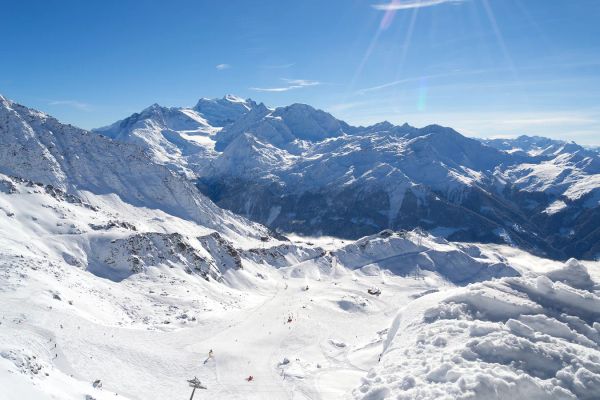
Alps Snow Forecast: Up to 64 cm Headed for the High Glaciers as the Snow Line Drops
The Alps are about to swap mild, sunny October weather for something far more wintry. A cold front arrives Tuesday, and SnowStash forecasts have Monterosa Ski out in front with 64 cm over 14 days, ahead of Blatten Belalp (55 cm) and Verbier (43 cm). The snow line should fall below 2000 metres by Wednesday night, and glaciers across Switzerland, Italy and Austria are in line for the best of it. The wind will have a say too.
20 Oct 2026

Four Dead After Avalanche Near Ski Portillo in Chile
A large avalanche struck near Laguna del Inca adjacent to Ski Portillo on Saturday afternoon, killing four people and injuring four others. The group were day visitors mountaineering in the backcountry after reportedly being warned about elevated avalanche risk by resort staff.
18 Oct 2026

Europe Ski Resorts Open Now: What Is Skiable in Mid-October 2026
Europe’s ski season is open, technically. After a record-warm summer, glaciers in Austria, Switzerland and Italy are running a few pistes apiece, Sölden, Stubai and Kitzsteinhorn started late, Titlis has pushed back to 24 October, and Zermatt reopens a few lifts on 14 October after more than two months shut. Finland’s Levi and Ruka are skiing on stored snow. Here is what is open, and what you actually get at each.
14 Oct 2026

Zermatt Plans World Cup Downhill Return on the Gornergrat for 2028
Zermatt is having another crack at a World Cup downhill, and this time nobody has to cross a border. Around 13 million Swiss francs is going into rebuilding the Gornergrat piste, including a jump fed by a roughly 300-metre in-run across the roof of the Gornergrat Railway gallery, with the Matterhorn lined up behind it for the TV cameras. First men’s race is pencilled in for March 2028, pending FIS homologation.
14 Oct 2026

Mt. Rose Begins Snowmaking for the 2026-27 Season at Lake Tahoe
Lake Tahoe’s highest base elevation is paying off early: Mt. Rose has started making snow for 2026-27 after the first flurries and a cold snap. The Nevada resort is backing it with nearly US$2 million in upgrades, including a replacement snowmaking main line, a new PistenBully groomer and restraint bars on every lift. Opening day is yet to be confirmed, though Heavenly and Northstar are already eyeing 20 November.
13 Oct 2026

Utah Ski Resorts 2026-27: What’s New at Alta, Deer Valley, Powder Mountain and More
Utah is still building flat out. For 2026-27, Powder Mountain opens a steep new Skytrac chair into more than 1,000 acres of advanced terrain, Deer Valley adds 200 acres on Hail Peak, Sundance gets a new quad and Park City adds a gondola from its new parking structure. Snowmaking is expanding almost everywhere, Eagle Point stays closed after the Cottonwood Fire, and the 2034 Games are setting the pace. Here’s what’s new, resort by resort.
13 Oct 2026

Mt Hutt Invests NZ$12 Million in Base Area, Tripling Its Sun Deck
Mt Hutt is getting busier, and its base lodge is about to catch up. NZ$12 million goes into a heated sun deck roughly three times the current size (430 m² to 1,300 m²), plus a new toilet block, heated steps down to snow level, extra storage and a new food and beverage outlet. Building starts after the 2026 season, with everything due for winter 2027.
11 Oct 2026

Vermont Ski Resort Opening Dates 2026-27: Few Dates Set, Killington Waits on the Cold
Vermont's season is slow to take shape. Stratton is tentatively targeting 18 November and Sugarbush 21 November, while Pico has Friday 11 December on the calendar. Killington never sets a date and opens when the snowmaking allows, and Vail Resorts has yet to name days for Stowe, Okemo and Mount Snow. The forecasts disagree about snow, and the main El Niño worry for the Green Mountains is warmth.
9 Oct 2026
Appi Kogen Snow Report
Snow Report
Updated 23 Oct 2026
1328m
summit
+0cm
new snow · last 24 hours
Overcast7°C / 12°C · SW 12km/h
Snowfall
24 hours
0cm
48 hours
0cm
7 days
0cm
Base depth
0cm
Season total
0cm
Total lifts6
Live open status isn’t available right now.
5 Dec 2026 - 28 Mar 2027
Hour by Hour
Next 45 hours· Updated Oct 24, 2026 at 5:02 AM
Scroll for the full outlook · Open-Meteo
7-Day Outlook
1,328 mUpdated Oct 24, 2026 at 5:02 AMOpen-Meteo
Days 1–7
7.1cm
Days 8–14
12cm
Sat, Oct 24
Light Drizzle
Temp12° / 7°°C
Snow0.0cm(99%)
Wind12 km/h SW
Live snow from the resort feed; forecast from Open-Meteo, via Supabase.
Understanding the Appi Kogen snow report
Planning a day at Appi Kogen? Our snow report combines official mountain data with live weather so you know exactly what conditions look like right now, from the 620m base to the 1328m summit.
Snow measurements
Snow depth at Appi Kogen is tracked at both the base and summit, since the two elevations often see different totals — roughly a 708m difference here. We report fresh snowfall over the last 24 hours and 7 days alongside the running season total, in both metric and imperial units.
Weather conditions
Snow quality tracks closely with temperature and wind. We surface both alongside the snowfall data so you can judge whether conditions at Appi Kogen are holding up or starting to soften.
Data sources
Snowfall and depth figures for Appi Kogen come from official mountain sources; weather and outlook data comes from independent forecasting services. The mountain is served by 6 lifts, including 3 quad chairlifts and a gondola.
When to check
Snow reports are typically updated early morning and late afternoon. For the most current conditions, check back regularly, especially if a winter storm is approaching.