
Inawashiro
580m vertical, 18 runs, 7.5m annual snow. Mount Bandai views, Saturday fireworks. Central Fukushima, 3hr20min Tokyo.
Season 2026 - 2027
Opens
18 Dec 2026
Closes
22 Mar 2027
Days open
94
Annual snow
8m
The Overview
Michael Fulton
Melbourne-based skier and snowboarder with 50+ resorts across 5 continents. Specialises in Australian resorts and international resort comparisons.
Inawashiro spans 675 to 1,255 metres elevation with 580 metres of vertical drop across 18 runs and 103 hectares of terrain. The resort comprises two interconnected areas, Chuo and Minero, accessed on a single pass and separated by a short shuttle ride. Annual snowfall averages 7.5 metres, with the resort operating within Bandai-Asahi National Park and offering commanding views of Mount Bandai and Lake Inawashiro, Japan's fourth-largest lake. The 2025-2026 season runs from 5 December to 29 March.
Terrain distribution tilts heavily toward progression, with 50 per cent beginner runs, 35 per cent intermediate and 15 per cent advanced. The Chuo area hosts wide gentle slopes tailored for first-timers and families, whilst the Minero sector delivers steeper pitches including the All-Japan Ski Competition Course used for FIS mogul events. A 3,500-metre top-to-bottom run descends through beech forest, and a basic terrain park sits alongside mini gate runs. The relatively low elevation means southeast-facing slopes can soften quickly under sun.
Weekday crowds remain sparse, with grooming standards benefiting from light traffic. The resort introduced Burton Step On rentals in 2024, deploying 900 sets, the largest fleet in Japan. On-mountain facilities include four day lodges, two mid-mountain restaurants, a kids' park with covered snow escalator, and ski school with limited English instruction. The Re:born CLUB loyalty programme offers free weekday lift access and half-price weekend tickets to members who register via QR code.
Inawashiro attracts a domestic clientele and sees few international visitors, creating an authentically local atmosphere. Saturday night skiing runs until 22:00 with fireworks displays launched from around 1,000 metres elevation, visible across the slopes and town below. Sunday mornings offer early-bird sessions from 06:30. The resort suits intermediates seeking soft groomers and powder hunters willing to explore discreetly off marked runs, though ski patrol enforce boundaries actively.
580m
Vertical
18
Runs
255 acres
Skiable
8m
Annual snow
The Terrain
18 runs across 255 acres skiable
Inawashiro is really two ski areas on a single ticket, Chuo and Minero, sharing 103 hectares on the southern slopes of the Bandai massif above Lake Inawashiro. Across 18 runs the vertical is 580 metres, from 675 metres to 1,255 metres, and the grading is gentle: 50% beginner, 35% intermediate and 15% advanced. No terrain is rated expert. Seven double chairs and three quads do the hauling, with no gondola, so the lift ride is slower than the bigger Tohoku names. A short shuttle links the two sectors, and each has its own distinct character rather than simply duplicating the other.
Chuo has the wide, forgiving slopes, which makes it the natural choice for first-timers and families, with a couple of green trails lit for night skiing until late on weekends. Minero is steeper and more serious, and it includes the course used for national and FIS mogul competition, which is a fair test for anyone wanting a bump run. Views stretch across the lake to Mount Bandai on clear days. Inawashiro suits beginners and mid-level skiers, and it gives experienced skiers one or two decent pitches in Minero but not enough to fill a week.
Terrain split
18
runs
18 runs across 4 grades
Beginner9 runs · 50%
Intermediate6 runs · 35%
Advanced3 runs · 15%
Expert0 runs · 0%
Time it right
When to visit Inawashiro
The 2025-2026 season opens 5 December 2025 and closes 29 March 2026, spanning approximately 16 weeks. Operations align with Tohoku's December-through-March window, running shorter than higher-elevation neighbours due to the 675-metre base. Opening dates shift based on early-season accumulation, with typical first lifts spinning mid to late December. Closing day falls before April, as spring warmth degrades snow quality on southeast-facing slopes.
Annual snowfall averages 7.5 metres, delivering consistent coverage but not the champagne powder Japan's northern resorts receive. Snow quality trails neighbouring areas by Japanese standards, with lower elevation and solar exposure limiting preservation. The snowiest period arrives in week three of December, typically producing 32 centimetres across 4.8 snowy days. Base depths fluctuate between one and two metres through peak season, with snowmaking absent or minimal across the terrain.
February and March offer the most reliable sunny weather, balancing accumulation with clearer skies. January delivers peak powder conditions when cold air masses stall over Fukushima. Weekdays from mid-January through February provide the quietest access to fresh snow, as domestic crowds concentrate on weekends. Late March sees spring snow develop, with corn cycles forming on sun-exposed aspects whilst shaded north-facing zones retain quality longer.
Saturday night skiing runs from 16:00 to 22:00 on selected dates from 20 December 2025 through 14 March 2026, accompanied by the Ina Ski Snow Fireworks displays launched between 18:00 and 18:30. Designated fireworks dates include 30-31 December 2024, 1-2 January, 11 January, and 22 February, with the programme repeating most Saturdays. Sunday morning sessions commence 06:30 for early-access skiing. A cosplay and anime festival features on the events calendar, alongside torchlight parades and dating events targeting younger Japanese skiers.
Season 2026 - 2027
18 Dec 2026
Opens
22 Mar 2027
Closes
94
Days open
8 m
Annual snow
Getting there
Getting to Inawashiro, and where to stay
Inawashiro sits in central Fukushima Prefecture within Bandai-Asahi National Park, positioned between Mount Bandai to the north and Lake Inawashiro to the south. The base village sits at 675 metres, with the resort occupying the southern slopes of the Bandai massif. Mount Bandai rises to 1,819 metres as an active stratovolcano and one of Japan's 100 Famous Mountains, whilst Lake Inawashiro extends 103 square kilometres as the nation's fourth-largest lake. The area lies in Inawashiro Town, Yama District, surrounded by volcanic peaks including Mount Adatara and Mount Azuma.
Inawashiro Town centre sits approximately 10 minutes by car from the resort base, offering supermarkets, convenience stores, restaurants, and onsen facilities fed by prolific natural springs. Koriyama, Fukushima Prefecture's largest city, lies 37 kilometres southeast and serves as the primary regional hub. Aizu-Wakamatsu, the historic castle town, sits 30 kilometres west. The resort lies roughly 200 kilometres north of Tokyo, positioning it within Tohoku's southern corridor. Lake Inawashiro's shoreline hosts the Noguchi Hideyo Memorial, commemorating the scientist featured on Japan's 1,000-yen note.
Road access follows the Ban-Etsu Expressway to Inawashiro-Bandai-Kogen interchange, then 10 minutes via Routes 115, 7, and 324 to the resort. Total driving time from Tokyo spans approximately 3 hours 20 minutes via the Tohoku Expressway through Kawaguchi and Koriyama junctions. Free parking operates at both base areas, with additional spaces at the World Glass Museum on weekends and holidays. The resort discourages overnight parking except at the designated RV park to allow snowplough operations.
Fukushima Airport sits 20 kilometres south in Sukagawa, approximately 40 minutes by limousine bus to Koriyama Station, though Sendai Airport 151 kilometres north offers broader domestic and limited international service. JR Tohoku Shinkansen reaches Koriyama Station from Tokyo in 80 minutes, with transfers to the Ban-Etsu West Line covering 37 kilometres to Inawashiro Station in 40 minutes. Free shuttle buses operate 10 minutes between Inawashiro Station and the resort. Narita and Haneda airports connect via shinkansen to Koriyama in approximately 3 hours 20 minutes and 3 hours 40 minutes respectively, followed by local train and shuttle connections.
Where to stay
Search all stays →Hotels and lodges near Inawashiro, powered by Stay22.
Latest News
From the SnowStash desk
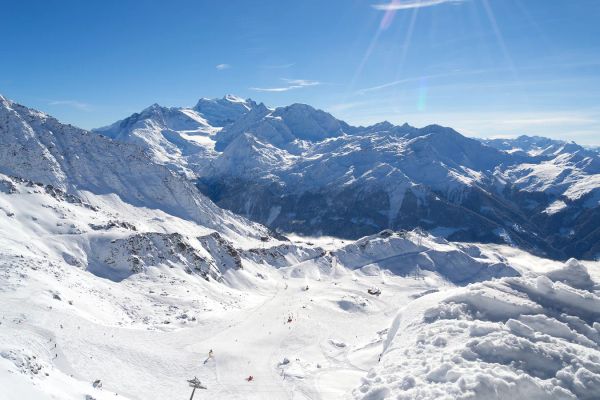
Alps Snow Forecast: Up to 64 cm Headed for the High Glaciers as the Snow Line Drops
The Alps are about to swap mild, sunny October weather for something far more wintry. A cold front arrives Tuesday, and SnowStash forecasts have Monterosa Ski out in front with 64 cm over 14 days, ahead of Blatten Belalp (55 cm) and Verbier (43 cm). The snow line should fall below 2000 metres by Wednesday night, and glaciers across Switzerland, Italy and Austria are in line for the best of it. The wind will have a say too.
20 Oct 2026
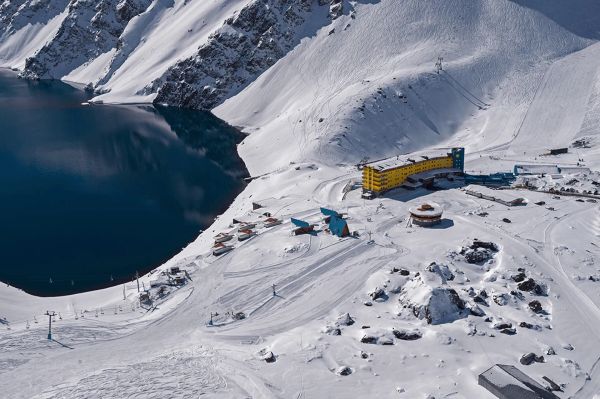
Four Dead After Avalanche Near Ski Portillo in Chile
A large avalanche struck near Laguna del Inca adjacent to Ski Portillo on Saturday afternoon, killing four people and injuring four others. The group were day visitors mountaineering in the backcountry after reportedly being warned about elevated avalanche risk by resort staff.
18 Oct 2026

Europe Ski Resorts Open Now: What Is Skiable in Mid-October 2026
Europe’s ski season is open, technically. After a record-warm summer, glaciers in Austria, Switzerland and Italy are running a few pistes apiece, Sölden, Stubai and Kitzsteinhorn started late, Titlis has pushed back to 24 October, and Zermatt reopens a few lifts on 14 October after more than two months shut. Finland’s Levi and Ruka are skiing on stored snow. Here is what is open, and what you actually get at each.
14 Oct 2026

Zermatt Plans World Cup Downhill Return on the Gornergrat for 2028
Zermatt is having another crack at a World Cup downhill, and this time nobody has to cross a border. Around 13 million Swiss francs is going into rebuilding the Gornergrat piste, including a jump fed by a roughly 300-metre in-run across the roof of the Gornergrat Railway gallery, with the Matterhorn lined up behind it for the TV cameras. First men’s race is pencilled in for March 2028, pending FIS homologation.
14 Oct 2026

Mt. Rose Begins Snowmaking for the 2026-27 Season at Lake Tahoe
Lake Tahoe’s highest base elevation is paying off early: Mt. Rose has started making snow for 2026-27 after the first flurries and a cold snap. The Nevada resort is backing it with nearly US$2 million in upgrades, including a replacement snowmaking main line, a new PistenBully groomer and restraint bars on every lift. Opening day is yet to be confirmed, though Heavenly and Northstar are already eyeing 20 November.
13 Oct 2026

Utah Ski Resorts 2026-27: What’s New at Alta, Deer Valley, Powder Mountain and More
Utah is still building flat out. For 2026-27, Powder Mountain opens a steep new Skytrac chair into more than 1,000 acres of advanced terrain, Deer Valley adds 200 acres on Hail Peak, Sundance gets a new quad and Park City adds a gondola from its new parking structure. Snowmaking is expanding almost everywhere, Eagle Point stays closed after the Cottonwood Fire, and the 2034 Games are setting the pace. Here’s what’s new, resort by resort.
13 Oct 2026

Mt Hutt Invests NZ$12 Million in Base Area, Tripling Its Sun Deck
Mt Hutt is getting busier, and its base lodge is about to catch up. NZ$12 million goes into a heated sun deck roughly three times the current size (430 m² to 1,300 m²), plus a new toilet block, heated steps down to snow level, extra storage and a new food and beverage outlet. Building starts after the 2026 season, with everything due for winter 2027.
11 Oct 2026

Vermont Ski Resort Opening Dates 2026-27: Few Dates Set, Killington Waits on the Cold
Vermont's season is slow to take shape. Stratton is tentatively targeting 18 November and Sugarbush 21 November, while Pico has Friday 11 December on the calendar. Killington never sets a date and opens when the snowmaking allows, and Vail Resorts has yet to name days for Stowe, Okemo and Mount Snow. The forecasts disagree about snow, and the main El Niño worry for the Green Mountains is warmth.
9 Oct 2026
Inawashiro Snow Report
Snow Report
Awaiting live data
1255m
summit
+0cm
new snow · last 24 hours
-°C / -°C · - -
Snowfall
24 hours
0cm
48 hours
0cm
7 days
0cm
Base depth
-
Season total
-
Total lifts10
Live open status isn’t available right now.
18 Dec 2026 - 22 Mar 2027
Hour by Hour
Next 47 hours· Updated Oct 25, 2026 at 5:02 AM
Scroll for the full outlook · Open-Meteo
7-Day Outlook
1,255 mUpdated Oct 25, 2026 at 5:02 AMOpen-Meteo
Days 1–7
1.2cm
Days 8–14
2.9cm
Sun, Oct 25
Dense Drizzle
Temp16° / 11°°C
Snow0.0cm(100%)
Wind9 km/h NW
Live snow from the resort feed; forecast from Open-Meteo, via Supabase.
Understanding the Inawashiro snow report
See what's happening on the mountain at Inawashiro right now — snowfall, snow depth, and weather data to help you plan your day in Tohoku.
Snow measurements
Our snow reports measure snowfall in centimeters over multiple time windows — last 24 hours, last 7 days, and the season total. Base depth reflects accumulation at the 675m base area, while summit depth captures conditions 580m higher at 1255m, where snow typically stays colder and lingers longer. Imperial conversions are shown alongside for convenience.
Weather conditions
Current weather conditions affect snow quality. Cold temperatures with low wind typically preserve snow quality, while warm temperatures or rain can impact conditions negatively — something worth watching closely at Inawashiro's 675m base elevation, where temperatures run milder than the summit.
Data sources
Inawashiro snow data is collected through a combination of on-mountain reports and weather forecasting services, giving you both official resort updates and independent forecast data in one place. The mountain is served by 10 lifts, including 3 quad chairlifts.
When to check
The biggest swings usually happen right after a storm. Check Inawashiro's report in the morning for the freshest numbers, and again in the afternoon as conditions evolve.