
Coronet Peak
Ski 280 hectares just 20 minutes from Queenstown, with night skiing, First Tracks and NZ's largest snowmaking system.
Season 2026
Opens
13 June 2026
Closes
4 Oct 2026
Days open
113
Annual snow
2m
The Overview
Michael Fulton
Melbourne-based skier and snowboarder with 50+ resorts across 5 continents. Specialises in Australian resorts and international resort comparisons.
Coronet Peak is Queenstown's closest ski area and the oldest commercial ski field in New Zealand, first opening in 1947 with a single rope tow. The resort spans 280 hectares of skiable terrain on the southern flanks of the 1,649m peak, seven kilometres west of Arrowtown and just 20 minutes by sealed road from downtown Queenstown. The mountain rises from 1,187m to 1,649m with a 462m vertical drop across 32 runs — 14% beginner, 34% intermediate, 25% advanced and 27% expert.
The terrain is characterised by its rolling, undulating profile — often described as roller coaster skiing — with open faces, natural gullies and back bowls that reward confident skiers willing to explore beyond the groomed trails. Northern Hemisphere race teams regularly use Coronet Peak as a southern-season training base, and the mountain is the home field of local Queenstown skier Alice Robinson, a World Cup giant slalom winner.
Coronet Peak is the only resort in the Queenstown region to offer night skiing, with floodlit runs open from 4–9pm on Wednesdays and Fridays plus select Saturday nights from late June through early September. Combined with a First Tracks programme offering exclusive early access from 8–9am, the resort delivers the longest ski day in New Zealand — up to 13 hours of on-snow time.
The resort is operated by NZSki alongside The Remarkables and Mt Hutt, and all three mountains sit on a shared Superpass and 3 Peak Season Pass. Coronet Peak is also included on the Ikon Pass and Mountain Collective, making it accessible to international pass holders without a separate ticket purchase.
462m
Vertical
32
Runs
692 acres
Skiable
2m
Annual snow
Ikon / Mountain Collective
Pass
The Terrain
32 runs across 692 acres skiable
Coronet Peak is the oldest commercial ski field in New Zealand and the closest to Queenstown, spreading across about 280 hectares on the slopes above the Shotover Valley. Skiing drops 462 metres, from 1,649 to 1,187 metres, across 32 runs. Sanity gives 14% beginner, 34% intermediate, 25% advanced and 27% expert, a spread that leans stronger than many neighbours. The profile is rolling and undulating, with open faces, gullies and wind lips rather than long uniform pitches. A gondola, a six-seater, two quads and a cluster of T-bars serve the mountain, and night skiing runs on selected evenings.
Big Easy and Little Easy cover the learner terrain near the Meadows Express, while M1 and Greengates offer rolling intermediate groomers. Shirtfront and Exchange Drop add steeper pitches for stronger skiers, and the Back Bowls, reached by a hike, hold unpatrolled chutes and off-piste lines that need avalanche awareness. Race teams use the slopes for training, which says something about the grooming. Coronet Peak suits confident intermediates and advanced skiers who like terrain with some character, and visitors from Queenstown wanting a short, simple transfer to a well-rounded mountain.
Terrain split
32
runs
32 runs across 4 grades
Beginner4 runs · 14%
Intermediate11 runs · 34%
Advanced8 runs · 25%
Expert9 runs · 27%
Time it right
When to visit Coronet Peak
Coronet Peak typically runs the longest season of any non-glacier resort in New Zealand, with the 2026 season operating from 13 June to 4 October. The new Snow Factory extends activity even earlier: from 30 May 2026, the learner slopes and a dedicated snow play zone will open for beginners, families and snow tubing, making Coronet Peak the first New Zealand resort to open for the 2026 season.
Average annual natural snowfall is approximately 2 metres, but the resort's comprehensive snowmaking system — capable of laying half a metre of cover across all main trails — means conditions are far less dependent on natural falls than at higher-altitude, non-snowmaking fields. The south-facing aspect helps preserve snow quality, and world-class grooming ensures piste conditions hold up even in variable weather.
The most reliable snow window runs from late July through August, when natural snowfall peaks and base depths are typically at their deepest. Spring skiing through September offers warmer days and fewer crowds, though the lower elevation means the season can tighten if conditions turn mild.
Night skiing runs from late June through early September on Wednesday and Friday evenings, with additional Saturday sessions during the July school holidays. The floodlit sessions draw a strong local crowd from Queenstown and are widely regarded as one of the region's signature winter experiences, with views across the illuminated slopes to the lights of Queenstown and Lake Wakatipu below.
Season 2026
13 June 2026
Opens
4 Oct 2026
Closes
113
Days open
2 m
Annual snow
Getting there
Getting to Coronet Peak, and where to stay
Coronet Peak sits just 18km from Queenstown on a fully sealed access road, making it the most accessible alpine ski area in the Southern Lakes region. The drive takes around 20 minutes from central Queenstown, with no chains required on the sealed road in normal conditions — a notable advantage over most other New Zealand ski fields, which typically involve gravel access roads.
Multiple shuttle bus services operate daily from Queenstown's Snow Centre, with hotel pick-ups available en route. The resort's proximity means it works well as a half-day activity, easily combined with Queenstown's other winter attractions. Arrowtown, the historic gold-mining village, lies just seven kilometres to the east.
Queenstown Airport is the nearest gateway, approximately 30 minutes from the resort, with domestic flights from Auckland, Wellington and Christchurch and direct international services from Sydney, Melbourne, Brisbane and the Gold Coast. The resort is also accessible from Invercargill (approximately two hours) and Dunedin (approximately three and a half hours).
The base area houses a large purpose-built lodge with restaurants, a bar, Cafe 1200, the iconic Heidi's Hut mid-mountain dining stop, and the Skiwiland childcare centre catering for children aged two to five. A retail shop, rental department and snowsports school round out the on-mountain facilities, and a new Heidi's Hot Tub provides a post-ski soak beside the hut.
Where to stay
Search all stays →Hotels and lodges near Coronet Peak, powered by Stay22.
Latest News
From the SnowStash desk
Alps Snow Forecast: Up to 64 cm Headed for the High Glaciers as the Snow Line Drops
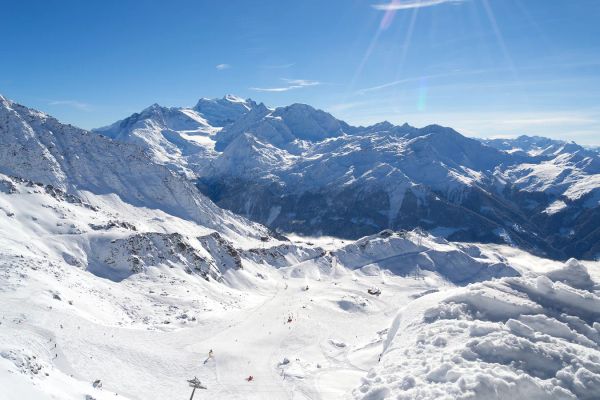
The Alps are about to swap mild, sunny October weather for something far more wintry. A cold front arrives Tuesday, and SnowStash forecasts have Monterosa Ski out in front with 64 cm over 14 days, ahead of Blatten Belalp (55 cm) and Verbier (43 cm). The snow line should fall below 2000 metres by Wednesday night, and glaciers across Switzerland, Italy and Austria are in line for the best of it. The wind will have a say too.
20 Oct 2026
Four Dead After Avalanche Near Ski Portillo in Chile
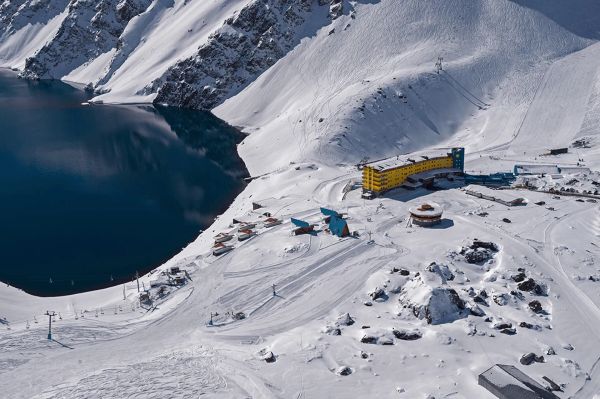
A large avalanche struck near Laguna del Inca adjacent to Ski Portillo on Saturday afternoon, killing four people and injuring four others. The group were day visitors mountaineering in the backcountry after reportedly being warned about elevated avalanche risk by resort staff.
18 Oct 2026

Europe Ski Resorts Open Now: What Is Skiable in Mid-October 2026
Europe’s ski season is open, technically. After a record-warm summer, glaciers in Austria, Switzerland and Italy are running a few pistes apiece, Sölden, Stubai and Kitzsteinhorn started late, Titlis has pushed back to 24 October, and Zermatt reopens a few lifts on 14 October after more than two months shut. Finland’s Levi and Ruka are skiing on stored snow. Here is what is open, and what you actually get at each.
14 Oct 2026

Zermatt Plans World Cup Downhill Return on the Gornergrat for 2028
Zermatt is having another crack at a World Cup downhill, and this time nobody has to cross a border. Around 13 million Swiss francs is going into rebuilding the Gornergrat piste, including a jump fed by a roughly 300-metre in-run across the roof of the Gornergrat Railway gallery, with the Matterhorn lined up behind it for the TV cameras. First men’s race is pencilled in for March 2028, pending FIS homologation.
14 Oct 2026

Mt. Rose Begins Snowmaking for the 2026-27 Season at Lake Tahoe
Lake Tahoe’s highest base elevation is paying off early: Mt. Rose has started making snow for 2026-27 after the first flurries and a cold snap. The Nevada resort is backing it with nearly US$2 million in upgrades, including a replacement snowmaking main line, a new PistenBully groomer and restraint bars on every lift. Opening day is yet to be confirmed, though Heavenly and Northstar are already eyeing 20 November.
13 Oct 2026

Utah Ski Resorts 2026-27: What’s New at Alta, Deer Valley, Powder Mountain and More
Utah is still building flat out. For 2026-27, Powder Mountain opens a steep new Skytrac chair into more than 1,000 acres of advanced terrain, Deer Valley adds 200 acres on Hail Peak, Sundance gets a new quad and Park City adds a gondola from its new parking structure. Snowmaking is expanding almost everywhere, Eagle Point stays closed after the Cottonwood Fire, and the 2034 Games are setting the pace. Here’s what’s new, resort by resort.
13 Oct 2026

Mt Hutt Invests NZ$12 Million in Base Area, Tripling Its Sun Deck
Mt Hutt is getting busier, and its base lodge is about to catch up. NZ$12 million goes into a heated sun deck roughly three times the current size (430 m² to 1,300 m²), plus a new toilet block, heated steps down to snow level, extra storage and a new food and beverage outlet. Building starts after the 2026 season, with everything due for winter 2027.
11 Oct 2026

Vermont Ski Resort Opening Dates 2026-27: Few Dates Set, Killington Waits on the Cold
Vermont's season is slow to take shape. Stratton is tentatively targeting 18 November and Sugarbush 21 November, while Pico has Friday 11 December on the calendar. Killington never sets a date and opens when the snowmaking allows, and Vail Resorts has yet to name days for Stowe, Okemo and Mount Snow. The forecasts disagree about snow, and the main El Niño worry for the Green Mountains is warmth.
9 Oct 2026
Coronet Peak Lift System
The lift network at Coronet Peak centres on two high-speed six-person chairlifts — Coronet Express, which serves the main upper mountain from the base area, and Meadows Express, a high-speed quad that accesses the lower and intermediate slopes. A third chairlift, the Greengates Express quad, opens up the steeper terrain on the resort's eastern flank including the boardercross course and some of the mountain's most technical lines.
The Rocky Gully T-bar services a pocket of dedicated groomed terrain popular with race-style skiing, while four surface conveyor lifts handle the learner zone adjacent to the base building. Total uplift capacity sits at approximately 8,200 persons per hour across all installations.
For 2026, Coronet Peak has installed a TechnoAlpin Snow Factory — the first in New Zealand's South Island — capable of producing up to 200 cubic metres of snow per day regardless of ambient temperature. This supplements the resort's existing snowmaking arsenal of 217 fixed guns and seven portable units, which together form the most extensive snowmaking system in the Southern Hemisphere with coverage across all main trails from summit to base.
The Snow Factory is part of a wider $4 million capital works programme for 2026 that also includes upgrades to learner slopes, groomers, rental equipment and additional snowmaking infrastructure.
9lifts across 4 types
1
Gondola
1
6-Person Chair
2
Quad Chairs
5
T-Bars
Coronet Peak lift system
Coronet Peak is served by 9 lifts, listed here by type. Check which lifts are turning against the live conditions before you plan your first laps - early lifts and high-speed chairs get you to the best snow fastest.
More Coronet Peak intelligence: trail map, snow report, webcams, resort overview.