
Craigieburn
Craigieburn: 503m vertical, 3 rope tows, ungroomed terrain. 90 minutes from Christchurch in New Zealand's Southern Alps.
Season 2026
Opens
8 Aug 2026
Closes
27 Sept 2026
Days open
50
Annual snow
3m
The Overview
Michael Fulton
Melbourne-based skier and snowboarder with 50+ resorts across 5 continents. Specialises in Australian resorts and international resort comparisons.
Craigieburn Valley operates between 1,308 and 1,811 metres across 400 hectares of ungroomed terrain in New Zealand's Southern Alps. The club field features 25 runs with 503 metres of vertical drop, split 55 per cent intermediate, 25 per cent advanced and 20 per cent expert. The field averages 3 metres of annual snowfall and draws accumulation from both easterly and westerly storm systems that cross the main divide. No beginner terrain exists, and the club recommends first-time visitors can confidently ski blue chairlift runs elsewhere.
Three rope tows service two distinct basins spanning separate ridgelines, with Hamilton Face and Allan's Basin providing the main descents. Middle Basin drops 600 metres to the access road through untracked powder when conditions align, often compared to heliskiing. Plake's Mistake run honours professional skier Glen Plake, who joined the club. All terrain remains ungroomed except by weather, and nutcracker rope tows require basic technique that staff demonstrate at the ticket office.
Two lodges sit below treeline in beech forest - Koroheke with 6-bed dorms and Matuhi with private rooms, together sleeping 65 guests. The Kea Ridge Day Lodge near the summit serves hot food and coffee with 360-degree views across the field. The Thirsty Kea Bar in Koroheke Lodge opens after 3pm for club members and day visitors. No ski rental exists on mountain, and visitors must bring chains for the 6-kilometre access road that winds through native beech forest.
The field operates under a shared pass system with adjacent Broken River, accessible via a 15-minute hike over Hamilton Col. The 2026 season runs 8 August through 27 September. Established in 1954, Craigieburn functions as a non-profit club run by volunteers who maintain all infrastructure. Member day passes cost NZ$50 to $70, whilst non-members pay NZ$90 to $110, and the Chill Pass provides weekend access across 11 Canterbury club fields.
503m
Vertical
25
Runs
988 acres
Skiable
3m
Annual snow
The Terrain
25 runs across 988 acres skiable
Craigieburn Valley is a volunteer-run club field in the Craigieburn Range of the Southern Alps, covering about 400 hectares of ungroomed terrain. The mountain falls 503 metres, from 1,811 to 1,308 metres, across 25 runs. Sanity lists no beginner terrain at all, with 55% intermediate, 25% advanced and 20% expert, which makes it a field for competent skiers who already handle blue runs elsewhere. Three Nutcracker rope tows climb two basins on separate ridgelines, and nothing is groomed except by the weather. Mountain beech forest sits below, with open alpine terrain above.
Hamilton Face and Allan's Basin carry the main descents, while Middle Basin drops about 600 metres to the access road through untracked snow when conditions align. Plake's Mistake is named after professional skier Glen Plake, a club member. Short walks from the top tow lead to Hamilton Peak and beyond, and a col crossing connects with neighbouring Broken River. Facilities are basic and run on volunteer labour. Craigieburn suits fit, self-sufficient intermediate to expert skiers who want steep, ungroomed, backcountry-feeling terrain without a helicopter, and who will learn the tow technique at the ticket office.
Terrain split
25
runs
25 runs across 4 grades
Beginner0 runs · 0%
Intermediate14 runs · 55%
Advanced6 runs · 25%
Expert5 runs · 20%
Time it right
When to visit Craigieburn
The 2026 season opens 8 August and closes 27 September, spanning approximately 7 weeks depending on snow coverage. Typical operating dates fall mid-July through late September, though club fields rely entirely on natural snowfall without snowmaking. The 1949 rope tow installation marks over seven decades of seasonal operation. Early and late season dates shift annually based on snowpack depth and weather patterns, with club members monitoring conditions before committing to road and facility access.
Craigieburn receives an average 3 metres of annual snowfall, with elevations between 1,308 and 1,811 metres capturing storms from multiple directions. Easterly and westerly systems both deliver accumulation, with westerlies crossing the main divide from the Tasman Sea. September typically offers peak coverage with average depths of 111 centimetres at the summit and 77 centimetres at the base. August delivers the most sunshine, averaging 15 clear days. The field features 31 sunny days per season on average, ranking amongst the 10 sunniest club fields in New Zealand.
Mid-winter months of July and August offer the coldest, driest powder, whilst September conditions soften with spring sun and longer daylight. Weekend crowds increase during school holidays, though rope tow access naturally limits visitor numbers compared to chairlift-serviced commercial fields. Fresh snow lingers on shaded slopes for days after storms due to minimal skier traffic. Late-season riding through September remains viable when natural snow persists, with corn snow developing on sun-exposed aspects.
The club hosts ski weeks and multi-day packages throughout winter, with accommodation including meals and instruction. No specific night skiing operates. Events vary annually, with club work parties in March and April preparing infrastructure before winter. Visitors should confirm operating days via the snow report, as the field only opens when coverage and access road conditions permit safe skiing.
Season 2026
8 Aug 2026
Opens
27 Sept 2026
Closes
50
Days open
3 m
Annual snow
Getting there
Getting to Craigieburn, and where to stay
Craigieburn sits on the northwestern end of the Craigieburn Range within Craigieburn Forest Park, 104 kilometres west of Christchurch in Canterbury. The field straddles two ridgelines at the headwaters of Craigieburn Valley, with the base lodges at 1,308 metres surrounded by mountain beech forest. State Highway 73 provides the access corridor between Christchurch and Arthur's Pass, with the field turnoff located 9 kilometres past Castle Hill Village. Hamilton Peak at 1,923 metres anchors the upper ridgeline, whilst Broken River field sits immediately adjacent across Hamilton Col.
Springfield township lies 33 kilometres east as the final fuel stop before Arthur's Pass, with basic accommodation options and services for Canterbury club field visitors. Castle Hill Village sits 100 kilometres from Christchurch at the base of Porters Pass, established in 1982 as an alpine settlement popular with winter sports visitors. The limestone boulder fields of Kura Tāwhiti Conservation Area border the access route. Arthur's Pass village lies 80 kilometres further west on Highway 73, offering alternative accommodation and the starting point for West Coast access.
The drive from Christchurch follows State Highway 73 northwest through the Canterbury Plains, climbing over Porters Pass at 945 metres before descending into the Craigieburn basin. Journey time averages 90 minutes covering 110 kilometres on sealed highway, with the final turnoff signposted Craigieburn Valley Ski Area. The 6-kilometre access road from Highway 73 winds through beech forest and requires 4WD or chains when snow or ice is present. Do not turn early at Broken River or continue past to Flock Hill Station.
Christchurch International Airport sits 110 kilometres east, serving as the primary gateway with direct flights from Australian cities and domestic connections. No public transport serves the field directly - visitors require private vehicles or pre-arranged shuttles. The TranzAlpine scenic train between Christchurch and Greymouth stops at Springfield and follows the Waimakariri River corridor through Arthur's Pass, though the service doesn't provide field access. Rental vehicles from Christchurch Airport offer the most practical transport option, with chains mandatory for winter mountain driving.
Where to stay
Search all stays →Hotels and lodges near Craigieburn, powered by Stay22.
Latest News
From the SnowStash desk
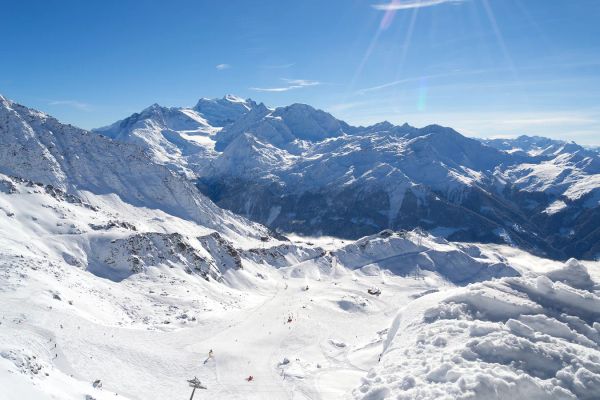
Alps Snow Forecast: Up to 64 cm Headed for the High Glaciers as the Snow Line Drops
The Alps are about to swap mild, sunny October weather for something far more wintry. A cold front arrives Tuesday, and SnowStash forecasts have Monterosa Ski out in front with 64 cm over 14 days, ahead of Blatten Belalp (55 cm) and Verbier (43 cm). The snow line should fall below 2000 metres by Wednesday night, and glaciers across Switzerland, Italy and Austria are in line for the best of it. The wind will have a say too.
20 Oct 2026

Four Dead After Avalanche Near Ski Portillo in Chile
A large avalanche struck near Laguna del Inca adjacent to Ski Portillo on Saturday afternoon, killing four people and injuring four others. The group were day visitors mountaineering in the backcountry after reportedly being warned about elevated avalanche risk by resort staff.
18 Oct 2026

Europe Ski Resorts Open Now: What Is Skiable in Mid-October 2026
Europe’s ski season is open, technically. After a record-warm summer, glaciers in Austria, Switzerland and Italy are running a few pistes apiece, Sölden, Stubai and Kitzsteinhorn started late, Titlis has pushed back to 24 October, and Zermatt reopens a few lifts on 14 October after more than two months shut. Finland’s Levi and Ruka are skiing on stored snow. Here is what is open, and what you actually get at each.
14 Oct 2026

Zermatt Plans World Cup Downhill Return on the Gornergrat for 2028
Zermatt is having another crack at a World Cup downhill, and this time nobody has to cross a border. Around 13 million Swiss francs is going into rebuilding the Gornergrat piste, including a jump fed by a roughly 300-metre in-run across the roof of the Gornergrat Railway gallery, with the Matterhorn lined up behind it for the TV cameras. First men’s race is pencilled in for March 2028, pending FIS homologation.
14 Oct 2026

Mt. Rose Begins Snowmaking for the 2026-27 Season at Lake Tahoe
Lake Tahoe’s highest base elevation is paying off early: Mt. Rose has started making snow for 2026-27 after the first flurries and a cold snap. The Nevada resort is backing it with nearly US$2 million in upgrades, including a replacement snowmaking main line, a new PistenBully groomer and restraint bars on every lift. Opening day is yet to be confirmed, though Heavenly and Northstar are already eyeing 20 November.
13 Oct 2026

Utah Ski Resorts 2026-27: What’s New at Alta, Deer Valley, Powder Mountain and More
Utah is still building flat out. For 2026-27, Powder Mountain opens a steep new Skytrac chair into more than 1,000 acres of advanced terrain, Deer Valley adds 200 acres on Hail Peak, Sundance gets a new quad and Park City adds a gondola from its new parking structure. Snowmaking is expanding almost everywhere, Eagle Point stays closed after the Cottonwood Fire, and the 2034 Games are setting the pace. Here’s what’s new, resort by resort.
13 Oct 2026

Mt Hutt Invests NZ$12 Million in Base Area, Tripling Its Sun Deck
Mt Hutt is getting busier, and its base lodge is about to catch up. NZ$12 million goes into a heated sun deck roughly three times the current size (430 m² to 1,300 m²), plus a new toilet block, heated steps down to snow level, extra storage and a new food and beverage outlet. Building starts after the 2026 season, with everything due for winter 2027.
11 Oct 2026

Vermont Ski Resort Opening Dates 2026-27: Few Dates Set, Killington Waits on the Cold
Vermont's season is slow to take shape. Stratton is tentatively targeting 18 November and Sugarbush 21 November, while Pico has Friday 11 December on the calendar. Killington never sets a date and opens when the snowmaking allows, and Vail Resorts has yet to name days for Stowe, Okemo and Mount Snow. The forecasts disagree about snow, and the main El Niño worry for the Green Mountains is warmth.
9 Oct 2026
Craigieburn Snow Report
Snow Report
Awaiting live data
1811m
summit
+0cm
new snow · last 24 hours
-°C / -°C · - -
Snowfall
24 hours
0cm
48 hours
0cm
7 days
0cm
Base depth
-
Season total
-
Total lifts3
Live open status isn’t available right now.
8 Aug 2026 - 27 Sept 2026
Hour by Hour
Next 37 hours· Updated Oct 21, 2026 at 6:02 AM
Scroll for the full outlook · Open-Meteo
7-Day Outlook
1,811 mUpdated Oct 21, 2026 at 6:02 AMOpen-Meteo
Days 1–7
0.0cm
Days 8–14
2.4cm
Wed, Oct 21
Foggy
Temp15° / -2°°C
Snow0.0cm
Wind6 km/h N
Live snow from the resort feed; forecast from Open-Meteo, via Supabase.
Understanding the Craigieburn snow report
Planning a day at Craigieburn? Our snow report combines official mountain data with live weather so you know exactly what conditions look like right now, from the 1308m base to the 1811m summit.
Snow measurements
Base depth, summit depth, and recent snowfall are the core numbers to watch. At Craigieburn, summit conditions (1811m) can differ noticeably from the base, so we break both out separately rather than showing a single average.
Weather conditions
Snow quality tracks closely with temperature and wind. We surface both alongside the snowfall data so you can judge whether conditions at Craigieburn are holding up or starting to soften.
Data sources
We pull Craigieburn's conditions from on-the-ground mountain reporting, then layer in forecast data so you get a fuller picture than either source alone. The mountain is served by 3 lifts in total.
When to check
The biggest swings usually happen right after a storm. Check Craigieburn's report in the morning for the freshest numbers, and again in the afternoon as conditions evolve.