
Mt Lyford
180 hectares, 501m vertical, 20 runs in the Seaward Kaikoura Range. Early season openings, Chill Pass access, 2 hours from Christchurch.
Season 2026
Opens
27 June 2026
Closes
20 Sept 2026
Days open
85
Annual snow
3m
The Overview
Michael Fulton
Melbourne-based skier and snowboarder with 50+ resorts across 5 continents. Specialises in Australian resorts and international resort comparisons.
Mt Lyford operates across 180 hectares between 1249 and 1750 metres elevation in the Amuri Range, delivering 501 metres of vertical drop across 20 marked runs. The field spans from the base area up to Mt Terako at 1742 metres, with an average annual snowfall of 2.5 metres supplemented by grooming on main trails. The resort is part of the Chill Pass network covering 13 South Island fields, offering access from a $900 season pass or $85 daily tickets for non-pass holders. Mt Lyford's eastern aspect captures south-easterly storms that often bypass other Canterbury fields, making it consistently one of the earliest South Island resorts to open each winter.
The terrain splits 30 per cent beginner, 40 per cent intermediate, and 30 per cent advanced, with wide learner zones at the base transitioning to steeper fall-line skiing on Mt Terako's exposed faces. Groomed runs like Cloudy T-Bar service families and progression skiers, whilst the Terako Rope Tow accesses 450 metres of vertical including Front Face and technical descents back to Paradise Valley. Off-piste zones include hike-to terrain on Hamish's Drop and Doug's Folly, both requiring sign-in at the ticket office. The Wild Ride Terrain Park features rails, kickers and a halfpipe maintained throughout the season for freestyle progression.
The Terako Day Lodge provides slopeside dining, rental equipment, ski school and first aid facilities, with parking directly adjacent to the snow. Crowds rarely form at Mt Lyford even during peak weekends, with fewer than 100 cars typical on busy days and surface lifts ensuring immediate mountain access. The family-owned operation maintains a welcoming atmosphere distinct from commercial resorts, with staff readily assisting first-time nutcracker rope tow users. Views from the summit extend to the Pacific Ocean on clear days, a feature unique amongst lifted New Zealand ski areas.
The resort suits families seeking uncrowded terrain, intermediates building confidence on varied groomed runs, and advanced skiers chasing fresh powder when south-easterly weather patterns deliver. Lake Stella Mountain Retreat offers on-mountain accommodation at 1260 metres with hot tubs, whilst Mt Lyford Village provides log cabin lodging 8 kilometres down the access road. Snow tubing operates separately from the ski area, and Mt Lyford Lodge at the highway junction offers pub meals and backpacker bunks for budget-conscious visitors making day trips from Christchurch or touring the Alpine Pacific Triangle route.
501m
Vertical
20
Runs
445 acres
Skiable
3m
Annual snow
The Terrain
20 runs across 445 acres skiable
Mt Lyford is a compact, family-run ski area in North Canterbury, covering around 180 hectares between 1,249 and 1,750 metres, a vertical of 501 metres. Its 20 runs divide into 30% beginner, 40% intermediate and 30% advanced, with no expert-rated terrain. Access is entirely by surface lifts, which means no chairlift queues and a more hands-on style of skiing than most resorts offer. Wide, open slopes sit close to the base, while the upper mountain steepens noticeably towards the summit ridge, so progression happens naturally within a single small area.
The Cloudy T-Bar serves the groomed intermediate runs and the Wild Ride terrain park, and also leads on to the Terako rope tow, which climbs Mt Terako in two sections and calls for a nutcracker. Front Face is the signature descent from the top. Hike-to zones such as Hamish's Drop and Doug's Folly require a sign-in before entry. Mt Lyford suits families, learners moving past the first-day stage and confident intermediates wanting a quiet field with a few genuine challenges. Advanced skiers get enough pitch to stay interested, though not enough to fill a week.
Terrain split
20
runs
20 runs across 4 grades
Beginner6 runs · 30%
Intermediate8 runs · 40%
Advanced6 runs · 30%
Expert0 runs · 0%
Time it right
When to visit Mt Lyford
The 2026 season runs from 27 June to 20 September, an 86-day operating window typical of North Canterbury fields reliant on natural snowfall and elevation advantage. Mt Lyford consistently opens amongst the first South Island resorts each winter, often by late June when south-easterly storm tracks deliver early-season accumulation. Closing typically occurs mid-to-late September as spring temperatures soften the snowpack and visitation tapers following the school holiday period. The field operates daily when conditions permit, with lift hours from 9am to 4pm and closures during high winds or whiteout conditions common to exposed New Zealand alpine environments.
Annual snowfall averages 2.5 metres across the operational elevations, with the summit at 1750 metres holding snow more reliably than the 1249-metre base throughout winter. Mt Lyford's position in the Seaward Kaikoura Range captures moisture from south-easterly weather systems that bypass western Canterbury fields, delivering powder when other resorts receive rain or minimal accumulation. Grooming on main runs ensures rideable surfaces even during lean periods, though natural snow quality drives the experience. The snowiest period historically falls during the second week of August, averaging 2.6 snowy days and 23 centimetres of accumulation during that seven-day window.
July and early August offer the most consistent base depths and coldest temperatures for powder preservation, whilst September delivers spring corn snow on sunny aspects by mid-afternoon. Midweek visits between late July and mid-August provide the quietest slopes, with weekend crowds remaining modest compared to commercial Canterbury resorts. The upper slopes receive extended sunshine through winter due to eastern and northern exposure, making Mt Lyford one of New Zealand's sunniest ski areas and allowing comfortable on-mountain sessions even in cold conditions. Early-season visitors should prepare for variable coverage on lower runs until base depths accumulate through July.
No major events or night skiing feature on the calendar, though the relaxed family atmosphere and consistently early opening make Mt Lyford a favoured destination for season pass holders chasing first turns. Snow tubing operates independently with $25 access for adults, and Lake Stella at 1260 metres offers ice skating when conditions align. The operational philosophy prioritises reliable daily access over amenity expansion, with morning snow reports posted via social media and mountain phone contact limited during operational hours when staff work on-slope.
Season 2026
27 June 2026
Opens
20 Sept 2026
Closes
85
Days open
3 m
Annual snow
Getting there
Getting to Mt Lyford, and where to stay
Mt Lyford sits in the Hurunui District at the southern end of the Seaward Kaikoura Range, 150 kilometres north of Christchurch in North Canterbury. The ski area occupies the flanks of Mt Terako at 1742 metres within the broader Amuri Range, positioned west of the coastal town of Kaikoura and forming the northernmost point of Canterbury's ski field cluster. The base village at 1249 metres lies on State Highway 70 (Inland Kaikōura Road), part of the Alpine Pacific Triangle touring route connecting Christchurch, Hanmer Springs and Kaikoura through high country farmland and beech forest. The resort operates on freehold land above Mt Lyford Village, a collection of approximately 100 log cabins and alpine properties rebuilt following damage from the 2016 Kaikōura earthquake.
Waiau township sits 26 kilometres southwest on SH70, offering the last fuel before the Mt Lyford turn-off. Hanmer Springs lies 60 kilometres west via SH70 and SH7, a 90-minute drive through the thermal resort town favoured for post-ski soaking. Kaikoura sits 60 kilometres northeast on SH70, an eco-tourism hub known for whale watching, seal colonies and coastal scenery along the Pacific. The resort's position equidistant between these two towns makes Mt Lyford a midpoint stop on the Alpine Pacific Triangle circuit, with accommodation ranging from budget backpacker bunks at Mt Lyford Lodge to self-contained log chalets in the village.
Access from Christchurch follows State Highway 1 north to the Waipara intersection, then State Highway 7 towards Hanmer Springs before turning onto State Highway 70 at the Waikari junction. Total driving time is 90 minutes covering 146 kilometres through the Waipara wine region and limestone hill country. From Hanmer Springs, the route follows SH7 south then SH70 east for approximately 60 kilometres. The final 8 kilometres from SH70 to the ski area base climbs via unsealed forest road requiring chains or four-wheel-drive capability, passing Lake Stella at 1260 metres en route to the Mt Terako basin.
Christchurch International Airport lies 150 kilometres south, a two-hour drive serving as the primary gateway for international and domestic visitors. Woodbourne Airport near Blenheim sits approximately 150 kilometres north, though Christchurch remains the dominant arrival point for North Canterbury ski tourism. No scheduled bus services operate to Mt Lyford, making private vehicle or rental car essential unless utilising the morning shuttle from Mt Lyford Lodge. The inland route via SH70 provides more dramatic high country scenery than the coastal SH1 option, with the Waiau Ferry Bridge and Conway River crossings offering photo opportunities along the approach.
Where to stay
Search all stays →Hotels and lodges near Mt Lyford, powered by Stay22.
Latest News
From the SnowStash desk
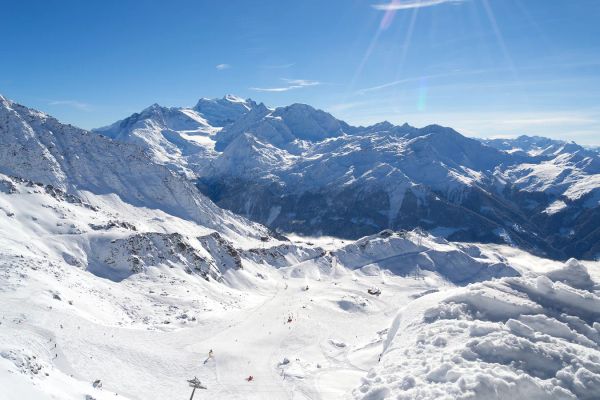
Alps Snow Forecast: Up to 64 cm Headed for the High Glaciers as the Snow Line Drops
The Alps are about to swap mild, sunny October weather for something far more wintry. A cold front arrives Tuesday, and SnowStash forecasts have Monterosa Ski out in front with 64 cm over 14 days, ahead of Blatten Belalp (55 cm) and Verbier (43 cm). The snow line should fall below 2000 metres by Wednesday night, and glaciers across Switzerland, Italy and Austria are in line for the best of it. The wind will have a say too.
20 Oct 2026

Four Dead After Avalanche Near Ski Portillo in Chile
A large avalanche struck near Laguna del Inca adjacent to Ski Portillo on Saturday afternoon, killing four people and injuring four others. The group were day visitors mountaineering in the backcountry after reportedly being warned about elevated avalanche risk by resort staff.
18 Oct 2026

Europe Ski Resorts Open Now: What Is Skiable in Mid-October 2026
Europe’s ski season is open, technically. After a record-warm summer, glaciers in Austria, Switzerland and Italy are running a few pistes apiece, Sölden, Stubai and Kitzsteinhorn started late, Titlis has pushed back to 24 October, and Zermatt reopens a few lifts on 14 October after more than two months shut. Finland’s Levi and Ruka are skiing on stored snow. Here is what is open, and what you actually get at each.
14 Oct 2026

Zermatt Plans World Cup Downhill Return on the Gornergrat for 2028
Zermatt is having another crack at a World Cup downhill, and this time nobody has to cross a border. Around 13 million Swiss francs is going into rebuilding the Gornergrat piste, including a jump fed by a roughly 300-metre in-run across the roof of the Gornergrat Railway gallery, with the Matterhorn lined up behind it for the TV cameras. First men’s race is pencilled in for March 2028, pending FIS homologation.
14 Oct 2026

Mt. Rose Begins Snowmaking for the 2026-27 Season at Lake Tahoe
Lake Tahoe’s highest base elevation is paying off early: Mt. Rose has started making snow for 2026-27 after the first flurries and a cold snap. The Nevada resort is backing it with nearly US$2 million in upgrades, including a replacement snowmaking main line, a new PistenBully groomer and restraint bars on every lift. Opening day is yet to be confirmed, though Heavenly and Northstar are already eyeing 20 November.
13 Oct 2026

Utah Ski Resorts 2026-27: What’s New at Alta, Deer Valley, Powder Mountain and More
Utah is still building flat out. For 2026-27, Powder Mountain opens a steep new Skytrac chair into more than 1,000 acres of advanced terrain, Deer Valley adds 200 acres on Hail Peak, Sundance gets a new quad and Park City adds a gondola from its new parking structure. Snowmaking is expanding almost everywhere, Eagle Point stays closed after the Cottonwood Fire, and the 2034 Games are setting the pace. Here’s what’s new, resort by resort.
13 Oct 2026

Mt Hutt Invests NZ$12 Million in Base Area, Tripling Its Sun Deck
Mt Hutt is getting busier, and its base lodge is about to catch up. NZ$12 million goes into a heated sun deck roughly three times the current size (430 m² to 1,300 m²), plus a new toilet block, heated steps down to snow level, extra storage and a new food and beverage outlet. Building starts after the 2026 season, with everything due for winter 2027.
11 Oct 2026

Vermont Ski Resort Opening Dates 2026-27: Few Dates Set, Killington Waits on the Cold
Vermont's season is slow to take shape. Stratton is tentatively targeting 18 November and Sugarbush 21 November, while Pico has Friday 11 December on the calendar. Killington never sets a date and opens when the snowmaking allows, and Vail Resorts has yet to name days for Stowe, Okemo and Mount Snow. The forecasts disagree about snow, and the main El Niño worry for the Green Mountains is warmth.
9 Oct 2026
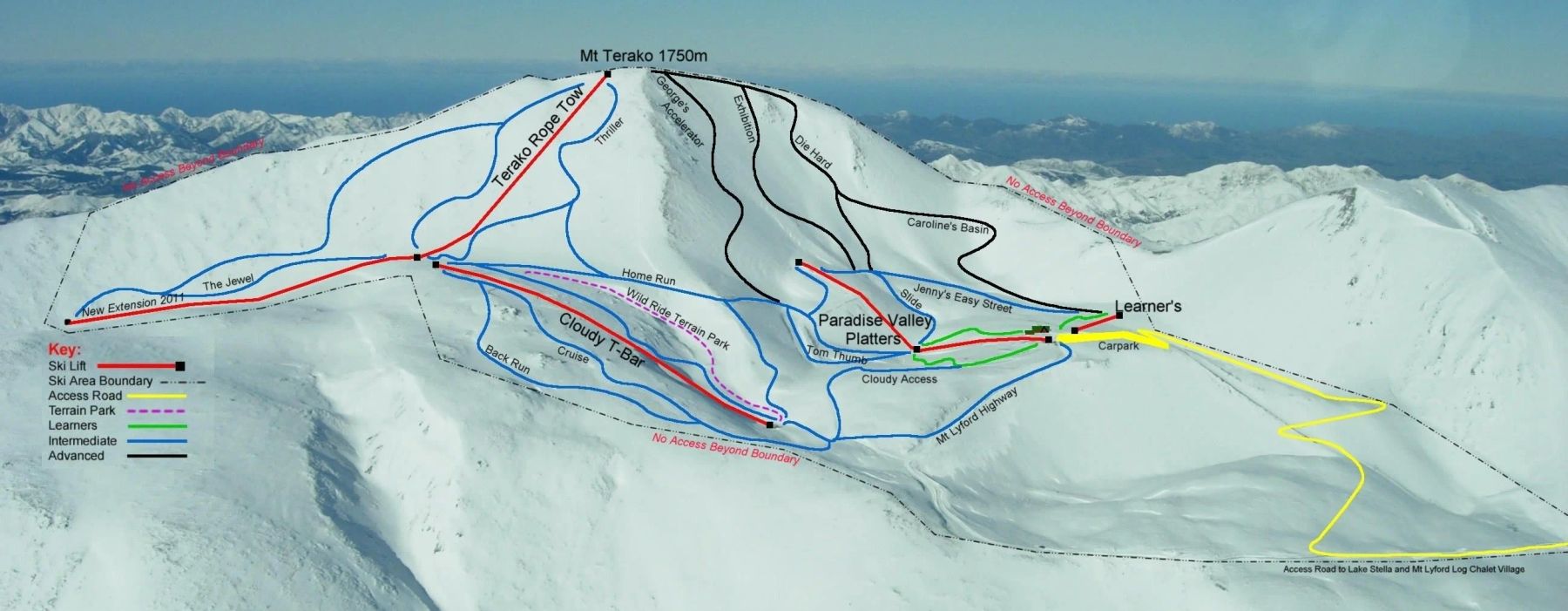
Mt Lyford Trail Map
Downloadable Mt Lyford trail map
Terrain split
20
runs
Beginner30%
Intermediate40%
Advanced30%
Expert0%
445 acres skiable180 hectares
Resort Stats
Elevation
Base1249m
Summit1750m
Annual snowfall
3m
Season
2026
27 June 2026 - 20 Sept 2026
Trail coverage
20 runs
445 acres (180 ha)
About Mt Lyford's trail map
Explore Mt Lyford's full trail map with 20 runs across the mountain, colour-coded by difficulty and shown alongside the terrain split. Use it to plan a day that matches your ability, find lift-served pockets of your favourite grade, and see how the resort links together. Download the piste map (PDF) ↗
More Mt Lyford intelligence: snow report, lift system, webcams, resort overview.