
Roundhill
783m vertical, 550 hectares, Heritage Express rope tow. Family-owned Mackenzie field overlooking Lake Tekapo, New Zealand.
Season 2026
Opens
27 June 2026
Closes
27 Sept 2026
Days open
92
Annual snow
2.5m
The Overview
Michael Fulton
Melbourne-based skier and snowboarder with 50+ resorts across 5 continents. Specialises in Australian resorts and international resort comparisons.
Roundhill operates across 550 hectares on the Richmond and Two Thumb ranges in Canterbury, spanning 1350 to 2133 metres elevation with 783 metres of vertical drop. The field comprises 20 marked runs distributed across 20% beginner, 45% intermediate and 35% advanced terrain, with access via four T-bars including the Heritage Express rope tow installed in 2010. At 1473 metres long, the Heritage Express claims status as the world's longest rope tow and delivers Australasia's largest lift-served vertical descent. Snowmaking covers the learners' zone and trails adjacent to the T1 T-bar, whilst two grooming machines maintain over 10 kilometres of corduroy terrain nightly.
The beginner zone occupies wide, gentle slopes directly beside the car park, served by one platter lift and two learner rope tows that allow novices to practice on ascent and descent. Intermediate terrain fans out from the T1 and T2 T-bars across broad, undulating runs with natural dips and consistent fall lines, groomed to smooth corduroy each morning. Advanced riders tackle the Heritage Express terrain on the Richmond Range, where steep pitches between 26 and 32 degrees open natural half-pipes, chutes and untracked powder bowls when snow conditions permit. The terrain park at Central Park features jumps, rails and boxes for freestyle progression.
The family-owned operation by the Rieder family maintains a relaxed club-field atmosphere despite commercial status, with slope-side parking, a licensed café overlooking Lake Tekapo, and the Von Brown refreshment hut near the T1 summit. Short lift queues and uncrowded runs define the Roundhill experience, with visitors able to rack up significant vertical during quiet weekdays. Views extend across the turquoise lake to Aoraki Mount Cook and the Southern Alps, whilst the eastern outlook reaches the Pacific coast. The base lodge at 1350 metres houses rental facilities stocked with Rossignol and Salomon skis plus Burton snowboards, alongside ski patrol and guest services.
Roundhill operates as an independent field without multi-resort pass affiliations, with daily adult tickets priced at NZ$125 and discounted beginner-only passes available at NZ$75. The 2026 season runs 27 June through 27 September, typical of Mackenzie Country fields. The resort suits families seeking affordable, uncrowded skiing with genuine Kiwi character, learners requiring extensive gentle terrain, and advanced skiers chasing the Heritage Express vertical when conditions align. InterCity coaches and shuttle services connect to Tekapo village 32 kilometres away, though most visitors arrive by private vehicle on the unsealed but well-maintained access road.
783m
Vertical
20
Runs
1,359 acres
Skiable
2.5m
Annual snow
The Terrain
20 runs across 1,359 acres skiable
Roundhill covers about 550 hectares of the Two Thumb Range above Lake Tekapo, a broad, open mountain with one of the larger verticals in the region at 783 metres, from 1,350 to 2,133 metres. Twenty runs split 20% beginner, 45% intermediate and 35% advanced, with no expert-rated slopes. Because the terrain is wide and largely treeless, the mountain feels bigger than the run count suggests, and long sightlines make route-finding straightforward. The base sits on a gradual, wide-open slope that then builds towards steeper ground higher up, so beginners and strong skiers can share the field without getting in each other's way.
The main T-bar is long, at around 1.2 kilometres, and brings skiers into the upper mountain, where intermediates have long, undulating runs to link together. Advanced skiers can find extra pitch on the steeper ground higher up, and the sheer length of the longest descents gives the vertical real meaning. Snowmaking helps the beginner and lower slopes stay open. Roundhill suits families, relaxed intermediates and advanced skiers wanting space and long fall-line runs without the queues of the bigger resorts. It is a good choice for anyone who likes to measure a day by vertical metres.
Terrain split
20
runs
20 runs across 4 grades
Beginner4 runs · 20%
Intermediate9 runs · 45%
Advanced7 runs · 35%
Expert0 runs · 0%
Time it right
When to visit Roundhill
The 2026 winter season opens 27 June and closes 27 September, spanning 13 weeks of operations typical for Mackenzie Basin commercial fields. Lifts operate 9am to 4pm daily with ticket sales from 8:30am, weather and snow conditions permitting. Roundhill historically operated as the Tekapo Ski Field from 1973 until closure in 1990, reopening under current ownership in 2001 with visitor numbers more than doubling between 2001 and 2018. The ski area operates under concession within Te Kahui Conservation Park across 860 hectares of core lease plus 1520 hectares of backcountry terrain without avalanche control.
Annual snowfall averages 2.5 metres at the 1742-metre mid-mountain elevation, with September historically delivering peak base depths averaging 82 centimetres at summit and 46 centimetres at base level. The high-altitude location between 1350 and 2133 metres combined with cold Mackenzie Basin temperatures preserves snow quality throughout winter, whilst the sunny northwest-facing aspect creates warmth on bluebird days. Snowmaking spans the beginners' area and T1-adjacent trails, supplementing natural accumulation during lean periods. The Heritage Express terrain requires substantial snow depth to open safely given steep gradients and scree bands above 1600 metres, with the rope tow operating conditionally rather than daily.
July and August deliver the most consistent powder conditions and coldest temperatures, with mid-July marking the snowiest week averaging 2.8 snowy days and 28 centimetres accumulation. Late-season spring skiing from mid-August through September brings warmer temperatures, corn snow cycles and extended daylight for afternoon sessions. Roundhill averages 34 sunny days per season, five days above the New Zealand ski field average, with August claiming 14 sunny days as the clearest month. Mid-winter weekdays outside school holidays offer the quietest conditions with fresh snow often remaining untracked for days given light visitor numbers.
The resort schedules weekend events throughout winter including the KBS Memorial Giant Slalom and race training camps that utilise the wide intermediate terrain. Night skiing does not operate given the remote location and club-field service model. Optimal timing targets July and early August for powder and cold temperatures, whilst September suits spring skiers seeking softer snow and fewer crowds. Race teams and ski clubs frequent Roundhill for training given the uncrowded, well-groomed intermediate terrain and affordable daily rates compared to larger Canterbury and Queenstown resorts.
Season 2026
27 June 2026
Opens
27 Sept 2026
Closes
92
Days open
2.5 m
Annual snow
The record
Historical snowfall at Roundhill
Daily snow reports at Roundhill go back to 2025, 2 winters on the books. Open the record to compare winters, lifts and piste.
62 cm
Snowiest day
7 July 2026
65 cm
This winter · 2026
so far
45 cm
Typical winter
average of complete seasons
Winter totals
cm
Past wintersThis winter
Getting there
Getting to Roundhill, and where to stay
Roundhill sits on the southeastern slopes of Round Hill and southwestern faces of the Richmond Range within the Two Thumb Range, 32 kilometres from Lake Tekapo village in the Mackenzie Basin of Canterbury. The base area at 1350 metres elevation overlooks the turquoise glacial waters of Lake Tekapo, New Zealand's highest alpine lake, with panoramic views extending to Aoraki Mount Cook at 3724 metres and the Southern Alps spine. The ski field drains into the Coal River valley, surrounded by tussock grasslands of snow tussock species Chionochloa macra and Chionochloa rigida that are mowed on some runs to reduce snow depth requirements. The summit at 2133 metres near Richmond Ridge reaches above the scree line into high-alpine terrain, with the Ben Ohau Range visible to the southwest and Pacific Ocean glimpses eastward on clear days.
Lake Tekapo village lies 32 kilometres northeast via Lilybank Road, a sealed route along the eastern lake shore for 24 kilometres before joining the 8-kilometre unsealed access road to the base car park. The township of 400 residents sits at the centre of the Mackenzie Country on State Highway 8, positioned roughly equidistant between Christchurch and Queenstown. Tekapo serves as the gateway to the Aoraki Mackenzie International Dark Sky Reserve and features accommodation ranging from backpackers to hotels, plus cafes, restaurants and the historic Church of the Good Shepherd. Nearby ski fields include Ohau 50 kilometres south and Mount Dobson 70 kilometres southeast, all classified as quieter Mackenzie alternatives to busier Canterbury club fields near Christchurch.
State Highway 8 connects Tekapo to Fairlie 55 kilometres northeast, which links to State Highway 79 and State Highway 1 for Christchurch-bound traffic. Drivers from Christchurch follow SH1 south to the Orari junction, turn inland via Geraldine on SH79 to Fairlie, then continue southwest on SH8 through Burke Pass to Tekapo. From Queenstown, SH6 runs northeast to Cromwell before SH8 crosses Lindis Pass through Omarama to Tekapo from the south. Lilybank Road branches from SH8 on Tekapo's eastern edge, requiring snow chains for two-wheel-drive vehicles when conditions warrant, though the gradual gradient and wide gravel surface accommodate campervans and buses unlike steeper club field access roads.
Christchurch International Airport lies 225 kilometres northeast with driving times of 2 hours 45 minutes to 3 hours depending on route and conditions, served by domestic and international flights with car rental facilities on-site. Queenstown Airport sits 260 kilometres southwest requiring approximately 3 hours driving via Cromwell and Omarama on SH6 and SH8. Richard Pearse Airport at Timaru operates 100 kilometres east but offers limited commercial services. InterCity operates daily coaches between Christchurch and Queenstown via Tekapo, with the journey requiring 3 hours 25 minutes from Christchurch. No rail links serve the Mackenzie region, with private vehicle or coach transfer essential for accessing Roundhill from either major airport gateway.
Where to stay
Search all stays →Hotels and lodges near Roundhill, powered by Stay22.
Latest News
From the SnowStash desk
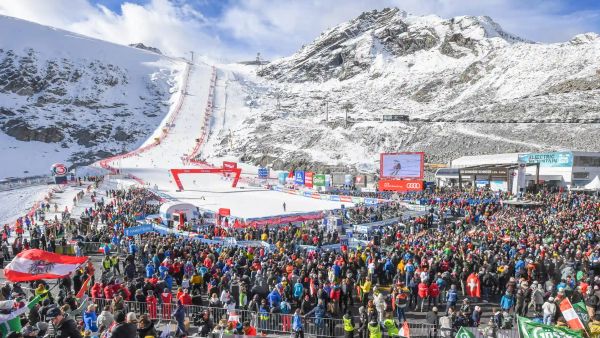
Pinheiro Braathen Wins Sölden Giant Slalom Opener by 0.48 Seconds
Two days at Sölden, two races decided by a hundredth somewhere on the podium, and one very quick Brazilian. Lucas Pinheiro Braathen led from the first run to win the men’s World Cup opener by 0.48 seconds, with Loïc Meillard second and Marco Odermatt third. River Radamus charged from 15th to fourth on a rutted course, and Britain’s Freddy Carrick-Smith banked his first World Cup points. Braathen still hasn’t lost a giant slalom since Olympic gold.
25 Oct 2026
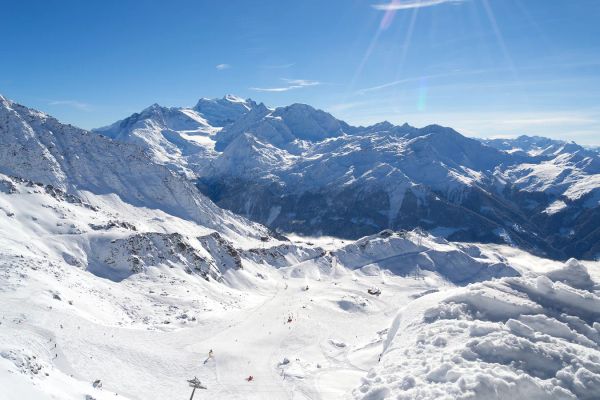
Alps Snow Forecast: Up to 64 cm Headed for the High Glaciers as the Snow Line Drops
The Alps are about to swap mild, sunny October weather for something far more wintry. A cold front arrives Tuesday, and SnowStash forecasts have Monterosa Ski out in front with 64 cm over 14 days, ahead of Blatten Belalp (55 cm) and Verbier (43 cm). The snow line should fall below 2000 metres by Wednesday night, and glaciers across Switzerland, Italy and Austria are in line for the best of it. The wind will have a say too.
20 Oct 2026
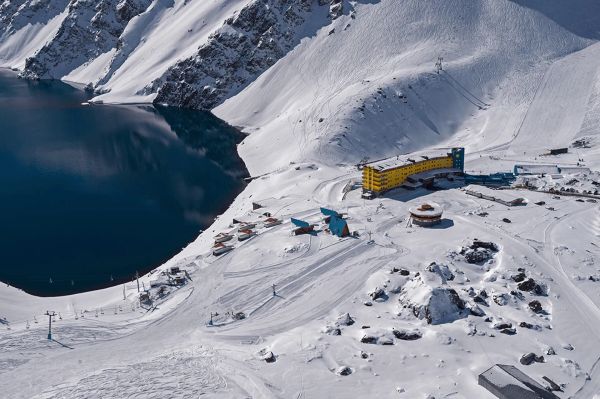
Four Dead After Avalanche Near Ski Portillo in Chile
A large avalanche struck near Laguna del Inca adjacent to Ski Portillo on Saturday afternoon, killing four people and injuring four others. The group were day visitors mountaineering in the backcountry after reportedly being warned about elevated avalanche risk by resort staff.
18 Oct 2026
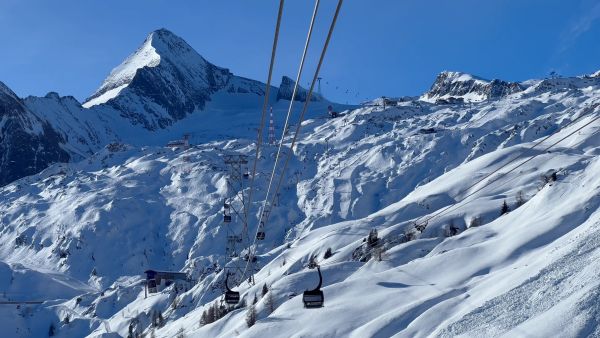
Europe Ski Resorts Open Now: What Is Skiable in Mid-October 2026
Europe’s ski season is open, technically. After a record-warm summer, glaciers in Austria, Switzerland and Italy are running a few pistes apiece, Sölden, Stubai and Kitzsteinhorn started late, Titlis has pushed back to 24 October, and Zermatt reopens a few lifts on 14 October after more than two months shut. Finland’s Levi and Ruka are skiing on stored snow. Here is what is open, and what you actually get at each.
14 Oct 2026

Zermatt Plans World Cup Downhill Return on the Gornergrat for 2028
Zermatt is having another crack at a World Cup downhill, and this time nobody has to cross a border. Around 13 million Swiss francs is going into rebuilding the Gornergrat piste, including a jump fed by a roughly 300-metre in-run across the roof of the Gornergrat Railway gallery, with the Matterhorn lined up behind it for the TV cameras. First men’s race is pencilled in for March 2028, pending FIS homologation.
14 Oct 2026

Mt. Rose Begins Snowmaking for the 2026-27 Season at Lake Tahoe
Lake Tahoe’s highest base elevation is paying off early: Mt. Rose has started making snow for 2026-27 after the first flurries and a cold snap. The Nevada resort is backing it with nearly US$2 million in upgrades, including a replacement snowmaking main line, a new PistenBully groomer and restraint bars on every lift. Opening day is yet to be confirmed, though Heavenly and Northstar are already eyeing 20 November.
13 Oct 2026

Utah Ski Resorts 2026-27: What’s New at Alta, Deer Valley, Powder Mountain and More
Utah is still building flat out. For 2026-27, Powder Mountain opens a steep new Skytrac chair into more than 1,000 acres of advanced terrain, Deer Valley adds 200 acres on Hail Peak, Sundance gets a new quad and Park City adds a gondola from its new parking structure. Snowmaking is expanding almost everywhere, Eagle Point stays closed after the Cottonwood Fire, and the 2034 Games are setting the pace. Here’s what’s new, resort by resort.
13 Oct 2026

Mt Hutt Invests NZ$12 Million in Base Area, Tripling Its Sun Deck
Mt Hutt is getting busier, and its base lodge is about to catch up. NZ$12 million goes into a heated sun deck roughly three times the current size (430 m² to 1,300 m²), plus a new toilet block, heated steps down to snow level, extra storage and a new food and beverage outlet. Building starts after the 2026 season, with everything due for winter 2027.
11 Oct 2026
Roundhill Snow Report
Snow Report
Updated 27 Oct 2026
2133m
summit
+0cm
new snow · last 24 hours
Foggy-7°C / 2°C · NW 22km/h
Snowfall
24 hours
0cm
48 hours
0cm
7 days
0cm
Base depth
45cm
Season total
65cm
Typical winter 45cm
Total lifts4
Live open status isn’t available right now.
27 June 2026 - 27 Sept 2026
Hour by Hour
Next 35 hours· Updated Oct 28, 2026 at 6:02 AM
Scroll for the full outlook · Open-Meteo
7-Day Outlook
1,976 mUpdated Oct 28, 2026 at 6:02 AMOpen-Meteo
Days 1–7
8.2cm
Days 8–14
0.0cm
Wed, Oct 28
Snow
Temp2° / -7°°C
Snow0.9cm(90%)
Wind22 km/h NW
Live snow from the resort feed; forecast from Open-Meteo, via Supabase.
Understanding the Roundhill snow report
Get the latest Roundhill snow report — real-time snowfall, snow depth, and mountain weather for this South Island resort, spanning 1350m to 2133m in elevation.
Snow measurements
Base depth, summit depth, and recent snowfall are the core numbers to watch. At Roundhill, summit conditions (2133m) can differ noticeably from the base, so we break both out separately rather than showing a single average.
Weather conditions
Current weather conditions affect snow quality. Cold temperatures with low wind typically preserve snow quality, while warm temperatures or rain can impact conditions negatively — something worth watching closely at Roundhill's 1350m base elevation, where temperatures run milder than the summit.
Data sources
Snowfall and depth figures for Roundhill come from official mountain sources; weather and outlook data comes from independent forecasting services. The mountain is served by 4 lifts in total.
When to check
Snow reports are typically updated early morning and late afternoon. For the most current conditions, check back regularly, especially if a winter storm is approaching.