Terrain Breakdown
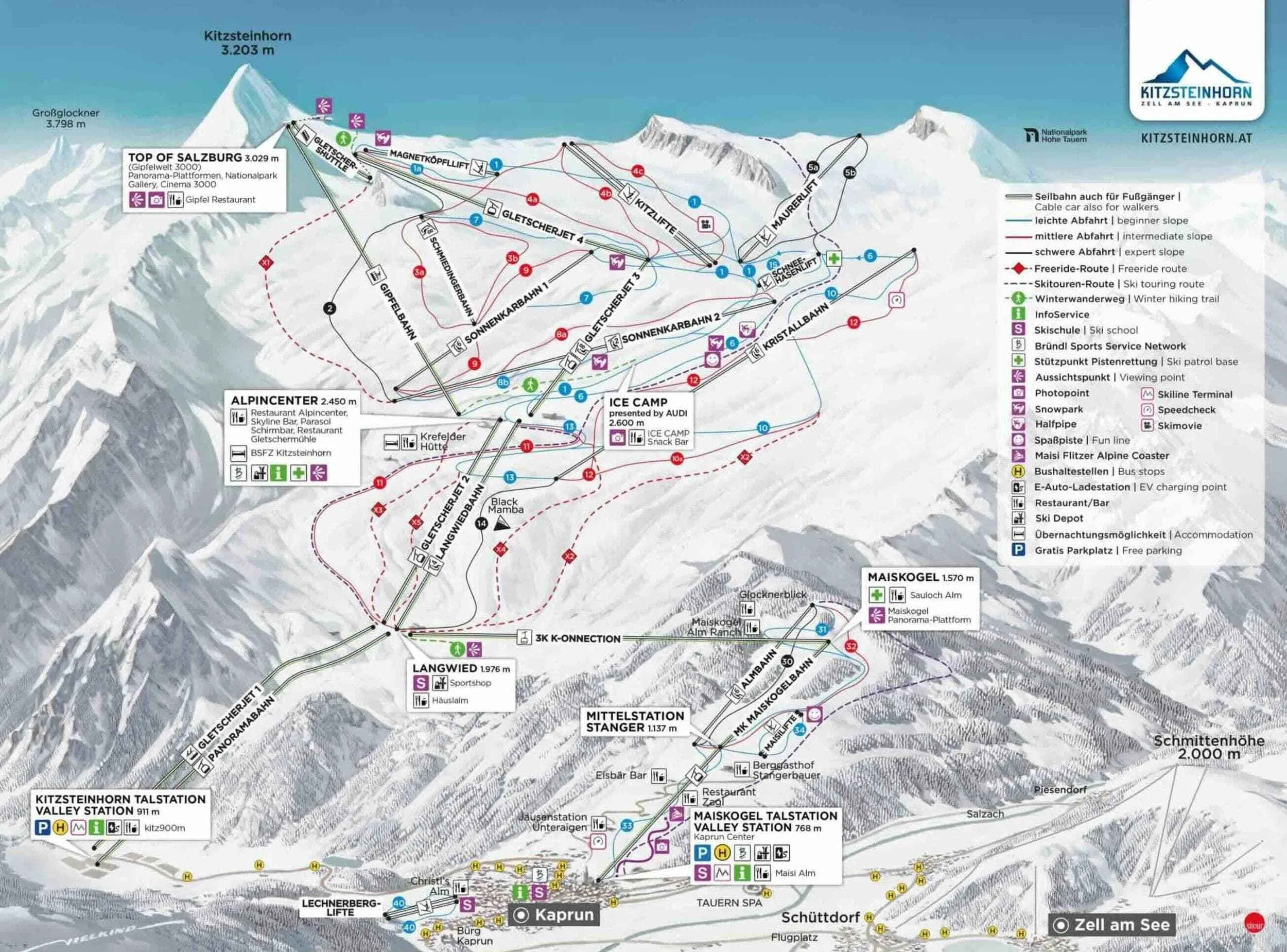
The beginner terrain distribution surprises most visitors. The majority sits in the upper regions from 2,600 metres to over 3,000 metres, which flips the typical resort layout entirely. The number 1 and 7 pistes offer wide, open cruisers where you're learning to ski above 3,000 metres with panoramic alpine views.
For those wanting more traditional learning environments, Maiskogel provides dedicated beginner terrain. You can ride from top to bottom on blue runs covering just under 1,000 metres of vertical.
The intermediate terrain opens up significantly once you're comfortable on red runs. The 3A and 3B pistes running either side of the Schmiedingerbahn lift offer excellent pitch and were genuinely fun to lap repeatedly. The standout is run number 11, descending from the Alpincenter at 2,450 metres down to Langwied. It's exceptionally wide, maintains a consistent fall line, and accommodates different skill levels riding the same run.
Advanced terrain includes four marked black runs, but this doesn't account for five marked freeride routes. The number 2 piste descending from the Gipfelbahn delivers sustained pitch and terrain that demands attention. Down in the lower section sits the Black Mamba—claiming the title of one of the steepest marked runs in the Salzburg region with a 63% gradient.
Freeride Opportunities
Kitzsteinhorn offers five designated freeride routes spread mostly through the lower sections. When I say lower, that still means 2,400 metres elevation, so snow quality remains excellent.
All five routes are classified as off-piste and don't receive grooming. The four routes in the lower section funnel back to lifts, making navigation straightforward. The X1 sits at the top with a gated entry featuring serious warning signage. I tackled the X2, which delivered gullies, natural halfpipes, and technical terrain features.
Like all European resorts, terrain between any marked runs is classified as off-piste. The standard warnings apply—know your limits, carry proper safety gear, and ideally ride with others who know the terrain.
Snow Conditions and Season Length
The glacier typically sees 7 to 10 metres of snow each season. When I was writing this in late November, the resort had already seen 249 centimetres and was nearly fully operational thanks to powerful early-season storms.
The season runs from early October through late April. Kitzsteinhorn typically opens first in the Salzburg region and stays open longest, making it the go-to option for early and late season skiing.
One consideration—the resort sits entirely above the tree line. It takes time for all the rocks and gullies to fill in with snow. If you're planning to explore the freeride zones, aim to visit from mid-January onwards when coverage is more complete.
Pricing and Value
A single-day glacier-only ticket costs €79 during peak season (approximately $140 AUD). Youth tickets run €59, children €39.50.
The value equation changes with the ALPIN CARD pass. A 6-day pass costs €423 (about $750 AUD), breaking down to just over €60 per day. This grants access to Kitzsteinhorn, Schmittenhöhe, and Saalbach Hinterglemm—three distinct resort areas with combined terrain that could easily occupy a full week.
The ALPIN CARD also provides free access to regional ski buses running between resorts. I used this system to travel from Kaprun to Saalbach, which took about 45 minutes with one change in Zell am See. Buses run from early morning until evening, operating every 20-30 minutes during peak periods.
Top of Salzburg Summit
At 3,029 metres, you can take the aerial tram to the Top of Salzburg viewing platform. A tunnel carved through the mountain features displays about the mountain's history, regional development, and local wildlife. At the end, you're treated to views of the Hohe Tauern National Park and the Großglockner peak—Austria's highest mountain at 3,798 metres.
Accommodation and Access
Kitzsteinhorn towers directly above Kaprun, a small mountain town with about 3,000 residents. Accommodation ranges from hostels to luxury hotels, with mid-range options running roughly €110 per night (about $200 AUD).
The resort sits 1 hour 20 minutes from Salzburg city, just over 2 hours from Innsbruck, and 2.5 hours from Munich. International visitors from Australia typically route through Munich. The Austrian train system runs with impressive punctuality, and during winter season, buses run every 20-30 minutes from the base of Kitzsteinhorn to Saalbach Hinterglemm.
Who Should Visit
This resort works exceptionally well for beginners and intermediates looking for reliable snow conditions and high-quality grooming. The high-elevation beginner terrain is genuinely unique—most resorts can't offer learning areas above 2,600 metres.
Intermediate skiers will find more than enough variety to stay engaged for several days. Advanced and expert skiers need to adjust expectations. While the marked freeride routes and steep pistes provide challenges, this isn't primarily an extreme terrain destination.
Freestyle riders have serious opportunities here. The resort operates Austria's largest superpipe and five terrain parks spread across different areas.
Final Assessment
After two days at Kitzsteinhorn, I understand its appeal. You don't come for extreme terrain comparable to Utah or Hokkaido. You come for the glacier experience, reliable conditions, and accessibility of high-elevation skiing within comprehensive Austrian resort infrastructure.
The extended season running from early October through late April makes Kitzsteinhorn valuable for anyone trying to maximise their ski season. It's particularly useful for those extra weeks in April when most lower elevation resorts have already shut down.
Value-wise, the ALPIN CARD system makes a week in this region compelling. Access to three major resorts for around €60 per day delivers genuine value compared to major North American resorts. Add the free bus system, and you can explore significant terrain variety without rental car expenses.