TL;DR
Two experienced backcountry skiers died in an avalanche on Tamlspitze in Austria's Tux Valley on 28 February, pushing the country's seasonal death toll to 28—more than double the 10-year average. The fatalities underscore ongoing instability from a persistent weak layer affecting the Alps.
Experienced Skiers Killed as Austria's Avalanche Season Turns Deadly
Austria's avalanche fatality count has reached 28 for the current season following the deaths of two experienced backcountry skiers in the Tux Valley on 28 February. That figure represents more than 2.5 times the country's 10-year average of roughly 11 deaths per season—a statistical anomaly that warrants serious attention from anyone planning backcountry travel in the Austrian Alps.
The victims, aged 44 and 47, were reported missing around 8:00 p.m. after failing to return from a ski tour to Tamlspitze, a peak above Lanersbach in Tyrol. According to Avalanche Tirol, both men were well-equipped and highly experienced—the sort of credentials that normally provide some margin of safety. That they died anyway speaks to the severity of current conditions rather than any obvious error in judgment or preparation.
Rescue operations faced immediate complications. Mountain rescue teams from Tux and Mayrhofen launched a search but were forced to suspend ground operations between 12:45 a.m. and 6:30 a.m. due to what officials described as an "extremely dangerous avalanche situation." When rescuers can't safely access terrain to search for victims, you're dealing with genuinely hazardous conditions.
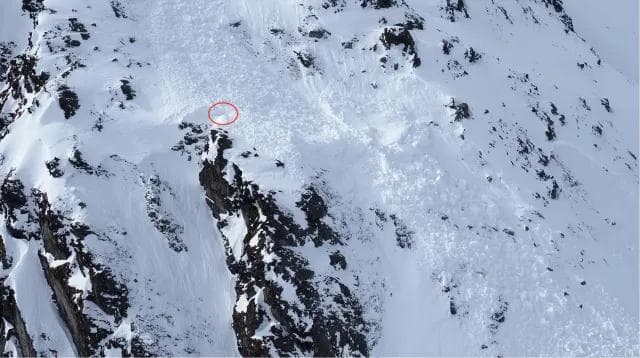
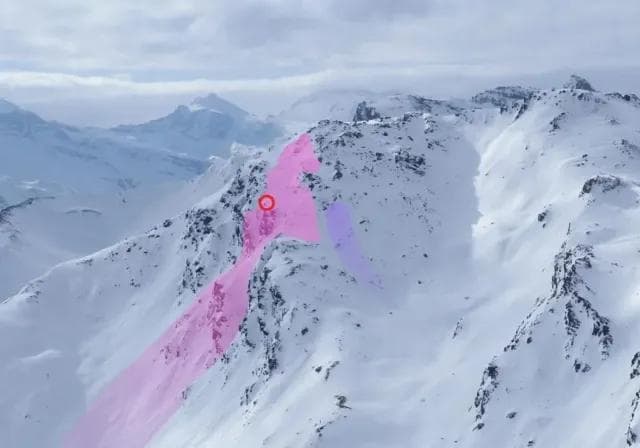
Police helicopter crews observed multiple avalanches in the Tamlspitze area on the morning of 1 March, with poor visibility preventing a comprehensive aerial search. Initial attempts to detect avalanche beacon signals came up empty, and deploying ground teams remained too risky due to unstable snowpack.The breakthrough came around 12:30 p.m. when helicopter crews detected a transceiver signal north of Tamlspitze during a brief weather window. Mountain rescuers and alpine police were flown to the site, locating the first victim around 1:00 p.m. buried in avalanche debris. A second signal led to the discovery of the second skier nearby. An emergency physician pronounced both dead at the scene.Avalanche Tirol reported the slab avalanche released on a northeast-facing slope at approximately 2,600 metres. The culprit: an angular weak layer in old snow near the ground—the persistent deep slab problem that's been plaguing the Alps throughout this season. According to the advisory, slab avalanches "can still be easily triggered and become very large in some places." That's unusually blunt language from an official source, and worth taking seriously.The so-called "old snow problem" has been well-documented across the Alps this winter. Early-season snowfall formed weak layers that subsequent storms buried but didn't bond with properly. The result is a snowpack structure that can fail catastrophically, often with minimal warning and on slopes that might otherwise seem reasonable. This isn't a case of skiers ignoring obvious danger signs—these conditions can catch out even experienced operators.