TL;DR
A fire that started Tuesday evening at Hôtel des Grandes Alpes in Courchevel 1850 spread to neighbouring buildings, forcing evacuations of 250 guests and staff. More than 110 firefighters battled the blaze for over 15 hours, with operations complicated by the building's double roof structure.
Fire Spreads to Second Hotel as Operations Extend Beyond 15 Hours
A fire at the five-star Hôtel des Grandes Alpes in Courchevel 1850 that started Tuesday evening, January 27, escalated to require the evacuation of a second luxury hotel and displaced approximately 250 guests and staff. The blaze, which began in the building's thick wooden roof structure shortly before 7 p.m., proved difficult to contain and by Wednesday morning had spread enough to threaten the neighbouring Hotel Le Lana.
The initial evacuation moved roughly 100 guests from Hôtel des Grandes Alpes, with most relocated to other hotels in the resort. However, by 9 a.m. Wednesday, firefighters were forced to evacuate an additional 150 guests and 50 staff from Hotel Le Lana as the fire remained uncontrolled. These evacuees were temporarily housed in a municipal hall provided by local authorities—a somewhat less comfortable arrangement than one would expect when paying five-star rates in one of France's priciest ski resorts.
The incident highlights the fire risks inherent in alpine resort construction, particularly in historic buildings with complex roof structures. According to the Savoie prefecture, firefighting operations remained "complex and ongoing" well into Wednesday, with 110 firefighters from across the department supported by approximately 60 emergency vehicles from Savoie, Haute-Savoie, and l'Isère.
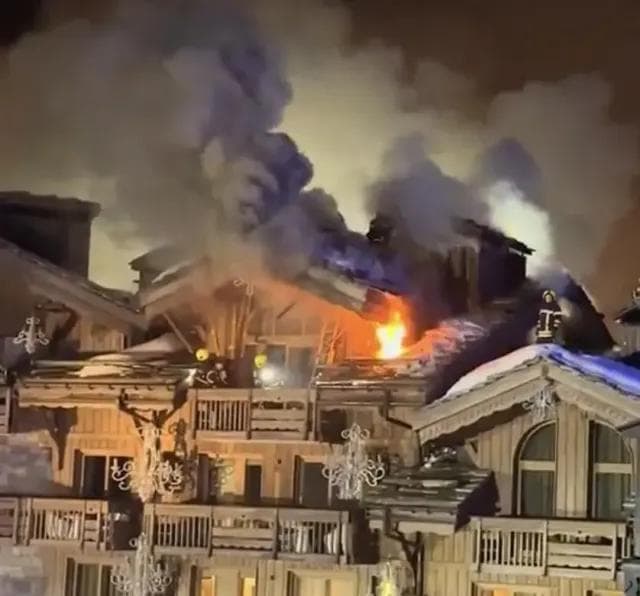
The building's double roof construction created significant operational difficulties, forcing crews to dismantle sections of the roof to access the flames spreading beneath the structure. Four firefighters sustained minor injuries from smoke inhalation, working with oxygen tanks due to the thick smoke conditions. Vanina Nicoli, mayor of Savoie department, noted that crews had been mobilised for more than 15 hours to prevent the fire spreading further.Courchevel mayor Jean-Yves Pachod described the intervention as "very complicated," citing both the building's structural risks and the added difficulty of thick snow accumulation on the roof. Snow groomers were deployed to illuminate the area for overnight operations—an improvised solution that suggests the resort's emergency infrastructure wasn't fully equipped for this scale of incident.Flames and heavy smoke were visible enough to draw crowds of residents and tourists to the perimeter of the secured zone Tuesday evening, which is either a testament to the fire's severity or the entertainment options available in Courchevel on a Tuesday night. By 10:20 p.m., all affected residents had been relocated to other hotels in the resort, demonstrating at least that Courchevel had sufficient accommodation capacity to absorb the displaced guests—not surprising given the resort's extensive inventory of high-end properties.The Savoie prefecture issued a precautionary advisory for residents and guests in Courchevel 1850 to avoid drinking tap water until further notice, though no explanation was provided for this measure. The cause of the fire remains under investigation by police services.