TL;DR
Giovanni Franzoni delivered a career-defining performance to win the Kitzbühel downhill by seven hundredths of a second over Marco Odermatt, who remains winless on the sport's most famous course despite three runner-up finishes. The result caps a remarkable January breakthrough for the 24-year-old Italian.
Italian's Breakthrough Victory Denies Odermatt on the Streif
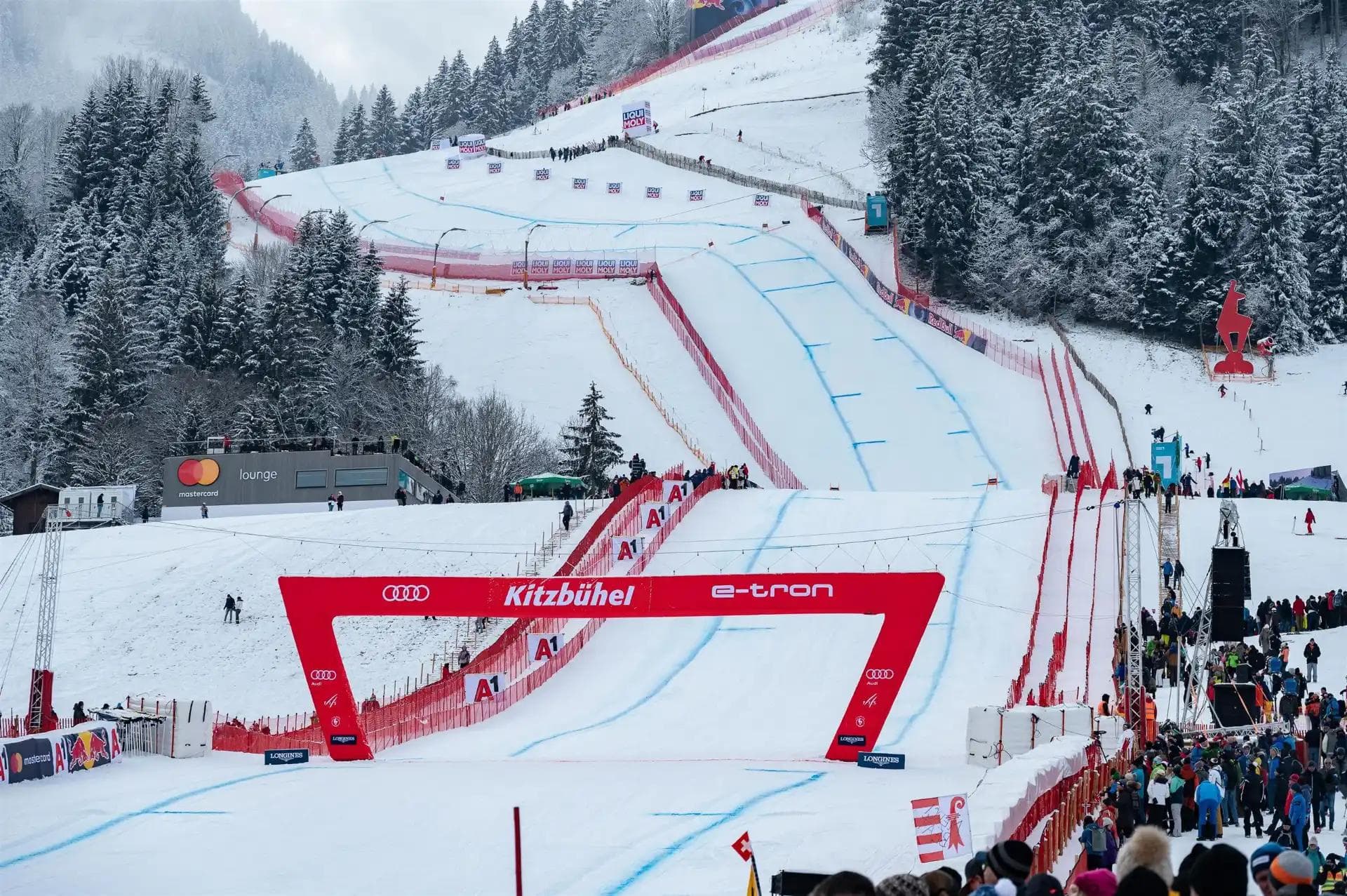
Giovanni Franzoni won Saturday's Kitzbühel downhill by the narrowest of margins—0.07 seconds—over Marco Odermatt, extending the Swiss racer's frustrating run of near-misses on the sport's most celebrated course. The 24-year-old Italian delivered a tactically astute performance that combined aggression through the Streif's technical sections with the calculated risk-taking required on alpine racing's most demanding track.
The result marks Franzoni's first downhill victory and caps an impressive January surge that began with his maiden World Cup super-G win in Wengen last week, followed by a debut downhill podium the following day. For Odermatt, who has openly described winning at Kitzbühel as a primary career goal, it represents a third runner-up finish on a course that continues to elude him despite dominance virtually everywhere else.
Maxence Muzaton rounded out the podium in third, the Frenchman's first World Cup top-three since 2017. Starting with bib 29, Muzaton led through the opening section and held on for what represents a significant career resurgence at age 23.
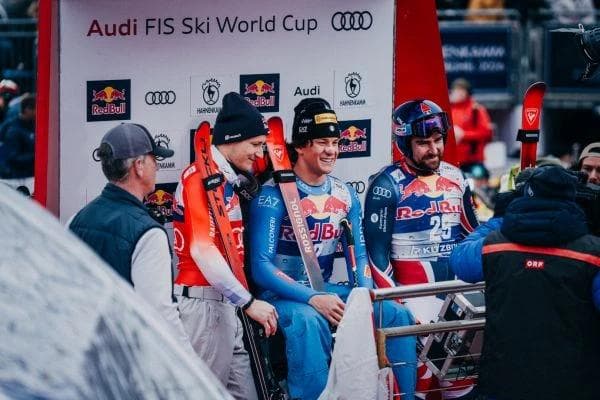
The race unfolded under ideal conditions, which meant margins would be razor-thin. Odermatt, starting with bib one, set a benchmark time that looked likely to stand until Franzoni's run. The Italian's advantage came through the more technical sections—a reversal of the usual script, where Odermatt's technical prowess typically gives him the edge over pure speed specialists.Odermatt's visible disappointment at the finish line was telling. "I feel stupid that I can be that disappointed about second place, here in Kitzbühel, but we all knew that today, victory was my big goal, my big dream," he said. "I didn't make it."When reminded that Beat Feuz required numerous attempts before eventually winning three consecutive Kitzbühel downhills, Odermatt's response revealed the uncertainty that underlies even the most dominant careers: "Sure, but you also never know. It's a privilege that you can come here with a red bib, with such a good shape, with a body that does exactly what you want, a mind that is hungry for this victory. Skis that are working perfectly. Many things need to fit together to fight for the top spot, and you never know when will be the next time."It's a fair point. Odermatt, still only in his mid-twenties, has time on his side, but the Streif is notoriously fickle. Weather, course conditions, equipment, and the marginal differences in form that separate winning from finishing second can align against even the most talented racers.For Franzoni, the victory represents both validation and a significant boost heading toward the 2026 Milano-Cortina Olympics, which will be contested on home snow. Italy's men's speed program has lacked consistent frontrunners in recent seasons—a notable gap for a nation with substantial downhill heritage. Whether Franzoni can maintain this level or whether January 2025 proves an outlier remains to be seen, but winning on the Streif suggests genuine capability rather than a one-off result.