The Rescue Operation
The 911 call came in to the Nevada County Sheriff's Office at around 11:30 a.m. Authorities were also alerted directly by Blackbird Mountain Guides and by emergency beacon signals. What followed was one of the largest backcountry rescue operations in the region's history.
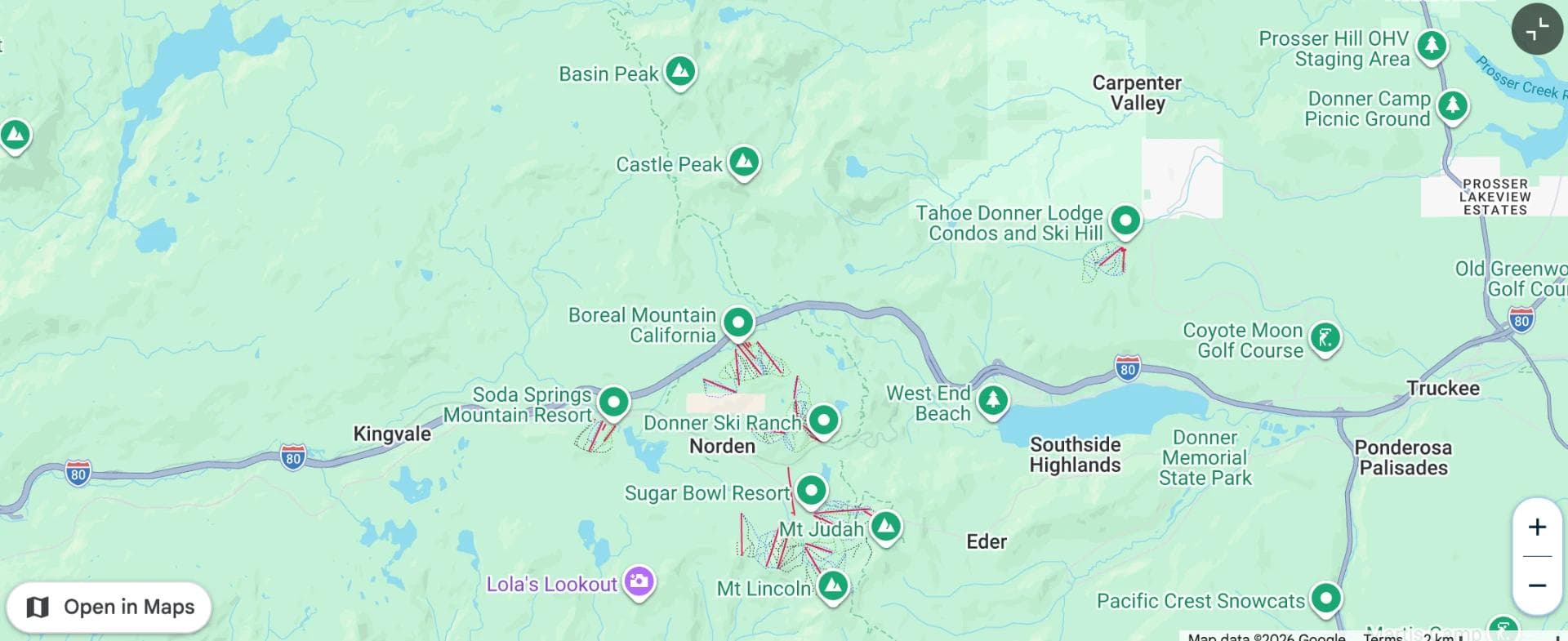
Between 46 and 50 rescuers from at least eight agencies mobilised from two staging points — Boreal Mountain Resort and the Tahoe Donner Alder Creek Adventure Centre. Helicopter rescue was not possible. The storm conditions made it impossible. Teams instead used snowcats to get within roughly three kilometres of the site, then skied in carefully — all while the surrounding slopes remained dangerously unstable and the risk of a secondary slide was real.
The six survivors — four men and two women — had sheltered in a treed area and constructed a makeshift windbreak using a tarp, against temperatures well below zero and blizzard conditions. Before rescuers arrived, the survivors had already located three of their deceased companions nearby.
Critically, they communicated with rescue coordinators for more than four hours using Apple's Emergency SOS via satellite feature — exchanging text messages with Don O'Keefe of the California Governor's Office of Emergency Services, who later confirmed the communication publicly. That satellite messaging capability played a direct role in coordinating the response.
Rescuers reached the survivors at approximately 5:30 in the evening — roughly six hours after the initial call. Two survivors were hospitalised with non-life-threatening injuries. The remaining four were assessed on-scene and able to move under their own power. All six were confirmed safe by 10:40 that night.
The Recovery
The following morning, during a brief break in the weather, search teams located eight of the nine victims. The operation transitioned from rescue to recovery. The ninth person was declared presumed dead by Sheriff Shannan Moon.
What came next was a multi-day effort under extraordinary conditions. The snowpack had been loaded with a further 90 centimetres of new snow. Winds were severe. The avalanche danger across the broader area remained high. Recovery crews were unable to safely enter the site for days.
On Thursday, the Tahoe National Forest issued a formal closure order for National Forest lands and trails in the Castle Peak area, effective through March 15, to protect both the public and the recovery personnel. Officials conducted controlled explosions to reduce avalanche hazard before crews could safely move in.
Five bodies were recovered on Friday. On Saturday morning, helicopters from the California National Guard and the California Highway Patrol hoisted the final four from the mountainside using ropes — working through severe wind conditions that forced multiple trips. The ninth victim was found close to the rest of the group.
On Saturday, February 21, the Nevada County Sheriff's Office confirmed that all nine victims had been recovered.
Sheriff Moon said at the press conference: "There are no words that truly capture the significance of this loss and our hearts mourn alongside the families of those affected by this catastrophic event."
The Investigation
The Nevada County Sheriff's Office has confirmed the incident is under active investigation, and the scope of that investigation has grown significantly in the days since.
On Friday, February 20, the Sheriff's Office confirmed that investigators are examining whether criminal negligence was involved in the decision to proceed with the trip. Separately, the California Division of Occupational Safety and Health — Cal/OSHA — confirmed it has opened its own workplace safety investigation into Blackbird Mountain Guides LLC. Cal/OSHA has up to six months to complete that process and issue citations if any workplace safety violations are identified.
The central question is the same one that has been there from the beginning: at what point did the guides know the Sierra Avalanche Center warning had been upgraded to HIGH, and what happened between that moment and when the group departed the huts on Tuesday morning? The group had entered the backcountry on Sunday when a watch was already active. The upgrade to a full HIGH danger warning came at 5:00 a.m. Tuesday — approximately six and a half hours before the slide. Whether that information reached the guides in the field before they set out is not yet publicly confirmed.
Blackbird Mountain Guides has been described by authorities as cooperative with the investigation. Company founder Zeb Blais confirmed in a statement that all four guides on the trip were trained or certified by the American Mountain Guides Association in backcountry skiing, and were instructors with the American Institute for Avalanche Research and Education. Guides in the field were also in communication with senior guides at the company's base about conditions and routing decisions.
That context matters — not to condemn or to exonerate, simply to state where things stand. These were not inexperienced people operating blindly. Which is precisely why Governor Gavin Newsom, commenting publicly on the tragedy, noted: "That's what's even more concerning and disturbing about this." Newsom, who has personal connections to those affected, called it "the most devastating avalanche, in terms of loss of life, we've ever experienced" in California.
Backcountry experts outside the investigation have also weighed in. Kurt Gensheimer, an experienced backcountry traveller who had been part of a separate group that left Frog Lake on Sunday — specifically to get ahead of the incoming storm — told reporters that entering that terrain in those conditions was, in his words, a recipe for disaster. Avalanche safety equipment supplier Anthony Pavlantos noted that snowfall rates exceeding 30 centimetres in 24 hours represent a significant red flag for anyone considering backcountry travel.
What This Means for the Rest of Us
Nine people went into the Sierra Nevada and didn't come home. They have now been brought off that mountain — after days of dangerous, exhausting work by rescue and recovery personnel who put themselves at real risk to do it. The Truckee community held a vigil on Sunday to honour those who were lost.
The full picture of what happened that morning — what decisions were made, what information was available, and why the group moved through that terrain despite the warnings — will emerge through the investigations. That process may take months. And until it runs its course, rushing to judgement doesn't serve anyone.
What is fair to say, and what this incident makes clear in the most devastating way possible, is that the backcountry does not offer second chances. The Sierra Avalanche Center issues danger ratings for a reason. The language in Tuesday morning's warning was not ambiguous. When a forecast states that large avalanches are expected and that travel in avalanche terrain is not recommended, that language carries real weight.
If you're planning any backcountry travel this season, please sit with that for a moment before you head out.
Our thoughts are with the families and friends of those who were lost, and with the six survivors who will carry this with them for the rest of their lives.