TL;DR
La Plagne, Les Arcs, and multiple other French ski resorts have shut down entirely as authorities issue a rare 5/5 avalanche danger rating. With over 60 deaths recorded across the Alps this season, the closures highlight the severe instability affecting Europe's ski regions during one of the busiest periods of the year.
Rare Maximum Avalanche Warning Forces Resort Shutdowns
La Plagne, Les Arcs, and several other French ski resorts have implemented complete operational shutdowns following the declaration of a Level 5/5 avalanche danger rating—the highest possible classification on the European avalanche scale. The closures come during the UK half-term holiday period, affecting thousands of visitors including significant numbers of British skiers who make up approximately 13 per cent of La Plagne's international clientele.
Level 5 ratings are exceptionally rare in the ski industry. The designation indicates conditions where numerous large to extremely large natural avalanches are expected, with potential for slides extending into valley floors and threatening infrastructure. At this level, even minimal human activity on slopes can trigger catastrophic events. The affected Savoie region includes some of the largest ski operations in Europe, making the coordinated shutdown significant from both safety and economic perspectives.
The current season has recorded over 60 avalanche fatalities across the European Alps, a figure that warrants serious attention regardless of how industry bodies typically frame seasonal statistics. Italy alone reported 13 backcountry deaths in a single week, with 10 directly attributed to avalanches. Austria recorded eight deaths in two separate incidents last month, including a 12-year-old Czech boy skiing off-piste with his family at Sportgastein.
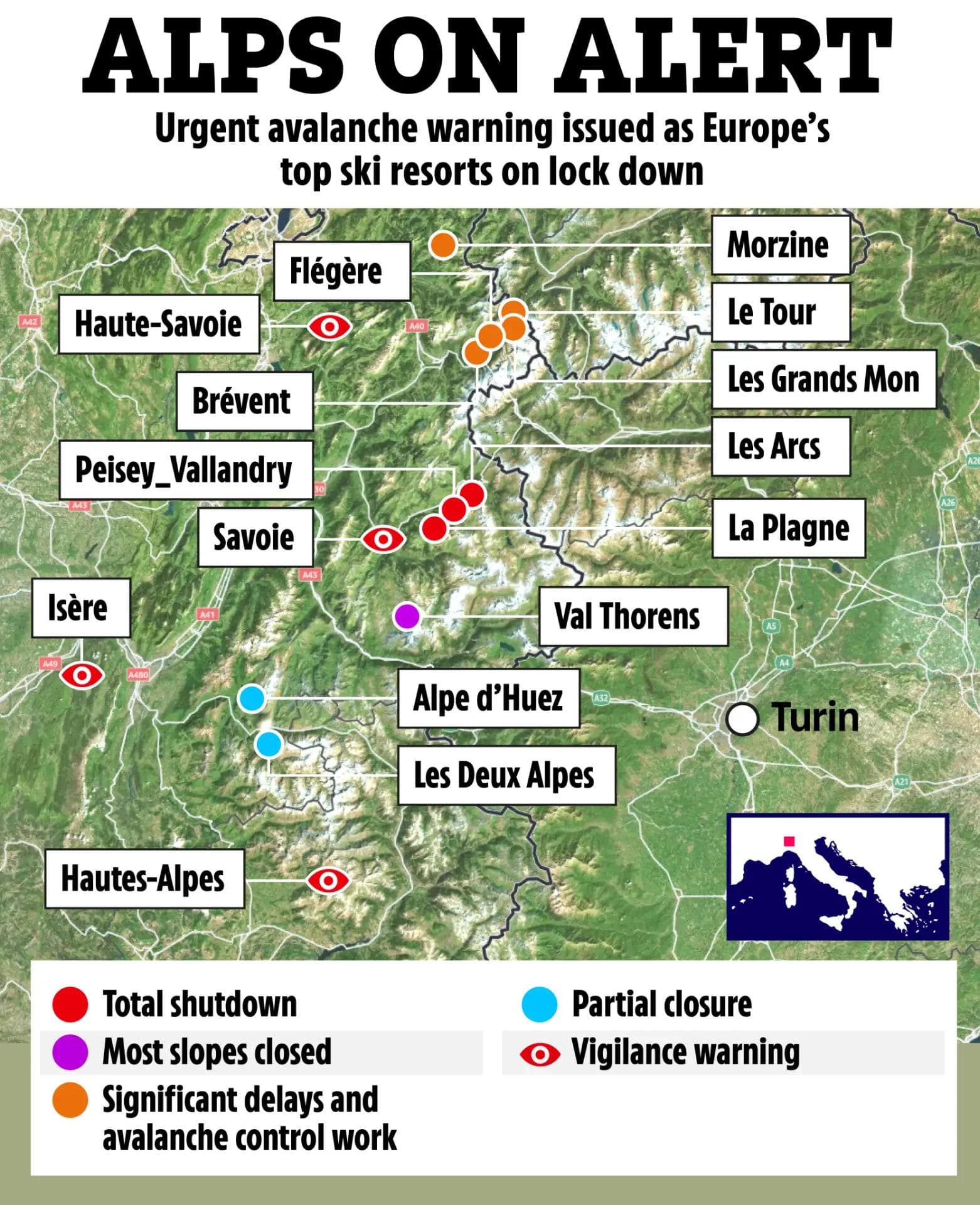
### Operational Impact Across Multiple Resort AreasBeyond the complete closures at La Plagne and Les Arcs, the avalanche situation has forced operational restrictions across a wide swath of the French Alps. Peisey-Vallandry and La Grave have also implemented full closures, while Val Thorens shut most of its terrain following heavy snowfall. Chamonix has restricted access to high-altitude areas including Les Grands Montets, Brévent, Flégère, and Le Tour—terrain that typically represents some of the most sought-after skiing in France.Partial closures are in effect at Alpe d'Huez and Les Deux Alpes, whilst Val d'Isère and Morzine have warned of significant operational delays as avalanche control teams work to stabilise accessible terrain. The scope of these measures reflects the reality that current snowpack conditions have overwhelmed standard control protocols.La Plagne's statement was unambiguous: "All lifts, slopes, ski schools and mountain activities will be shut. It's a full closure for safety—for guests and for staff." Access roads remain open, though disruptions are expected. For resort operators, shutting down during peak season represents substantial lost revenue, which provides some indication of how seriously authorities are treating the current conditions.The Alpine regions of Hautes-Alpes, Isère, Savoie, and Haute-Savoie remain under avalanche vigilance, with approximately 30 French departments under orange alert for multiple hazards including violent winds, flooding, and avalanche danger. Meteorological services describe the snowpack as highly unstable with deteriorating conditions, particularly below 1,500 metres where rain and wet snow are compromising lower layers.