New Latemar Cable Car Opens in the Dolomites After €15.5 Million Investment
Published Date:
The Latemar Dolomites Gets a New €15.5 Million Cable Car
The Latemar ski area in Italy's Val di Fiemme has officially inaugurated a brand new cable car, replacing an ageing four-person chairlift that had been in operation since 1988. The €15.5 million upgrade has been running since the start of the 2025-26 season and was formally opened at a ceremony attended by provincial authorities, industry representatives, and local residents.
What's New With the Latemar Cable Car
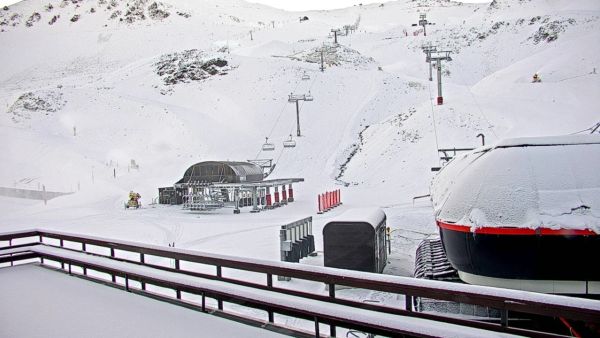
Built by Doppelmayr — one of the most well-regarded lift manufacturers in the industry — the new cable car connects the valley station at 1,760 metres with the mountain station at 2,015 metres. The numbers are straightforward: 42 cabins, a route length of 1,085 metres, a vertical rise of 255 metres, and a travel time of around four minutes from bottom to top.
The headline figure, though, is the transport capacity — 2,700 people per hour. That's a significant step up from the old four-person chairlift it replaces, and for a lift that connects Pampeago with the upper mountain practice areas and mountain huts, that throughput matters. Long queues on a beginner or mid-mountain connector lift have a way of killing the rhythm of a ski day, so this kind of infrastructure investment has practical benefits beyond just the optics.
The new lift is also fully barrier-free, which is worth noting. Accessibility on the mountain is an area the industry has been slow to address in many resorts, so a properly accessible gondola in a busy sector is a genuine improvement.
21 03 2026 coperture Inaugurazione Pampeago Latemar
The Latemar Ski Area — What's There
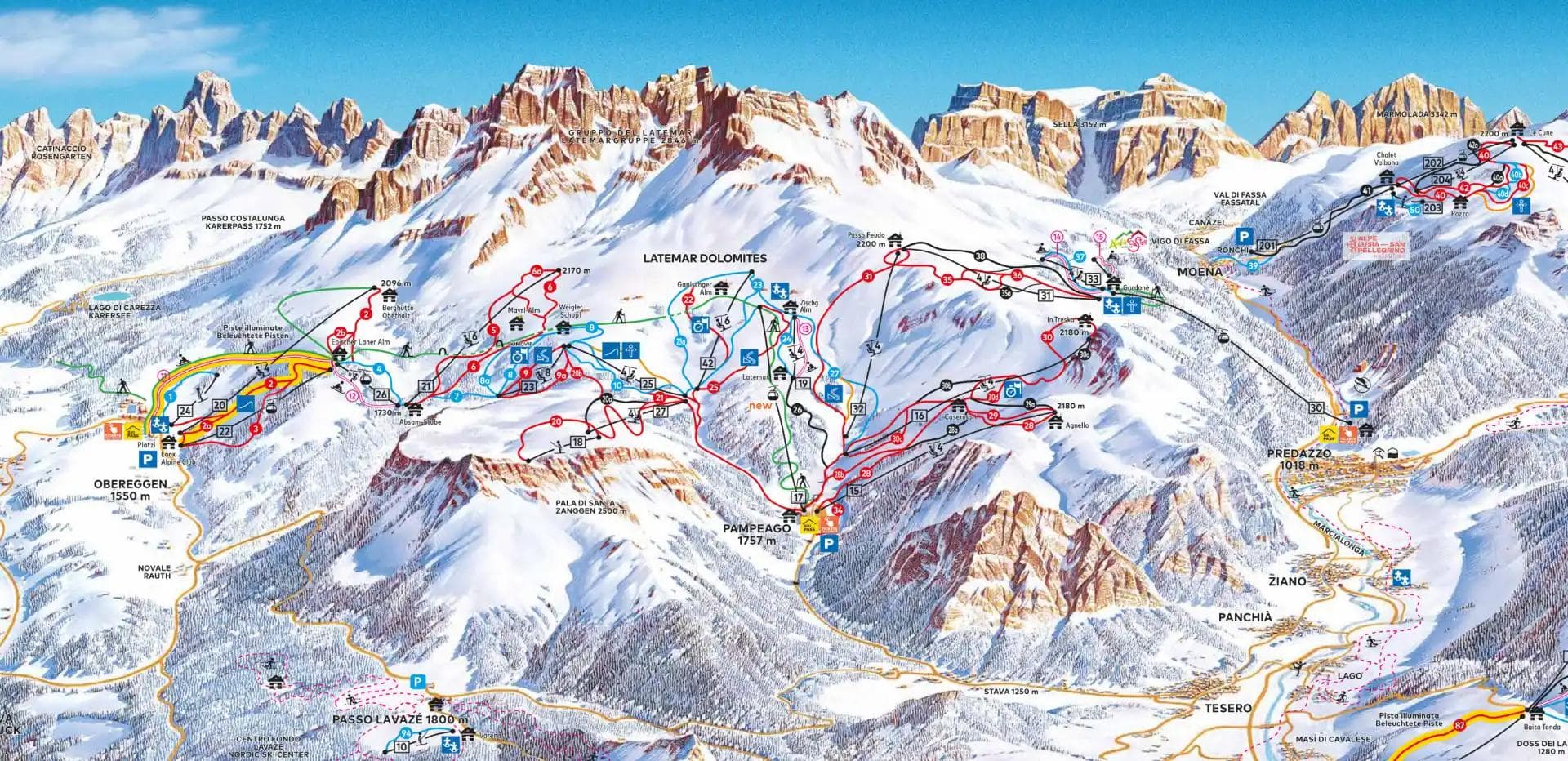
The Latemar Dolomites area is the largest ski zone in the Val di Fiemme-Obereggen region, accessed from three entry points — Predazzo, Pampeago, and Obereggen — with over 50 kilometres of slopes across the domain. It sits within the broader Dolomiti Superski system, one of the largest lift-connected ski networks in the world, and the resorts in Val di Fiemme account for more than 10% of all cable car journeys in the Trentino region annually.
For Australian skiers who've explored the Dolomites — whether through the Sella Ronda circuit or day trips out of resorts like Canazei or Ortisei — Val di Fiemme sits on the southern edge of that network. It's less heavily trafficked than some of the more prominent Dolomiti Superski entry points, which has its appeal.
50 Years of Cross-Border Ski Cooperation
The inauguration also marked 50 years since the ski connection between Obereggen, Pampeago, and Predazzo was first established — a link that crosses the boundary between the Autonomous Province of Trento and South Tyrol. It's the kind of regional infrastructure that doesn't get much attention outside of the local area, but that cross-border connection has been central to the development of the ski area over the past five decades.
Provincial authorities used the occasion to point to the broader economic significance of the lift industry in the region. The cable car sector in Trentino alone handles around 100 million journeys per year, generating revenues exceeding €300 million — a figure that has doubled over the past decade. Replacing a 37-year-old chairlift with a modern high-capacity gondola is consistent with that growth trajectory.

Why Lift Upgrades Like This One Matter
A new cable car doesn't make headlines the same way a massive snowfall does, but for anyone planning a trip to the Dolomites, the quality and capacity of the lift infrastructure is a practical consideration. Older chairlifts on key connector routes create bottlenecks that flow through the entire ski day. This upgrade removes one of those pinch points in the Latemar area and brings the mountain station access in line with what you'd expect from a modern, well-maintained resort.
If you're planning a trip to the Dolomites and haven't looked at Val di Fiemme as a base, it's worth putting on your list — particularly if you want access to the Dolomiti Superski network without the crowds that come with some of the more popular entry points.