Schladming Dachstein hosts night races under floodlights every January, but the World Cup circus tells only part of the story. This Styrian resort spreads 123 kilometres across four interconnected mountains with surprisingly little genuine challenge for the grade on the lift pass.
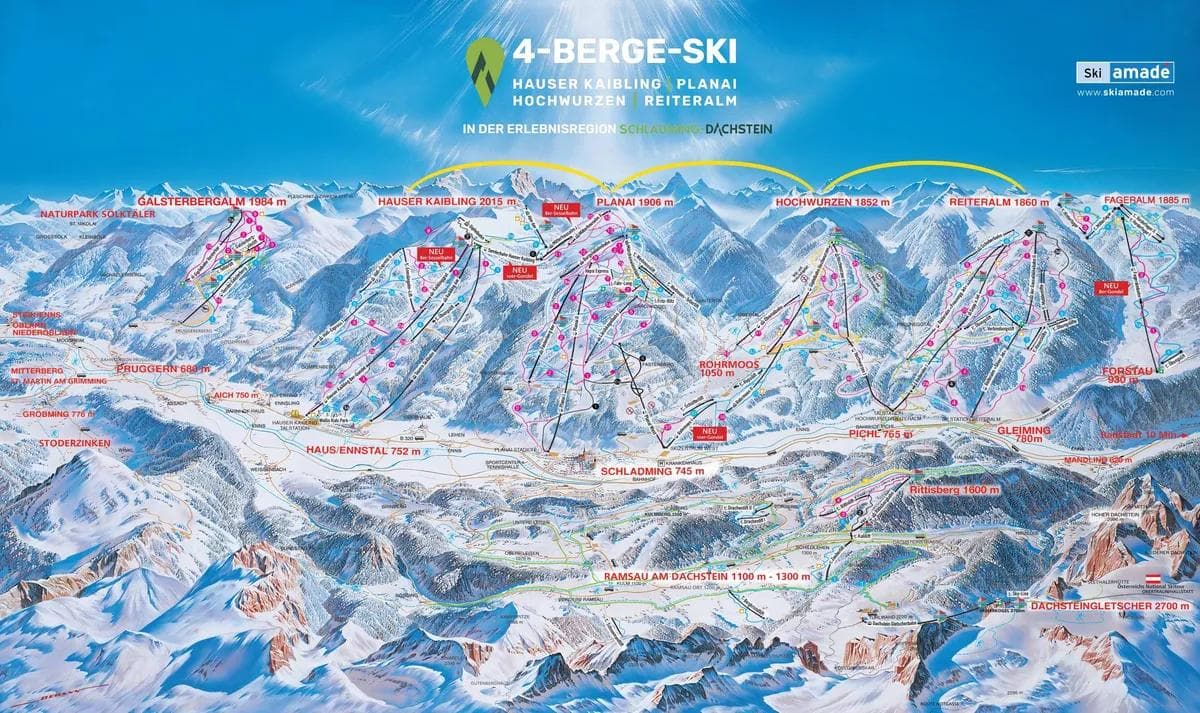
Schladming Dachstein hosts night races under floodlights every January, but the World Cup circus tells only part of the story. This Styrian resort spreads 123 kilometres across four interconnected mountains - Hauser Kaibling, Planai, Hochwurzen, and Reiteralm - with surprisingly little genuine challenge for the grade on the lift pass. The numbers look formidable at first glance: 94 lifts servicing 95 runs. Dig deeper and you realise you're looking at a resort that prioritises circulation over concentration, comfort over consequence.
Schladming Dachstein Mountain Overview
The terrain spans from 728 metres in the valley to 2,015 metres at the Dachstein Glacier access point, delivering 1,287 metres of vertical. In practice, most skiing happens between 1,000 and 1,900 metres across the four main peaks. The area breaks down to 37% beginner, 55% intermediate, and just 8% advanced - with no runs classified as expert. That distribution is honest: this is comfortable cruising terrain, not a testing ground.
Hauser Kaibling anchors the eastern end with broad, well-groomed slopes and the longest runs in the system. Planai handles the town access and racing duties - the Planai World Cup run drops 850 vertical metres with gradients that feel aggressive under race conditions but mellow considerably at recreational speeds. Hochwurzen and Reiteralm fill out the western sections with rolling intermediate terrain and tree-lined runs that hold snow reasonably well when lower slopes thin out.
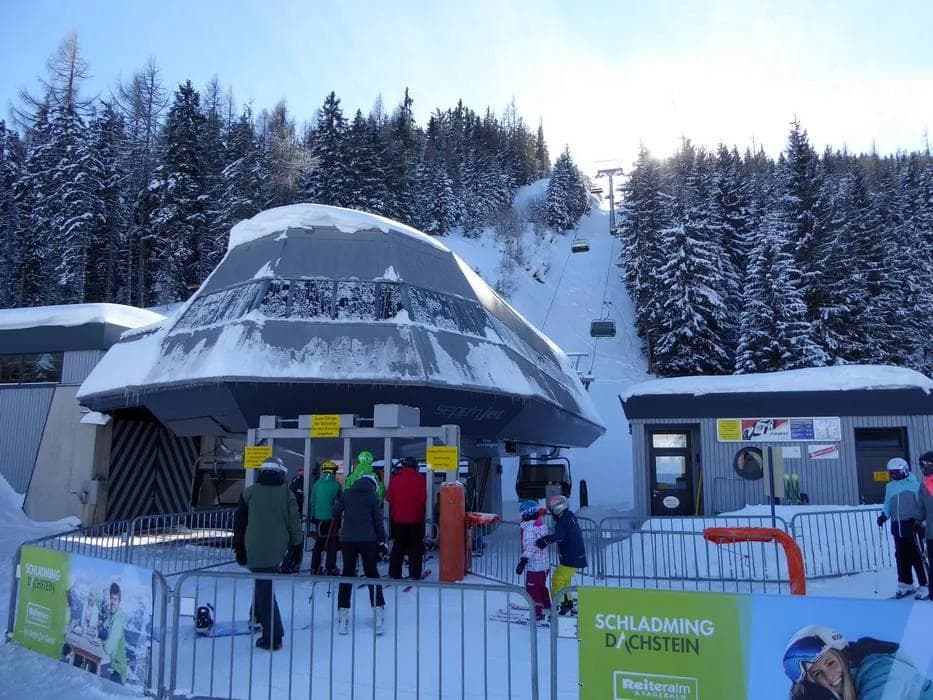
Ninety-four lifts sounds excessive for 123 kilometres, and it is. Many are short surface lifts and connecting chairs that exist primarily to shuttle skiers between sectors rather than open up distinct terrain. The lift infrastructure is modern and efficient - you won't waste time in queues outside holiday weeks - but the density speaks to a resort designed for circulation and convenience rather than deep exploration of any single mountain face.
Intermediate skiers and riders looking for sustained mileage without anxiety will find exactly what they need here. The 55% intermediate classification undersells how much of the mountain caters to confident blue-run skiers - many of the designated red runs would grade blue at more challenging resorts. Families with mixed abilities can spread out across the four mountains and regroup easily thanks to the efficient lift network.
Advanced skiers expecting sustained challenge will run out of interesting terrain quickly. The 8% advanced classification translates to a handful of legitimate black runs, mostly short pitches rather than sustained descents. Off-piste opportunities exist but require local knowledge and careful snow assessment - the elevation isn't high enough to guarantee stable snow structure throughout winter. The glacier section provides summer skiing but doesn't fundamentally change the advanced terrain equation during winter operations.
Race enthusiasts and those interested in ski culture will appreciate the World Cup connection. Watching recreational skiers tackle the Planai race course provides perspective on what professional racers manage at speed. The night race atmosphere in January draws significant crowds, but expect higher accommodation costs and busier slopes during that period.
Schladming Dachstein Snow & Season
Four metres of average annual snowfall sits below the Austrian average and reflects the moderate elevation range. The base at 728 metres can struggle in warm winters, though snowmaking covers approximately 80% of the piste network. Current conditions show 90 centimetres base depth with 5 centimetres in the past week and 112 centimetres season total - adequate rather than exceptional for mid-season.
The 2025-2026 season runs from 22 November through 12 April, a reasonable window given the elevation profile. Early and late season reliability depends heavily on snowmaking, particularly on lower slopes and town-access runs. The Dachstein Glacier section extends the season but involves a separate ticket and additional travel time - it's better viewed as a bonus option rather than core terrain.
Mid-January through mid-March offers the most consistent conditions, though mild spells can affect snow quality at lower elevations even during peak season. The tree-lined runs on Reiteralm and sections of Hochwurzen provide better visibility during flat light and storms than the more exposed upper slopes of Hauser Kaibling.
Salzburg Airport sits 90 kilometres north, roughly 75 minutes by car in clear conditions. Innsbruck Airport lies 180 kilometres west, approximately two hours depending on weather and traffic through the passes. Munich Airport, despite being 280 kilometres away, often provides more flight options and competitive car hire rates for a three-hour drive.
The town of Schladming provides direct ski-in access via the Planai gondola. Accommodation in nearby Rohrmoos, Haus im Ennstal, or Ramsau am Dachstein requires a short drive or free ski bus to reach the main lifts. The ski bus network is reliable but adds 15-30 minutes to morning routines depending on your lodging location. Parking at the base areas costs €5-8 per day at peak times.
Schladming Dachstein Lift Tickets
Adult day tickets cost €66.50 regular rate, rising to €78.50 during peak periods - school holidays, weekends in January and February, and the week surrounding the World Cup races. Junior tickets run €50, children €33.50. Multi-day passes reduce the daily rate, and online advance purchase typically saves 10% off walk-up prices.
The pricing sits in the middle range for Austrian skiing - more than smaller regional areas but less than Ischgl or St. Anton. The value proposition depends on what you prioritise: if you want kilometre accumulation and comfortable cruising, the ticket price delivers. If you're chasing steep terrain or extensive off-piste, you're paying for amenities you won't fully use.
The Verdict on Schladming Dachstein
Schladming Dachstein executes a clear brief: provide comfortable, interconnected skiing for intermediate ability levels with efficient lift infrastructure and reliable grooming. The World Cup connection adds cultural interest but doesn't fundamentally change the terrain equation. If you want to clock substantial mileage without navigating serious exposure or technical challenges, the resort delivers. Full resort details, webcams, and trail maps are on the Snowstash resort page.