Who is Arizona Snowbowl Best For
Phoenix and Tucson residents seeking occasional ski days without interstate travel commitments. The drive from Phoenix takes around 2.5 hours, Tucson roughly 3.5 hours - short enough for weekend trips but long enough that you'll want snow conditions to justify the journey. Check current reports carefully; the resort can operate lifts whilst offering conditions most experienced skiers would consider marginal.
Beginners and lower intermediates focused on progression rather than vertical accumulation. The intermediate terrain percentage suggests varied options, though how much is actually open depends on snowmaking priorities and natural snowfall timing. If you're learning to ski and live in Arizona, this beats not skiing at all. If you're flying in specifically to learn, numerous resorts offer better reliability and terrain variety.
Anyone curious about the novelty factor of skiing in Arizona. There's something genuinely unusual about the drive up from desert landscapes into alpine terrain, and the views across northern Arizona from the summit lift are distinctive. Just recognise you're skiing for the experience and convenience rather than optimal conditions. The resort works best when you frame it as a local amenity rather than a destination comparable to Colorado, Utah, or anywhere in the Alps.
Arizona Snowbowl Snow & Season
The 2025-26 season runs from early November through early May, though those dates represent equipment capability rather than snow reliability. Early and late season nearly always means manufactured snow exclusively. Mid-winter offers the best chance of natural accumulation, but Arizona's snowfall patterns remain unpredictable - some winters deliver adequate natural snow, others require near-constant snowmaking to maintain skiable coverage.
That 6.6-metre annual average needs context. It's measured at 2,895 metres elevation, and averages can mask huge seasonal variation. More relevant is that the resort invested heavily in snowmaking infrastructure precisely because natural snowfall alone wouldn't support consistent operations. Current season totals show 348cm, which is tracking above average, but weekly accumulation sits at zero - typical of the extended dry spells that characterise Arizona winters.
Temperatures play a larger role here than at higher-latitude resorts. Sunny days are common, which sounds appealing until you're skiing soft, sticky manufactured snow by early afternoon. Morning sessions often offer the best conditions, particularly after overnight grooming. The high-altitude location helps snow preservation compared to lower-elevation Arizona skiing, but you're still operating in a climate where snow is the exception rather than the rule.
Getting to Arizona Snowbowl
Flagstaff sits along Interstate 40, making road access straightforward from either direction. Phoenix Sky Harbor Airport is the nearest major air hub at roughly 230km south. Rental car is essential unless you've arranged specific transport - no meaningful public transit serves the resort. The final approach climbs through switchbacks up the Peaks, which can require chains or four-wheel drive during active storms.
Flagstaff itself offers standard American ski town amenities - accommodation, restaurants, equipment shops - at prices generally lower than Colorado resort towns. Staying in Flagstaff rather than at the mountain base makes sense given the 23km distance and lower lodging costs. The town sits at 2,100 metres elevation, so you're already acclimatised to altitude before reaching the resort.
The Phoenix proximity means weekend crowds can be substantial when conditions align, particularly on powder days following storms. Midweek skiing offers shorter queues and better snow preservation, assuming you have schedule flexibility and the mountain is operating.
Arizona Snowbowl Lift Tickets
Published ticket pricing ranges from $19 to $309 depending on advance purchase, season timing, and demand-based pricing algorithms. The lower end of that range applies to early online purchases for midweek, low-demand periods. Walk-up weekend tickets during peak season approach the upper limit, which feels steep for 701 vertical metres with heavy snowmaking dependence. Check the resort website for current dynamic pricing - costs vary significantly based on date and purchase timing.
Senior tickets also start at $19, whilst child pricing shows $0 in the data provided, suggesting kids ski free under certain conditions. The resort offers season passes and multi-day packages that reduce per-day costs for regular visitors, which makes sense if you live locally and ski frequently. For occasional visitors or those travelling specifically to ski, single-day tickets feel expensive relative to the product delivered.
The Verdict on Arizona Snowbowl
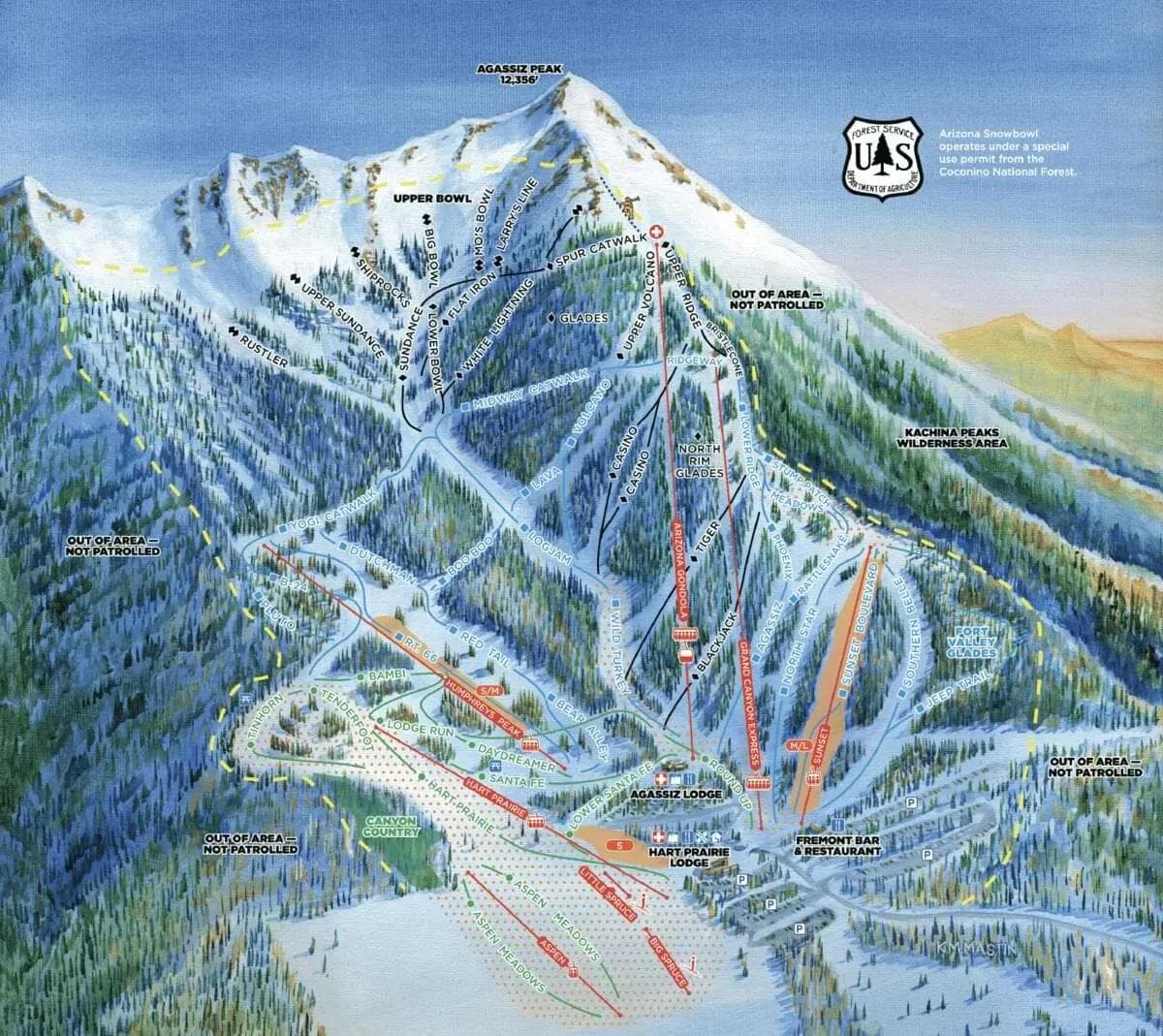
Arizona Snowbowl functions as a regional amenity rather than a destination resort - it exists because Phoenix and Flagstaff populations want ski access, not because the snowfall or terrain compete with established ski regions. If you live within a few hours' drive and want occasional ski days without major travel commitments, it serves that purpose adequately. If you're planning a dedicated ski trip from elsewhere, dozens of resorts offer better snow reliability, more vertical, and superior terrain for similar or lower ticket costs. Full resort details, webcams, and trail maps are on the Snowstash resort page.
Full resort details, live webcams, and trail maps for Arizona Snowbowl on Snowstash →