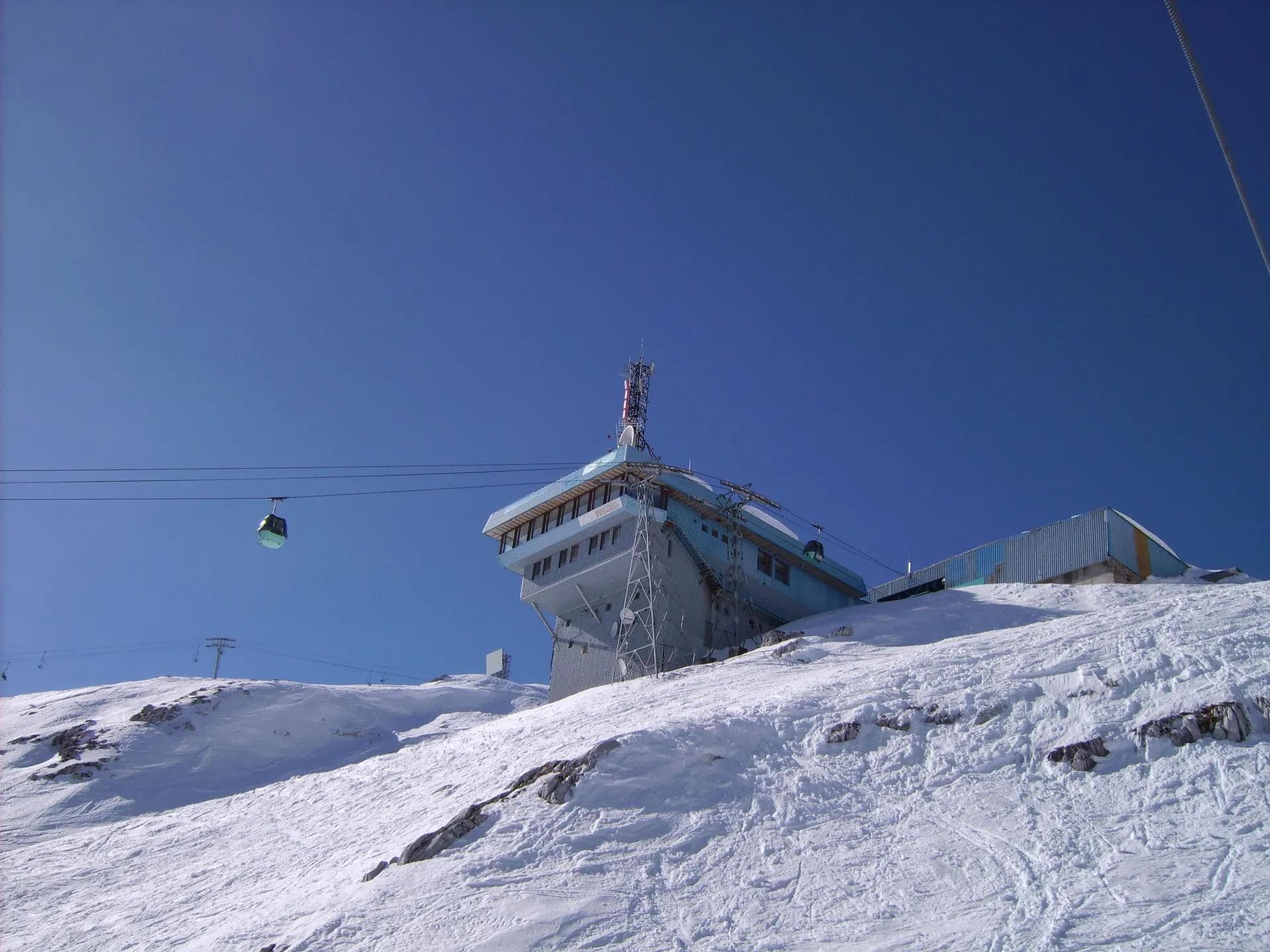
The resort closed in autumn 2023 after its ageing cable car infrastructure lost its operating permit. With no valley-access lift, the mountain became effectively inaccessible for most visitors and winter tourism in Bovec collapsed almost overnight. In its heyday, Kanin drew significant visitor numbers - around 144,000 skier visits were recorded in the 1984 season alone.
The broader resort infrastructure - slopes and on-mountain facilities - remained intact through the closure period. The Slovenian government moved to address the situation in June 2025, formally endorsing a letter of intent to contribute up to €30 million toward a replacement cable car, conditional on the municipality securing a building permit and a credible private investor. Project documentation for a new Bovec-Kanin gondola - valued at over €100 million - was presented in early 2026, covering lift replacement, infrastructure upgrades and base-area redevelopment.
A significant procedural hurdle remains, however. On 13 June 2026, the Slovenian government extended the deadline for securing the final building permit by six months to 12 December 2026, due to outstanding environmental and nature protection consents. The building permit is a hard precondition for releasing the government's €30 million contribution - meaning both the public funding and the investor process are effectively locked behind the same regulatory gate.
The most striking element of the tender documentation is a comparative snowfall analysis prepared by the ICDR Institute. It places Kanin-Sella Nevea among the highest snowfall accumulations in the Alps, with a multi-year average of approximately 1,000 to 1,200 centimetres of annual snowfall at around 2,260 metres elevation. The municipality is transparent that these figures are indicative rather than exact, based on mixed-source datasets with varying methodologies.
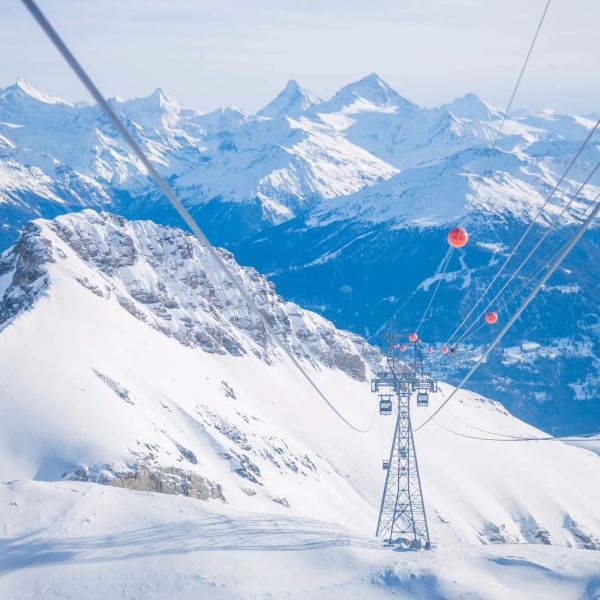
The geographic driver is straightforward: Kanin sits directly beneath moisture streams arriving from the Adriatic, which are forced upward by the Julian Alps to produce intense orographic snowfall events. From the upper slopes, skiers look south across the Soča Valley toward the sea - a perspective that reflects exactly why this mountain catches weather that most of the Alps does not. In an era where reliable natural snow is becoming harder to guarantee at lower elevations, that profile carries real weight.
The wider opportunity
The plans extend beyond new lift infrastructure. The municipality's brief calls for a broader mountain tourism concept covering winter and summer activities, improved visitor flow, enhanced safety standards and stronger integration with the existing tourism economy of Bovec and the Soča Valley.
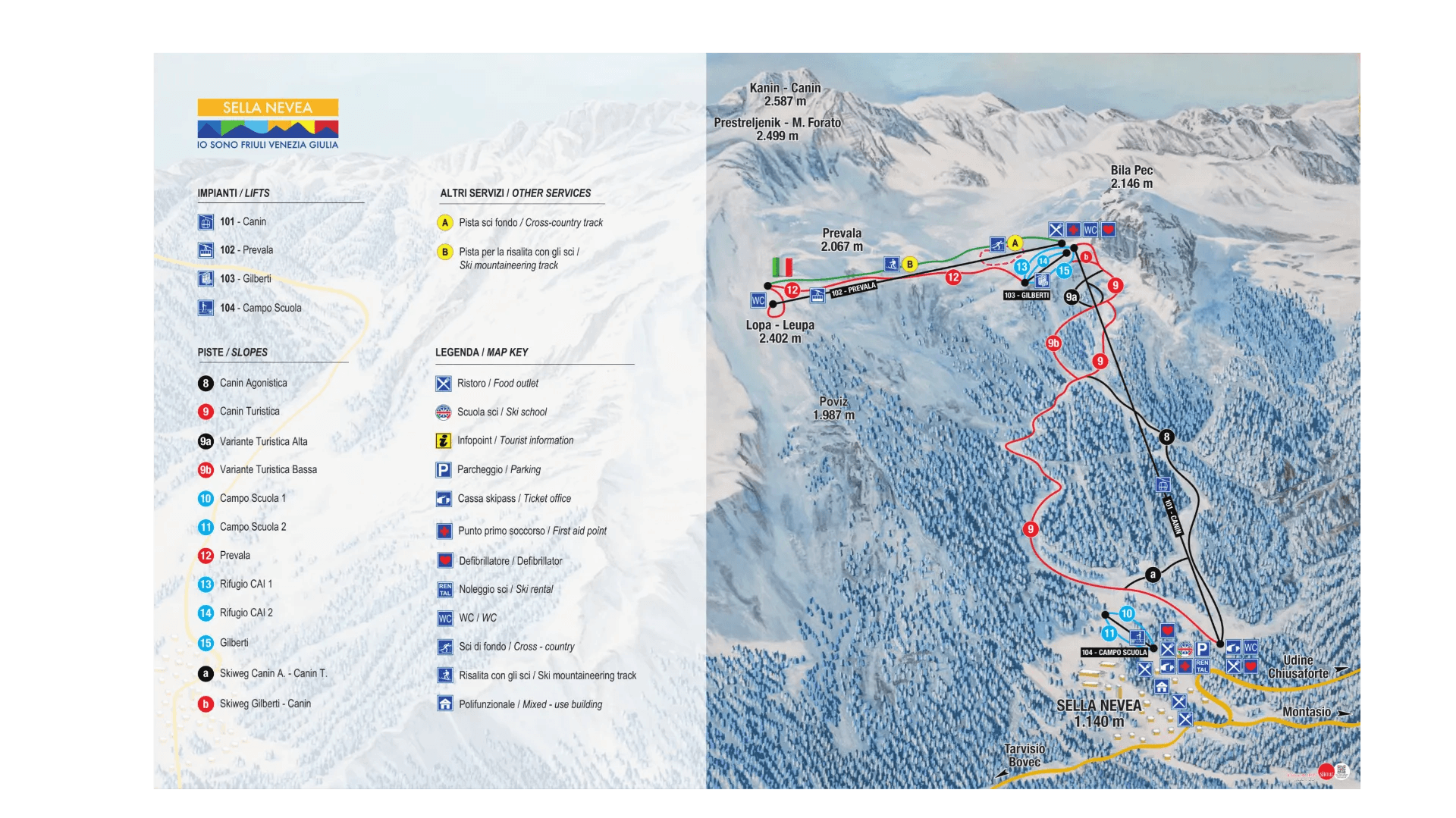
In terms of terrain, the existing Slovenian ski area covers approximately 48 hectares. Expansion plans could increase the Slovenian side to around 130 hectares, and together with Sella Nevea on the Italian side, the cross-border ski area could ultimately reach approximately 200 hectares of skiable terrain. The Italian side is already reinvesting - a new four-seat chairlift at Sella Nevea has raised capacity to 1,800 skiers per hour, signalling continued confidence in the cross-border product.
The wider Soča Valley recorded more than 414,000 tourist arrivals and 1.07 million overnight stays in 2025. Within a three-hour drive lie Ljubljana, Venice, Graz and Trieste - a catchment of roughly 11 to 13 million people.
A previous leading prospective investor - CDC, a consortium based in Bolzano/Bozen in South Tyrol that had been in discussions to partner with Swiss cable car manufacturer Bartholet - did not advance into a binding agreement. The new formal tender is an open international process.
The resort has the snowfall, the terrain, the cross-border connectivity and now a government funding commitment. What it still needs is regulatory clearance to begin construction. For any investor evaluating the July tender, that outstanding building permit is the single most important variable in the equation.