TL;DR
Zermatt is having another crack at a World Cup downhill, and this time nobody has to cross a border. Around 13 million Swiss francs is going into rebuilding the Gornergrat piste, including a jump fed by a roughly 300-metre in-run across the roof of the Gornergrat Railway gallery, with the Matterhorn lined up behind it for the TV cameras. First men’s race is pencilled in for March 2028, pending FIS homologation.

Zermatt is chasing a World Cup downhill again, and this time the race stays on one side of the border.
Zermatt Bergbahnen plans to spend around CHF 13 million rebuilding the Gornergrat piste, with the first men’s World Cup downhill pencilled in for March 2028. The resort at the foot of the Matterhorn in the Swiss Valais appears in the provisional FIS calendar for the 2027/28 season, and it is treating this as a second attempt after the cross-border races fell through.
A rebuilt slope on the Gornergrat
Franz Julen, chairman of Zermatt Bergbahnen, is running the project. He took the plans for the new downhill to the Swiss ski team in August, and the reaction from the athletes was warm. Franjo von Allmen said that if Zermatt delivers exactly what is planned, “we will experience a truly spectacular race in March 2028.” Marco Odermatt went further on the effort involved: “In this day and age, it’s anything but a given that such a gigantic effort is made to launch a World Cup race, as the people of Zermatt are doing now.”
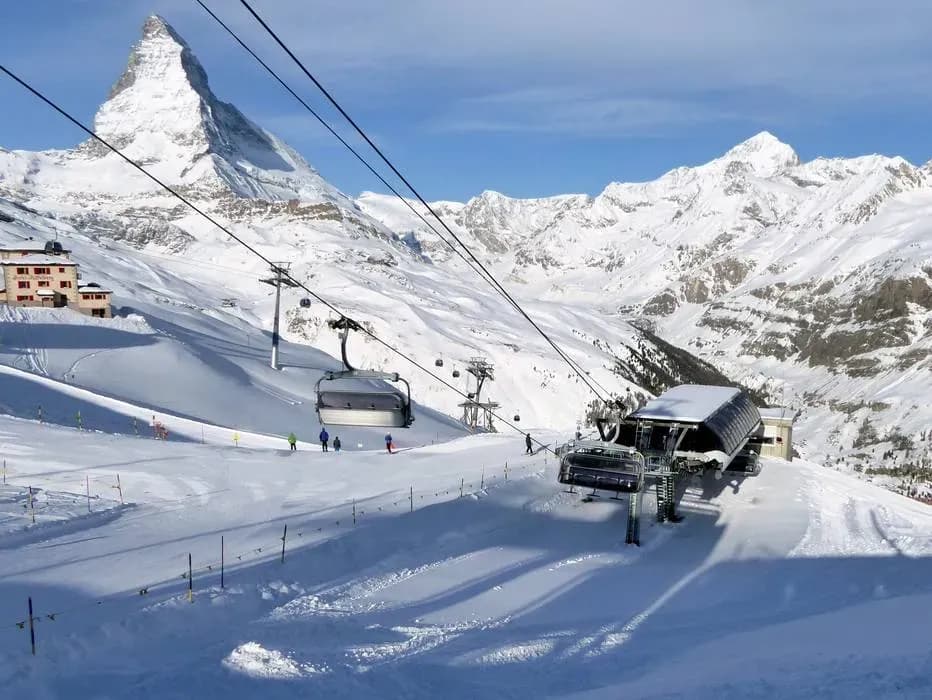
The upper sections of the course are being completely reconfigured and cleared. The run starts at roughly 2,850 metres and drops close to 1,000 vertical metres. The showpiece is a new jump fed by an in-run of about 300 metres that crosses the roof of the Gornergrat Railway’s gallery, positioned so that television cameras get the Matterhorn directly behind it. Project ambassador and adviser Pirmin Zurbriggen told Blick the images would be broadcast around the world and make the best possible advertisement for the sport.
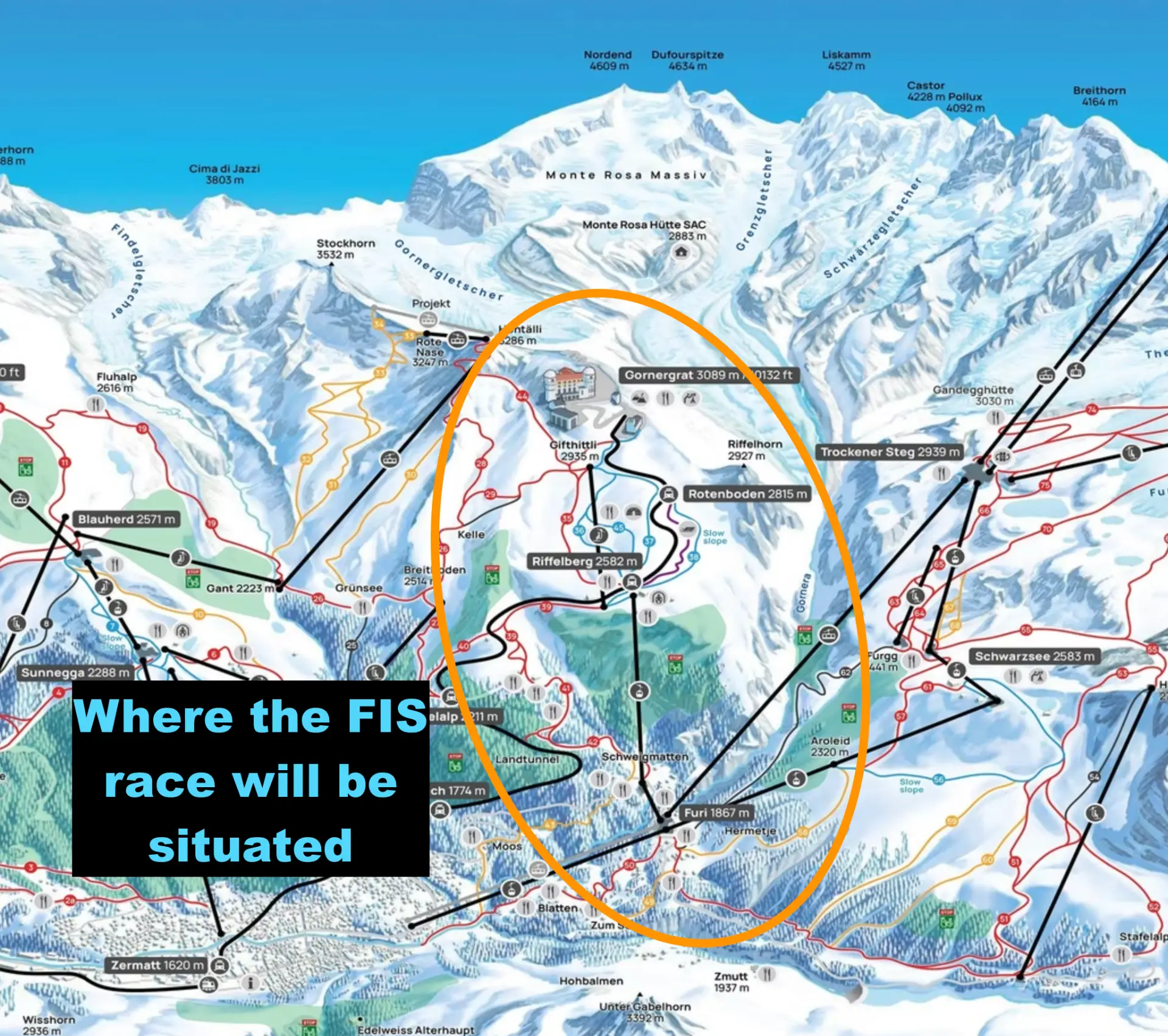
The paperwork is largely sorted too. Zermatt’s municipal assembly approved the zoning changes in June with 96 percent in favour (159 yes, 4 no, 2 abstentions), after negotiations with more than 30 landowners. Rebuilding the slope to World Cup standard means clearing around 8,300 square metres of forest. The Gornergrat hosted international racing until 1967, when the course ran for six kilometres.
A lift upgrade alongside the race slope
Zermatt is also replacing the six-seater Gifthittli chairlift with an eight-seater, lifting capacity to 3,400 passengers per hour.
Why the Gran Becca plan stalled
The original idea was a cross-border downhill from Zermatt to Cervinia on the Gran Becca, running into Italy’s Aosta Valley. Races were scheduled for 2022 and 2023 and both were cancelled, the first because of unseasonably warm weather and thin snow cover, the second because of heavy snowfall and high winds. Zermatt and the FIS then agreed to a place on the provisional 2024/25 calendar, but that contract was terminated with more weather problems expected.
The fallout reached the training side. In summer 2024 Zermatt shut elite teams out of glacier gate training, including Swiss-Ski, which had leaned heavily on Zermatt for speed work. That relationship has since been repaired: in July, Zermatt and Swiss-Ski announced a cooperation running to 2034 that brings summer glacier training back.
Timeline to the first race
Construction is scheduled to finish in autumn 2027. The first training sessions are planned for January 2028, and a European Cup downhill in February serves as the dress rehearsal before the World Cup race in March.
What still has to fall into place
The piste needs FIS homologation before anything is locked in. FIS and Swiss-Ski have given Zermatt an assurance of two men’s speed races in the second half of March each year from 2028 to 2034, conditional on that homologation and on Zermatt meeting the usual requirements for a World Cup organiser. Swiss reporting also notes that Zermatt has to confirm it has enough hotel beds in March to host the World Cup circus.
FIS President Urs Lehmann has been supportive but is not rushing it. “Everyone here has truly recognized the enormous potential of the Gornergrat downhill course. But it’s also important to me that we don’t make a hasty decision, but rather that everything is well-founded,” he said. He added that if anyone can meet the demands by 2028, it is Julen’s team together with Swiss-Ski.
About the author

Michael Fulton
Melbourne-based skier and snowboarder with 50+ resorts across 5 continents. Specialises in Australian resorts and international resort comparisons.