Palisades Tahoe
6,400 acres, 279 runs, 39 lifts across 8 peaks. Olympic Valley & Alpine Meadows united. 1960 Winter Olympics host. Ikon Pass.

Season 2026 - 2027
Opens
21 Nov 2026
Closes
30 May 2027
Days open
190
Annual snow
400in
The Overview
Michael Fulton
Melbourne-based skier and snowboarder with 50+ resorts across 5 continents. Specialises in Australian resorts and international resort comparisons.
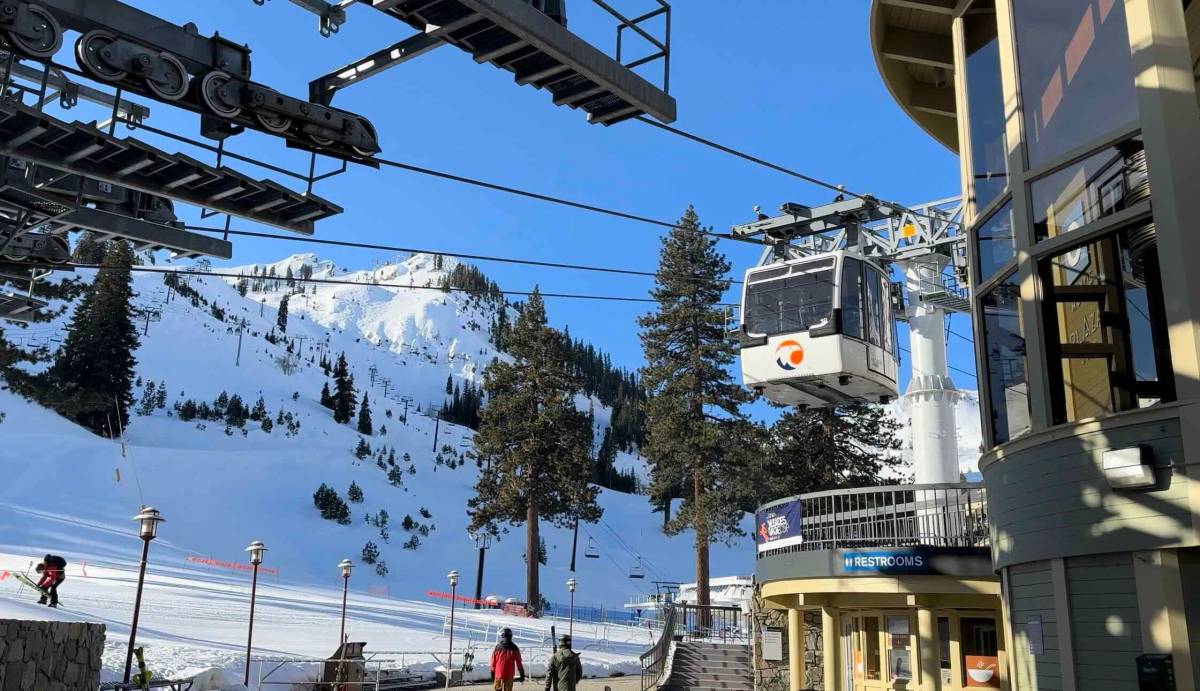
Palisades Tahoe spans 6,400 acres across eight peaks with 279 runs accessed by 39 lifts, reaching from 1,890 metres at base to 2,758 metres at Granite Chief summit. The resort averages 10.2 metres of annual snowfall and operates from late November through late May. The 2021 merger of Olympic Valley and Alpine Meadows created California's largest ski destination, unified by a 16-minute base-to-base gondola completed in 2022. Host of the 1960 Winter Olympics, the resort maintains Olympic memorabilia at High Camp's museum.
Terrain splits 13 per cent beginner, 33 per cent intermediate, 30 per cent advanced, and 24 per cent expert across two distinct mountain personalities. Olympic Valley delivers steep chutes and cliff-lined bowls including KT-22, the Palisades wall, and Granite Chief couloirs. Alpine Meadows counters with groomed boulevards and hike-to bowls like Beaver and Estelle. The 5.15-kilometre Mountain Run offers the resort's longest descent, whilst Silverado and Broken Arrow host extreme terrain visible from lift chairs.
The Village at Olympic Valley anchors the Olympic Valley side with slopeside lodging, 30 restaurants, and European-style cobblestone walkways. Alpine's mid-mountain lodge draws crowds to its sun deck and relaxed atmosphere. The 110-person aerial tram rises 610 vertical metres to High Camp at 2,500 metres, where beginners access protected learning terrain and an outdoor ice rink operates at 2,500 metres elevation. North America's only ski-resort funitel transports 4,000 skiers per hour to Gold Coast.
Ikon Pass and Ikon Base Pass provide unlimited access with select blackout dates between December 27 and February 15. Adult single-day tickets range from $119 to $179 depending on demand and advance purchase. The resort suits advanced and expert skiers seeking steep fall-line skiing and Olympic history, whilst families benefit from High Camp's segregated beginner zones and gondola sightseeing access year-round.
2,848ft
Vertical
279
Runs
6,400 acres
Skiable
400in
Annual snow
Ikon / Mountain Collective
Pass
The Terrain
279 runs across 6,400 acres skiable
Palisades Tahoe is a vast 6,400 acres (2,590 hectares) of linked terrain across the former Olympic Valley and Alpine Meadows areas, with 279 runs. The vertical measures 2,850 ft (868 m), from 6,200 ft (1,890 m) at the base to 9,050 ft (2,758 m) at the summit. The difficulty split is unusually demanding for a resort this size: 13% beginner, 33% intermediate, 30% advanced and 24% expert. A base-to-base gondola joins the two mountains, so skiers can sample both in a day, though the terrain is bigger than most visitors can cover in one trip.
Olympic Valley is the steep side, with the KT-22 chair feeding sustained fall-line runs, the Headwall zone, Cornice Bowl and the cliffs and chutes around Granite Chief and Silverado. Alpine Meadows has more open bowls and glades, with Sherwood and the Scott Chair area often holding powder longer. Beginners can use the more protected slopes at High Camp. Palisades Tahoe suits strong intermediates through to experts chasing steeps, and it rewards anyone willing to learn the mountain over a few days rather than rush through it.
Terrain split
279
runs
279 runs across 4 grades
Beginner36 runs · 13%
Intermediate92 runs · 33%
Advanced84 runs · 30%
Expert67 runs · 24%
Time it right
When to visit Palisades Tahoe
The 2025-26 season operates from November 22, 2025 through May 26, 2026, with lifts spinning 9am to 4pm daily subject to conditions. Palisades Tahoe typically opens earlier and closes later than Tahoe-region competitors, earning designation as the area's spring skiing capital. The resort frequently extends operations into Memorial Day weekend when snowpack permits. Olympic Valley's base sits at 1,890 metres, providing altitude advantage over south-shore resorts.
The resort averages 10.2 metres of annual snowfall measured at the 2,438-metre Belmont plot, with monthly averages peaking at 3.12 metres in December and 2.31 metres in March. Granite Chief's 2,746-metre summit captures additional snow and preserves powder longer than lower elevations. The 2025-26 season through late April recorded 9.12 metres, marking a challenging year across western North America. Snowmaking covers 11 of 26 lifts on Olympic Valley and nine of 13 at Alpine, concentrating on lower-elevation access routes and learning terrain.
January through March delivers peak conditions, with February historically offering the most consistent snowpack and fewest rain events at base elevation. April and May transform into spring skiing season with softening snow by midday and corn-snow conditions prevailing on south-facing aspects. Granite Chief and north-facing zones like Silverado hold quality snow through May. Weekday visits outside holiday periods offer significantly lighter crowds than weekends, when parking reservations are mandatory on Saturdays and Sundays.
The resort hosts World Cup technical events, terrain park competitions, and spring music festivals including pond-skimming contests. Ikon Pass holders receive early-access First Tracks on select Thursdays from 8am to 9am at Red Dog and Resort chairs. Three-hundred-plus annual sunshine days distinguish Tahoe's Sierra Nevada climate from Pacific Northwest resorts, though marine storms deliver the Sierra's heavy, dense snow nicknamed "Sierra Cement" by locals.
Season 2026 - 2027
21 Nov 2026
Opens
30 May 2027
Closes
190
Days open
400 in
Annual snow
The record
Historical snowfall at Palisades Tahoe
Daily snow reports at Palisades Tahoe go back to 2025, 2 winters on the books. Open the record to compare winters, lifts and piste.
44 in
Snowiest day
18 Feb 2026
0 in
This winter · 2026-27
so far
360 in
Typical winter
average of complete seasons
Winter totals
in
Past wintersThis winter
Getting there
Getting to Palisades Tahoe, and where to stay
Palisades Tahoe occupies Olympic Valley in the Sierra Nevada range of eastern Placer County, California, on Lake Tahoe's northwest shore. The Olympic Valley base sits at 1,890 metres within a narrow valley formed by Washeshu Creek, eight kilometres south of Truckee via Highway 89. Granite peaks rise to 2,746 metres above the Tahoe Basin, providing views across the 500-square-kilometre alpine lake. The Washoe Tribe considers this ancestral homeland within the greater Tahoe region.
Tahoe City anchors the north shore 11 kilometres southeast, offering lakefront dining and historical sites along Highway 89. Truckee, 16 kilometres northeast, provides a historic railroad town with restaurants, breweries, and mountain-town character dating to the 1860s California Gold Rush. Incline Village sits 19 kilometres east across Nevada's state line. The resort operates 68 kilometres west of Reno and 154 kilometres northeast of Sacramento via Interstate 80. San Francisco lies 315 kilometres southwest requiring three to four hours' drive.
Access follows Interstate 80 east from Sacramento or west from Reno to Truckee, then Highway 89 south for eight kilometres to Olympic Valley Road. The two-kilometre Olympic Valley Road terminates at the Village base area. Winter chain controls are mandatory on Interstate 80 during storms, with California Highway Patrol enforcing four-wheel-drive or chain requirements. Road closures occur during severe weather, adding hours to drive times. TART bus provides free daily service from Truckee and Tahoe City directly to Olympic Valley.
Reno-Tahoe International Airport sits 68 kilometres northeast with one-hour drive time in clear conditions. Sacramento International Airport offers more flight options 177 kilometres southwest, requiring two to 2.5 hours' drive via Interstate 80. North Lake Tahoe Express operates five daily shuttles from Reno airport at $99 per person for 45-minute transfers. Amtrak services Truckee station 16 kilometres away, connecting California Zephyr routes from San Francisco and Chicago. JSX operates private-charter flights between Reno, San Francisco, and southern California.
Where to stay
Search all stays →Stays map loads when you scroll here
Hotels and lodges near Palisades Tahoe, powered by Stay22.
Latest News
From the SnowStash desk
Val Gardena to Alpe di Siusi Lift Link Back in Play After Court Ruling
The Val Gardena-Alpe di Siusi lift link isn’t dead after all. A South Tyrol court has overturned Santa Cristina’s rejection of the new Monte Pana-Saltria link on procedural grounds, after the council skipped required public information sessions. Opponents want the missing sessions held and a fresh vote, and nothing has been approved. For now it’s still a bus between the two, but a plan first floated in 2017 is back in the conversation.
8 Nov 2026
Whistler Blackcomb Rockslide Zone Stays Closed Through 2026-27 Season
A section of Whistler Peak terrain will stay closed all 2026-27 season, Vail Resorts has confirmed, with rockslide mitigation work continuing into summer 2027. Peak Express is still expected to run this winter, but locals are already arguing about what’s actually off limits, whether the Whistler Bowl is gone, and why the news landed after pass sales wound down. Here’s where things stand.
7 Nov 2026
Loveland Ski Area Opens for 2026-27 and Marks 60 Years of Snowmaking
Loveland is open. The Colorado ski area started Chet’s Dream turning on Saturday 7 November to kick off 2026-27, with $60 adult lift tickets to mark 60 years of snowmaking. Expect three runs, nearly 1,000 vertical feet (about 300 metres) of top-to-bottom skiing, live music on the Basin Patio and no beginner terrain yet. Here’s what’s open, what it costs and when Loveland Valley follows.
7 Nov 2026
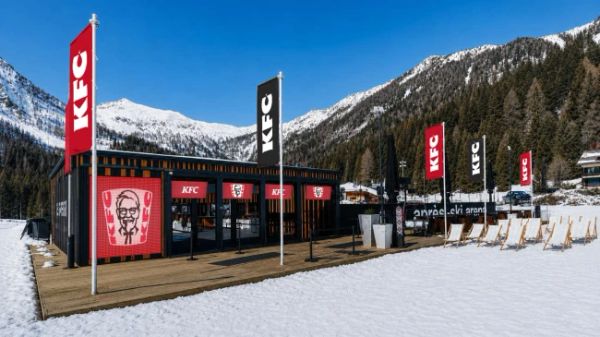
KFC Is Coming to the Slopes at Cortina and Madonna di Campiglio
Fried chicken is heading up the Dolomites. From 5 December KFC will run two restaurants on the slopes - one at 2,123 metres at Cortina, one at 1,700 metres at Madonna di Campiglio - and the polenta-and-canederli crowd has opinions. Local politicians, conservation groups and plenty of Facebook commenters are calling it a step too far, while others just want a cheaper lunch. Here’s what’s on the menu and what’s the fuss.
5 Nov 2026
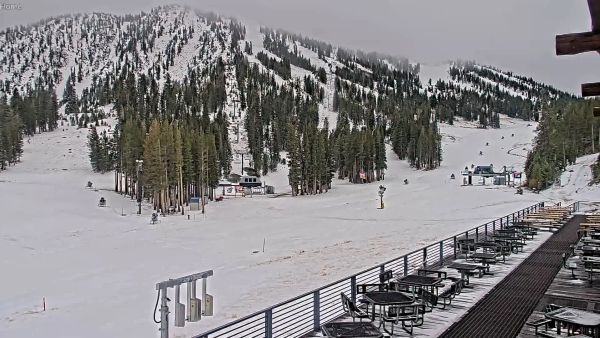
Mt Rose Aims to Open First in Tahoe on November 6
Mt Rose is going for the first-in-Tahoe title, with the Lakeview Express due to spin at 9 a.m. on Friday, November 6. One main lift, three runs and plenty of snowmaking, sitting on the highest base elevation in the region at 8,260 ft. Here is what is open, what is not (sorry, tubing fans), and how the early North American openings are stacking up.
4 Nov 2026
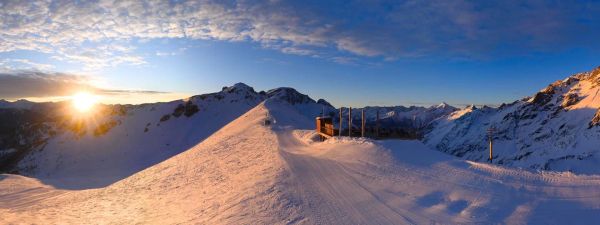
Europe Snow Forecast: Serre Chevalier Leads With 82 cm Over the Next 10 Days
Europe has had a quiet start to November, but our 10-day forecast has Serre Chevalier on 82 cm and Les 2 Alpes on 71 cm. Two pushes are lined up: a western Alps top-up from Friday, then a bigger, wider system on Thursday, November 12 and Friday, November 13 that reaches Italy and Switzerland. Full leaderboard inside.
4 Nov 2026
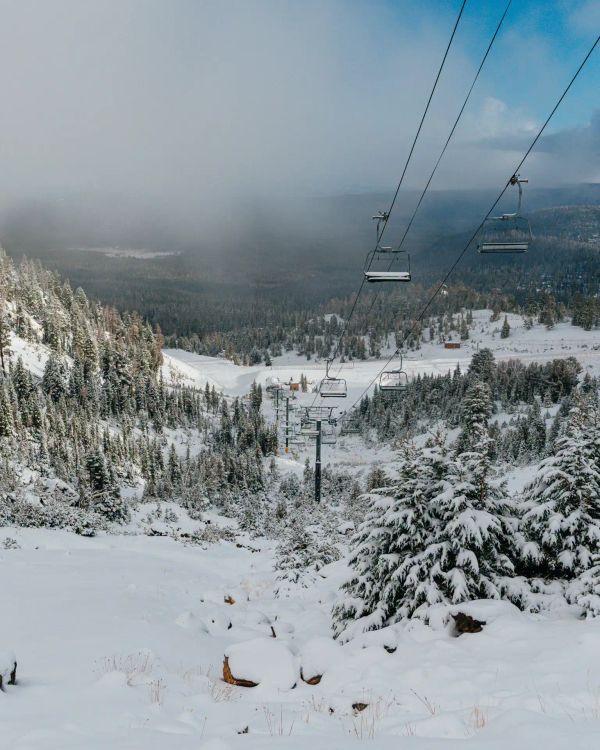
Mammoth Mountain Opens Early on November 5 With Up to 33 Inches of Snow in the Forecast
Mammoth just moved opening day forward to Thursday, November 5, eight days ahead of schedule. A snowy weekend and cold snowmaking nights did the work, and our forecast shows up to 33 inches more landing on November 13 and 14. Here is what opens, what the weather looks like and where Mammoth sits among the early Ikon Pass openers.
3 Nov 2026
Utah Snow Storm Builds Early-Season Base Ahead of November Openings
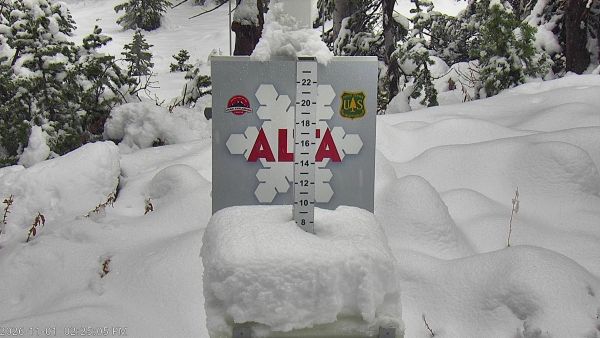
Rain down low, snow up high, and a snow report full of zeros that mostly means ‘not updated yet’. Utah’s first proper storm of 2026-27 is rolling through the Wasatch, Snowbird’s snow stake is closing in on 10 inches, and Brian Head is five days from opening day. Early November snow rarely looks like much, but it is the layer every November opening date is built on. Here is where it stands.
1 Nov 2026
Palisades Tahoe Snow Report
Snow Report
Updated 14 Nov 2026
9,049ft
summit
+0in
new snow · last 24 hours
Overcast20°F / 31°F · SW 22mph
Snowfall
24 hours
0in
48 hours
0in
7 days
0in
Base depth
0in
Season total
0in
Typical winter 360in
Total lifts39
Live open status isn’t available right now.
21 Nov 2026 - 30 May 2027
Hour by Hour
Next 48 hours· Updated Nov 14, 2026 at 5:02 PM
Scroll for the full outlook · Open-Meteo
7-Day Outlook
8,478 ftUpdated Nov 14, 2026 at 5:02 PMOpen-Meteo
Days 1–7
31"
Days 8–14
6.5"
Sun, Nov 15
Heavy Snow
Temp31° / 20°°F
Snow1.6"(44%)
Wind22 mph SW
Live snow from the resort feed; forecast from Open-Meteo, via Supabase.
Understanding the Palisades Tahoe snow report
Planning a day at Palisades Tahoe? Our snow report combines official mountain data with live weather so you know exactly what conditions look like right now, from the 1890m base to the 2758m summit.
Snow measurements
Our snow reports measure snowfall in centimeters over multiple time windows — last 24 hours, last 7 days, and the season total. Base depth reflects accumulation at the 1890m base area, while summit depth captures conditions 868m higher at 2758m, where snow typically stays colder and lingers longer. Imperial conversions are shown alongside for convenience.
Weather conditions
Snow quality tracks closely with temperature and wind. We surface both alongside the snowfall data so you can judge whether conditions at Palisades Tahoe are holding up or starting to soften.
Data sources
We pull Palisades Tahoe's conditions from on-the-ground mountain reporting, then layer in forecast data so you get a fuller picture than either source alone. The mountain is served by 39 lifts, including an aerial tram and 6 quad chairlifts.
When to check
Conditions can change overnight, so mornings and late afternoons are the best times to check back on Palisades Tahoe.