
Sugar Bowl
Experience Tahoe's first ski resort with 1650 acres of historic charm. Featuring steep terrain deep powder and authentic alpine atmosphere near Donner Summit.
Season 2026 - 2027
Opens
27 Nov 2026
Closes
5 Apr 2027
Days open
129
Annual snow
42ft
The Overview
Michael Fulton
Melbourne-based skier and snowboarder with 50+ resorts across 5 continents. Specialises in Australian resorts and international resort comparisons.
Sugar Bowl opened on 15 December 1939, making it the oldest major ski area in the Lake Tahoe region and one of the oldest in California. Founded by Austrian ski champion Hannes Schroll — who held the 1935 US National Downhill and Slalom titles — and backed by early investors including Walt Disney, who contributed $2,500 and had one of the resort's four peaks named in his honour, Sugar Bowl carries a depth of history that very few ski areas in the American West can match.
The resort remains one of the few privately and family-owned ski areas in the Lake Tahoe region, and has retained the Bavarian-styled lodge architecture and village character that Schroll originally envisioned when he modelled it on the Austrian resorts of his background. The gondola entry to the village, first installed in 1953 as the first gondola on the West Coast, still provides the primary access to the Sugar Bowl Lodge — a 27-room slopeside structure that has stood since the resort's opening season.
The ski area spans 1,650 acres across four peaks — Mt. Lincoln, Mt. Disney, Mt. Judah and Crow's Nest — with 103 trails covering a 1,500-foot vertical from a base of 6,883 feet to a summit of 8,383 feet. The terrain profile is weighted heavily toward challenging skiing: 15% beginner, 45% intermediate, 28% advanced and 12% expert, with the Palisades sector off Mt. Disney widely regarded as the most demanding inbounds terrain in California.
The longest run, Crowley's off Mt. Lincoln, stretches over three miles. The Silver Belt race, inaugurated at Sugar Bowl in April 1940 and attracting the world's top racers in the decades before the World Cup circuit existed, remains part of the resort's identity — the race route on Mt. Lincoln still carries the name.
1,499ft
Vertical
103
Runs
1,650 acres
Skiable
42ft
Annual snow
Mountain Collective
Pass
The Terrain
103 runs across 1,650 acres skiable
Sugar Bowl spreads across 1,650 acres (668 hectares) and 103 runs on four peaks at Donner Summit: Mt Lincoln, Mt Disney, Mt Judah and Crow's Nest. The vertical is 1,500 ft (457 m), from 8,380 ft (2,555 m) at the top to 6,880 ft (2,098 m) at the base. Intermediate runs take 45% of the terrain, with 28% advanced, 15% beginner and 12% expert. The mix of cruisers and steeps is well balanced, and a single gondola from the car park leads into the village and base lifts, giving the resort a distinct ski-in character.
Union Pacific and Silver Belt form long, sweeping intermediate descents, and Silver Belt takes its name from a race first held here in 1940. Crowley's and East Face give steeper pitches around Crow's Nest and upper Mt Lincoln, with glades between trails. The Palisades sector off Mt Disney holds the toughest chutes, including Avalanche and Palisades. Sugar Bowl suits strong intermediates and advanced skiers who prefer a quieter mountain with serious snowfall. Beginners have a small but dedicated area, so groups of mixed ability should plan on separate laps.
Terrain split
103
runs
103 runs across 4 grades
Beginner15 runs · 15%
Intermediate46 runs · 45%
Advanced29 runs · 28%
Expert12 runs · 12%
Time it right
When to visit Sugar Bowl
Sugar Bowl operates from late November through to mid-April, with the 2025/26 season running 21 November to 13 April. The resort's position on the Sierra Crest near Donner Pass puts it in one of the snowiest corridors in the entire Tahoe region, averaging 500 inches of annual snowfall — consistently higher than nearby resorts including Palisades Tahoe (approximately 450 inches), Northstar (approximately 350 inches) and Heavenly (approximately 360 inches).
The geography at Donner Summit channels Pacific moisture systems directly into the mountains, and deep snowpack years at Sugar Bowl regularly produce conditions that justify its historic backcountry nickname — local skiers in the 1920s referred to the area as "the Sugar Bowl" for the way snow collected in the terrain's natural hollows. The current 2025/26 season has logged a base depth approaching 64 inches with a season total exceeding 275 inches by early March.
The combination of high snowfall, 1,500 feet of vertical and predominantly shaded north and northeast-facing aspects on the most advanced terrain keeps snow quality high well into the spring, with the Palisades, the Lincoln chutes and the Crow's Nest terrain remaining in competitive condition through March.
The resort participates in the Mountain Collective pass programme, giving passholders access to Sugar Bowl alongside resorts across North America, South America and New Zealand — a commercial partnership that reflects the resort's standing as an independent, family-owned operation competing confidently against the large pass networks that dominate the broader Tahoe market. Spring skiing at Sugar Bowl is well regarded among Bay Area regulars, with long daylight hours, stable weather and deep snowpack through April on the upper peaks.
Season 2026 - 2027
27 Nov 2026
Opens
5 Apr 2027
Closes
129
Days open
42 ft
Annual snow
Getting there
Getting to Sugar Bowl, and where to stay
Sugar Bowl sits near Norden in northern Placer County, California, on Donner Summit at the junction of the Sierra Crest and Interstate 80 — approximately 46 miles west of Reno and 90 miles northeast of Sacramento. The resort access road leaves I-80 at the Soda Springs/Norden exit and climbs three miles to the car park base area, making Sugar Bowl the closest major ski resort to the San Francisco Bay Area via the I-80 corridor and one of the most accessible large-terrain Tahoe ski areas for the Sacramento day-trip market.
Reno-Tahoe International Airport, around 50 miles to the east on the same freeway, provides the primary air connection, with Sacramento International Airport also viable for West Coast arrivals. Boreal Mountain, with its night skiing and Woodward Tahoe facility, is approximately five miles east on I-80 and can be combined with a Sugar Bowl visit for visitors spending multiple days at Donner Summit.
The Donner Pass area carries a weight of California and American history that shapes the character of visiting Sugar Bowl beyond the skiing itself. The Donner Party's catastrophic 1846 winter here is visible from the summit of Mt. Judah, where the view directly down the backside reveals Donner Lake and the Donner Memorial State Park at the valley floor. The transcontinental railroad, completed in 1869, runs through Mt. Judah via the Summit Tunnel — blasted through solid granite by the Central Pacific in the 1860s — and the historic snowsheds built to protect the line from Sierra winters are still visible from the road approaching the resort.
The Sugar Bowl Lodge's 27 guestrooms provide the only slopeside overnight accommodation at the resort itself, accessible exclusively by gondola, giving overnight visitors an experience that more resembles a classic Alpine lodge stay than the standard Tahoe resort hotel.
Where to stay
Search all stays →Hotels and lodges near Sugar Bowl, powered by Stay22.
Latest News
From the SnowStash desk
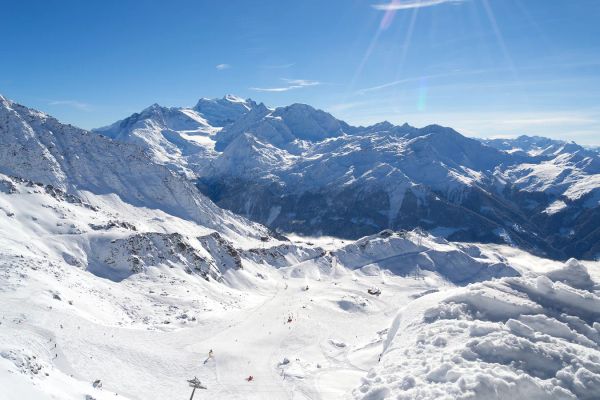
Alps Snow Forecast: Up to 64 cm Headed for the High Glaciers as the Snow Line Drops
The Alps are about to swap mild, sunny October weather for something far more wintry. A cold front arrives Tuesday, and SnowStash forecasts have Monterosa Ski out in front with 64 cm over 14 days, ahead of Blatten Belalp (55 cm) and Verbier (43 cm). The snow line should fall below 2000 metres by Wednesday night, and glaciers across Switzerland, Italy and Austria are in line for the best of it. The wind will have a say too.
20 Oct 2026
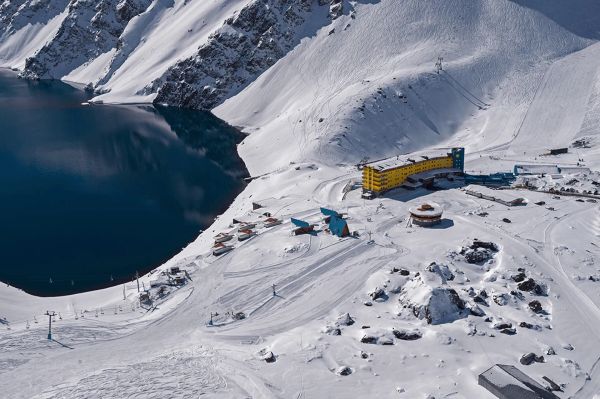
Four Dead After Avalanche Near Ski Portillo in Chile
A large avalanche struck near Laguna del Inca adjacent to Ski Portillo on Saturday afternoon, killing four people and injuring four others. The group were day visitors mountaineering in the backcountry after reportedly being warned about elevated avalanche risk by resort staff.
18 Oct 2026
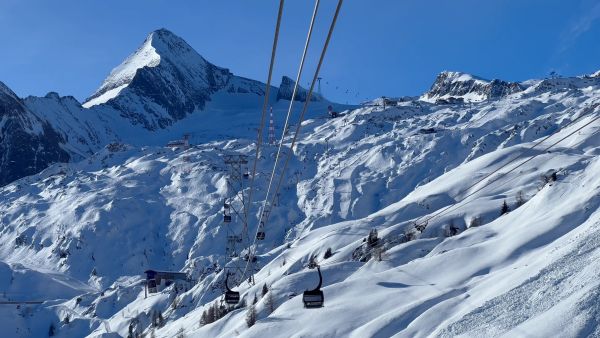
Europe Ski Resorts Open Now: What Is Skiable in Mid-October 2026
Europe’s ski season is open, technically. After a record-warm summer, glaciers in Austria, Switzerland and Italy are running a few pistes apiece, Sölden, Stubai and Kitzsteinhorn started late, Titlis has pushed back to 24 October, and Zermatt reopens a few lifts on 14 October after more than two months shut. Finland’s Levi and Ruka are skiing on stored snow. Here is what is open, and what you actually get at each.
14 Oct 2026
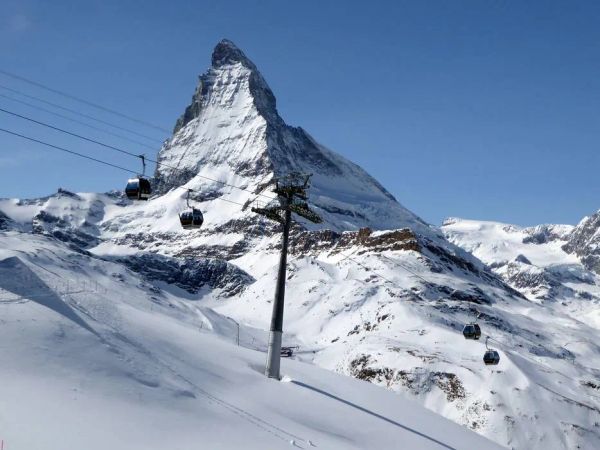
Zermatt Plans World Cup Downhill Return on the Gornergrat for 2028
Zermatt is having another crack at a World Cup downhill, and this time nobody has to cross a border. Around 13 million Swiss francs is going into rebuilding the Gornergrat piste, including a jump fed by a roughly 300-metre in-run across the roof of the Gornergrat Railway gallery, with the Matterhorn lined up behind it for the TV cameras. First men’s race is pencilled in for March 2028, pending FIS homologation.
14 Oct 2026
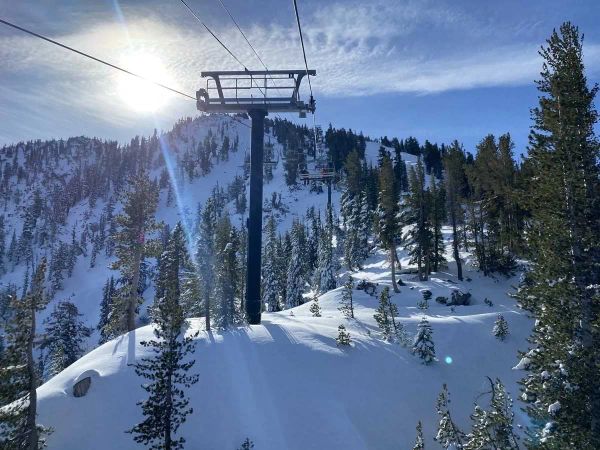
Mt. Rose Begins Snowmaking for the 2026-27 Season at Lake Tahoe
Lake Tahoe’s highest base elevation is paying off early: Mt. Rose has started making snow for 2026-27 after the first flurries and a cold snap. The Nevada resort is backing it with nearly US$2 million in upgrades, including a replacement snowmaking main line, a new PistenBully groomer and restraint bars on every lift. Opening day is yet to be confirmed, though Heavenly and Northstar are already eyeing 20 November.
13 Oct 2026
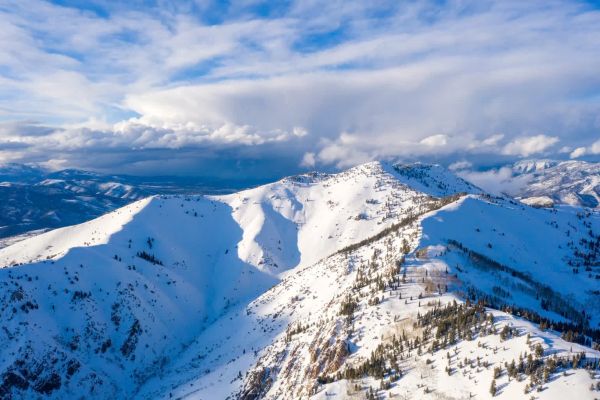
Utah Ski Resorts 2026-27: What’s New at Alta, Deer Valley, Powder Mountain and More
Utah is still building flat out. For 2026-27, Powder Mountain opens a steep new Skytrac chair into more than 1,000 acres of advanced terrain, Deer Valley adds 200 acres on Hail Peak, Sundance gets a new quad and Park City adds a gondola from its new parking structure. Snowmaking is expanding almost everywhere, Eagle Point stays closed after the Cottonwood Fire, and the 2034 Games are setting the pace. Here’s what’s new, resort by resort.
13 Oct 2026
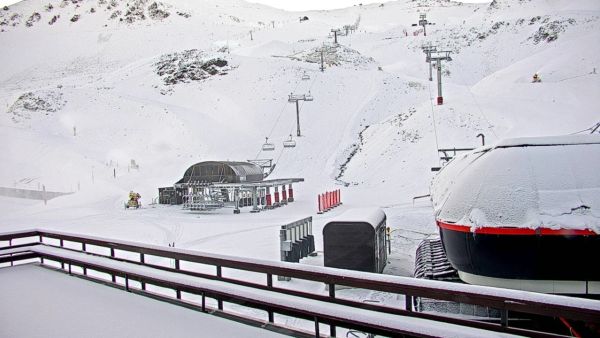
Mt Hutt Invests NZ$12 Million in Base Area, Tripling Its Sun Deck
Mt Hutt is getting busier, and its base lodge is about to catch up. NZ$12 million goes into a heated sun deck roughly three times the current size (430 m² to 1,300 m²), plus a new toilet block, heated steps down to snow level, extra storage and a new food and beverage outlet. Building starts after the 2026 season, with everything due for winter 2027.
11 Oct 2026

Vermont Ski Resort Opening Dates 2026-27: Few Dates Set, Killington Waits on the Cold
Vermont's season is slow to take shape. Stratton is tentatively targeting 18 November and Sugarbush 21 November, while Pico has Friday 11 December on the calendar. Killington never sets a date and opens when the snowmaking allows, and Vail Resorts has yet to name days for Stowe, Okemo and Mount Snow. The forecasts disagree about snow, and the main El Niño worry for the Green Mountains is warmth.
9 Oct 2026