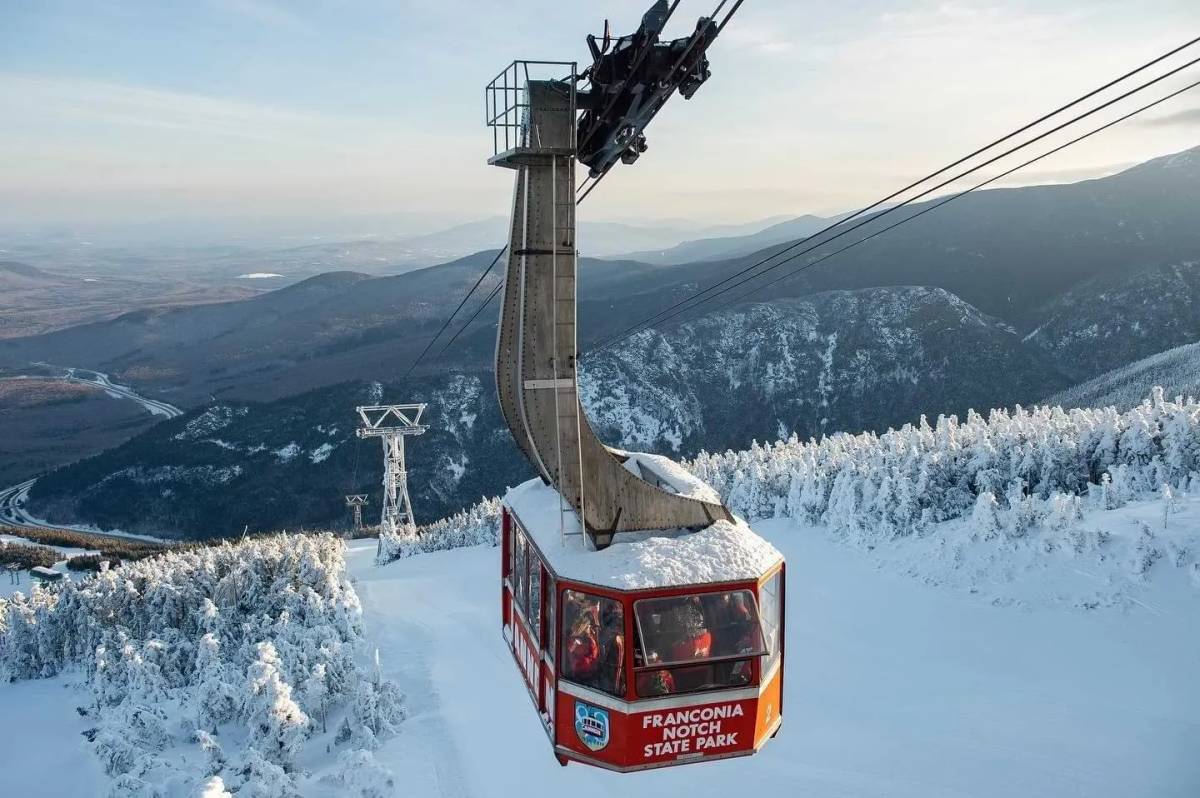
Cannon Mountain
285 acres, 97 runs in Franconia Notch. NH's only aerial tram, challenging terrain, Indy Pass access.

Current Conditions→
Season 2026 - 2027
Opens
27 Nov 2026
Closes
11 Apr 2027
Days open
135
Annual snow
130in
The Overview
Michael Fulton
Melbourne-based skier and snowboarder with 50+ resorts across 5 continents. Specialises in Australian resorts and international resort comparisons.
Cannon Mountain's summit reaches 4,081 feet, dropping 2,180 vertical feet to a base at 1,900 feet across 97 runs spread over 285 acres within Franconia Notch State Park, New Hampshire. Terrain splits 53 per cent intermediate and 33 per cent advanced, with no expert-rated runs and 14 per cent beginner terrain, and average annual snowfall of roughly 130 inches. The resort carries Indy Pass affiliation. Eleven lifts, including one aerial tram and three quad chairs, serve the mountain alongside one double chair, three triple chairs, one surface lift and two t-bars.
Cannon Mountain operates as a state-owned ski area, one of just two such resorts in New Hampshire, and is home to the state's only aerial tramway, a genuinely historic piece of engineering that remains central to the mountain's identity. Its challenging, largely intermediate-and-advanced terrain has earned Cannon a reputation among serious Northeast skiers as one of the region's more demanding mountains.
The concept for an aerial tramway at Cannon originated in 1933, when Alexander Bright of the Franconia Ski Club proposed the idea after experiencing similar systems in Europe. In June 1937, the New Hampshire legislature passed a bill authorising a 250,000 US dollar bond issue to finance the tramway's construction, an engineering feat completed almost entirely by hand, involving 32 carloads of cement, 232 tons of steel and four miles of cable. On 28 June 1938, North America's first aerial tramway was dedicated at Cannon, quickly becoming a major tourist attraction that carried 163,000 passengers in its first year alone.
Cannon has remained under New Hampshire state ownership throughout its history, distinguishing it from the majority of the region's privately operated resorts. Adult daily tickets run from 79 to 99 US dollars, with a discounted rate available for New Hampshire residents.
2,182ft
Vertical
97
Runs
285 acres
Skiable
130in
Annual snow
Indy
Pass
The Terrain
97 runs across 285 acres skiable
Cannon Mountain stands inside Franconia Notch State Park in New Hampshire, with 97 runs over 285 acres (115 hectares). A vertical of 2,180 ft (665 m) runs from a 1,900 ft (579 m) base to a 4,080 ft (1,244 m) summit, a substantial drop by New England standards. The mix is 14% beginner, 53% intermediate and 33% advanced, so the mountain asks more of its skiers than the percentages first suggest. Snowfall averages around 130 inches a year. An aerial tram carries skiers to the top, and the trails fall away steeply from there.
The Peabody Slopes at the bottom hold four long beginner runs - Lower Cannon, Parkway, Gremlin and Turnpike - reached from the Peabody base area. Higher up, the Front Five are the steep trails that built Cannon's reputation, and the Zoomer complex brings intermediate and expert terrain, with bumps stacking up on Paulies Folly under the lift. Mittersill, managed by Cannon since 2009, adds 86 acres of natural terrain, linked by the Taft Trail from the summit. Cannon suits confident intermediates and advanced skiers, while beginners are best kept on the Peabody runs.
Terrain split
97
runs
97 runs across 4 grades
Beginner14 runs · 14%
Intermediate51 runs · 53%
Advanced32 runs · 33%
Expert0 runs · 0%
Time it right
When to visit Cannon Mountain
The 2025-26 season at Cannon Mountain ran from 6 December 2025 to 12 April 2026, a roughly nineteen-week season supported by average annual snowfall of around 130 inches. Season dates can shift depending on early and late-season weather within Franconia Notch.
Midwinter, from December through February, typically brings the most consistent conditions to Cannon's intermediate-and-advanced-weighted terrain, among the more challenging in the Northeast. As an Indy Pass resort, Cannon draws some visiting skiers holding that multi-resort pass alongside its core regional visitor base drawn to the mountain's demanding reputation and historic aerial tram.
As one of New Hampshire's two state-owned ski areas, alongside Mount Sunapee's state park lease arrangement, Cannon benefits from a discounted resident-pricing structure that supports strong local New Hampshire visitation throughout the season. School holiday periods bring some family visitation, though the resort's terrain profile skews toward more experienced skiers.
Specific event programming beyond standard operations and the aerial tram's tourist appeal is not confirmed in available resort information. Cannon's continuous state ownership throughout its history, dating to the tramway's 1938 dedication, continues to shape its public-access mission each season. The mountain's genuinely challenging terrain and historic tram remain central to its seasonal identity.
Season 2026 - 2027
27 Nov 2026
Opens
11 Apr 2027
Closes
135
Days open
130 in
Annual snow
Getting there
Getting to Cannon Mountain, and where to stay
Cannon Mountain sits within Franconia Notch State Park in New Hampshire's White Mountains, with a base elevation of 1,900 feet and a summit at 4,081 feet across a 2,180-foot vertical drop over 285 acres. This dramatic mountain pass setting places Cannon within one of the most scenic protected landscapes in the Northeast.
Franconia and the broader Franconia Notch region offer lodging, dining and additional attractions within the state park itself and nearby towns. The White Mountains region surrounds the resort with extensive further outdoor recreation, from hiking trails to other nearby ski areas.
Interstate 93 runs directly through Franconia Notch, providing convenient access to Cannon Mountain from both the north and south. Winter driving conditions through the notch can include snow and ice, though the well-travelled interstate is regularly maintained given its role as a major regional corridor. There is no direct public transport service to the mountain.
Specific nearest commercial airport details are not confirmed in available resort information, though Cannon's location along Interstate 93 keeps it within a reasonable drive of the greater Boston metropolitan area's major airports for visitors travelling from further afield.
Where to stay
Search all stays →Stays map loads when you scroll here
Hotels and lodges near Cannon Mountain, powered by Stay22.
Latest News
From the SnowStash desk
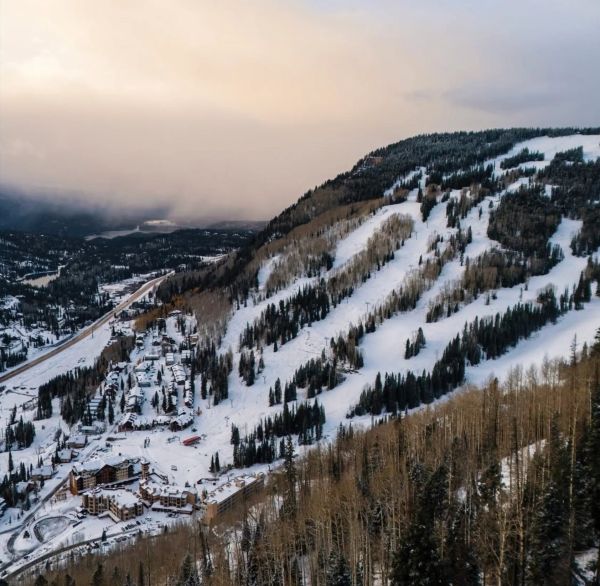
Purgatory Reveals Seven New Trails and a Colorado Couloir Chairlift Opening in December
Purgatory’s new trail map reads like a warning label. Seven new trails named after Dante’s Divine Comedy arrive with the Colorado Couloir chairlift in December, adding around 40 acres (16 ha) of steep pitches and gladed tree skiing. Five of them are black or double black. The resort opens for the season this Friday, 20 November.
19 Nov 2026
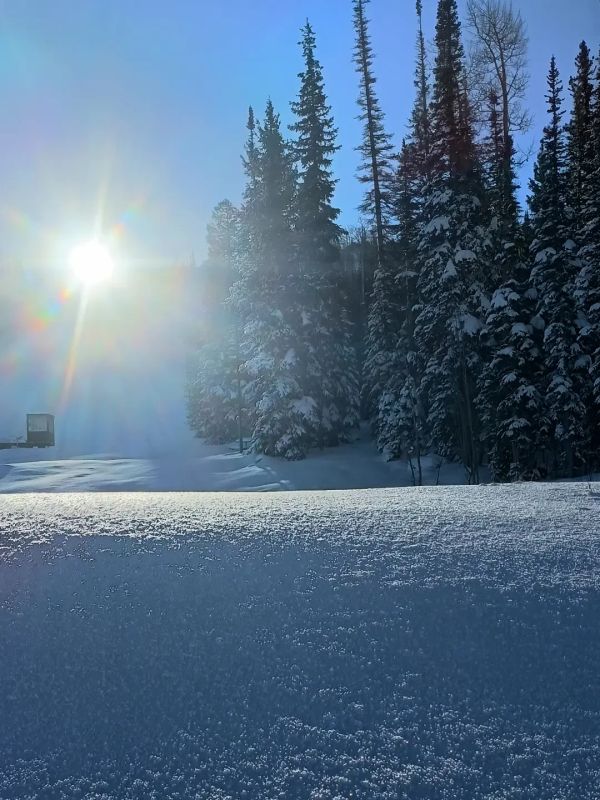
Brian Head Becomes First Utah Resort to Open for 2026-27, With Six Trails and a New Snowmaking Pipeline
Utah’s ski season has started, and it began in the south. Brian Head opened on Tuesday, 17 November, with six trails on the Navajo Express after 14 inches (36 cm) of storm snow and another half foot on opening day. It is the second year running the resort has beaten the rest of the state to first chair, and it has put nearly $1 million into a new snowmaking pipeline that can run 24 guns at once.
19 Nov 2026
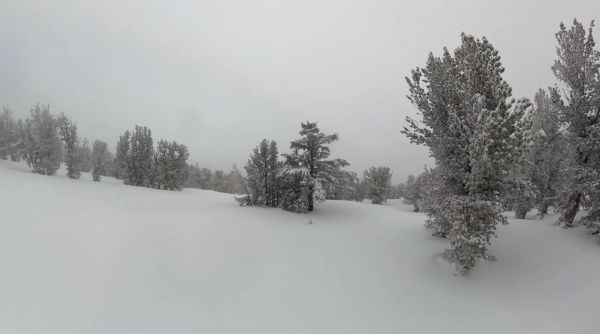
Heavenly and Northstar Open Friday as Lake Tahoe Snow Stacks Up, With Kirkwood Eyeing an Early Start
Tahoe has gone from dry to deep in a week. Heavenly and Northstar open this Friday, 20 November, with up to 24 inches (61 cm) already down at Kirkwood and 50+ inches (127 cm) in the 10-day forecast. Kirkwood normally waits until December, but this snow might change that. Heavenly is even talking about opening Stagecoach in Nevada early, which almost never happens this soon.
18 Nov 2026
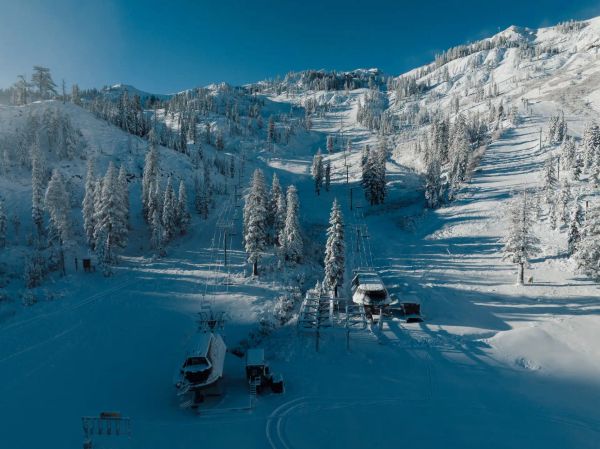
Palisades Tahoe Opens Saturday, Four Days Early, After 26 Inches of New Snow
Palisades Tahoe has pulled its opening forward by four days. Lifts spin this Saturday, 21 November, after 26 inches (66 cm) of new snow, with up to 50 more in the forecast. Opening terrain includes Treeline Cirque at Alpine and Gold Coast and Sunkid 1 at Palisades, though the resort says the weather could change the plan. Tickets are $99 through Tuesday.
18 Nov 2026
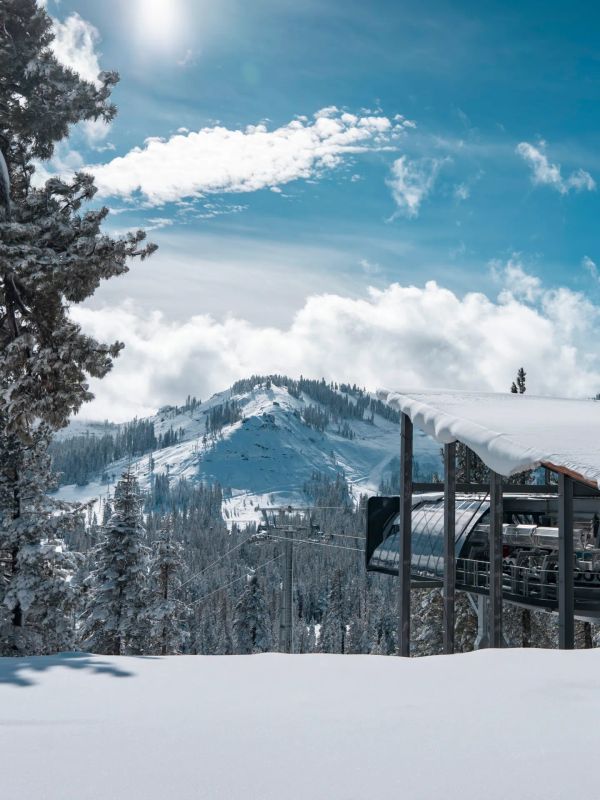
Sugar Bowl Gondola Slips to January 2027 as Opening Day Holds
Sugar Bowl still opens on 27 November, just without its new gondola. The eight-passenger Village Gondola is now targeting January 2027, with all eight towers up, the haul rope on and the first cabin hanging. Until it runs, everyone gets in through the Main Lodge, with curbside drop-off and parking lot shuttles. It replaces the first gondola in the western US, which dates from 1953.
16 Nov 2026
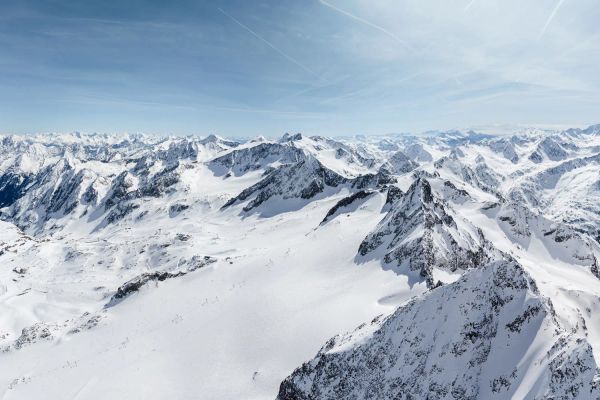
Stubai Glacier Avalanche Ends in Austria’s First Death of the Season
A 72-year-old American skier has died on Stubai Glacier after a small slab avalanche carried him over rocky ground and into a 20-metre crevasse. It is Austria’s first avalanche death of the 2026-27 season, and forecasters had flagged this exact setup two days earlier. Here is what happened near the Daunscharte, and what the snowpack was already telling anyone who was reading it.
15 Nov 2026
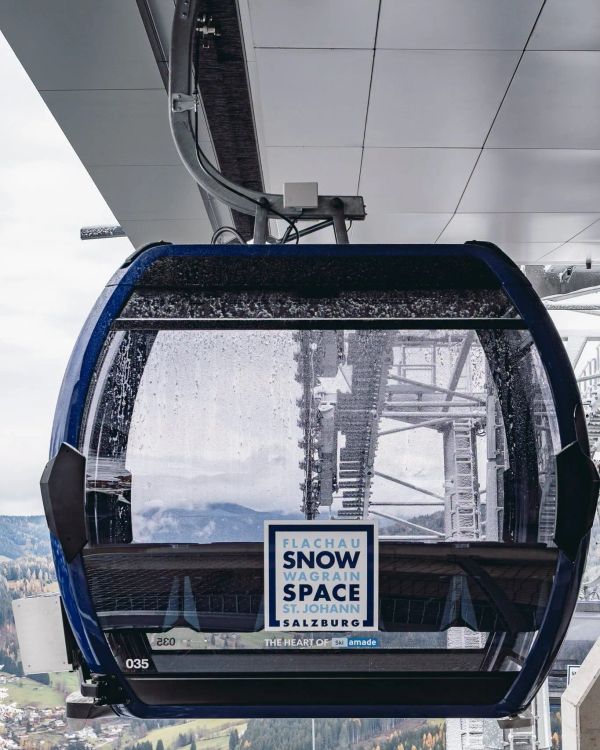
Wagrain’s New Grafenbergbahn Gondola Appears in First Photos
Wagrain’s new Grafenbergbahn is nearly here, and Snow Space Salzburg stamped “no AI” on the first photos, which says plenty about 2026. One 10-person gondola takes over from three old lifts, with 120 cabins moving up to 3,400 people an hour and a mid-station link into the G-Link. Dark blue cabins, fresh snow, no opening date yet.
14 Nov 2026
Indy Pass Adds 10 Alpine and 5 Nordic Partners for 2026-27
Indy Pass just got bigger. On 12 November it announced 10 new alpine resorts and 5 Nordic centres for 2026-27, including four in Norway and one in Austria. Three New York State mountains - Whiteface, Gore and Belleayre - also signed on to its Allied Program, with discounted tickets rather than included days. Waitlisted customers are being offered passes, and Learn to Turn news is due this week. Full list inside.
13 Nov 2026
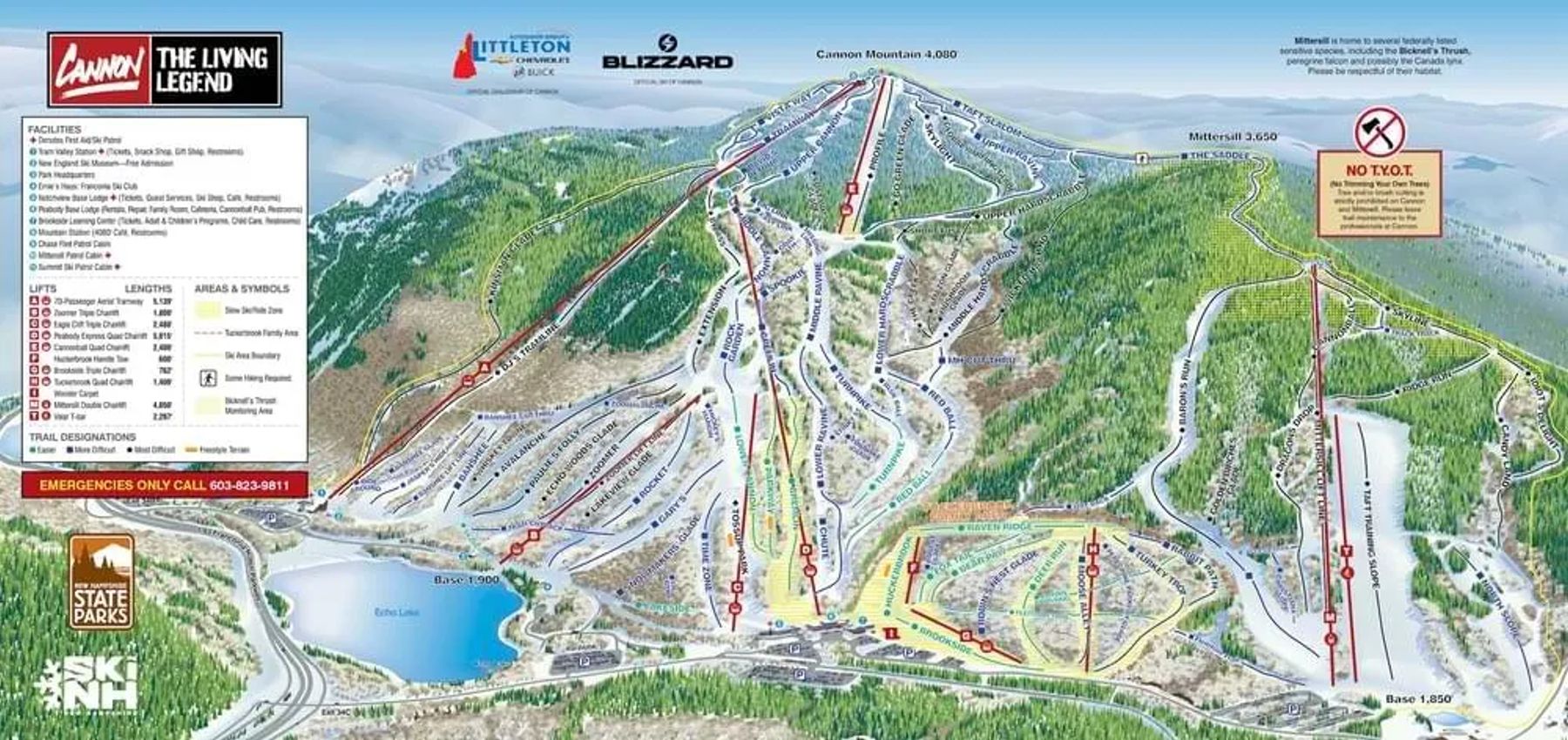
Cannon Mountain Trail Map
Downloadable Cannon Mountain trail map
Terrain split
97
runs
Beginner14%
Intermediate53%
Advanced33%
Expert0%
285 acres skiable115 hectares
Resort Stats
Elevation
Base1,900ft
Summit4,081ft
Annual snowfall
130in
Season
2026 - 2027
27 Nov 2026 - 11 Apr 2027
Trail coverage
97 runs
285 acres (115 ha)
About Cannon Mountain's trail map
Explore Cannon Mountain's full trail map with 97 runs across the mountain, colour-coded by difficulty and shown alongside the terrain split. Use it to plan a day that matches your ability, find lift-served pockets of your favourite grade, and see how the resort links together.
More Cannon Mountain intelligence: snow report, lift system, webcams, resort overview.