
Snowbasin
Snowbasin: 107 runs, 884m vertical, 2002 Olympic venue. 53km from Salt Lake City with two gondolas and luxury day lodges.
Season 2026 - 2027
Opens
27 Nov 2026
Closes
28 Mar 2027
Days open
121
Annual snow
25ft
The Overview
Michael Fulton
Melbourne-based skier and snowboarder with 50+ resorts across 5 continents. Specialises in Australian resorts and international resort comparisons.
Snowbasin spans 3,000 acres across six peaks in Weber County, Utah, with 107 runs distributed across a 884-metre vertical drop from 1,966 to 2,850 metres elevation. The resort hosted downhill, super-G and combined events at the 2002 Winter Olympics and will reprise this role in 2034. Terrain divides 7% beginner, 37% intermediate, 47% advanced and 9% expert, with an annual average snowfall of 762 centimetres supplemented by snowmaking across 21% of runs. The resort includes Ikon Pass access with 5 days for Base holders and 7 days for full passholders.
Three distinct zones define the mountain: Strawberry Gondola accesses wide bowls including Sisters Bowl and Middle Bowl Cirque, Needles Gondola serves groomed cruisers and terrain parks, whilst John Paul Express leads to steep tree skiing and the Olympic downhill courses. The Grizzly Downhill drops 884 metres over 3.2 kilometres and has been called the most difficult downhill in North America. The Allen Peak Tram rises an additional 155 metres from John Paul Lodge, providing access to expert chutes and panoramic views across five states on clear days. Elk Ridge off Strawberry ranks amongst Utah's longest runs at 4 kilometres top-to-bottom.
Three day lodges provide upmarket facilities: Earl's Lodge anchors the 1,925-metre base area with 4,181 square metres of space, whilst John Paul Lodge at 2,743 metres and Needles Lodge at 2,652 metres offer table-service dining with views of Ogden Valley and the Great Salt Lake. The Overlook bar opened in 2021 at Needles as a 21-plus venue. Parking capacity exceeds any Utah resort with no reservations required, and weekend carpool lanes prioritise vehicles with three or more occupants. Daily operations run 9am to 4pm with lodges opening from 8am.
Access via Ikon Pass has increased visitation since the resort joined the network, with weekends drawing Salt Lake crowds when Cottonwood Canyon resorts close due to avalanche risk. The 2025-26 season ran from 29 November to 22 March, closing earlier than planned due to limited snowfall. Snowbasin suits confident intermediates through experts who value wide groomers, Olympic terrain and fewer lift queues than Wasatch resorts 55 kilometres south. Three terrain parks range from Crazy Kat beginner features to advanced rails at Apex Park, whilst no on-mountain lodging keeps the focus on day skiing.
2,900ft
Vertical
107
Runs
3,000 acres
Skiable
25ft
Annual snow
Ikon
Pass
The Terrain
107 runs across 3,000 acres skiable
Snowbasin is a 2002 Winter Olympic venue in Weber County, Utah, with about 3,000 acres (1,214 hectares) of terrain and 107 runs. The base sits at 6,450 ft (1,966 m) and the highest lift reaches 9,350 ft (2,850 m), a vertical of 2,900 ft (884 m). Advanced terrain leads at 47%, followed by 37% intermediate, 9% expert and just 7% beginner, so this is a mountain for confident skiers rather than first-timers. Two gondolas and a tram spread skiers across three distinct sections: Strawberry, Needles and John Paul.
The Strawberry Gondola accesses wide bowl terrain for intermediate and advanced skiers, with the double black lines of Sister's Bowl, Middle Bowl Cirque and Lone Tree above, while Elk Ridge is the longest run on the hill at 3.5 miles. The Needles Gondola serves intermediate and advanced runs such as Dan's Run and Pork Barrel. At John Paul, the John Paul Express quad leads to the Olympic downhill courses, Grizzly for the men and Wildflower for the women, both deceptively steep, and the Allen Peak Tram climbs to the very top of the mountain. Snowbasin suits confident intermediates through to experts, though newcomers will find limited easy terrain.
Terrain split
107
runs
107 runs across 4 grades
Beginner7 runs · 7%
Intermediate40 runs · 37%
Advanced50 runs · 47%
Expert10 runs · 9%
Time it right
When to visit Snowbasin
The 2025-26 season operated from 29 November 2025 to 22 March 2026, closing earlier than the typical mid-April end date due to below-average snowfall. Standard seasons run late November through mid-April depending on conditions, with lifts operating 9am to 4pm daily throughout winter. Snowbasin opened in 1940 as one of America's oldest continually operating ski areas, originally developed by Ogden to restore the Wheeler Creek watershed with support from legendary skier Alf Engen and the Civilian Conservation Corps. The resort underwent major expansion in 1998 ahead of the 2002 Olympics, doubling terrain with new access to Allen Peak, Strawberry Peak and DeMoisy Peak.
Annual snowfall averages 762 centimetres at mid-mountain elevation, less than Cottonwood Canyon resorts 55 kilometres south but supplemented by extensive snowmaking covering 38 runs. Base elevation of 1,966 metres ranks amongst Utah's lowest, requiring artificial snow for early-season coverage and causing faster spring melt on sun-exposed terrain. Upper elevations hold snow well on north-facing aspects, particularly in Middle Bowl and terrain off Allen Peak. The resort averages 73% terrain open by Christmas, with 30% of seasons reaching less than half open by year-end. January week 2 historically delivers peak snowfall averaging 28 centimetres.
Optimal timing targets January through early March for powder and consistent coverage, with February offering the most reliable deep base and coldest temperatures. December conditions vary significantly depending on early-season storms and snowmaking progress. Late March and April provide spring corn skiing when temperatures cooperate, though south-facing terrain can become slushy by midday. Weekdays see substantially lighter crowds than weekends, when Ikon Pass access brings Salt Lake skiers to Ogden Valley. The resort remains quieter than Park City or Cottonwood resorts even on busy powder days.
Snowbasin hosts no regular night skiing but offers seasonal events including the Blues, Brews & BBQ summer concert series running Sundays from June through September. The resort operates Needles Gondola on summer weekends for hiking and mountain biking access, with services beginning in late June. Oktoberfest, Haunted Basin in October, and an annual spring pond skim in April round out the events calendar. The resort will host 2034 Olympic alpine events on the same courses used in 2002, with infrastructure already meeting international competition standards.
Season 2026 - 2027
27 Nov 2026
Opens
28 Mar 2027
Closes
121
Days open
25 ft
Annual snow
Getting there
Getting to Snowbasin, and where to stay
Snowbasin sits on the eastern slopes of Mount Ogden in Weber County, Utah, at the western terminus of State Route 226 in Huntsville. The base area elevation of 1,966 metres places the resort on the back side of the Wasatch Range, overlooking Ogden Valley and Pineview Reservoir to the east with views west toward the Great Salt Lake. Mount Ogden summit reaches 2,917 metres, whilst the resort's highest lift-served terrain tops out at 2,850 metres on Allen Peak. Approximately 60% of the resort operates on U.S. Forest Service land under special-use permit, with 557 hectares transferred to private ownership in 1996 as part of Olympic venue development.
Huntsville village lies 15 kilometres southeast of the resort with limited services, whilst Ogden (population 87,000) sits 27 kilometres west as the nearest substantial city. Eden and Liberty provide closer lodging options in Ogden Valley, 10 to 15 minutes from the mountain. Salt Lake City lies 53 kilometres southwest, a 45-minute drive via Interstate 84 and State Route 167. Park City sits 90 minutes southeast, making Snowbasin accessible for multi-resort itineraries. The resort operates in relative isolation compared to clustered Wasatch resorts, with no slopeside village or overnight accommodation at the mountain itself.
Road access follows Interstate 84 north from Salt Lake City to exit 96 at Mountain Green, then State Route 167 (Trappers Loop Road) east through Huntsville to State Route 226. The final approach climbs State Route 226 for 8 kilometres to the base area. Roads remain well-maintained through winter with rare closures, offering more reliable access than Cottonwood Canyon resorts subject to avalanche closures and traffic restrictions. The resort provides more free parking than any Utah resort across five lots, with Earl's Lot closest to base facilities and Canyon Rim expanded by 124 stalls in 2024.
Salt Lake City International Airport lies 53 kilometres south, a 45-minute transfer in typical conditions making same-day arrival and skiing feasible. Ogden-Hinckley Airport sits 23 kilometres west with limited commercial service. Utah Transit Authority operates ski buses on Route 675 from Ogden and Route 677 from Layton FrontRunner station mid-December through March, with Snowbasin season passholders receiving free UTA passes. Private shuttle companies including Black Diamond Shuttle, Canyon Hop and Utah Mountain Shuttles offer door-to-door transfers from Salt Lake airport and Park City. No passenger rail serves Ogden Valley directly, though FrontRunner commuter rail connects Salt Lake to Ogden with bus connections to the resort.
Where to stay
Search all stays →Hotels and lodges near Snowbasin, powered by Stay22.
Latest News
From the SnowStash desk
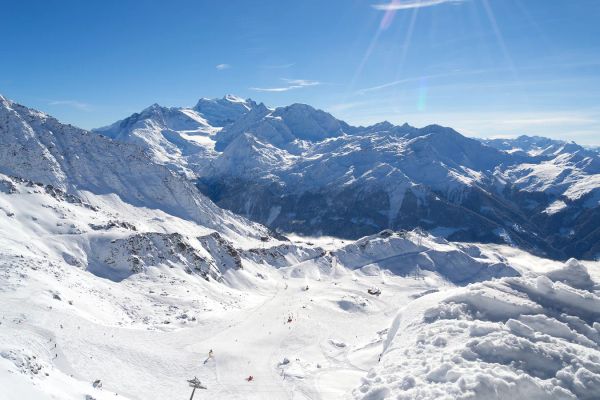
Alps Snow Forecast: Up to 64 cm Headed for the High Glaciers as the Snow Line Drops
The Alps are about to swap mild, sunny October weather for something far more wintry. A cold front arrives Tuesday, and SnowStash forecasts have Monterosa Ski out in front with 64 cm over 14 days, ahead of Blatten Belalp (55 cm) and Verbier (43 cm). The snow line should fall below 2000 metres by Wednesday night, and glaciers across Switzerland, Italy and Austria are in line for the best of it. The wind will have a say too.
20 Oct 2026
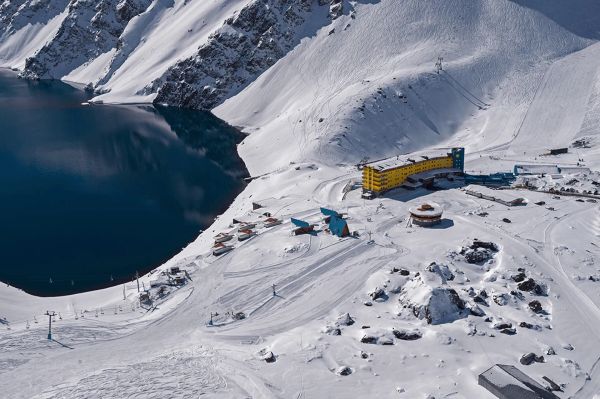
Four Dead After Avalanche Near Ski Portillo in Chile
A large avalanche struck near Laguna del Inca adjacent to Ski Portillo on Saturday afternoon, killing four people and injuring four others. The group were day visitors mountaineering in the backcountry after reportedly being warned about elevated avalanche risk by resort staff.
18 Oct 2026

Europe Ski Resorts Open Now: What Is Skiable in Mid-October 2026
Europe’s ski season is open, technically. After a record-warm summer, glaciers in Austria, Switzerland and Italy are running a few pistes apiece, Sölden, Stubai and Kitzsteinhorn started late, Titlis has pushed back to 24 October, and Zermatt reopens a few lifts on 14 October after more than two months shut. Finland’s Levi and Ruka are skiing on stored snow. Here is what is open, and what you actually get at each.
14 Oct 2026

Zermatt Plans World Cup Downhill Return on the Gornergrat for 2028
Zermatt is having another crack at a World Cup downhill, and this time nobody has to cross a border. Around 13 million Swiss francs is going into rebuilding the Gornergrat piste, including a jump fed by a roughly 300-metre in-run across the roof of the Gornergrat Railway gallery, with the Matterhorn lined up behind it for the TV cameras. First men’s race is pencilled in for March 2028, pending FIS homologation.
14 Oct 2026

Mt. Rose Begins Snowmaking for the 2026-27 Season at Lake Tahoe
Lake Tahoe’s highest base elevation is paying off early: Mt. Rose has started making snow for 2026-27 after the first flurries and a cold snap. The Nevada resort is backing it with nearly US$2 million in upgrades, including a replacement snowmaking main line, a new PistenBully groomer and restraint bars on every lift. Opening day is yet to be confirmed, though Heavenly and Northstar are already eyeing 20 November.
13 Oct 2026

Utah Ski Resorts 2026-27: What’s New at Alta, Deer Valley, Powder Mountain and More
Utah is still building flat out. For 2026-27, Powder Mountain opens a steep new Skytrac chair into more than 1,000 acres of advanced terrain, Deer Valley adds 200 acres on Hail Peak, Sundance gets a new quad and Park City adds a gondola from its new parking structure. Snowmaking is expanding almost everywhere, Eagle Point stays closed after the Cottonwood Fire, and the 2034 Games are setting the pace. Here’s what’s new, resort by resort.
13 Oct 2026

Mt Hutt Invests NZ$12 Million in Base Area, Tripling Its Sun Deck
Mt Hutt is getting busier, and its base lodge is about to catch up. NZ$12 million goes into a heated sun deck roughly three times the current size (430 m² to 1,300 m²), plus a new toilet block, heated steps down to snow level, extra storage and a new food and beverage outlet. Building starts after the 2026 season, with everything due for winter 2027.
11 Oct 2026

Vermont Ski Resort Opening Dates 2026-27: Few Dates Set, Killington Waits on the Cold
Vermont's season is slow to take shape. Stratton is tentatively targeting 18 November and Sugarbush 21 November, while Pico has Friday 11 December on the calendar. Killington never sets a date and opens when the snowmaking allows, and Vail Resorts has yet to name days for Stowe, Okemo and Mount Snow. The forecasts disagree about snow, and the main El Niño worry for the Green Mountains is warmth.
9 Oct 2026
Snowbasin Snow Report
Snow Report
Updated 22 Oct 2026
9,350ft
summit
+0in
new snow · last 24 hours
Drizzle45°F / 59°F · S 20mph
Snowfall
24 hours
0in
48 hours
0in
7 days
0in
Base depth
0in
Season total
0in
Total lifts9
Live open status isn’t available right now.
27 Nov 2026 - 28 Mar 2027
Hour by Hour
Next 47 hours· Updated Oct 22, 2026 at 6:02 PM
Scroll for the full outlook · Open-Meteo
7-Day Outlook
9,350 ftUpdated Oct 22, 2026 at 6:02 PMOpen-Meteo
Days 1–7
1.4"
Days 8–14
0.0"
Thu, Oct 22
Slight Snow
Temp59° / 45°°F
Snow0.0"(60%)
Wind20 mph S
Live snow from the resort feed; forecast from Open-Meteo, via Supabase.
Understanding the Snowbasin snow report
Track current conditions at Snowbasin in Utah. This report covers snowfall totals, base and summit depth, and the forecast across 107 runs.
Snow measurements
Base depth, summit depth, and recent snowfall are the core numbers to watch. At Snowbasin, summit conditions (2850m) can differ noticeably from the base, so we break both out separately rather than showing a single average.
Weather conditions
Wind and temperature swings matter as much as fresh snowfall. Cold, calm conditions hold snow quality well, while wind-loading or a warm-up can change things quickly — especially given the elevation spread between Snowbasin's base and summit.
Data sources
We pull Snowbasin's conditions from on-the-ground mountain reporting, then layer in forecast data so you get a fuller picture than either source alone. The mountain is served by 9 lifts, including an aerial tram and 2 quad chairlifts.
When to check
Snow reports are typically updated early morning and late afternoon. For the most current conditions, check back regularly, especially if a winter storm is approaching.