
Snowshoe
61 runs, 1,502ft vertical, 257 acres in West Virginia's Alleghenies. Ikon Pass, summit village layout.
Season 2026 - 2027
Opens
25 Nov 2026
Closes
21 Mar 2027
Days open
116
Annual snow
15ft
The Overview
Michael Fulton
Melbourne-based skier and snowboarder with 50+ resorts across 5 continents. Specialises in Australian resorts and international resort comparisons.
Snowshoe's summit reaches 4,848 feet, dropping 1,502 vertical feet to a base at 3,346 feet across 61 runs spread over 257 acres in the Allegheny Mountains of West Virginia. Terrain splits 38 per cent beginner, 30 per cent advanced, 24 per cent intermediate and 8 per cent expert. Average annual snowfall reaches roughly 180 inches, high for the Mid-Atlantic region. The resort operates on the Ikon Pass under Alterra Mountain Company ownership.
Snowshoe's defining feature is its Village, built near the summit rather than at the mountain's base, an unusual layout among North American resorts. Shuttle buses connect the summit village to the base lodge, roughly six miles and a 15-minute drive away. The 1,502-foot vertical drop and 180-inch average snowfall make Snowshoe the largest and snowiest resort in the Mid-Atlantic and Southeast. Twelve lifts serve the 61-run network across the mountain.
The site was logged from around 1905 to 1960 before being abandoned, until dentist and ski area developer Thomas 'Doc' Brigham, who had previously built North Carolina's Sugar Mountain and Beech Mountain, identified it as a resort site. Snowshoe opened to skiing on 13 December 1974. Tokyo Tower Development Company, a Japanese leisure developer, bought the resort in 1990, selling it to Canadian operator Intrawest in 1995. Intrawest was acquired in 2017 by a joint venture of KSL Capital Partners and Henry Crown and Company, forming Alterra Mountain Company, Snowshoe's current owner and the operator of the Ikon Pass.
Ikon Pass holders receive access to Snowshoe alongside dozens of other Alterra-owned and partner resorts worldwide. Adult day tickets range from 89 to 125 US dollars depending on date, with multi-day and lodging package options also available. The resort suits Mid-Atlantic and Southeast skiers seeking the region's largest terrain and highest snowfall, without needing to travel to the Rockies or New England. Its summit-village layout gives it a distinctly different feel from base-village resorts elsewhere on the Ikon network.
1,503ft
Vertical
61
Runs
257 acres
Skiable
15ft
Annual snow
Ikon
Pass
The Terrain
61 runs across 257 acres skiable
Snowshoe is the largest ski area in the Mid-Atlantic, with 257 acres (104 hectares) and 61 runs on Cheat Mountain in the Allegheny range. The summit at 4,850 ft (1,478 m) is Thorny Flat, and the base sits at 3,350 ft (1,020 m), giving a vertical of 1,500 ft (458 m). Runs split 38% beginner, 24% intermediate, 30% advanced and 8% expert, a mix that leans easy but has real bite. About 180 inches of snow falls each winter, and 12 lifts serve the three areas.
The layout is upside down, with the village near the summit. Western Territory is the steeper side, off Cupp Run, a 1.5 mile trail designed by Olympian Jean-Claude Killy, and Shay's Revenge is a mogul-heavy challenge. Silver Creek is the family zone, with wide groomers, night skiing, a tubing park and the ski school. Beginners will be comfortable, and expert riders will find a handful of steep runs that stay interesting for a weekend. Skiers from Washington DC and Pittsburgh make up much of the crowd.
Terrain split
61
runs
61 runs across 4 grades
Beginner23 runs · 38%
Intermediate15 runs · 24%
Advanced18 runs · 30%
Expert5 runs · 8%
Time it right
When to visit Snowshoe
The 2025-26 season at Snowshoe ran from 28 November 2025 to 13 April 2026, a roughly nineteen-week window, long for a Mid-Atlantic resort. The mountain's relatively high summit elevation of 4,848 feet for the region supports an extended season compared with lower Appalachian ski areas. Season dates can shift based on early and late-season snowfall and snowmaking capacity. This length places Snowshoe among the longer operating Mid-Atlantic seasons.
Average annual snowfall of roughly 180 inches is exceptional for the Mid-Atlantic and Southeast, a result of Snowshoe's high elevation within the Allegheny Mountains catching more snow than surrounding lower terrain. This natural snowfall advantage, combined with extensive snowmaking, gives Snowshoe more reliable conditions than most regional competitors. Base depth builds through midwinter, supported by both natural accumulation and machine-made snow. The mountain's position makes it something of a snow island relative to the broader Mid-Atlantic region.
January and February typically bring the most reliable natural and machine-made conditions, consistent with the broader Appalachian storm pattern. Holiday periods from Christmas through New Year bring the heaviest crowds given Snowshoe's role as the region's premier destination. March offers a balance of strong snow totals and improving weather, extending into the mid-April close. Weekday visits are generally quieter than weekends throughout the season.
Snowshoe's summit-village setting supports a range of on-mountain dining and lodging options through the season, distinct from base-village resorts elsewhere. As part of Alterra's Ikon Pass network, specific event programming ties into the broader Ikon calendar alongside local operations. The resort's Mid-Atlantic and Southeast draw means it functions as a true multi-day destination rather than a day-trip hill. Its scale and snowfall keep it distinct from smaller regional competitors throughout the season.
Season 2026 - 2027
25 Nov 2026
Opens
21 Mar 2027
Closes
116
Days open
15 ft
Annual snow
Getting there
Getting to Snowshoe, and where to stay
Snowshoe sits in the Allegheny Mountains of West Virginia, with a base elevation of 3,346 feet and a summit at 4,848 feet across a 1,502-foot vertical drop over 257 acres. The resort's Village sits close to the summit rather than the base, an unusual layout among North American ski areas. This is Pocahontas County, a rural, mountainous part of eastern West Virginia. The surrounding Monongahela National Forest adds to the area's remote, forested character.
There is no substantial town immediately adjacent to Snowshoe; the resort itself functions as the area's primary settlement, with the small community of Snowshoe, West Virginia, centred on the resort. Slatyfork and Marlinton are the nearest towns of any size, providing additional services beyond the resort itself. The broader region carries a rural Appalachian character rather than a ski-town identity. Charleston and other West Virginia cities lie a considerable drive away.
West Virginia state routes provide the main access to Snowshoe, climbing into the Allegheny Mountains from the surrounding lowlands. The drive from Charleston takes roughly three hours, while Washington DC is around four hours away, making Snowshoe accessible to a large Mid-Atlantic population. Winter driving on the mountain approach roads can include snowpack and ice, standard for a high-elevation Appalachian route. No public transport service reaches the resort, making a car necessary for access.
Yeager Airport in Charleston, West Virginia, is a regional option, though many visitors fly into Washington Dulles International Airport, roughly four hours away, given the larger range of flights available there. Pittsburgh International Airport in Pennsylvania offers another regional alternative. No rail service reaches Snowshoe directly. Most visitors drive from the Washington DC, Pittsburgh or Charlotte metropolitan areas rather than flying into a small regional airport near the resort.
Where to stay
Search all stays →Hotels and lodges near Snowshoe, powered by Stay22.
Latest News
From the SnowStash desk

Zermatt Plans World Cup Downhill Return on the Gornergrat for 2028
Zermatt is having another crack at a World Cup downhill, and this time nobody has to cross a border. Around 13 million Swiss francs is going into rebuilding the Gornergrat piste, including a jump fed by a roughly 300-metre in-run across the roof of the Gornergrat Railway gallery, with the Matterhorn lined up behind it for the TV cameras. First men’s race is pencilled in for March 2028, pending FIS homologation.
14 Oct 2026

Mt. Rose Begins Snowmaking for the 2026-27 Season at Lake Tahoe
Lake Tahoe’s highest base elevation is paying off early: Mt. Rose has started making snow for 2026-27 after the first flurries and a cold snap. The Nevada resort is backing it with nearly US$2 million in upgrades, including a replacement snowmaking main line, a new PistenBully groomer and restraint bars on every lift. Opening day is yet to be confirmed, though Heavenly and Northstar are already eyeing 20 November.
13 Oct 2026

Utah Ski Resorts 2026-27: What’s New at Alta, Deer Valley, Powder Mountain and More
Utah is still building flat out. For 2026-27, Powder Mountain opens a steep new Skytrac chair into more than 1,000 acres of advanced terrain, Deer Valley adds 200 acres on Hail Peak, Sundance gets a new quad and Park City adds a gondola from its new parking structure. Snowmaking is expanding almost everywhere, Eagle Point stays closed after the Cottonwood Fire, and the 2034 Games are setting the pace. Here’s what’s new, resort by resort.
13 Oct 2026

Mt Hutt Invests NZ$12 Million in Base Area, Tripling Its Sun Deck
Mt Hutt is getting busier, and its base lodge is about to catch up. NZ$12 million goes into a heated sun deck roughly three times the current size (430 m² to 1,300 m²), plus a new toilet block, heated steps down to snow level, extra storage and a new food and beverage outlet. Building starts after the 2026 season, with everything due for winter 2027.
11 Oct 2026

Vermont Ski Resort Opening Dates 2026-27: Few Dates Set, Killington Waits on the Cold
Vermont's season is slow to take shape. Stratton is tentatively targeting 18 November and Sugarbush 21 November, while Pico has Friday 11 December on the calendar. Killington never sets a date and opens when the snowmaking allows, and Vail Resorts has yet to name days for Stowe, Okemo and Mount Snow. The forecasts disagree about snow, and the main El Niño worry for the Green Mountains is warmth.
9 Oct 2026
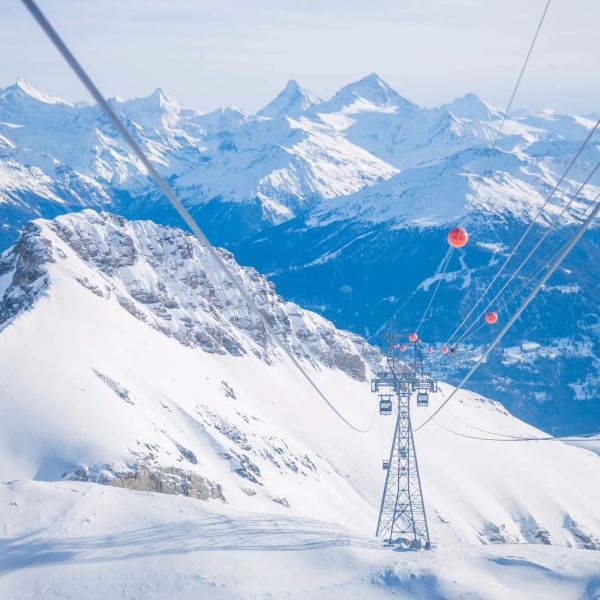
Crans-Montana 2027 World Championships President Resigns Ahead of Fraud Hearing
Less than four months out from the Crans-Montana 2027 World Championships, the man running the organising committee has stepped down. Claude-Alain Schmidhalter resigned as Swiss-Ski vice president and OC president after being indicted over a business dispute unrelated to skiing. He denies the allegations and faces court on October 27. Interim leaders are in place for the February 1-14 event.
9 Oct 2026
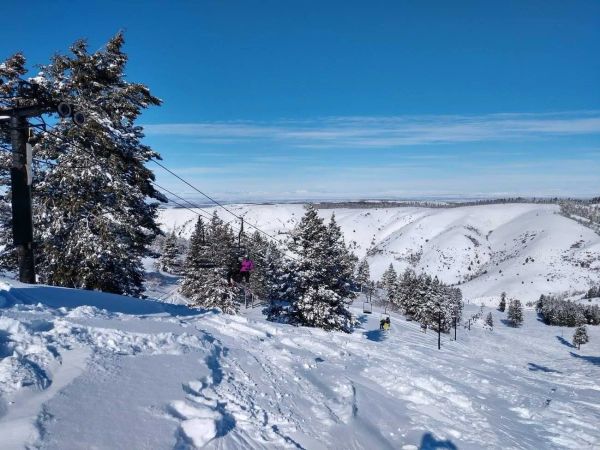
Kelly Canyon, Idaho, Adds Snowmaking, a Bigger Terrain Park and More Parking for 2026-27
Kelly Canyon had a rough 2025-26, and the Idaho resort has spent the summer making sure it doesn’t repeat. Snowmaking now reaches the top of Goldrush, the terrain park is doubling in size with a stereo system, lights and a snack shack, and the car park is getting bigger. Grooming is stepping up too. Target opening is December 4, conditions permitting.
9 Oct 2026
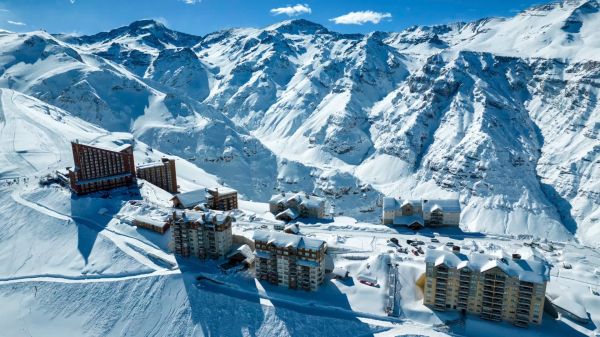
Valle Nevado Extends Season to November 8 After 108 cm in 48 Hours
Winter was meant to be winding down in Chile. Then Valle Nevado took 108 cm in 48 hours in early October, and the resort has pushed its closing date out to November 8 - its latest in 38 years of operation. That makes 143 days of skiing since opening day on June 19, with 690 cm banked for the season. Only part of the mountain is running while the storm settles, so check the mountain report before you plan a trip.
9 Oct 2026
Snowshoe Webcams
3 live angles across the mountain. Tap any camera to go full-screen.
About Snowshoe's live webcams
Check live conditions across Snowshoe with 3 real-time webcams showing snow, weather, and lift operations, updated every 10 minutes. Check high-elevation cams for powder visibility and base-area cams for crowd levels before you head up.
Camera guide
- Ballhooter Slope4,075ft
- Experience the heart of the action through the Snowshoe WV webcam positioned at Ballhooter. This live feed captures skiers descending one of the resort's signature runs while giving you a perfect view of conditions at this popular gathering spot near the Boathouse. The Snowshoe Mountain Resort webcam stream lets you check the snow quality and lift operations in real-time.
- Powder Monkey Condos4,075ft
- Looking back at the summit of the resort from the Powder Monkey Condos this Snowshoe webcam gives you a front row seat to the snowfall.
- Snowshoe Village4,849ft
- The Snowshoe West Virginia webcam at the summit gives you a front-row view of the vibrant village main street. This strategically placed Snowshoe webcam lets you monitor the bustling resort atmosphere, current weather conditions, and daily mountain activities from the highest vantage point in the village.
Snowshoe snow cams FAQ
How often do Snowshoe snow cams update?
All Snowshoe snow cams and webcams update every 10 minutes with fresh images showing current mountain conditions. This frequent update schedule ensures you have access to near real-time conditions for planning your ski day at Snowshoe.
Which Snowshoe webcam shows the best powder conditions?
The high-elevation Snowshoe Village webcam at 1,478m provides the clearest view of powder conditions and snowfall. These Snowshoe webcams capture fresh snow accumulation and visibility better than base area cameras.
Can I see Snowshoe lift queues on the webcams?
Yes. Multiple Snowshoe snow cams specifically show lift queue areas and chairlift operations, helping you time your arrival and avoid peak queue periods.
When is the best time to check Snowshoe snow cams?
Check Snowshoe webcams early morning (7-8am) for overnight snowfall assessment, and mid-afternoon for current crowd levels and weather. The live cams are most useful after storm events to assess fresh powder.
How can I check current conditions before buying Snowshoe lift tickets?
Use our Snowshoe webcams alongside the live snow report to assess conditions before purchasing lift tickets. The webcams show real-time visibility, snow quality, and operational status.
Do Snowshoe webcams work on mobile devices?
Yes. All Snowshoe snow cams and webcams are optimized for mobile viewing, so you can check live conditions from anywhere using your phone or tablet.
More Snowshoe intelligence: snow report, lift tickets, trail map, resort overview.