
The Overview
Michael Fulton
Melbourne-based skier and snowboarder with 50+ resorts across 5 continents. Specialises in Australian resorts and international resort comparisons.
Antelope Butte's summit reaches 9,398 feet, dropping 1,000 vertical feet to a base at 8,399 feet across 28 runs spread over roughly 250 acres in the Bighorn National Forest. Terrain splits 18 per cent beginner, 25 per cent intermediate and 57 per cent advanced, with no expert-rated runs. The resort operates on Indy Pass, giving pass holders access to Wyoming's Bighorn Mountains without the crowds found at larger Rocky Mountain resorts. Annual snowfall averages roughly 200 inches, drawing on the range's high-elevation snowbelt.
Two double chairlifts and a single surface lift give access across the mountain's 28 runs, with the surface lift dedicated to lower-mountain beginner terrain. Advanced skiers account for 57 per cent of the trail count, against 25 per cent intermediate and 18 per cent beginner. That split makes Antelope Butte better suited to skiers already comfortable on steeper pitches than to first-timers, despite marketing that frames it as a family learning hill. The terrain covers roughly 250 acres within the Bighorn National Forest boundary.
Antelope Butte operates as a nonprofit, run by the Antelope Butte Foundation after the ski area sat closed from 2004 until volunteer restoration returned lifts to operation for the 2019-20 season. There is no on-site village; skiers arrive by car and the base area centres on a single lodge building. Lift queues are minimal given the area's small scale and remote Bighorn Mountains setting, roughly an hour's drive from the nearest town. The adjoining Nordic ski area adds five miles of groomed cross-country trail.
Indy Pass holders get two lift-ticket days at Antelope Butte per season, alongside access to other independent areas across North America under the same pass. A 2025/26 season pass cost 399 US dollars, with single adult day tickets at 50 dollars regular and 60 dollars on peak days. The resort suits skiers seeking an uncrowded, advanced-leaning mountain over a polished resort experience, given the absence of on-site lodging or commercial village infrastructure. Its nonprofit structure keeps prices well below those of larger Rocky Mountain resorts nearby.
1,001ft
Vertical
28
Runs
500 acres
Skiable
17ft
Annual snow
Indy
Pass
The Terrain
28 runs across 500 acres skiable
Antelope Butte is a small, nonprofit-run ski area in the Bighorn National Forest, with about 500 acres (202 hectares) of terrain on Sanity's figures. The mountain rises from 8,400 ft (2,560 m) at the base to 9,400 ft (2,865 m) at the summit, a vertical of 1,000 ft (305 m). The 28 runs lean steep for the scale: 57% are advanced, 25% intermediate and 18% beginner, with no expert-rated terrain. Two double chairs and a surface lift handle all the uphill work, so the layout is simple to read and lift lines stay short. Expect an old-school, uncrowded Wyoming day rather than a resort village.
The gentler end of the mountain has beginner runs named Ho Ho Ha, Enchanted Forest and Happy Trails, which suit learners and families, while the upper chairs serve the steeper pitches that make up most of the trail count. The area also welcomes snowboarders, telemark skiers and backcountry travellers, and an adjoining Nordic network adds five miles of groomed cross-country track. Antelope Butte suits confident intermediates and advanced skiers after quiet terrain off US-14, along with beginners who want a low-key place to learn. Bring a packed lunch, because facilities are modest and the real attraction is space.
Terrain split
28
runs
28 runs across 4 grades
Beginner5 runs · 18%
Intermediate7 runs · 25%
Advanced16 runs · 57%
Expert0 runs · 0%
Time it right
When to visit Antelope Butte
The 2025-26 season at Antelope Butte ran from 20 December 2025 through 29 March 2026, a roughly fourteen-week window typical for this elevation band in the Bighorn Mountains. Dates shift year to year based on snowpack and the nonprofit foundation's staffing and grooming capacity. The mountain operates strictly as a winter destination during this window, alongside its separate Nordic ski trail system. Closing in late March means the season ends before many larger Rocky Mountain resorts, which often run into April.
Average annual snowfall at Antelope Butte runs to roughly 200 inches, reflecting the high-elevation snowbelt position of the Bighorn range between 8,399 and 9,398 feet. Base depth and season totals are tracked through the resort's own snow reporting rather than a regional avalanche centre feed. Snowmaking coverage is not documented for this area, leaving conditions more dependent on natural snowfall than at larger, investment-backed resorts. That natural dependency makes early and late-season depth more variable than at snowmaking-heavy competitors.
Mid-winter, from January through February, offers the most reliable base depth once early-season snowpack has built up across the terrain. Powder conditions favour storm-cycle timing given the reliance on natural snowfall rather than manufactured cover. Late-season visits in March can be inconsistent, with the area's 29 March close date reflecting typical spring snowpack decline at this elevation. Weekday visits year-round tend to be quieter than weekends, given the area's role as a regional rather than destination resort.
Antelope Butte does not operate night skiing, consistent with its scale and volunteer-supported operating model. The adjoining Nordic ski area, part of the Bighorn National Forest's winter sports programme, runs its own five-mile groomed trail season alongside the alpine lifts through the same window. As a nonprofit community resource rebuilt by volunteer labour after 2016, the mountain's calendar centres on keeping lifts running reliably through winter rather than hosting festivals or competitions. The Foundation relies on member and donor support to fund each season's operation.
Season 2025 - 2026
20 Dec 2025
Opens
29 Mar 2026
Closes
99
Days open
17 ft
Annual snow
Getting there
Getting to Antelope Butte, and where to stay
Antelope Butte sits inside the Bighorn National Forest in north-central Wyoming, with a base elevation of 8,399 feet in the Bighorn Mountains' northern range. The resort lies on the west side of the range along the US-14 corridor. Summit elevation reaches 9,398 feet, giving the ski area a 1,000-foot vertical drop within national forest land. The surrounding terrain is undeveloped forest and alpine ridge rather than a built-up resort village.
Sheridan, Wyoming, lies 59 miles east of the resort via US-14, the nearest town of meaningful size and home to the Antelope Butte Foundation's offices. Greybull sits roughly 28 miles away on the range's western side, providing a closer but smaller service town. Both towns supply the lodging and groceries that the resort itself does not, given the absence of an on-site village. The wider Bighorn Basin region carries a ranching and small-town character rather than a ski-town identity.
US Highway 14, known through this stretch as the Bighorn Scenic Byway, provides the only paved access route to Antelope Butte. The drive from Sheridan takes roughly 75 minutes, climbing through switchbacks typical of the byway's mountain crossing. Winter driving conditions on US-14 can include snowpack and ice, standard for a high-elevation forest highway in this range. No public transport service runs to the resort, making a car the only practical way to arrive.
Sheridan County Airport (SHR) is the nearest airport, roughly 66 miles from the resort and served by nonstop flights to Denver. Billings Logan International Airport in Montana offers a wider range of connections and sits within driving range for visitors flying from further afield. No rail service reaches this part of the Bighorn Basin, and no scheduled bus or shuttle connects Sheridan to the resort. Visitors typically rent a car in Sheridan or Billings for the final leg to Antelope Butte.
Where to stay
Search all stays →Hotels and lodges near Antelope Butte, powered by Stay22.
Latest News
From the SnowStash desk
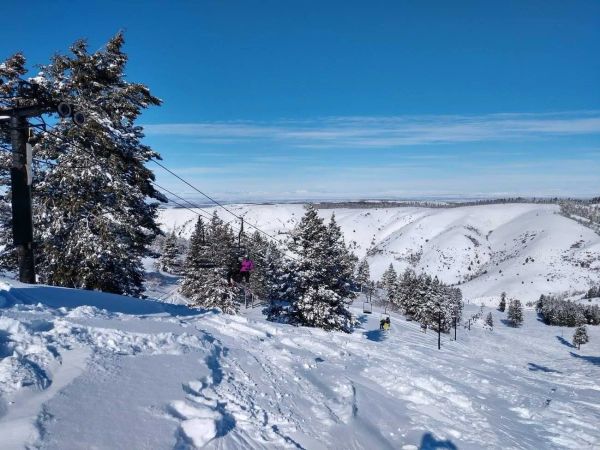
Kelly Canyon, Idaho, Adds Snowmaking, a Bigger Terrain Park and More Parking for 2026-27
Kelly Canyon had a rough 2025-26, and the Idaho resort has spent the summer making sure it doesn’t repeat. Snowmaking now reaches the top of Goldrush, the terrain park is doubling in size with a stereo system, lights and a snack shack, and the car park is getting bigger. Grooming is stepping up too. Target opening is December 4, conditions permitting.
9 Oct 2026
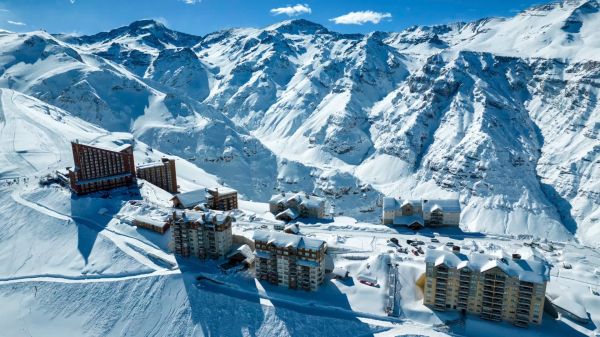
Valle Nevado Extends Season to November 8 After 108 cm in 48 Hours
Winter was meant to be winding down in Chile. Then Valle Nevado took 108 cm in 48 hours in early October, and the resort has pushed its closing date out to November 8 - its latest in 38 years of operation. That makes 143 days of skiing since opening day on June 19, with 690 cm banked for the season. Only part of the mountain is running while the storm settles, so check the mountain report before you plan a trip.
9 Oct 2026
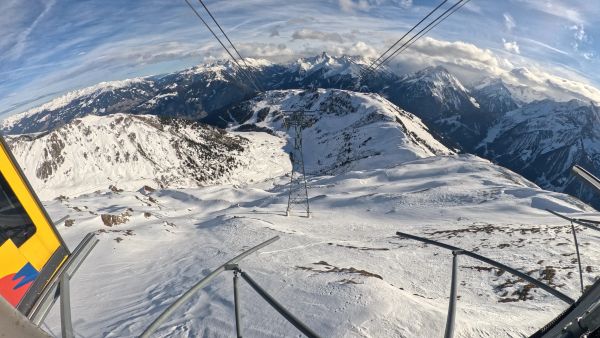
Alps Snow Forecast: Cold Front Brings Thursday Snow to the High Alps
The Alps look a lot more like winter today, for a day or so. A cold front is moving west to east, dropping up to 35 cm on high glaciers and peaks, with snow levels falling to around 1,500-1,800 m at times. Don’t plan a trip around it: mid-elevation snow will be thin and wet, every area is closed bar a limited Sölden glacier opening tomorrow, and warmer weather returns by Monday.
8 Oct 2026
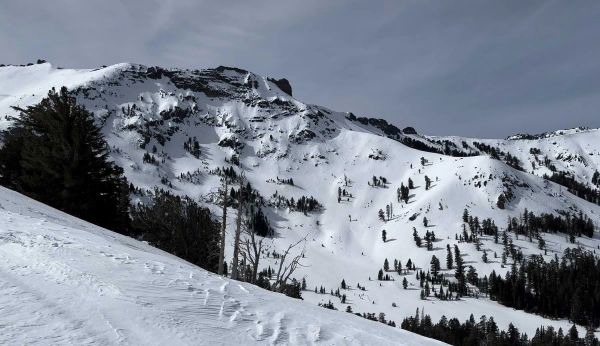
California Ski Resort Opening Dates 2026-27: Mammoth Leads, Tahoe Follows
Mammoth Mountain is first up in California, targeting Friday 13 November after a dusting of September snow. Heavenly and Northstar follow on 20 November, Palisades Tahoe on Wednesday 25 November and Sugar Bowl on 27 November, with Kirkwood on 4 December and June Mountain on 19 December. Plenty of smaller areas have no date yet. A super El Niño favours the Sierra, but a warmer storm track is the catch.
7 Oct 2026
Colorado Ski Resort Opening Dates 2026-27: A-Basin and Keystone Race to Be First
Arapahoe Basin, Keystone and Winter Park are all chasing an October start, though none has a firm date yet. The first dated openers are Breckenridge and Copper on Friday 6 November, then Vail on 13 November, with most of the rest bunched around US Thanksgiving. Hesperus did not open at all last season. A super El Niño offers hope but no guarantee, and forecasters say the southern mountains have the better odds.
5 Oct 2026
Dolomiti Superski 2026-27: Four New Gondolas, New Reservoirs and an €89 Peak Day Pass
Dolomiti Superski is spending around €100 million across its 12 areas before winter. Kronplatz gets a new 10-passenger gondola with a middle station, 3 Zinnen gets Helmissimo, and Val di Fassa swaps a chairlift for a gondola above Col Valvacin. New water-storage basins and upgraded snowmaking follow, and construction has started on the San Martino to Passo Rolle link. A peak adult day pass is €89.
4 Oct 2026
Utah Ski Resort Opening Dates 2026-27: Brian Head First, Eagle Point Out
Brian Head is targeting 6 November, though last year it aimed for 7 November and did not open until the 25th. Park City, Alta and Solitude are pencilled in for 20 November, Snowbird and Snowbasin for 27 November, and Deer Valley for 5 December. Eagle Point will stay closed after the Cottonwood Fire. A super El Niño is forecast, but the big snow is not expected until January.
4 Oct 2026
Hintertux Glacier Opens for 2026-27 With 12 Kilometres of Piste
Hintertux became Austria's second glacier to open for 2026-27 on Friday 2 October, after the Pitztal Glacier. Twelve kilometres of piste are running around the Olperer and Gefrorene Wand, served by one gondola and two drag lifts, with the Betterpark also open. Lifts officially run 8:15 am to 4:30 pm, but skiing stops at 2 pm for now.
4 Oct 2026
Antelope Butte Snow Report
Snow Report
Updated 9 Oct 2026
9,400ft
summit
+0in
new snow · last 24 hours
Clear42°F / 60°F · SW 19mph
Snowfall
24 hours
0in
48 hours
0in
7 days
0in
Base depth
0in
Season total
0in
Total lifts3
Live open status isn’t available right now.
20 Dec 2025 - 29 Mar 2026
Hour by Hour
Next 43 hours· Updated Oct 9, 2026 at 6:02 AM
Scroll for the full outlook · Open-Meteo
7-Day Outlook
9,400 ftUpdated Oct 9, 2026 at 6:02 AMOpen-Meteo
Days 1–7
0.4"
Days 8–14
0.0"
Fri, Oct 9
Overcast
Temp60° / 42°°F
Snow0.0"(3%)
Wind19 mph SW
Live snow from the resort feed; forecast from Open-Meteo, via Supabase.
Understanding the Antelope Butte snow report
See what's happening on the mountain at Antelope Butte right now — snowfall, snow depth, and weather data to help you plan your day in Wyoming.
Snow measurements
Snow depth at Antelope Butte is tracked at both the base and summit, since the two elevations often see different totals — roughly a 305m difference here. We report fresh snowfall over the last 24 hours and 7 days alongside the running season total, in both metric and imperial units.
Weather conditions
Snow quality tracks closely with temperature and wind. We surface both alongside the snowfall data so you can judge whether conditions at Antelope Butte are holding up or starting to soften.
Data sources
Snowfall and depth figures for Antelope Butte come from official mountain sources; weather and outlook data comes from independent forecasting services. The mountain is served by 3 lifts in total.
When to check
Conditions can change overnight, so mornings and late afternoons are the best times to check back on Antelope Butte.